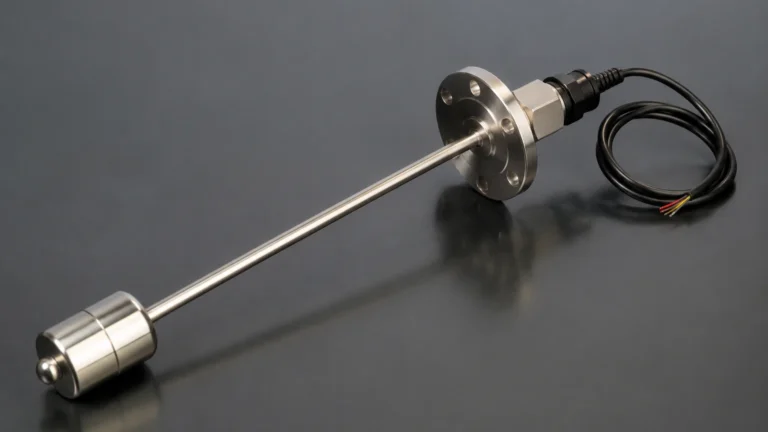
Grain Bin Level Sensors
Grain Bin Level Sensors
In modern agricultural and industrial grain handling, the ability to monitor inventory accurately is a cornerstone of operational efficiency. Grain bin level sensors provide the data necessary to prevent overflows, manage supply chains, and ensure the safety of personnel by reducing the need for manual bin climbing. However, the environment inside a grain silo is notoriously difficult for instrumentation. High dust concentrations, irregular material surfaces (the angle of repose), and extreme temperature fluctuations require a nuanced understanding of measurement technologies to select the correct tool for the job.
Understanding Grain Level Measurement Principles
Before selecting a specific sensor, it is essential to understand the two primary categories of measurement: point level detection and continuous level measurement.
Point Level Detection
Point level sensors are designed to detect the presence or absence of grain at a specific height. These are often used as high-level alarms to prevent overfilling or low-level alarms to signal when a bin is nearly empty. They function as switches, triggering an electrical signal when the grain makes contact with the sensing element. Common technologies include rotary paddles, vibrating rods, and capacitance switches.
Continuous Level Measurement
Continuous level measurement provides real-time data on the exact amount of grain in the bin at any given time. This is achieved by measuring the distance from the sensor (usually mounted at the top of the bin) to the surface of the grain. This data is then converted into volume or weight based on the bin's dimensions. The most common technologies for this application are radar, ultrasonic, and electromechanical weight-and-cable systems.
Key Technologies for Grain Bin Level Sensors
Selecting the right technology depends on the grain type, the bin's physical dimensions, and the environmental conditions such as dust and moisture.
Radar Level Meters (80GHz FMCW)
Radar technology has become the preferred choice for grain bin applications. These sensors emit a high-frequency electromagnetic wave (typically in the 80 GHz range) that reflects off the grain surface.
* Principle: FMCW (Frequency Modulated Continuous Wave) radar calculates the distance by measuring the frequency shift between the transmitted and received signals.
* Advantages: Unlike ultrasonic waves, radar signals are not affected by heavy dust, air temperature, or pressure changes. The 80 GHz frequency allows for a narrow beam angle (often as small as 3 degrees), which is critical for avoiding internal bin structures like ladders or stay cables.
* Suitability: Ideal for tall, narrow silos and environments with extreme dust during filling.
Ultrasonic Level Sensors
Ultrasonic sensors use high-frequency sound waves to measure distance. The sensor emits a pulse that bounces off the grain and returns to the transducer.
* Principle: The sensor calculates distance based on the "time-of-flight" of the sound wave, adjusted for the speed of sound in air.
* Advantages: Cost-effective and non-contact.
* Limitations: Sound waves are easily scattered by high dust concentrations and can be absorbed by certain types of "soft" grain. Furthermore, temperature gradients within a large silo can affect the speed of sound, leading to inaccuracies if not properly compensated.
Guided Wave Radar (GWR)
Guided Wave Radar uses a cable or rod (the waveguide) that extends to the bottom of the bin. A low-energy microwave pulse travels down the cable and reflects when it hits the grain surface.
* Principle: Like standard radar, it uses time-of-flight, but the signal is contained along the waveguide.
* Advantages: It is unaffected by dust or the angle of repose because the measurement is taken exactly where the cable meets the grain.
* Limitations: The grain exerts significant "pull-down" force on the cable as it settles or is discharged. In large bins, this force can exceed 10,000 kg (22,000 lbs), potentially damaging the bin roof or the sensor itself if not engineered correctly.
Electromechanical (Weight and Cable) Systems
Often referred to as "Yo-Yo" sensors, these are mechanical devices that periodically drop a weighted probe into the bin.
* Principle: A motor lowers a weight on a cable. When the weight touches the grain surface, the tension changes, and the unit retracts the weight, measuring the distance based on the cable payout.
* Advantages: Extremely reliable in the heaviest dust and unaffected by the dielectric constant of the material.
* Limitations: It provides periodic rather than real-time data and involves moving parts that require regular maintenance.
For a comprehensive overview of available industrial instrumentation and technical specifications, you may review product options and application support on the Main Page of our technical catalog.
Factors Influencing Sensor Selection
When evaluating grain bin level sensors, engineers must consider the following environmental and physical factors:
1. Dust Levels: Grain handling generates significant dust. If the dust is constant, non-contact radar or mechanical systems are superior to ultrasonic sensors.
2. Angle of Repose: Grain does not sit flat; it forms a cone (peak) when filling and a crater (valley) when emptying. The sensor must be positioned to account for this to provide an accurate average volume.
3. Dielectric Constant: Radar and capacitance sensors depend on the material's dielectric constant ($ε_r$). Most grains have a low dielectric constant (between 2.0 and 5.0), which requires sensitive electronics to detect the reflected signal accurately.
4. Bin Geometry: The height-to-width ratio of the bin determines the required beam angle. Narrower bins require narrower beams to avoid false reflections from the walls.
Selection Table for Grain Bin Level Sensors
| Technology | Measurement Type | Dust Resistance | Accuracy | Maintenance Needs | Best For |
| :— | :— | :— | :— | :— | :— |
| 80GHz Radar | Continuous | Excellent | ±2 mm | Low | High-accuracy, dusty silos |
| Ultrasonic | Continuous | Poor to Fair | ±0.25% | Low | Short bins, low-dust liquids |
| Guided Wave Radar | Continuous | Excellent | ±3 mm | Moderate | Small bins with low dielectric grain |
| Weight & Cable | Periodic | Excellent | ±1 cm | High | Very tall silos with extreme dust |
| Rotary Paddle | Point | Excellent | N/A | Moderate | High/Low level switching |
| Vibrating Rod | Point | Excellent | N/A | Low | Fine powders and small grains |
Installation Guidelines and Best Practices
Proper installation is as important as selecting the right technology. Even the most advanced sensor will fail if placed incorrectly.
* Mounting Location: Sensors should generally be mounted 1/6th to 1/3rd of the diameter from the bin wall. Mounting too close to the wall results in false reflections, while mounting directly in the center may place the sensor in the path of the filling stream, leading to rapid wear or signal loss.
* Avoiding the Fill Stream: Never install a sensor where grain will fall directly onto it. This causes signal noise and physical damage. If necessary, use a protective shield or choose an offset mounting position.
* Beam Clearance: Ensure the "signal cone" is clear of obstructions. For a radar sensor with a 3-degree beam angle, a 10m (32.8 ft) measurement distance requires a clear path of approximately 0.52m (1.7 ft) in diameter.
* Aiming Flanges: For continuous level sensors, using an adjustable aiming flange allows the technician to point the sensor at the discharge hopper or the middle of the angle of repose to optimize signal return.
Limitations and Operational Challenges
While modern sensors are highly capable, they are not without limitations.
Signal Attenuation: In very tall silos (over 30m or 98 ft), the signal can weaken as it travels through thick dust. High-power 80 GHz radar is designed to mitigate this, but it remains a factor in extreme cases.
Condensation and Caking: High moisture content in grain can lead to condensation on the sensor face. If dust sticks to this moisture, it can create a "crust" that blocks the signal. Many radar sensors now feature PTFE or PEEK lenses that are concave or flat to shed moisture and prevent buildup.
Material Bridging: No sensor can detect if grain has "bridged" (stuck to the walls while the center is empty). Point level sensors installed at multiple heights can help identify this dangerous condition, but it remains a challenge for continuous sensors alone.
Frequently Asked Questions (FAQ)
Q: How does the moisture content of the grain affect the sensor?
A: Moisture increases the dielectric constant of the grain, which actually makes it easier for radar sensors to detect. However, high moisture can also cause dust to stick to the sensor lens, potentially requiring more frequent cleaning or the use of an air purge system.
Q: Can one sensor measure the volume of a flat-bottom bin and a hopper-bottom bin?
A: Yes, but the integration software must be programmed with the specific geometry of the bin. The sensor measures distance; the controller or PLC converts that distance into volume based on the bin's strapping table (a map of volume vs. height).
Q: Is 80 GHz radar always better than 26 GHz radar for grain?
A: In most cases, yes. The 80 GHz frequency provides a narrower beam and better signal focus, which is superior for penetrating dust and avoiding internal bin obstructions. 26 GHz may still be used in shorter, wider vessels where beam spread is less of a concern.
Q: Do I need an explosion-proof sensor?
A: Grain dust is highly combustible. In almost all jurisdictions, sensors installed inside or on top of grain bins must meet specific hazardous area ratings (such as Class II, Division 1 or 2, or ATEX Zone 20/21) to ensure they do not become an ignition source.
Conclusion
Effective grain inventory management requires a strategic approach to sensor selection. By understanding the physics of the measurement—whether it be the electromagnetic reflection of radar or the mechanical movement of a weight-and-cable system—operators can choose a solution that balances accuracy, reliability, and cost. For industrial environments where precision is paramount, 80GHz FMCW radar remains the gold standard, offering the most robust performance against the perennial challenges of dust and irregular surfaces. Always consult the specific bin dimensions and material characteristics before finalizing an instrumentation plan to ensure long-term operational success.