Halocarbon Fill Fluid Diaphragm Seal
Halocarbon Fill Fluid Diaphragm Seal
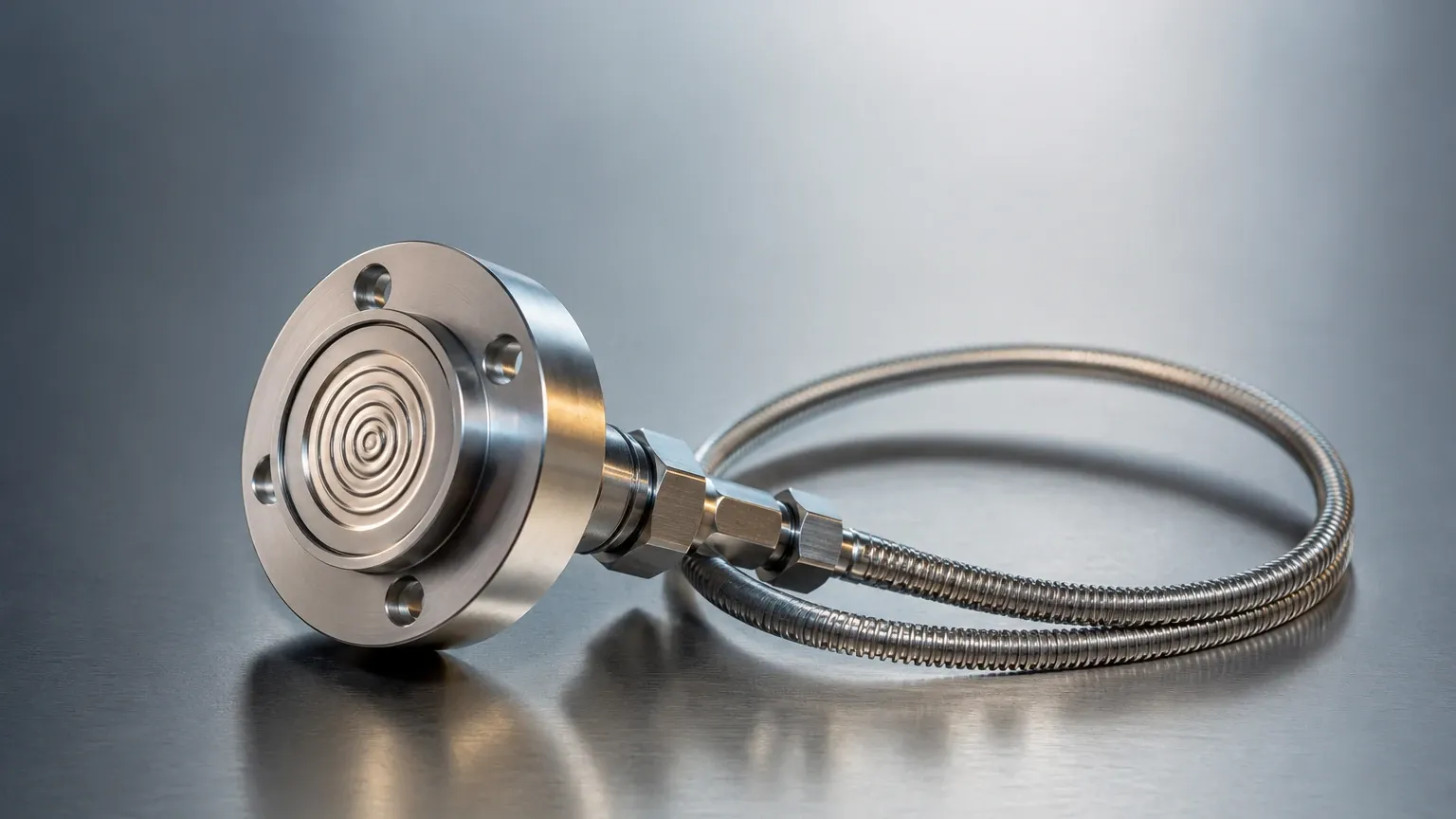
In industrial process control, the accuracy and longevity of pressure and level measurement instruments depend heavily on how they are isolated from the process media. Diaphragm seals, also known as chemical seals or remote seals, serve as the primary interface between the process fluid and the sensing element of a transmitter. Central to the performance of these seals is the fill fluid—the hydraulic medium that transmits pressure from the flexible diaphragm to the instrument sensor. Among the various specialized fluids available, the halocarbon fill fluid diaphragm seal stands out as a critical solution for applications involving highly reactive chemicals, particularly strong oxidizers.
Selecting the correct fill fluid is not merely a matter of temperature range; it is a fundamental safety and compatibility requirement. While silicone oils are the industry standard for general-purpose applications, they can react catastrophically with certain chemicals. This guide explores the engineering principles, application criteria, and technical considerations for using halocarbon fill fluids in diaphragm seal systems.
Measurement Principles of Diaphragm Seals
A diaphragm seal system operates on the principle of Pascal’s Law, which states that pressure applied to an enclosed fluid is transmitted undiminished to every portion of the fluid and to the walls of the containing vessel.
In a typical installation, a thin, flexible metal diaphragm is exposed to the process medium. The volume behind this diaphragm, including the internal cavity of the pressure transmitter and any connecting capillary tubing, is completely filled with a de-aerated fill fluid. When process pressure exerts force on the diaphragm, it deflects slightly, compressing the fill fluid. This pressure is then transmitted through the fluid column to the sensing diaphragm inside the transmitter.
For this system to remain accurate, the fill fluid must possess specific physical properties:
1. Incompressibility: The fluid must effectively transmit pressure without significant volume change.
2. Thermal Stability: It must remain liquid and stable across the operating temperature range.
3. Low Thermal Expansion: Minimal expansion or contraction is required to prevent "temperature shift" errors.
4. Chemical Inertness: In the event of a diaphragm rupture, the fill fluid must not react dangerously with the process media.
What is Halocarbon Fill Fluid?
Halocarbon fill fluids are chemically classified as polychlorotrifluoroethylene (PCTFE). Unlike standard hydrocarbon-based oils or silicone oils, halocarbons are fully halogenated. This means that the hydrogen atoms typically found in organic molecules have been replaced by fluorine and chlorine atoms.
This molecular structure makes halocarbon oils exceptionally stable. They are non-flammable and chemically inert, even when in direct contact with aggressive oxidizing agents. In the context of a halocarbon fill fluid diaphragm seal, the fluid typically used is a low-viscosity variant (such as Halocarbon 6.3) to ensure adequate response time in the measurement loop.
Physical Properties of Halocarbon
* Density: Halocarbon is significantly denser than silicone oil. It typically has a specific gravity of approximately 1.85 to 1.90 at 25°C, compared to roughly 0.96 for standard silicone oil.
* Temperature Range: While specific formulations vary, a standard halocarbon fill fluid is generally rated for process temperatures between -40°C and +175°C (-40°F to +347°F).
* Viscosity: At room temperature, it maintains a viscosity that allows for efficient pressure transmission, though it thickens more rapidly than silicone at very low temperatures.
Why Use a Halocarbon Fill Fluid Diaphragm Seal?
The primary reason for specifying a halocarbon fill fluid diaphragm seal is safety in reactive environments. In many chemical processes, a leak or a diaphragm failure could lead to the fill fluid mixing with the process medium.
Oxygen Service
In high-concentration oxygen applications, standard silicone or hydrocarbon oils can act as fuel. If a diaphragm fails and silicone oil enters an oxygen-rich stream, the combination of high pressure and a pure oxidizer can lead to spontaneous combustion or explosion. Halocarbon is non-reactive with oxygen, making it the industry standard for oxygen service.
Chlorine and Oxidizers
Chlorine is another highly reactive element that can react violently with many organic compounds. Halocarbon oils are specifically designed to remain stable in the presence of chlorine, fluorine, and other halogens. They are also used with strong acids like nitric acid or hydrogen peroxide, where other fluids might oxidize or degrade, leading to gas bubbles in the seal system (outgassing) that would ruin measurement accuracy.
Practical Selection Table
When designing a level or pressure measurement system, engineers must compare halocarbon against other common fill fluids. The following table provides a comparison based on typical industrial grades.
| Feature | Halocarbon (PCTFE) | Silicone Oil (Standard) | High-Temp Silicone | Glycerin / Water |
| :— | :— | :— | :— | :— |
| Primary Use | Oxygen, Chlorine, Oxidizers | General Purpose | High Temperature | Food & Beverage |
| Specific Gravity | 1.85 – 1.90 | 0.96 | 1.07 | 1.13 – 1.26 |
| Temp Range (°C) | -40 to +175 | -40 to +200 | -10 to +400 | -17 to +93 |
| Chemical Reactivity | Extremely Low | Moderate | Moderate | High (Organic) |
| Viscosity (cSt) | ~6.3 at 25°C | ~10 to 50 | ~40 | ~1000 (Pure) |
| Relative Cost | High | Low | Moderate | Low |
Installation and Engineering Considerations
Implementing a halocarbon fill fluid diaphragm seal requires specific engineering adjustments that differ from standard silicone-filled systems.
1. Head Effect and Density
Because halocarbon is nearly twice as dense as silicone oil, the "head effect" (hydrostatic pressure exerted by the fluid column in the capillary) is much more pronounced. If the transmitter is mounted below the diaphragm seal, the weight of the halocarbon fluid will exert a positive pressure on the sensor, creating a zero offset.
For a 1-meter vertical drop using halocarbon (SG 1.85), the offset is approximately 18.1 kPa (185 mbar). If silicone oil (SG 0.96) were used, the offset would only be 9.4 kPa (96 mbar). Engineers must ensure the transmitter can be zero-calibrated to account for this significant suppression or elevation.
2. Capillary Length and Response Time
Due to the higher density and the viscosity-temperature curve of halocarbon, response times can be slower than silicone-filled systems, especially in cold environments. To mitigate this, capillary lengths should be kept as short as possible. If long capillaries are unavoidable, heat tracing or insulation may be required to maintain a consistent viscosity.
3. Cleaning for Oxygen Service
When a halocarbon fill fluid diaphragm seal is specified for oxygen service, the fluid choice is only half of the requirement. The entire assembly—including the diaphragm, the internal cavities, and the transmitter—must be rigorously cleaned to remove any traces of hydrocarbons, greases, or lint. This is typically performed to standards such as ASME B40.1 or specialized corporate oxygen-cleaning specifications.
4. Vacuum Service
In vacuum applications, fill fluids can "outgas" or boil if the absolute pressure drops below the fluid's vapor pressure at the operating temperature. While halocarbon is suitable for many vacuum applications, its vapor pressure characteristics must be checked against the maximum process temperature to prevent the formation of gas bubbles, which would cause significant measurement drift.
Limitations and Risks
While the halocarbon fill fluid diaphragm seal is indispensable for specific applications, it is not a universal solution.
* Temperature Restrictions: Halocarbon cannot handle the extreme high temperatures (up to 400°C) that specialized synthetic silicones can manage. If a process is both highly oxidizing and extremely hot, complex cooling elements or different isolation strategies may be necessary.
* Cost: Halocarbon fluid is significantly more expensive than silicone oil. This cost is compounded by the specialized cleaning and filling procedures required for reactive service.
* Environmental Sensitivity: The high density makes the system more sensitive to ambient temperature fluctuations. If the capillary is exposed to the sun, the expansion of the dense fluid can cause a noticeable shift in the pressure reading, necessitating temperature compensation or shielding.
Frequently Asked Questions (FAQs)
Q: Can I use halocarbon fill fluid for food and beverage applications?
A: No. Halocarbon is not FDA-approved for food contact. For those applications, Neobee M-20 or Glycerin/Water solutions are typically used.
Q: How do I know if my existing seal uses halocarbon?
A: Most manufacturers stamp the fill fluid type on the transmitter tag or the seal flange. If the tag is missing, a halocarbon system is often identifiable by a "Cleaned for Oxygen Service" sticker or by its distinctively high weight relative to its size.
Q: Is halocarbon compatible with hydrogen service?
A: While halocarbon is chemically inert, hydrogen service presents a different challenge: hydrogen permeation. Hydrogen atoms can migrate through metal diaphragms and dissolve in the fill fluid. While halocarbon doesn't react with it, the resulting bubbles will still cause measurement errors. For hydrogen service, gold-plated diaphragms are usually the primary solution, regardless of the fill fluid.
Conclusion
The use of a halocarbon fill fluid diaphragm seal is a critical engineering decision driven by safety and chemical compatibility. By providing an inert hydraulic link, these systems allow for the precise measurement of level and pressure in environments where standard oils would pose a fire or explosion risk. When selecting these components, engineers must account for the high density of the fluid and ensure that the entire instrument assembly meets the cleanliness standards required for reactive media.
For professionals seeking reliable measurement hardware, it is essential to consult with manufacturers who offer comprehensive customization. You can Review product options and application support on our Main Page to find the specific configurations of radar, ultrasonic, and pressure-based level instruments that can be integrated with specialized diaphragm seal systems for your industrial needs. Proper selection today prevents instrument failure and enhances plant safety tomorrow.}