Submersible Pressure Transmitter
Submersible Pressure Transmitter
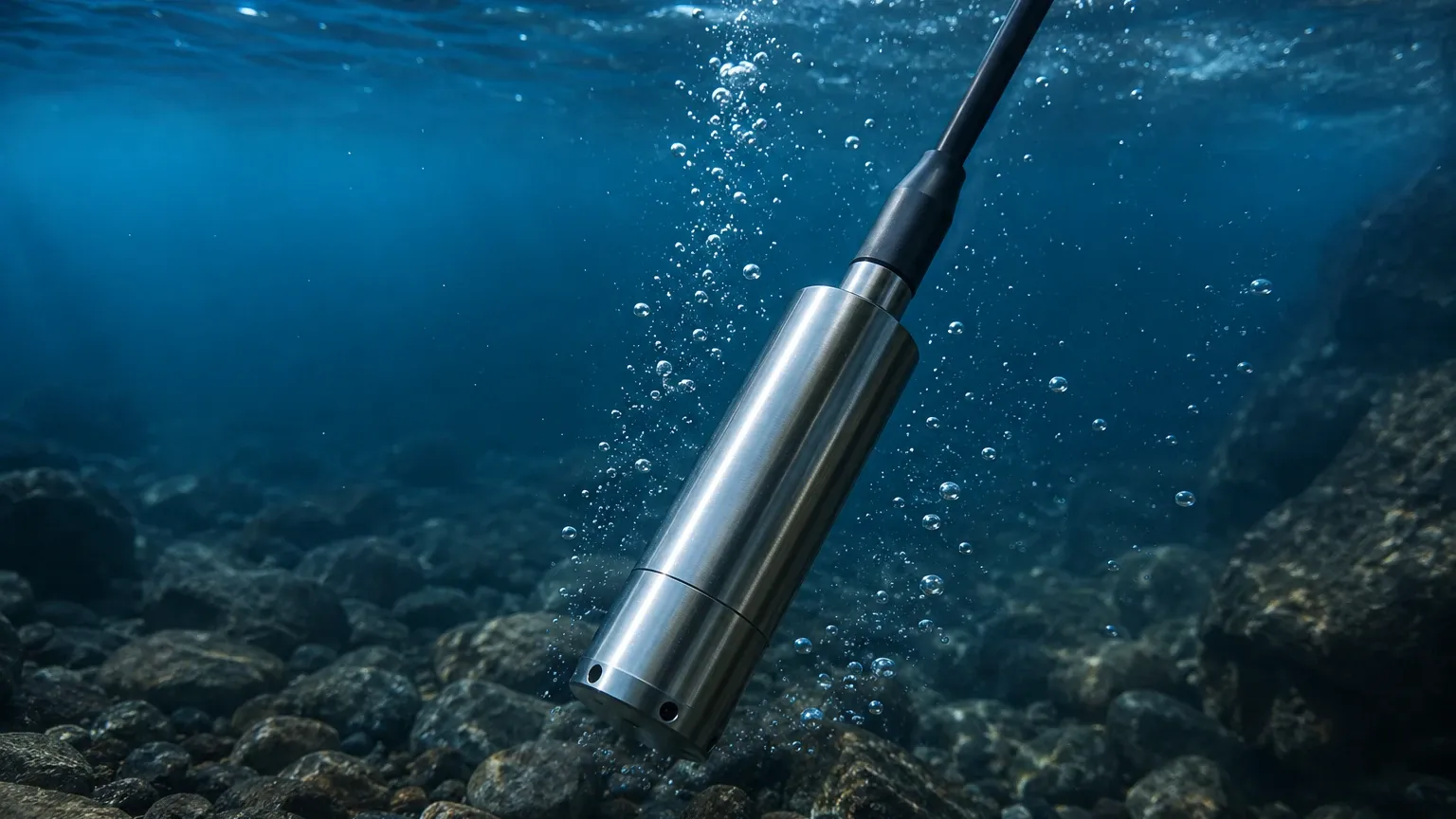
In the field of industrial level measurement, the submersible pressure transmitter serves as a fundamental tool for monitoring liquid levels in tanks, wells, reservoirs, and open water bodies. Often referred to as a hydrostatic level sensor, this instrument provides a direct correlation between the pressure exerted by a liquid column and its height. For engineers and facility managers, understanding the technical nuances of these devices is essential for ensuring long-term reliability and accuracy in demanding environments.
As a professional manufacturer of industrial level measurement instruments, Welk provides a comprehensive range of solutions, including radar level meters, ultrasonic sensors, and specialized hydrostatic transmitters. For those seeking detailed product specifications and application support, visiting the Main Page offers a deeper look into available technologies.
The Principle of Hydrostatic Level Measurement
Before selecting a submersible pressure transmitter, it is critical to understand the underlying physics of its operation. The measurement is based on the principle of hydrostatic pressure, which states that the pressure at a specific point within a static liquid is proportional to the height of the liquid column above that point.
The mathematical relationship is expressed by the formula:
P = ρ · g · h
Where:
* P is the hydrostatic pressure.
* ρ (rho) is the density of the liquid.
* g is the acceleration due to gravity (approximately 9.81 m/s²).
* h is the height of the liquid column.
In a practical application, the submersible pressure transmitter is lowered to the bottom of the vessel or to a fixed depth. The sensor diaphragm detects the total pressure, which includes both the liquid pressure and the atmospheric pressure pressing down on the surface of the liquid. To provide an accurate level reading, the transmitter must compensate for atmospheric pressure. This is typically achieved through a vented cable that allows the internal side of the sensor diaphragm to remain at the same pressure as the atmosphere, effectively canceling out atmospheric fluctuations.
Design and Construction Components
A submersible pressure transmitter is designed to operate while fully immersed in the process media. This requires a robust construction that can withstand both the chemical properties of the fluid and the physical pressures at depth.
1. The Sensor Element
Most modern transmitters utilize either a piezoresistive silicon sensor or a ceramic capacitive sensor. Piezoresistive sensors are highly sensitive and offer excellent long-term stability, while ceramic sensors are often preferred for their superior resistance to abrasion and chemical corrosion.
2. Housing Materials
The outer shell of the transmitter is usually constructed from 316L stainless steel, which provides excellent resistance to rust and many industrial chemicals. For more aggressive environments, such as seawater or concentrated acids, materials like Titanium or Hastelloy may be employed.
3. The Vented Cable
The cable is perhaps the most critical component of a submersible pressure transmitter. It serves three purposes: providing power to the sensor, transmitting the 4-20mA or digital signal (such as RS485/Modbus), and housing a small-diameter vent tube. This tube ensures that the sensor references atmospheric pressure. The cable jacket material is selected based on the media; Polyurethane (PUR) is common for general water applications, while Fluorinated Ethylene Propylene (FEP) or PTFE is used for harsh chemical environments.
Key Evaluation Criteria for Selection
Choosing the right submersible pressure transmitter requires a detailed analysis of the application environment. Engineers should evaluate the following parameters:
* Measurement Range: The range should be slightly higher than the maximum expected liquid level to prevent overpressure damage. For example, if a tank is 10 meters (32.8 ft) deep, a sensor with a 0-1.2 bar (0-17.4 psi) range is appropriate.
* Accuracy: Standard industrial transmitters offer accuracy levels of ±0.5% or ±0.25% of the full scale. High-precision applications may require ±0.1% accuracy.
* Media Compatibility: Consider the density and corrosivity of the fluid. If the density changes significantly (e.g., due to temperature fluctuations or mixing of chemicals), the level reading will require manual or automated compensation.
* Output Signal: The most common output is a 2-wire 4-20mA analog signal, which is ideal for long-distance transmission with minimal interference. Digital outputs like RS485 are increasingly popular for integration into IoT and SCADA systems.
Practical Selection Table
| Application Type | Recommended Housing | Cable Material | Typical Pressure Range |
| :— | :— | :— | :— |
| Clean Water / Reservoirs | 316L Stainless Steel | PUR (Polyurethane) | 0 – 2 bar (0 – 20m) |
| Wastewater / Sewage | 316L with Flush Diaphragm | PE (Polyethylene) | 0 – 1 bar (0 – 10m) |
| Chemical Storage | PVDF or Titanium | PTFE / FEP | Varies by density |
| Deep Boreholes | 316L (Slim Profile) | Reinforced PE | 0 – 20 bar (0 – 200m) |
| Seawater / Brine | Titanium | PUR or FEP | 0 – 5 bar (0 – 50m) |
Installation Considerations
Correct installation is paramount to the longevity and accuracy of a submersible pressure transmitter. Failure to follow best practices often leads to premature sensor failure or erratic readings.
Mounting and Placement
The transmitter should be placed in an area where the fluid is relatively stagnant. In tanks with high turbulence or agitators, the sensor should be installed inside a "stilling well" (a vertical pipe with small holes) to prevent the device from swinging, which can cause mechanical stress on the cable and noise in the signal.
Cable Management
The cable should be secured using a dedicated cable clamp that does not pinch the internal vent tube. If the cable is too loose, it may drift; if it is too tight, the vent tube may be constricted, leading to measurement errors. Excess cable should be coiled neatly and protected from sharp edges.
Atmospheric Protection
The end of the vented cable (the side connected to the junction box) must be protected from moisture. If water vapor enters the vent tube, it can condense inside the sensor housing, causing permanent damage to the electronics. Using a desiccant filter or a specialized vented junction box is highly recommended in humid environments.
Limitations and Common Risks
While the submersible pressure transmitter is a versatile tool, it is not suitable for every application. Engineers must be aware of the following risks:
1. Density Variations: Since the sensor measures pressure, any change in the liquid's density will be interpreted as a change in level. This is a common issue in processes where temperature varies widely or where different chemicals are blended.
2. Clogging and Fouling: In wastewater or slurries, solids can accumulate on the sensor diaphragm. Using a flush diaphragm or a protective cage can mitigate this, but regular cleaning may still be required.
3. Lightning and Surges: Because these sensors are often installed in outdoor tanks or deep wells, they are susceptible to lightning strikes. High-quality transmitters include internal surge protection, but external lightning arrestors should be used in high-risk areas.
4. Vacuum Conditions: Standard submersible transmitters are designed for vented tanks. If used in a sealed pressurized tank or a vacuum vessel, the atmospheric compensation will fail, leading to incorrect readings.
Maintenance and Troubleshooting
A well-installed submersible pressure transmitter requires minimal maintenance, but periodic checks are advised to ensure continued performance.
* Zero-Point Calibration: Over time, sensors may experience "zero drift." Periodically pulling the sensor out of the liquid to check if it reads zero pressure is a simple way to verify calibration.
* Vent Tube Inspection: Ensure the vent tube is not blocked by dust or insects. If a desiccant is used, check its color to see if it needs replacement.
* Cleaning: If used in non-potable water, gently clean the diaphragm with a soft cloth and mild detergent. Never use sharp objects to clean the sensor face, as the diaphragm is extremely thin and easily damaged.
Frequently Asked Questions (FAQs)
Q: Can a submersible pressure transmitter be used in boiling liquids?
A: Generally, no. Most submersible sensors are rated for temperatures up to 70°C or 80°C (158°F to 176°F). For higher temperatures, a remote-seal pressure transmitter or a non-contact radar level meter is usually a better choice.
Q: How long can the cable be?
A: The 4-20mA signal can typically travel over 1,000 meters (3,280 ft) without significant signal loss, provided the power supply voltage is sufficient to overcome the resistance of the long cable.
Q: What happens if the vent tube gets wet?
A: If moisture enters the vent tube, it will likely cause the sensor to drift or fail completely. If this happens, the sensor usually needs to be replaced, as drying out the internal electronics is difficult.
Q: Is it possible to cut the cable to a shorter length?
A: Yes, the cable can be shortened, but it must be done carefully to ensure the vent tube remains open and the wiring is correctly re-terminated in a moisture-protected junction box.
Conclusion
The submersible pressure transmitter remains a cornerstone of industrial level measurement due to its simplicity, cost-effectiveness, and ease of installation. By understanding the hydrostatic principle and carefully selecting materials compatible with the process media, engineers can implement reliable monitoring systems for a wide variety of applications. For those looking to explore a full range of level measurement technologies, including radar and ultrasonic options, Welk offers the expertise and hardware necessary to meet modern industrial demands. Visit the Main Page to review technical specifications and find the optimal solution for your specific project requirements.