Handheld Micromanometer
Handheld Micromanometer
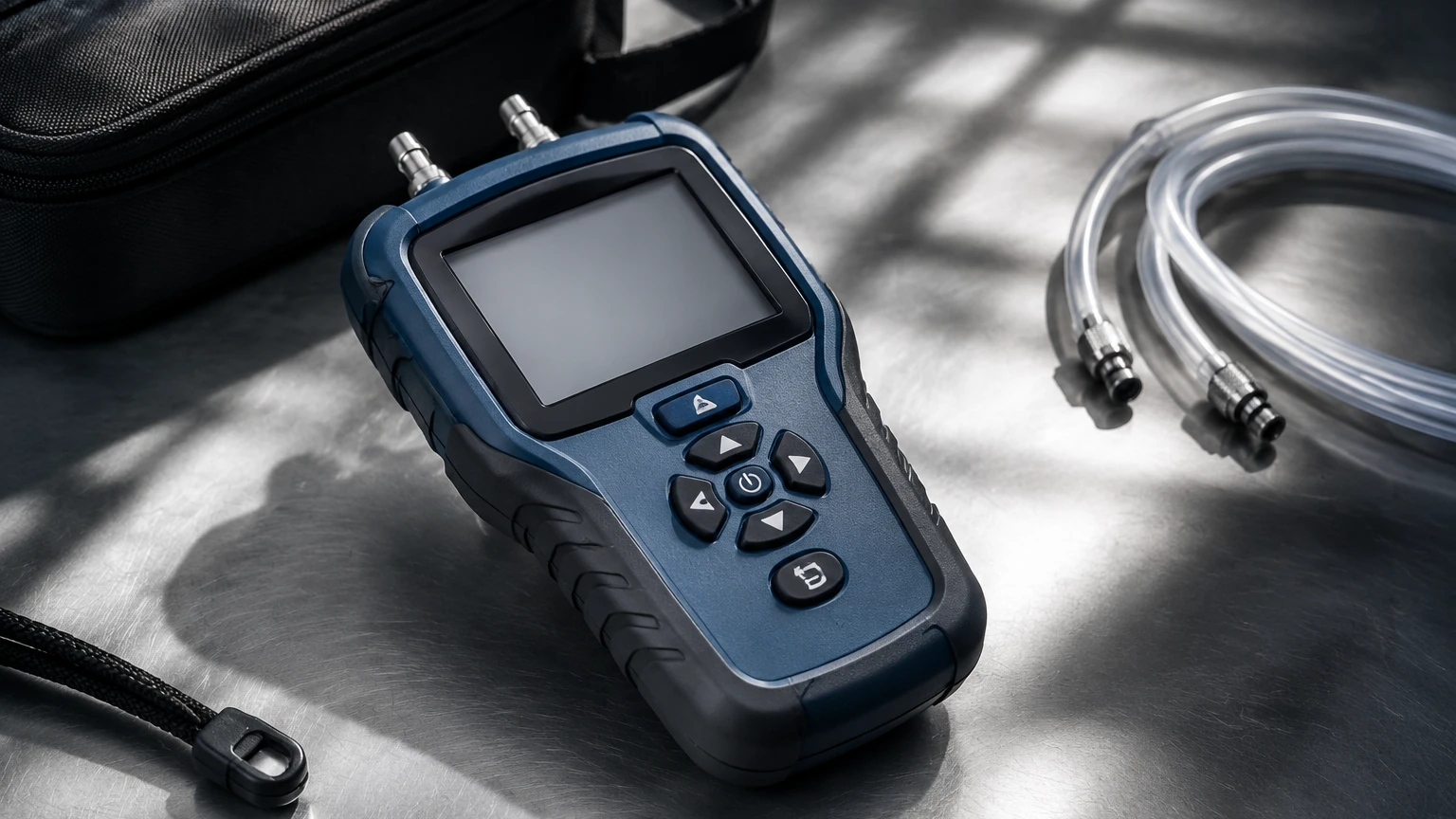
In the landscape of industrial process control and environmental monitoring, precision is the primary metric of success. While large-scale level measurement instruments—such as those found on our Main Page—handle bulk liquid and solid monitoring, the handheld micromanometer serves as a critical tool for localized, high-precision pressure diagnostics. This device is engineered to measure extremely low differential pressures, often in the range of fractions of a Pascal, making it indispensable for HVAC balancing, cleanroom validation, and industrial airflow analysis.
Understanding the technical nuances of a handheld micromanometer is essential for engineers who require portable yet laboratory-grade accuracy. This guide explores the underlying principles, selection criteria, and practical applications of these instruments within the broader context of industrial measurement technology.
Measurement Principles of Micromanometry
A handheld micromanometer operates on the fundamental principle of differential pressure (DP) measurement. Unlike standard manometers that might measure pressures in bars or PSI, a micromanometer is optimized for very low-pressure differentials, typically between 0 and 2000 Pascals (Pa).
Piezoresistive Sensing Technology
Most modern handheld micromanometers utilize piezoresistive silicon sensors. These sensors consist of a micromachined silicon diaphragm with integrated strain gauges. When pressure is applied to one side of the diaphragm, it deflects, causing a change in the electrical resistance of the strain gauges. This change is proportional to the applied pressure. Because the diaphragm is extremely sensitive, it can detect minute fluctuations in air pressure that would be invisible to mechanical gauges.
Thermal Anemometry Integration
Some advanced micromanometers are designed to work in tandem with thermal velocity probes. While the pressure sensor measures the static or differential pressure, the device can calculate velocity and volumetric flow rates by applying programmed algorithms. This dual-functionality is critical when the instrument is used with a Pitot-static tube to determine airflow speeds in industrial ductwork.
Auto-Zeroing Mechanisms
Because micromanometers measure such small increments, they are highly susceptible to sensor drift caused by temperature changes or physical orientation. High-quality industrial units feature an internal solenoid valve that periodically vents the sensor to the atmosphere, allowing the electronics to "re-zero" the baseline. This ensures that the reading remains accurate over long measurement cycles without requiring manual intervention.
Key Evaluation Criteria for Industrial Selection
Selecting the right handheld micromanometer requires an assessment of the specific environment and the precision required by the application. Engineers should evaluate the following technical specifications:
Accuracy and Resolution
In B2B environments, accuracy is usually expressed as a percentage of the reading plus a fixed number of digits (e.g., ±1% of reading ±0.1 Pa). Resolution refers to the smallest increment the device can display. For cleanroom applications, a resolution of 0.001 mmH2O or 0.01 Pa is often mandatory to ensure compliance with international standards like ISO 14644.
Pressure Range and Overpressure Protection
While the goal is to measure low pressure, the device must be robust enough to survive accidental exposure to higher pressures. Overpressure protection prevents the delicate silicon diaphragm from rupturing if the probe is placed in a high-velocity stream or a pressurized line. Always verify the maximum burst pressure of the instrument before deployment.
Data Logging and Connectivity
For field audits and commissioning, manual data recording is inefficient and prone to error. Modern micromanometers include internal memory for logging thousands of data points. Connectivity options such as Bluetooth or USB allow for the seamless transfer of data to a PC for analysis and reporting. This is particularly useful for generating pressure profiles of a facility over a 24-hour cycle.
Industrial Applications and Use Cases
Handheld micromanometers are versatile tools used across various sectors where air movement and pressure differentials dictate safety and efficiency.
HVAC Balancing and Commissioning
In large industrial complexes, HVAC systems must be balanced to ensure that air is distributed correctly to all zones. Micromanometers are used to measure the pressure drop across filters, coils, and fans. By using the device with a Pitot tube, technicians can calculate the air velocity (m/s) and volume flow (m³/h) to ensure the system meets the design specifications.
Cleanroom and Laboratory Monitoring
Cleanrooms require a positive pressure relative to adjacent hallways to prevent contaminants from entering. Conversely, hazardous laboratories (such as BSL-3 or BSL-4 facilities) require negative pressure to prevent pathogens from escaping. A handheld micromanometer is the primary tool for verifying these pressure gradients during routine inspections.
Industrial Chimney and Stack Testing
Environmental compliance often requires measuring the velocity of gases exiting a stack. Due to the high temperatures and potentially corrosive nature of stack gases, a micromanometer paired with a stainless steel Pitot tube provides a reliable, non-electronic interface with the gas stream, keeping the sensitive electronics of the meter safe while providing accurate flow data.
Selection Table: Handheld Micromanometer Specifications
| Feature | Standard Industrial Model | High-Precision Laboratory Model |
| :— | :— | :— |
| Pressure Range | ±2000 Pa | ±250 Pa |
| Resolution | 1 Pa | 0.01 Pa |
| Accuracy | ±3% of reading | ±0.5% of reading |
| Units | Pa, hPa, mbar, mmH2O | Pa, mmH2O, inH2O, fpm, m/s |
| Data Logging | Manual Save | Auto-logging (10,000+ points) |
| Probe Compatibility | Static Pressure Tips | Pitot Tubes, Velocity Matrix |
| Battery Life | 10-20 Hours | 40+ Hours (Lithium-ion) |
Practical Installation and Usage Considerations
To achieve the accuracies stated by manufacturers, the handheld micromanometer must be used correctly in the field. Improper setup is the leading cause of measurement error.
1. Hose Management: Ensure that the tubing used to connect the probe to the meter is free of kinks and leaks. Even a microscopic leak in the tubing can lead to a significant drop in the measured pressure, especially when dealing with values below 10 Pa.
2. Pitot Tube Alignment: When measuring airflow velocity, the Pitot tube must be aligned parallel to the flow. An angular misalignment of more than 10 degrees can result in a measurement error of 5% or more. Many micromanometers include a "velocity averaging" mode to help smooth out fluctuations caused by turbulence.
3. Temperature Compensation: Air density changes with temperature. If the micromanometer is being used to calculate air velocity or volume flow, the user must input the ambient temperature or use a probe with an integrated thermistor. Failure to account for temperature can lead to errors in mass flow calculations.
4. Static Pressure Placement: When measuring static pressure in a duct, the probe tip must be perpendicular to the airflow. Using a dedicated static pressure tip, rather than just an open hose, prevents the "velocity pressure" from interfering with the static reading.
Limitations and Common Risks
While highly effective, handheld micromanometers have specific limitations that engineers must acknowledge:
* Media Compatibility: Most micromanometers are designed for use with non-corrosive, non-ionic gases (like air or nitrogen). Using them with liquids or aggressive chemical vapors will destroy the internal sensor. For liquid applications, one should refer to hydrostatic level transmitters and pressure sensors found on our Main Page.
* Environmental Sensitivity: Extreme vibration or rapid temperature swings can affect the stability of the sensor. It is recommended to allow the device to stabilize in the measurement environment for at least 15 minutes before taking critical readings.
* Calibration Drift: Like all precision instruments, micromanometers require annual calibration. In regulated industries (pharmaceutical, aerospace), N.I.S.T. traceable calibration is often a legal requirement to ensure the validity of the data.
Frequently Asked Questions (FAQs)
Q: What is the difference between a manometer and a micromanometer?
A: The distinction lies in the sensitivity and range. A standard manometer measures higher pressures (e.g., 0-10 bar), whereas a micromanometer is specifically designed for very low pressures (e.g., 0-2000 Pa) with much higher resolution.
Q: Can I use a micromanometer to measure water level?
A: Generally, no. Handheld micromanometers are gas-phase instruments. Measuring water level requires hydrostatic pressure sensors or ultrasonic level meters designed to handle liquid contact. For reliable liquid level solutions, explore the product range on our Main Page.
Q: How do I convert Pascals to mmH2O?
A: 1 millimeter of water (mmH2O) at 4°C is approximately equal to 9.80665 Pascals. Most industrial micromanometers allow the user to switch between these units at the touch of a button.
Q: Why is my reading fluctuating?
A: Low-pressure measurements are sensitive to air turbulence and environmental noise. Most devices offer a "damping" or "averaging" function that allows you to set a time constant (e.g., 5 or 10 seconds) to provide a more stable, readable average.
Conclusion
The handheld micromanometer is a specialized instrument that bridges the gap between laboratory precision and field utility. By understanding the piezoresistive principles and adhering to strict usage protocols—such as proper Pitot tube alignment and regular auto-zeroing—industrial professionals can ensure the integrity of their pressure and airflow data. While these devices are focused on gas-phase differential pressure, they complement the broader suite of industrial measurement tools used to monitor complex processes. For more information on integrated level and pressure measurement systems for industrial automation, visit our Main Page.