Hcl Monitoring
Hcl Monitoring
Hydrochloric acid (HCl) is one of the most challenging substances to manage in industrial environments. As a highly corrosive, strong mineral acid, it is fundamental to processes ranging from steel pickling and chemical synthesis to pH control in water treatment plants. However, the same properties that make it industrially valuable—its reactivity and volatility—present significant hurdles for instrumentation. Effective HCl monitoring is not merely a matter of inventory management; it is a critical safety and environmental requirement.
In storage and process tanks, HCl frequently exists in concentrated forms (typically 30% to 36%), which emit dense, corrosive fumes. These fumes can damage sensitive electronics, corrode standard stainless steel housings, and interfere with the physical signals used by measurement devices. This article provides a comprehensive technical overview of the principles, selection criteria, and installation requirements for monitoring hydrochloric acid levels in industrial settings.
Measurement Principles for Corrosive Environments
Before selecting a specific instrument for HCl monitoring, it is essential to understand the physics behind different measurement technologies and how they interact with the unique properties of hydrochloric acid.
Radar Level Measurement (FMCW)
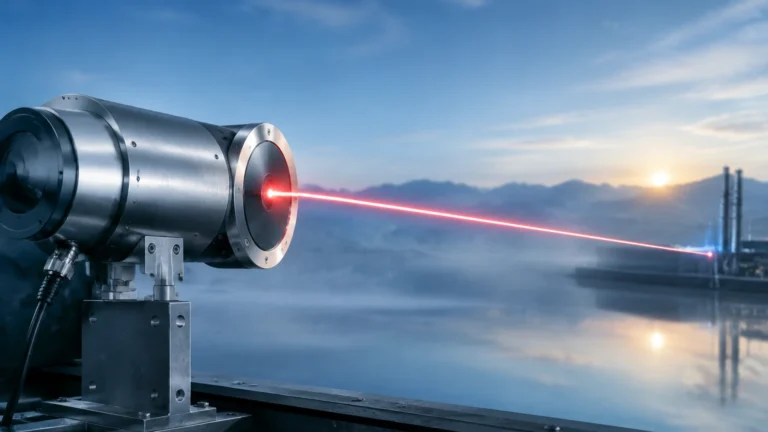
Radar level meters, particularly those operating on the Frequency Modulated Continuous Wave (FMCW) principle, are widely considered the gold standard for HCl monitoring. These devices emit a high-frequency microwave signal (often at 80 GHz) that reflects off the liquid surface. The time-of-flight or frequency shift is used to calculate the distance.
Radar is highly effective for HCl because it is a non-contact technology. Since the microwaves are electromagnetic, they are largely unaffected by the dense fumes or vapors that typically accumulate in the headspace of an HCl tank. However, because concentrated HCl has a relatively low dielectric constant compared to water, the instrument must be sensitive enough to detect the return signal. For HCl applications, the antenna must be completely encapsulated in chemically resistant materials such as PTFE (Polytetrafluoroethylene) or PFA (Perfluoroalkoxy).
Ultrasonic Level Sensing
Ultrasonic sensors function by emitting sound waves that bounce off the liquid surface. The sensor measures the time taken for the echo to return. While cost-effective, ultrasonic technology faces significant challenges in HCl monitoring. The speed of sound is dependent on the density of the medium through which it travels. In an HCl tank, the headspace is filled with heavy acid vapors rather than air. These vapors change the speed of sound, leading to measurement errors unless the system is calibrated for the specific gas mixture. Furthermore, dense fumes can attenuate (weaken) the sound signal, potentially leading to a loss of echo.
Hydrostatic Pressure Measurement
Hydrostatic transmitters measure the pressure exerted by the liquid column. According to the principle $P = \rho \cdot g \cdot h$ (where $P$ is pressure, $\rho$ is density, $g$ is gravity, and $h$ is height), the level can be determined if the density of the acid is known. For HCl, which can change density based on concentration and temperature, this requires careful calibration. To prevent corrosion, the sensing diaphragm must be made of exotic materials like Tantalum or be protected by a PTFE chemical seal.
Magnetic Level Gauges
Magnetic level gauges provide a visual indication and can be equipped with transmitters for remote monitoring. They consist of a bypass chamber containing a float with an internal magnet. As the float rises and falls with the liquid level, it flips magnetic flags on the outside of the chamber. For HCl, the entire wetted assembly—including the chamber and the float—must be constructed from plastics like PVDF (Polyvinylidene fluoride) or lined with PFA.
Comparing Technologies for HCl Level Measurement
Choosing the right technology requires balancing accuracy, maintenance requirements, and initial cost. The following table summarizes the performance of common technologies in HCl applications.
| Technology | Contact Type | Chemical Resistance | Accuracy | Impact of Fumes | Maintenance |
| :— | :— | :— | :— | :— | :— |
| 80 GHz Radar | Non-contact | Excellent (PTFE/PFA) | High (±1-2 mm) | Minimal | Very Low |
| Ultrasonic | Non-contact | Good (PVDF) | Moderate | High (Signal loss) | Moderate |
| Hydrostatic | Contact | Requires Tantalum/PTFE | Moderate | None | High (Cleaning) |
| Magnetic Gauge| Contact | Excellent (PVDF/PP) | Moderate | None | Low |
| Level Switches| Contact | Good (Plastic) | N/A (Point) | None | Low |
For engineers seeking to evaluate specific hardware configurations for their facility, it is helpful to Review product options and application support to ensure the chosen instrument meets local safety codes and process requirements.
Material Selection and Chemical Compatibility
In HCl monitoring, the material of construction is more important than the measurement principle itself. Hydrochloric acid will rapidly degrade standard 304 or 316 stainless steel, leading to instrument failure and potential leaks.
1. PTFE and PFA: These fluoropolymers are virtually inert to HCl at almost all concentrations and temperatures. They are used for radar antenna encapsulation, diaphragm seals, and lining for magnetic gauge chambers.
2. PVDF: A robust thermoplastic often used for ultrasonic sensor faces and magnetic float housings. It offers excellent resistance up to moderate temperatures (typically up to 100°C-120°C depending on concentration).
3. PP (Polypropylene): Suitable for lower concentration HCl and ambient temperatures. It is often used for cost-effective level switches or non-critical storage tanks.
4. Tantalum: While expensive, Tantalum is one of the few metals that can withstand concentrated HCl. It is primarily used for the thin diaphragms in hydrostatic pressure transmitters.

Installation Best Practices for HCl Tanks
Proper installation is vital to prevent premature sensor failure and ensure accurate data. When installing level instruments for HCl monitoring, consider the following:
* Nozzle Geometry: For radar and ultrasonic sensors, the mounting nozzle should be as short and wide as possible. Long, narrow nozzles can create "ringing" or false reflections, especially if condensation (acid droplets) forms on the nozzle walls.
* Venting and Condensation: HCl tanks often experience heavy condensation. Radar sensors with a convex (drip-off) PTFE lens are preferred because they allow droplets to run off the face, preventing signal interference.
* Isolation Valves: For hydrostatic and magnetic gauge installations, use full-bore isolation valves made of compatible plastics. This allows the instrument to be removed for maintenance without draining the tank.
* Standoff Pipes: If using ultrasonic sensors, a stilling well or standoff pipe can help stabilize the surface and provide a more consistent gas medium, though it must be vented to ensure the level inside the pipe matches the tank.
* Environmental Protection: Ensure that the transmitter housing (the part containing the electronics) is rated at least IP67 or IP68 and is coated to resist the corrosive atmosphere surrounding the tank.
Limitations and Troubleshooting
Despite advances in technology, HCl monitoring remains prone to specific operational issues. Engineers should be aware of these limitations:
* Fuming and Vapor Blankets: In highly concentrated HCl (36%+), the vapor blanket can become so dense that even radar signals may experience slight attenuation. In such cases, a high-power 80 GHz transmitter is required to penetrate the medium.
* Crystallization: While HCl itself does not crystallize, impurities in industrial-grade acid or reactions with tank liners can create deposits. Contact-based sensors like hydrostatic diaphragms or magnetic floats should be inspected periodically for buildup.
* Temperature Fluctuations: Rapid temperature changes affect the density of the acid and the speed of sound in the headspace. If using hydrostatic or ultrasonic methods, integrated temperature compensation is mandatory.
* Pressure Changes: HCl is often stored in atmospheric tanks, but process vessels may be pressurized. Ensure the instrument's pressure rating exceeds the maximum possible process pressure, including potential surges.
Frequently Asked Questions (FAQ)
Q: Can I use a standard stainless steel radar for HCl if it doesn't touch the liquid?
A: No. The fumes from HCl are highly corrosive. Even if the liquid does not touch the sensor, the vapors will quickly corrode the antenna and the housing. A fully encapsulated PTFE or PFA antenna is required.
Q: How does HCl concentration affect level measurement?
A: Concentration primarily affects density and fuming. Higher concentrations (above 32%) fume more aggressively, which can interfere with ultrasonic signals. Higher concentrations also have different densities, which must be accounted for in hydrostatic pressure calculations.
Q: Is radar better than ultrasonic for HCl?
A: In most industrial HCl applications, radar is superior because it is not affected by the change in gas composition (acid fumes) in the tank headspace, whereas ultrasonic speed-of-sound measurements will be inaccurate without complex compensation.
Q: What is the maintenance cycle for an HCl level sensor?
A: For non-contact radar, maintenance is minimal—often just a yearly visual inspection. For contact-based systems like magnetic gauges or hydrostatic sensors, a semi-annual check for corrosion or buildup is recommended.
For further technical specifications and to explore the full range of instrumentation suitable for corrosive chemical storage, users should visit the Main Page for detailed product documentation and engineering guides. Ensuring the correct match between chemical concentration and instrument material is the most effective way to guarantee long-term reliability in HCl monitoring.