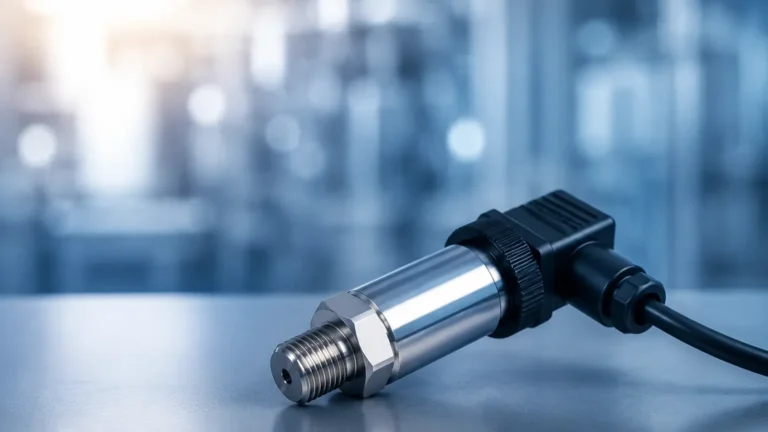
High Accuracy Pressure Transmitter
High Accuracy Pressure Transmitter
In the landscape of industrial automation and process control, the ability to measure force per unit area with extreme precision is fundamental. A high accuracy pressure transmitter is a sophisticated instrument designed to convert mechanical pressure into a standardized electrical signal—typically 4-20mA, 0-10V, or digital protocols like HART and Modbus—with minimal error. For industries such as chemical processing, oil and gas, and water treatment, these devices serve as the "eyes" of the control system, ensuring safety, efficiency, and product quality.
When integrated into level measurement systems, particularly through hydrostatic methods, the performance of a high accuracy pressure transmitter directly dictates the reliability of inventory management and process safety. This article explores the underlying principles, selection criteria, and practical application of these essential instruments.
Measurement Principles of Pressure Transmitters
To select the right instrument, one must first understand how a physical pressure is transformed into data. High accuracy pressure transmitters generally utilize one of three primary sensing technologies, each with specific advantages regarding stability and sensitivity.
Piezoresistive Sensors
This is the most common technology used in modern industrial transmitters. It relies on the piezoresistive effect, where the electrical resistance of a semiconductor (usually silicon) changes when it is subjected to mechanical strain. In a high accuracy pressure transmitter, a thin silicon diaphragm is etched with strain gauges. When pressure is applied, the diaphragm deflects, changing the resistance. These sensors are highly sensitive and can be miniaturized, but they often require sophisticated temperature compensation to maintain accuracy across varying process conditions.
Capacitive Sensors
Capacitive pressure sensing involves a moving diaphragm and a static ceramic or metal plate. As pressure moves the diaphragm, the capacitance between the two surfaces changes. This change is measured by an internal bridge circuit. Capacitive sensors are known for their ruggedness and high resistance to overpressure. They are frequently used in high-end transmitters where long-term stability and high accuracy (often up to 0.05% of span) are required.
Resonant Sensors
Resonant technology utilizes the change in resonant frequency of a vibrating element (such as a silicon micro-resonator) under stress. Because frequency can be measured with extreme precision by digital electronics, these sensors offer some of the highest accuracy levels available in the market. They are less susceptible to environmental noise compared to analog voltage-based systems.
The Role of Pressure in Level Measurement
While pressure measurement is a distinct field, it is inextricably linked to level measurement through the principle of hydrostatics. For a liquid in an open tank, the pressure at the bottom is directly proportional to the height of the liquid column. The formula is expressed as:
P = ρ × g × h
Where:
* P is the hydrostatic pressure (Pa).
* ρ (rho) is the density of the liquid (kg/m³).
* g is the gravitational acceleration (approximately 9.81 m/s²).
* h is the height of the liquid (m).
By using a high accuracy pressure transmitter at the base of a vessel, operators can calculate the exact level of the contents. If the density of the fluid is constant, the accuracy of the level reading depends entirely on the accuracy of the pressure transmitter. In pressurized vessels, a differential pressure (DP) transmitter is used to subtract the top-side gas pressure from the total pressure at the bottom, isolating the hydrostatic head of the liquid.
Key Evaluation Criteria for High Accuracy Transmitters
When evaluating a high accuracy pressure transmitter for a specific project, technical specifications must be scrutinized beyond the simple "accuracy" percentage listed on a datasheet.
Total Probable Error (TPE)
Standard accuracy often refers only to linearity, hysteresis, and repeatability at reference conditions. However, in the field, factors like temperature shifts and static pressure changes affect performance. TPE provides a more realistic view of the instrument's performance in a real-world environment.
Turndown Ratio
The turndown ratio (or rangeability) indicates the range over which the transmitter can be calibrated without significant loss of accuracy. For example, a transmitter with a 100:1 turndown ratio and a maximum range of 10 bar (145 PSI) can be calibrated to measure a range of 0.1 bar (1.45 PSI) while maintaining its specified performance. High-quality instruments allow for greater flexibility in the field.
Long-term Stability
Accuracy is not a static value; it drifts over time. A high-quality transmitter will specify its stability over a period of 5 to 10 years. This is critical for reducing maintenance costs and calibration frequency in remote or hard-to-reach installations.
Technical Selection Table
The following table provides a comparison of common transmitter configurations used in industrial automation.
| Feature | Piezoresistive Transmitter | Capacitive Transmitter | Resonant Silicon Transmitter |
| :— | :— | :— | :— |
| Typical Accuracy | 0.1% to 0.25% FS | 0.05% to 0.1% FS | 0.025% to 0.05% FS |
| Pressure Range | Low to Very High | Medium to High | Medium to High |
| Stability | Moderate | High | Very High |
| Overpressure Limit | 2x to 3x rated range | Up to 10x rated range | High |
| Best Application | General purpose, OEM | Chemical processing, Oil & Gas | Custody transfer, Lab standards |
| Cost | Cost-effective | Premium | High |
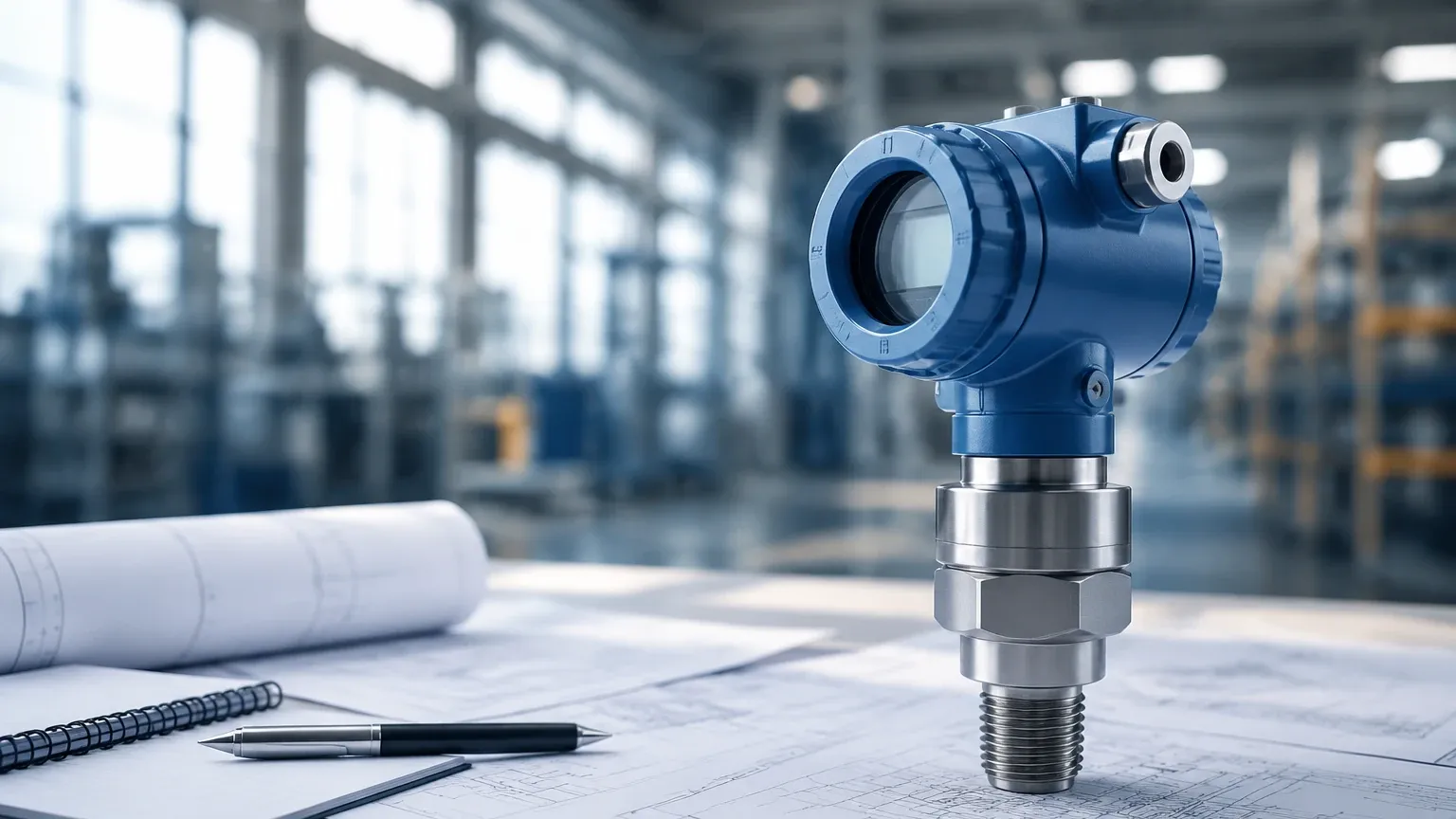
Installation Considerations
Even the most precise high accuracy pressure transmitter will provide incorrect data if installed improperly. Engineering teams should follow these guidelines to ensure data integrity:
1. Impulse Line Routing: For liquid service, the transmitter should be mounted below the process taps to ensure the impulse lines remain filled with fluid. For gas service, it should be mounted above the taps to allow condensate to drain back into the process.
2. Mounting Position Effect: The weight of the internal oil fill can cause a zero-shift if the transmitter is tilted. Always perform a zero-adjustment after the final mounting is complete.
3. Temperature Isolation: If the process fluid is extremely hot (e.g., steam), use siphons or remote seals to protect the sensor diaphragm from direct thermal damage.
4. Venting and Bleeding: Ensure the manifold allows for the removal of trapped air in liquid lines or trapped liquid in gas lines, as these pockets create pressure offsets.
Limitations and Risks
While high accuracy pressure transmitters are robust, they are not indestructible. Understanding their limitations is vital for long-term reliability.
* Media Compatibility: The wetted parts (diaphragm and process connection) must be chemically compatible with the process fluid. While 316L Stainless Steel is standard, aggressive chemicals may require Tantalum, Monel, or Hastelloy.
* Hydrogen Permeation: In high-pressure hydrogen applications, hydrogen molecules can permeate through standard metal diaphragms, causing internal gas bubbles and sensor failure. Gold-plated diaphragms are often required in these scenarios.
* Ambient Temperature Extremes: While the sensor may be compensated, the electronics have limits. In extreme climates, sunshades or heated enclosures may be necessary to prevent component degradation.
Frequently Asked Questions (FAQ)
Q: What is the difference between Gauge, Absolute, and Differential pressure?
A: Gauge pressure is measured relative to atmospheric pressure. Absolute pressure is measured relative to a perfect vacuum. Differential pressure measures the difference between two distinct pressure points.
Q: How often should a high accuracy pressure transmitter be calibrated?
A: This depends on the stability of the device and the criticality of the process. Many modern transmitters only require calibration every 3 to 5 years, though regulated industries may require annual checks.
Q: Can a pressure transmitter be used for flow measurement?
A: Yes, when used in conjunction with a primary flow element like an orifice plate or Venturi tube, a differential pressure transmitter can calculate flow rates based on the pressure drop across the restriction.
Conclusion
Selecting a high accuracy pressure transmitter requires a balance between technical requirements and budgetary constraints. By understanding the measurement principles and the specific needs of the application—whether it is simple tank gauging or complex chemical reactor monitoring—engineers can ensure long-term operational success. For those seeking to explore specific hardware options and technical support for their next installation, it is recommended to Review product options and application support on the Main Page to find the most suitable technology for your industrial environment.
By adhering to strict installation standards and accounting for environmental factors, these instruments provide the reliable data necessary for the modern automated facility. Whether you are managing water treatment plants or high-pressure oil pipelines, the accuracy of your pressure data is the foundation of your process control integrity.