High Load Capacity Transducer
High Load Capacity Transducer
In the landscape of industrial process control, the accurate measurement of level and mass in large-scale vessels requires instrumentation capable of withstanding extreme physical forces. A high load capacity transducer serves as the critical sensing element in these environments, converting mechanical force or liquid pressure into a measurable electrical signal. Whether integrated into a hydrostatic level transmitter or a vessel weighing system, these components are engineered to maintain precision while supporting or submerged under significant weight.
For engineers and system integrators, selecting a high load capacity transducer involves understanding the interplay between structural integrity, signal stability, and environmental resistance. This guide examines the principles, selection criteria, and installation requirements for these heavy-duty sensing solutions.
Measurement Principles of High Load Capacity Transducers
High load capacity transducers typically operate on one of two primary physical principles: the deformation of a solid sensing element (strain gauge) or the displacement of a diaphragm under fluid pressure (hydrostatic). Both methods are used extensively to determine the level of material in tanks, silos, and reservoirs.
Strain Gauge Technology
In weight-based level measurement, the transducer (often referred to as a load cell) is placed under the supports of a vessel. The core principle involves a metal structure, known as a flexure or spring element, which undergoes microscopic deformation when a load is applied.
Bonded to this element are strain gauges—fine electrical conductors arranged in a Wheatstone bridge circuit. As the element deforms, the resistance of the strain gauges changes proportionally. This change in resistance creates a voltage differential that is amplified and processed to represent the weight of the material. In high load applications, these transducers are designed with high-strength alloys to handle forces ranging from 10 metric tons to over 500 metric tons per mounting point.
Hydrostatic Pressure Sensing
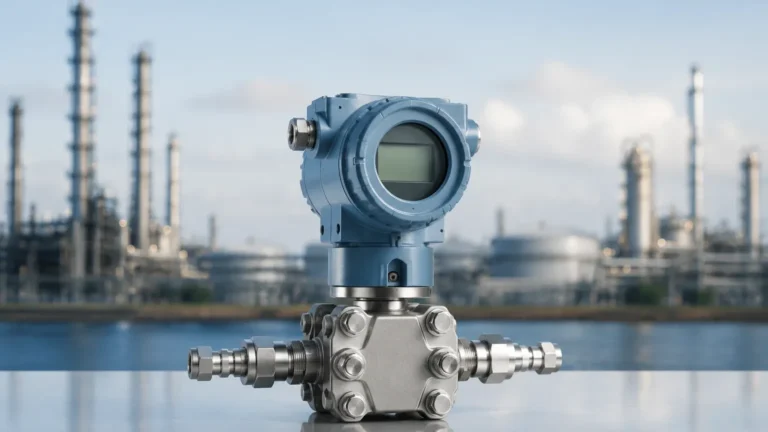
For liquid level measurement, a high load capacity transducer often takes the form of a pressure sensor located at the base of a deep tank or submerged in a reservoir. The principle is based on the hydrostatic paradox: the pressure at the bottom of a liquid column is directly proportional to the height of the liquid and its density ($P = \rho gh$).
In deep-sea applications or massive industrial tanks, the transducer must be able to withstand the "load" of the entire liquid column without mechanical failure. These sensors use piezoresistive or capacitive diaphragms. As the liquid height increases, the pressure exerts force on the diaphragm, which is then converted into a 4-20mA or digital signal. High load capacity in this context refers to the sensor's ability to handle high static pressures and significant overpressure events without losing calibration.
Key Evaluation Criteria for Industrial Applications
When specifying a high load capacity transducer for industrial level monitoring, several technical parameters must be confirmed to ensure long-term reliability. For a comprehensive overview of available technologies and their specific performance envelopes, engineers can Review product options and application support at the Welk official site.
1. Rated Capacity and Overload Protection
The rated capacity is the maximum load the transducer is designed to measure within its specifications. However, in industrial environments, "shock loads" or "water hammer" effects can momentarily exceed these limits. A high-quality transducer should offer a safe overload rating (typically 150% of rated capacity) and an ultimate overload rating (up to 300% or more) before structural failure occurs.
2. Accuracy and Linearity
High load capacity does not have to come at the expense of precision. Linearity refers to the maximum deviation of the transducer's output from a straight line drawn between zero and full scale. For large-scale inventory management, a linearity error of less than 0.03% to 0.1% is often required to minimize financial discrepancies in bulk material handling.
3. Environmental Sealing (IP Ratings)
Since these transducers are often located at the base of tanks or in outdoor silos, they are exposed to moisture, dust, and corrosive chemicals. An IP68 or IP69K rating is standard for high-capacity transducers, ensuring they remain functional even when submerged or subjected to high-pressure washdowns.
4. Temperature Compensation
Metal expands and contracts with temperature changes, which can introduce errors in high-load measurements. High-performance transducers include internal compensation circuits or software algorithms that correct for thermal drift, ensuring the "zero" point remains stable across a wide operating range, typically from -40°C to +80°C.
Comparison of High Load Capacity Transducer Types
The following table provides a comparison of common transducer configurations used in heavy-duty level and mass measurement.
| Feature | Compression Load Cell | Hydrostatic Transducer | Tension S-Beam Transducer |
| :— | :— | :— | :— |
| Primary Use | Tank and Silo Weighing | Liquid Level in Deep Tanks | Suspended Hoppers/Tanks |
| Capacity Range | 1,000 kg to 500+ t | 0.1 bar to 100+ bar | 50 kg to 20 t |
| Installation | Under vessel supports | Bottom-mounted or Submerged | Inline with suspension |
| Accuracy | Very High (up to 0.02%) | High (0.1% to 0.5%) | High (0.03% to 0.1%) |
| Maintenance | Low (if protected from debris) | Medium (diaphragm cleaning) | Low |
| Pros | Measures mass directly | Unaffected by surface foam | Ideal for retrofitting |
| Cons | Requires level foundation | Sensitive to density changes | Limited to suspended loads |
Installation Considerations for Heavy-Duty Systems
The performance of a high load capacity transducer is heavily dependent on the quality of its installation. Even the most accurate sensor will produce erroneous data if mechanical stresses are improperly applied.
Foundation and Alignment
For weight-based systems, the foundation must be rigid and level. Any deflection in the support structure can cause "side loading," where force is applied at an angle rather than purely vertical. Side loading is a primary cause of measurement error and can eventually damage the internal flexure of the transducer. Self-aligning mounting kits are often used to mitigate this risk.
Thermal Expansion Management
Large industrial tanks expand and contract horizontally as they fill or change temperature. If a tank is rigidly fixed to multiple high load capacity transducers, this expansion can create shear forces. Engineers must use "stay rods" or expansion-compatible mounting assemblies that allow for horizontal movement while maintaining vertical force transmission.
Cable Protection and Grounding
In high-capacity installations, transducers are often far from the control room. Using shielded, twisted-pair cabling is essential to prevent electromagnetic interference (EMI) from high-power motors or VFDs. Additionally, proper grounding (earthing) of the vessel is critical to protect the sensitive electronics within the transducer from lightning strikes or welding currents during maintenance.

Common Risks and Limitations
While high load capacity transducers are robust, they are not immune to operational challenges. Awareness of these limitations is vital for system design.
* Creep: This is the change in transducer output over time while under a constant load. In high-capacity applications where tanks remain full for long periods, selecting a transducer with low creep specifications is necessary for inventory accuracy.
* Hysteresis: This refers to the difference in output readings when a specific load is reached by increasing the weight versus decreasing it. In high-load scenarios, material buildup on tank walls ("rat-holing") can exacerbate the perception of hysteresis.
* Density Fluctuations: For hydrostatic-based transducers, changes in the specific gravity of the liquid (due to temperature or concentration changes) will result in level errors, as the sensor measures pressure, not actual height. This requires either a secondary temperature sensor for compensation or a dual-sensor differential setup.
Frequently Asked Questions (FAQ)
Q: Can a high load capacity transducer be repaired if overloaded?
A: Generally, no. If a transducer has been subjected to an ultimate overload that has deformed the internal spring element beyond its elastic limit, the calibration will be permanently shifted. For safety and accuracy, the unit must be replaced.
Q: How often should these transducers be calibrated?
A: In most industrial B2B environments, an annual calibration check is recommended. However, for high-precision trade applications (legal-for-trade), local regulations may require more frequent verification.
Q: Are wireless high load capacity transducers available?
A: Yes, wireless versions are increasingly used in remote tank farms where cabling costs are prohibitive. These units typically use LoRaWAN or WirelessHART protocols, though they require battery management and may have slower update rates than hardwired versions.
Q: What material is best for the transducer body?
A: Stainless steel (17-4 PH or 316L) is the standard for most industrial applications due to its strength and corrosion resistance. For highly aggressive chemical environments, specialized coatings or exotic alloys like Hastelloy may be required for the wetted parts of hydrostatic transducers.
Conclusion
Integrating a high load capacity transducer into an industrial process is a strategic decision that impacts both safety and operational efficiency. By understanding the mechanical limits, environmental requirements, and the specific physics of the application—whether it be weighing a 200-ton cement silo or monitoring the level of a deep chemical reactor—engineers can ensure a robust measurement solution. For further technical guidance on selecting the appropriate instrumentation for your facility, visiting the Main Page offers a gateway to expert support and a broad portfolio of industrial level measurement tools.