High Precision Pressure Transducer
High Precision Pressure Transducer
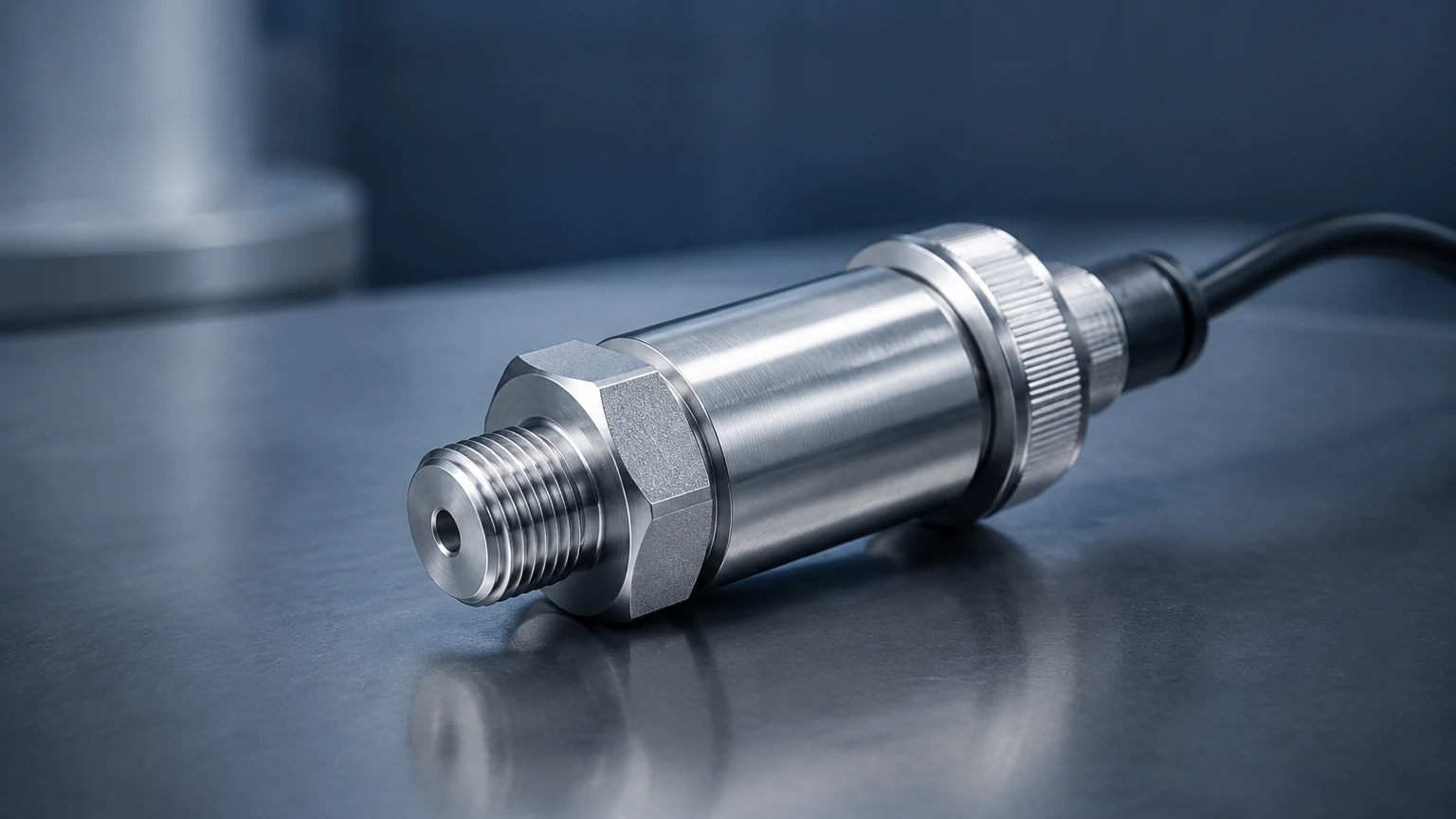
In the field of industrial automation and process control, the high precision pressure transducer serves as a fundamental component for accurate level and pressure monitoring. While often categorized simply as a sensor, a high-precision transducer is a sophisticated instrument engineered to convert physical force into a highly stable electrical signal, typically used in hydrostatic level measurement, pipeline monitoring, and chemical processing. Understanding the underlying physics, material science, and calibration requirements is essential for engineers tasked with selecting the right instrumentation for demanding environments.
Measurement Principles and Technology
Before selecting a high precision pressure transducer, it is vital to understand how these devices quantify pressure. In level measurement applications, the most common method is hydrostatic pressure sensing. This principle relies on the relationship between the height of a liquid column and the pressure it exerts at the base: $P = \rho gh$ (where $P$ is pressure, $
ho$ is liquid density, $g$ is gravity, and $h$ is the height of the liquid).
To capture this pressure, transducers utilize several core technologies:
Piezoresistive Sensors
These are the most widely used in industrial level transmitters. They consist of a silicon or metal diaphragm with integrated strain gauges. When pressure is applied, the diaphragm deforms, changing the electrical resistance of the gauges. Piezoresistive transducers are known for their high sensitivity and compact size, making them ideal for submersible level probes.
Capacitive Sensors
Capacitive transducers measure the change in electrical capacitance between a sensing diaphragm and a fixed plate. As pressure moves the diaphragm, the distance between the plates changes, altering the capacitance. These sensors are exceptionally robust and offer high resistance to overpressure and mechanical shock, often used in high-accuracy process industries.
Silicon Resonant Sensors
For applications requiring the highest level of precision, silicon resonant technology is often employed. These sensors use a vibrating crystal or silicon structure whose resonant frequency changes in response to pressure-induced stress. This digital-native measurement provides superior long-term stability and minimal thermal drift compared to analog strain-gauge methods.
Key Evaluation Criteria for High Precision Units
When evaluating a high precision pressure transducer, "precision" is not a single value but a combination of several performance metrics. Engineers must look beyond the basic accuracy rating to understand how the device will perform over time in a real-world plant environment.
1. Total Error Band (TEB): While many manufacturers list "Accuracy" as a percentage of Full Scale (FS), this often only covers non-linearity, hysteresis, and repeatability at room temperature. The Total Error Band includes thermal effects, providing a more realistic view of the transducer's performance across its operating temperature range (e.g., -20°C to +80°C).
2. Long-Term Stability: High-precision applications require sensors that do not drift. A high-quality transducer should maintain a stability of $\pm$0.1% FS per year or better. This reduces the frequency of manual recalibrations and ensures consistent data for automated control loops.
3. Turndown Ratio: This refers to the range over which the transducer can be adjusted without losing significant accuracy. A 10:1 turndown allows a 10-bar sensor to be calibrated to measure a 1-bar range while maintaining reliable output.
4. Response Time: In dynamic systems, such as those involving rapid filling or high-speed pumping, the transducer must respond quickly (often in milliseconds) to prevent overfilling or cavitation.
Selection Guide for Industrial Applications
Choosing the correct transducer requires balancing technical requirements with budget constraints. The following table provides a comparison of common configurations used in level and pressure measurement.
| Feature | Piezoresistive (Standard) | Ceramic Capacitive | Silicon Resonant |
| :— | :— | :— | :— |
| Typical Accuracy | 0.25% to 0.5% FS | 0.1% to 0.2% FS | < 0.05% FS |
| Overpressure Limit | 2x to 3x Rated Range | Up to 10x Rated Range | High |
| Material Compatibility | 316L SS, Hastelloy | Ceramic (Al2O3) | 316L SS, Monel |
| Best For | General water/oil level | Corrosive chemicals | Laboratory/Fiscal billing |
| Thermal Sensitivity | Moderate | Low | Very Low |
For comprehensive technical data and to explore specific models for your industry, you can visit the Main Page for detailed product specifications.
Installation Considerations and Best Practices
Even the most advanced high precision pressure transducer will fail to provide accurate data if installed incorrectly. In level measurement, environmental factors play a significant role in signal integrity.
Atmospheric Pressure Compensation
For gauge pressure measurements (where the sensor measures pressure relative to the atmosphere), the transducer must be vented. In submersible level sensors, this is achieved through a small vent tube integrated into the signal cable. It is critical to ensure this tube is not kinked, blocked, or exposed to moisture, as any blockage will cause errors proportional to changes in local barometric pressure.
Mounting Position
Transducers should be mounted in areas free from heavy turbulence or vibration. If installed in a tank with an agitator, a stilling well (a perforated pipe) should be used to protect the sensor diaphragm from mechanical stress and to provide a stable liquid surface for measurement.
Media Compatibility
The wetted parts of the transducer must be compatible with the process fluid. While 316L stainless steel is standard, aggressive chemicals like hydrochloric acid or seawater may require Tantalum diaphragms or PTFE (Teflon) coatings. Using an incompatible material can lead to diaphragm pitting or hydrogen permeation, which destroys the sensor's precision.
Limitations and Potential Risks
While high-precision transducers are versatile, they are not universal solutions. Engineers should be aware of the following limitations:
* Density Sensitivity: Hydrostatic level measurement assumes a constant liquid density. If the temperature of the liquid changes significantly, or if different fluids are mixed, the density changes, and the level reading will become inaccurate even if the pressure reading is perfect. In these cases, temperature compensation or multi-parameter sensors are required.
* Clogging and Buildup: In wastewater or slurry applications, the small pressure ports or exposed diaphragms can become coated with solids. This "shielding" effect prevents the sensor from seeing the true pressure. For these environments, flush-diaphragm designs or non-contact radar level meters may be more appropriate.
* Electrical Interference: High-precision signals (especially 4-20mA or 0-10V) are susceptible to electromagnetic interference (EMI) from nearby motors or VFDs. Shielded cabling and proper grounding are mandatory to maintain the integrity of the high-precision data.
Frequently Asked Questions (FAQ)
Q: What is the difference between a pressure sensor and a pressure transducer?
A: A sensor is the raw sensing element (like a strain gauge), while a transducer includes signal conditioning electronics that convert the raw output into a standardized industrial signal like 4-20mA, 0-5V, or digital protocols like HART or Modbus.
Q: How often should a high precision pressure transducer be calibrated?
A: For most industrial B2B applications, an annual calibration is standard. However, in critical safety systems or fiscal metering, semi-annual or even quarterly verification may be required to maintain ISO compliance.
Q: Can I use a pressure transducer for vacuum measurement?
A: Yes, but you must specify an "Absolute" or "Compound" pressure transducer. A standard gauge pressure transducer may not be designed to handle the mechanical stress of a vacuum or may not provide accurate negative readings.
Q: Does the cable length affect the accuracy of the transducer?
A: For current-loop signals (4-20mA), cable length has a negligible effect on accuracy over hundreds of meters, provided the power supply can overcome the loop resistance. For voltage signals (0-10V), long cables can lead to voltage drops and signal degradation.
Conclusion and Next Steps
Implementing a high precision pressure transducer is a strategic investment in process reliability. By focusing on the Total Error Band, material compatibility, and correct installation techniques, facilities can achieve tight control over their liquid levels and process pressures. Whether you are managing water treatment facilities, chemical storage, or oil and gas assets, the accuracy of your data starts at the sensing element.
To find the specific instrument that matches your process requirements, or to consult with engineering experts on custom OEM/ODM solutions, Review product options and application support to ensure your facility operates with the highest degree of measurement integrity.