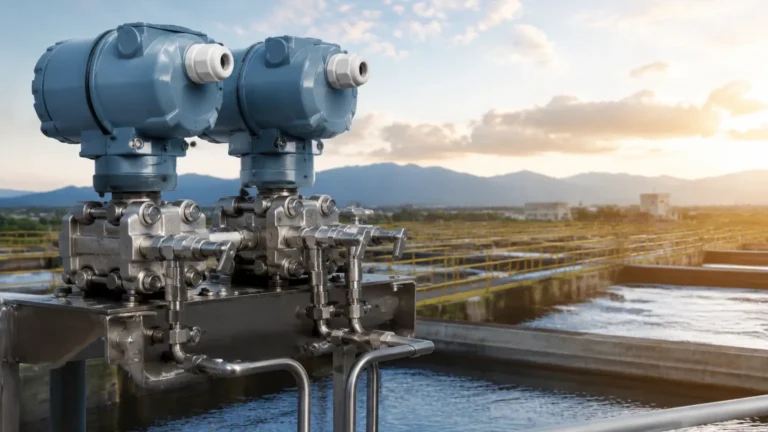
High Temperature Differential Pressure Transducer
High Temperature Differential Pressure Transducer
In the landscape of industrial process control, the high temperature differential pressure transducer serves as a critical component for monitoring level, flow, and pressure in environments where standard sensors would fail. These specialized instruments are designed to withstand the rigors of steam generation, chemical synthesis, and petroleum refining, where process temperatures often exceed the limits of conventional electronics. Understanding the engineering behind these devices is essential for selecting the right equipment to ensure both operational safety and measurement accuracy.
Measurement Principles in High-Temperature Environments
The fundamental operation of a differential pressure (DP) transducer relies on the measurement of the difference between two pressure points. In level measurement applications, this typically involves measuring the hydrostatic head of a liquid in a vessel. For flow measurement, the transducer measures the pressure drop across a primary element, such as an orifice plate or Venturi tube.
In high-temperature applications, the primary challenge is protecting the sensitive sensing element—usually a piezoresistive or capacitive silicon chip—from the extreme heat of the process medium. Standard sensors are typically rated for temperatures up to 85°C (185°F). When process temperatures exceed this, specialized configurations are required.
The Role of Remote Seals and Capillaries
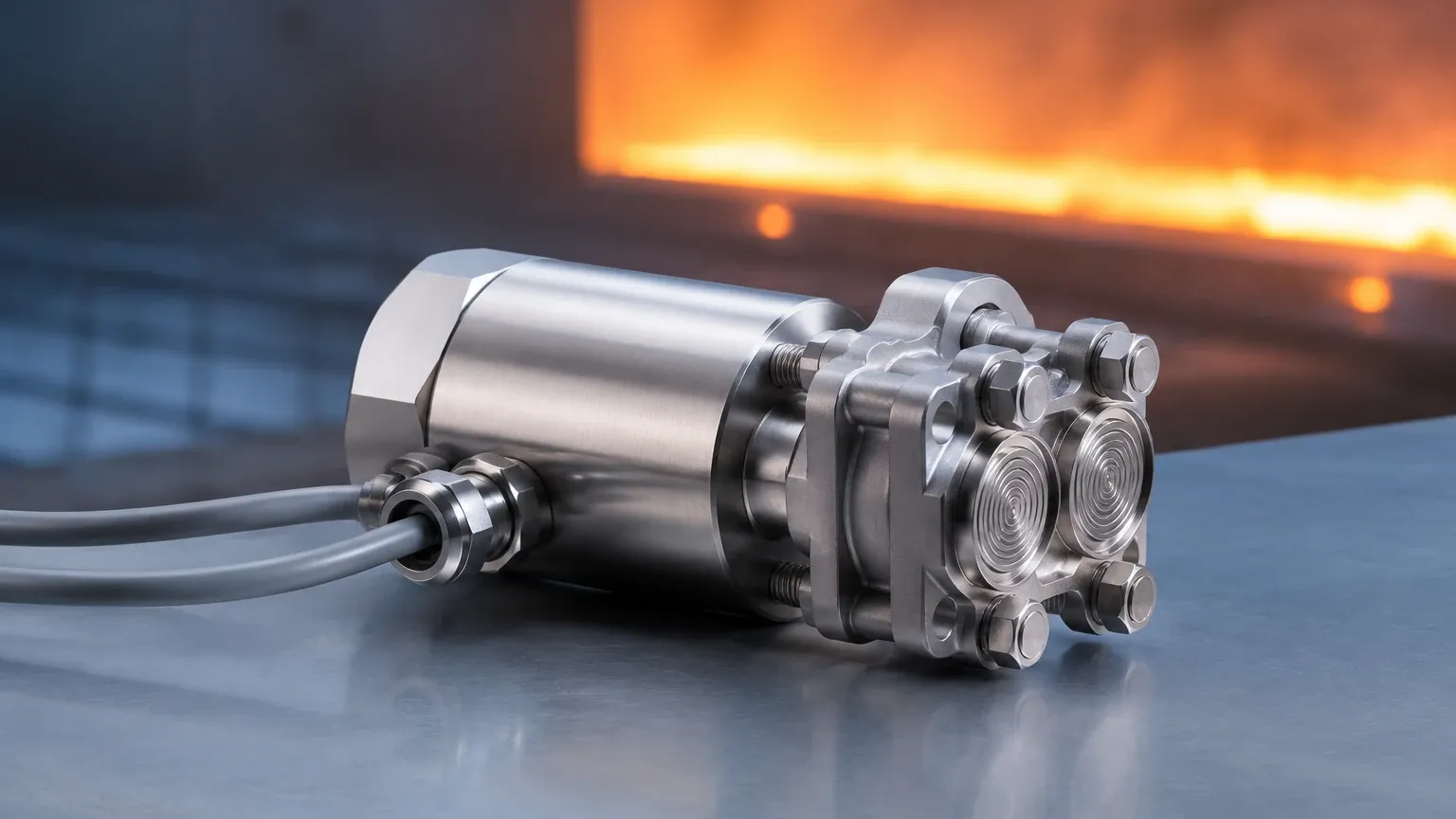
To isolate the transducer from high temperatures, a remote seal system is frequently employed. This system consists of a flexible diaphragm exposed to the process, connected to the transducer via a capillary tube filled with a transmission fluid. The pressure exerted on the process diaphragm is transmitted through the fill fluid to the internal sensing element of the transducer. By using a length of capillary tubing, the heat is dissipated before it reaches the electronics, allowing the sensor to operate within its calibrated temperature range while measuring media that may be as hot as 400°C (752°F).
Thermal Expansion and Zero Shift
A critical factor in high-temperature DP measurement is the thermal expansion of the fill fluid. As the temperature rises, the volume of the oil in the capillaries increases, which can exert additional pressure on the diaphragm. This phenomenon, known as "temperature effect" or "zero shift," can introduce errors in the reading. High-quality high temperature differential pressure transducers utilize balanced capillary systems and specific fill fluids with low thermal expansion coefficients to minimize these inaccuracies.
Key Components and Material Selection
The reliability of a high temperature differential pressure transducer is heavily dependent on the materials used in its construction. Because these sensors are often exposed to corrosive chemicals and high pressures simultaneously with high temperatures, material compatibility is paramount.
1. Diaphragm Materials: While 316L stainless steel is the standard, applications involving high-temperature acids or chlorides may require Hastelloy C-276, Tantalum, or Monel. These materials provide the necessary corrosion resistance to prevent diaphragm rupture.
2. Fill Fluids: The choice of fill fluid is determined by the operating temperature range. Standard silicone oils are suitable for moderate temperatures, but for extreme heat (above 200°C), specialized high-temperature synthetic oils or inert fluids like Fluorolube are required. It is also vital to consider the minimum operating temperature to ensure the fluid does not become too viscous in cold environments.
3. Capillary Tubes: The length and inner diameter of the capillaries affect the response time of the transducer. Longer capillaries provide better thermal isolation but result in a slower response to pressure changes.
Selection Criteria for Industrial Applications
When evaluating a high temperature differential pressure transducer for a specific project, engineers must look beyond the basic pressure range. The following table provides a comparison of typical configurations used in industrial automation:
| Feature | Impulse Line Configuration | Remote Seal (Capillary) | Integral Heat Sink Design |
| :— | :— | :— | :— |
| Max Process Temp | Up to 1000°C (with cooling) | Up to 400°C | Up to 150°C |
| Maintenance | High (clogging risks) | Low (sealed system) | Moderate |
| Response Time | Fast | Moderate to Slow | Fast |
| Installation | Complex (piping required) | Simple (flange mount) | Direct Mount |
| Best For | Steam, Clean Gases | Viscous Liquids, Slurries | High-Temp Ambient Air |
Selecting the appropriate configuration requires a thorough understanding of the process media. For instance, in water treatment or industrial automation where the media is relatively clean, impulse lines with cooling legs might be cost-effective. However, in chemical processing where the media might solidify or clog small pipes, a remote seal high temperature differential pressure transducer is the preferred choice.
Installation Considerations and Best Practices
Proper installation is as important as the device selection itself. Even the most accurate transducer will provide unreliable data if installed incorrectly in a high-temperature system.
* Mounting Position: For liquid level measurement, the transducer should ideally be mounted below the lower tapping point to ensure the impulse lines or capillaries remain full. For gas applications, the instrument should be mounted above the tapping point to allow condensate to drain back into the process.
* Heat Dissipation: If using impulse lines, a minimum of 1 meter (approx. 3.3 feet) of uninsulated tubing is usually required to act as a natural heat exchanger. For remote seals, the capillary should not be insulated, as this prevents the necessary heat loss required to protect the sensor head.
* Ambient Temperature Limits: While the process end of the transducer is designed for high heat, the housing containing the electronics must remain within its specified ambient temperature limits (usually -40°C to +85°C). In extreme environments, sunshades or cooling jackets for the transmitter housing may be necessary.
For more information on specific product models and to explore our full range of industrial level measurement instruments, please visit our Main Page.
Limitations and Common Risks
Despite their robust design, high temperature differential pressure transducers have inherent limitations that must be managed:
1. Response Lag: In remote seal systems, the viscosity of the fill fluid increases as the temperature drops near the transducer head. This can lead to a lag in the measurement signal, which may be problematic in fast-acting control loops.
2. Static Pressure Effects: High-temperature processes often operate at high static pressures. It is important to verify that the transducer is calibrated to handle the specific static pressure of the application, as high line pressure can cause a shift in both the zero point and the span.
3. Hydrogen Permeation: In high-temperature hydrogen service, hydrogen atoms can sometimes permeate through the metal diaphragm and dissolve into the fill fluid, causing bubbles and eventually sensor failure. Gold-plated diaphragms are often recommended for these specific high-temperature applications to act as a hydrogen barrier.
Frequently Asked Questions (FAQs)
Q: How do I determine the required capillary length for a high-temperature application?
A: The length depends on the process temperature and the ambient cooling capacity. Generally, 1.5 to 3 meters (5 to 10 feet) is sufficient to drop the temperature from 300°C to a safe level for the electronics, provided there is adequate airflow around the capillaries.
Q: Can a high temperature differential pressure transducer be used for vacuum service?
A: Yes, but it requires careful selection. Under vacuum, the boiling point of the fill fluid drops. If the process temperature is high and the pressure is low, the fill fluid could vaporize, damaging the diaphragm. Specialized "vacuum-service" fill fluids and factory-sealed systems are mandatory for these conditions.
Q: What is the impact of insulation on the measurement?
A: You should never insulate the capillaries or the transmitter housing in a high-temperature application. Insulation traps the heat you are trying to dissipate, which can lead to electronic failure. However, the process vessel and the flange connection should be insulated for process efficiency.
Q: How often should these transducers be calibrated?
A: Due to the thermal stresses involved, an initial check after 3 to 6 months is recommended. Once the "thermal set" of the diaphragms and fill fluid is established, annual calibration is typically sufficient for most industrial applications.
Conclusion
The high temperature differential pressure transducer is a sophisticated instrument that bridges the gap between extreme process conditions and precise electronic monitoring. By understanding the principles of remote seals, the importance of fill fluid selection, and the necessity of proper thermal isolation, engineers can implement reliable measurement solutions in the most demanding environments. Whether the application involves steam boilers, chemical reactors, or oil refining, choosing a transducer with the correct material specifications and installation configuration is the key to long-term operational success. For comprehensive technical support and product selection, professionals are encouraged to review the engineering resources and product catalogs available on our Main Page.
Download High Temperature Differential Pressure Transducer as a PDF