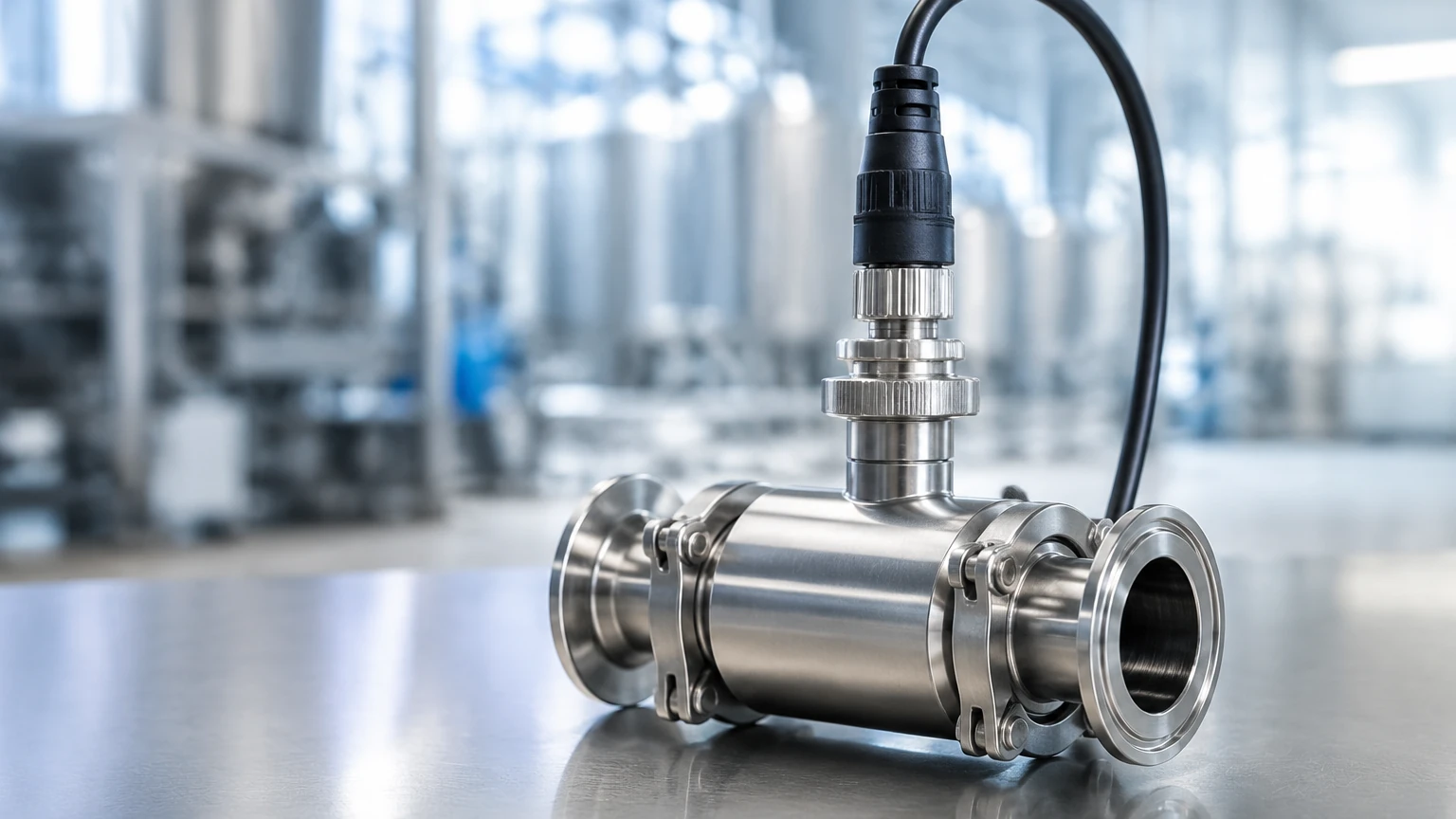
High Temperature Sanitary Flow Meter
High Temperature Sanitary Flow Meter
In the food, beverage, pharmaceutical, and biotechnology industries, the ability to measure fluid flow accurately while maintaining strict hygiene standards is critical. A high temperature sanitary flow meter is specifically engineered to handle the dual challenges of extreme process temperatures—often associated with Clean-in-Place (CIP) and Sterilization-in-Place (SIP) cycles—and the requirement for a sterile, crevice-free flow path. These instruments ensure that process fluids, from milk and fruit juices to pharmaceutical grade water and vaccines, are moved and measured without the risk of bacterial contamination or mechanical failure due to thermal stress.
Measurement Principles
Selecting the right high temperature sanitary flow meter requires an understanding of the underlying physics used to calculate flow rates. Different technologies offer varying levels of accuracy, temperature tolerance, and compatibility with fluid properties such as conductivity and viscosity.
Electromagnetic Flow Meters (Magmeters)
Electromagnetic flow meters operate based on Faraday’s Law of Induction. This principle states that a conductor (the fluid) moving through a magnetic field generates an electrical voltage proportional to its velocity. The formula is expressed as:
E = kBDv
Where:
* E is the induced voltage.
* k is a constant.
* B is the magnetic field strength.
* D is the inner diameter of the pipe.
* v is the average velocity of the liquid.
In sanitary applications, the meter must be lined with a food-grade material like PFA (Perfluoroalkoxy) or PEEK (Polyether ether ketone). For high-temperature environments, PFA is preferred for its ability to withstand temperatures up to 150°C (302°F) and its resistance to vacuum conditions often found during CIP cooling phases. Magmeters are ideal for conductive liquids but cannot measure oils or deionized water.
Coriolis Mass Flow Meters
Coriolis meters measure the mass flow directly by monitoring the inertia of the fluid as it passes through vibrating tubes. When fluid flows through these tubes, it causes a phase shift or "twist" in the vibration. This shift is directly proportional to the mass flow rate.
Coriolis technology is highly valued in high-temperature sanitary processes because it is independent of fluid density and viscosity. These meters can handle temperatures exceeding 200°C (392°F) using specialized high-temperature sensors and remote electronics. Because they have no moving parts in the flow stream, they are inherently hygienic, though the design must ensure the tubes are self-draining.
Ultrasonic (Transit-Time) Flow Meters
Transit-time ultrasonic meters use acoustic signals to determine flow velocity. Two transducers act as both transmitters and receivers, sending ultrasonic pulses upstream and downstream. The difference in the time it takes for the signal to travel in each direction is proportional to the fluid velocity.
For sanitary use, these can be "clamp-on" (non-invasive) or inline. High-temperature variants utilize heat-resistant transducers and specialized mounting hardware to isolate the sensitive electronics from the heat of the pipe, making them suitable for steam-heavy environments.
Sanitary Design and Material Standards
To be classified as "sanitary," a flow meter must adhere to specific design criteria established by organizations such as 3-A Sanitary Standards, EHEDG (European Hygienic Engineering & Design Group), and the FDA.
1. Material Composition: The wetted parts must be made of non-corrosive materials, typically 316L stainless steel (1.4404). This grade of steel offers excellent resistance to the caustic and acidic chemicals used in cleaning cycles.
2. Surface Finish: The internal surface must be polished to a specific roughness, usually Ra < 0.8 μm (32 micro-inches). This prevents microorganisms from adhering to microscopic pits in the metal.
3. Hygienic Connections: Standard threaded fittings are avoided because they contain crevices. Instead, high temperature sanitary flow meters use Tri-Clamp (ISO 2852), DIN 11851, or SMS 1145 connections, which utilize specialized gaskets to create a flush, seamless seal.
4. Thermal Resilience: High-temperature models must account for the thermal expansion of the meter body. If the expansion is not managed, it can stress the gaskets or the internal liners, leading to leaks or measurement drift.
Selection Criteria for Industrial Applications
When evaluating a high temperature sanitary flow meter, engineers must consider the specific parameters of their process loop. For comprehensive information on how these flow solutions integrate with broader industrial monitoring systems, including tank level management, professionals often consult the Main Page of specialized instrumentation providers like Welk.
| Feature | Electromagnetic | Coriolis | Ultrasonic |
| :— | :— | :— | :— |
| Max Operating Temp | Up to 150°C | Up to 200°C+ | Up to 180°C |
| Accuracy (Liquid) | ±0.5% of rate | ±0.1% of rate | ±1.0% of rate |
| Fluid Requirement | Conductive (>5 μS/cm) | Any (Mass-based) | Clean, non-aerated |
| Pressure Drop | Negligible | Low to Moderate | None (Clamp-on) |
| Typical Applications | Milk, Juice, Beer | Syrups, Oils, Pharma | Purified Water, CIP liquids |
Installation Considerations
Proper installation is as important as the technology selection itself. Failure to follow engineering best practices can result in inaccurate readings or hygiene failures.
* Orientation for Self-Draining: In sanitary systems, the meter must be installed in a way that allows the fluid to drain completely when the system is shut down. For magmeters and Coriolis meters, this often means a vertical installation with flow moving upward. If horizontal installation is necessary, the meter must be sloped according to 3-A guidelines.
* Straight Pipe Runs: Most flow meters require a specific length of straight pipe upstream (typically 5 to 10 diameters) and downstream (2 to 5 diameters) to stabilize the flow profile. High-temperature applications may require longer runs if thermal insulation interferes with the sensor's heat dissipation.
* Grounding: For electromagnetic meters, proper grounding is essential to eliminate electrical noise. In sanitary piping, which often uses non-conductive plastic or high-grade stainless steel with insulating gaskets, grounding rings are required to ensure the fluid is at the same electrical potential as the meter.
* Remote Electronics: In environments where the ambient temperature near the pipe exceeds 60°C (140°F), it is recommended to use a "remote mount" configuration. This moves the transmitter electronics away from the hot sensor body, significantly extending the lifespan of the components.
Limitations and Common Risks
While high temperature sanitary flow meters are robust, they are not without limitations.
* Thermal Shock: Rapid changes in temperature—such as switching from a 5°C product to a 140°C steam sterilization cycle—can cause ceramic or PFA liners to crack or delaminate. It is vital to choose a meter with a high thermal shock resistance rating.
* Gas Entrainment: In sanitary processes, air can be introduced during tank changeovers or through cavitation. Air bubbles can cause significant errors in magmeters and Coriolis meters. De-aerators or air eliminators should be installed upstream if entrainment is a known issue.
* Conductivity Limits: If using an electromagnetic meter for pharmaceutical applications, ensure the fluid meets the minimum conductivity requirement. Highly purified water (WFI) may have conductivity too low for standard magmeters, requiring the use of Coriolis or ultrasonic technology instead.
Frequently Asked Questions (FAQs)
Q: Can these meters handle steam sterilization (SIP)?
A: Yes, provided they are rated for the specific steam temperature and pressure. Most sanitary meters are designed to withstand 140°C to 150°C steam for short durations (typically 30–60 minutes).
Q: How often should a sanitary flow meter be calibrated?
A: In regulated industries like pharmaceuticals, annual calibration is standard. However, if the meter is subjected to frequent thermal cycling (daily SIP), more frequent verification may be necessary to ensure the thermal expansion hasn't caused mechanical drift.
Q: Are there specific gaskets required for high-temperature sanitary meters?
A: Yes. Standard EPDM gaskets may fail at extreme temperatures. PTFE (Teflon) or specialized Viton (FKM) gaskets are often used, but they must be checked for compatibility with the CIP chemicals being used.
Conclusion
Selecting a high temperature sanitary flow meter is a balancing act between precision, hygiene, and thermal durability. By understanding the measurement principles—whether it be the electromagnetic induction of a magmeter or the mass-flow sensing of a Coriolis meter—engineers can specify a solution that maintains process integrity under the harshest cleaning conditions. For those integrating flow data with level measurement for total process automation, referring to a technical Main Page can provide the necessary context for building a reliable, high-performance industrial system.