High Temperature Thermometers
High Temperature Thermometers
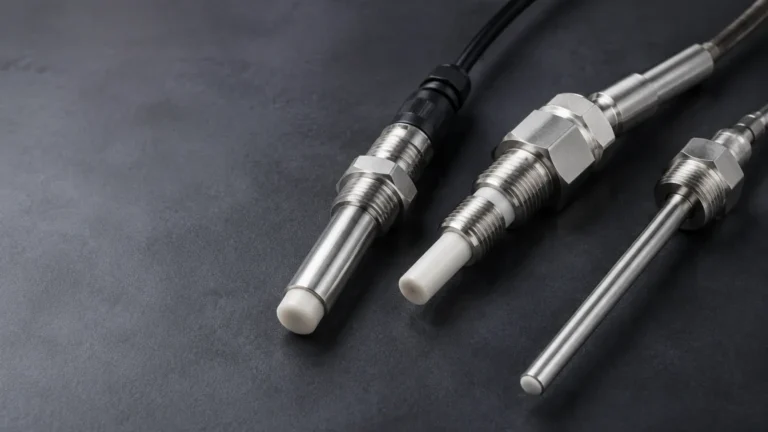
In industrial process control, the accurate measurement of extreme heat is as critical as monitoring pressure or volume. High temperature thermometers are specialized instruments designed to operate in environments where standard thermal sensors would fail due to material degradation, oxidation, or electronic interference. These instruments are foundational in industries such as metallurgy, glass manufacturing, power generation, and petrochemical refining.
Understanding the underlying physics of heat detection is essential before selecting a device. This guide explores the principles of high-temperature measurement, the various technologies available, and how these sensors integrate with broader process automation systems, including level measurement solutions found on our Main Page.
Measurement Principles of High Temperature Thermometers
High temperature thermometers generally operate based on three primary physical principles: thermoelectricity, electrical resistance change, and thermal radiation.
The Seebeck Effect (Thermocouples)
Thermocouples are the most common tools for high-heat applications. They operate on the Seebeck effect, where a junction of two dissimilar metals produces a voltage proportional to the temperature difference between the sensing junction and the reference junction. At high temperatures, the choice of metal alloys is restricted to those with high melting points and resistance to oxidation, such as Platinum and Rhodium.
Resistance Temperature Detectors (RTDs)
RTDs operate on the principle that the electrical resistance of a metal increases predictably as temperature rises. While most RTDs use Platinum (Pt100 or Pt1000), their use in "high temperature" contexts is typically capped around 600°C to 850°C. Beyond this, the platinum wire can become contaminated or the ceramic substrate can degrade, leading to permanent drift.
Thermal Radiation (Pyrometry)
For temperatures exceeding the melting points of most metals, or for moving objects, non-contact measurement is required. Infrared thermometers and pyrometers detect the intensity of electromagnetic radiation emitted by an object. According to the Stefan-Boltzmann law, the total energy radiated is proportional to the fourth power of the absolute temperature. This allows for measurement of molten metals or furnace interiors reaching well over 2000°C.
Classification and Types of High-Heat Sensors
Selecting the correct sensor requires matching the metallurgical properties of the probe to the atmospheric conditions of the process.
Noble Metal Thermocouples
For temperatures above 1200°C, base metal thermocouples (like Type K or J) oxidize rapidly. Noble metal types are required:
* Type S (Platinum/10% Rhodium): Suitable for temperatures up to 1450°C. Known for high stability and accuracy in oxidizing atmospheres.
* Type R (Platinum/13% Rhodium): Similar to Type S but offers slightly higher output and stability.
* Type B (Platinum/30% Rhodium vs. Platinum/6% Rhodium): Designed for the highest ranges, capable of reaching 1700°C continuously and 1800°C for short durations.
Tungsten-Rhenium Thermocouples
In vacuum furnaces or inert gas environments where platinum would fail, Type C, D, and G thermocouples are used. These can measure up to 2300°C, though they are extremely brittle and cannot be used in the presence of oxygen.
Optical and Ratio Pyrometers
In environments with heavy smoke, steam, or changing emissivity, a "two-color" or ratio pyrometer is used. It measures radiation at two different wavelengths and calculates the ratio, which cancels out errors caused by obscurations in the sight path.
Selection Criteria for Industrial Applications
When evaluating high temperature thermometers, engineers must look beyond the maximum temperature rating. The following table provides a comparison of common industrial sensors:
| Sensor Type | Temperature Range (°C) | Accuracy Class | Environment Suitability |
| :— | :— | :— | :— |
| Type K Thermocouple | -200 to 1260 | Class 1 or 2 | General purpose, oxidizing |
| Type N Thermocouple | -270 to 1300 | High Stability | Better oxidation resistance than Type K |
| Type S/R Thermocouple | 0 to 1450 | Very High | Glass, Ceramics, Research |
| Type B Thermocouple | 0 to 1700 | High | Smelting, High-heat furnaces |
| Pt100 RTD | -200 to 850 | Ultra High | Precision chemical processing |
| Infrared Pyrometer | -50 to 3000+ | Variable | Non-contact, Molten metals |
Key Evaluation Factors
1. Atmospheric Composition: Is the environment reducing (oxygen-depleted) or oxidizing? For example, Type K thermocouples suffer from "green rot" in reducing atmospheres, whereas Type S is highly resistant to oxidation.
2. Response Time: Does the process require millisecond feedback (pyrometry) or is a buffered response through a heavy thermowell acceptable?
3. Mechanical Stress: High temperatures often coincide with high pressures or abrasive flows. The physical housing (thermowell) must be selected for structural integrity.
Integration with Level Measurement Systems
In many B2B industrial settings, temperature and level measurement are inextricably linked. High temperatures can significantly impact the accuracy of level sensors. For instance, in a high-pressure boiler or a chemical reactor, the temperature of the medium affects its density and the dielectric constant of the vapor space.
* Radar Level Meters: While radar is generally immune to temperature fluctuations, the electronics must be protected. High-temperature antennas with PTFE or ceramic seals are often used in conjunction with high temperature thermometers to provide a complete profile of the vessel's status.
* Magnetic Level Gauges: In high-heat applications, the float within a magnetic gauge must be engineered to withstand thermal expansion without losing buoyancy. Monitoring the temperature of the chamber ensures the liquid density remains within the float's design parameters.
* Ultrasonic Sensors: These are highly sensitive to temperature because the speed of sound changes with air density. In these cases, an integrated thermometer provides the data necessary for the sensor's microprocessor to compensate for the speed of sound shift.
For engineers designing integrated systems, reviewing the compatibility of heat and level instruments is vital. You can explore specialized level measurement hardware designed for extreme environments on our Main Page.

Installation and Maintenance Best Practices
Correct installation is the difference between a sensor that lasts years and one that fails in weeks.
Thermowell Considerations
At high temperatures, the thermowell is the primary line of defense. Materials such as Inconel 600, Hastelloy, or high-purity Alumina (ceramic) are standard.
* Insertion Length: To avoid stem conduction error (where heat leaks out through the sensor body), the probe should be inserted at a depth at least 10 times its diameter.
* Lagging: In insulated pipes, a "lagging extension" is required to move the transmitter head away from the heat source to protect the electronics.
Calibration and Drift
High temperature thermometers are prone to "calibration drift." This occurs because the metallurgical structure of the thermocouple wires changes over time when exposed to extreme heat (grain growth).
* Regular Validation: Sensors should be checked against a certified reference standard annually.
* Replacement Cycles: In continuous 1500°C+ applications, thermocouples are often treated as consumables and replaced on a scheduled basis before failure occurs.
Limitations and Common Risks
Despite their robust design, high temperature thermometers face several physical limitations:
1. Thermal Shock: Rapid temperature changes can crack ceramic protection tubes or cause delamination in composite sensors. Pre-heating probes before insertion into a furnace is a common mitigation strategy.
2. Contamination: At high temperatures, metal ions from a thermowell can migrate into the thermocouple wire (especially platinum), changing its thermoelectric properties. Using high-purity ceramic insulators is essential.
3. Emissivity Errors: In pyrometry, if the emissivity setting of the instrument does not match the material being measured, the temperature reading will be significantly lower than the actual value. This is particularly difficult with shiny, reflective metals like molten aluminum.
Frequently Asked Questions (FAQ)
Q: Why can't I use a standard Type K thermocouple for molten steel?
A: Molten steel typically exceeds 1500°C. The melting point of Type K (Chromel/Alumel) is approximately 1260°C to 1350°C. The probe would melt instantly. Noble metal Type B or disposable "dip" thermocouples are required.
Q: How does ambient temperature affect the thermometer's transmitter?
A: Most industrial transmitters are rated for ambient temperatures up to 85°C (185°F). If the sensor is measuring a 1000°C process, the heat radiating from the vessel can easily cook the transmitter electronics. Use remote-mounted transmitters or cooling jackets in these scenarios.
Q: What is the difference between a 2-wire and 4-wire RTD for high heat?
A: A 4-wire RTD provides the highest accuracy by eliminating the resistance of the lead wires from the measurement. This is critical in high-heat applications where long lead wires are used to keep electronics away from the heat source.
Q: Can high temperature thermometers be used in hazardous (Ex) zones?
A: Yes, but they must be paired with an intrinsically safe barrier or housed in an explosion-proof enclosure. The temperature classification (T-rating) of the probe's head must be lower than the ignition temperature of the surrounding gas.
By carefully matching the measurement principle to the specific thermal and chemical demands of the application, B2B operators can ensure long-term reliability and process safety. For more information on how temperature data integrates with industrial level measurement, visit our Main Page.