How Did the Bessemer Process Improve Manufacturing
How Did the Bessemer Process Improve Manufacturing
The evolution of modern industrial manufacturing is inextricably linked to the ability to produce high-quality materials at scale. When examining the question of how did the bessemer process improve manufacturing, one must look beyond the immediate output of steel and consider the systemic shift it triggered across all heavy industries. Before the mid-19th century, steel was a luxury material, produced in small batches through labor-intensive methods like the crucible process. The Bessemer process transformed steel from a rare commodity into the backbone of global infrastructure, fundamentally altering the trajectory of manufacturing, engineering, and process control.
Today, the legacy of this metallurgical breakthrough is visible in every industrial facility, from the massive steel silos used in chemical processing to the intricate piping systems of water treatment plants. These modern environments, built on the foundations laid by the Bessemer process, now require sophisticated monitoring systems, such as those found on the Main Page of industrial instrumentation providers, to maintain the efficiency and safety that mass production demands.
The Principles of the Bessemer Process
To understand how the Bessemer process improved manufacturing, it is essential to first understand its underlying physical and chemical principles. Patented by Henry Bessemer in 1856, the process was the first inexpensive industrial method for the mass production of steel from molten pig iron.
The Oxidation Mechanism
The core principle of the Bessemer process is the removal of impurities from pig iron through oxidation. Pig iron contains high levels of carbon (typically 3% to 4.5%), silicon, and manganese, which make the metal brittle. To convert this into steel, these impurities must be reduced.
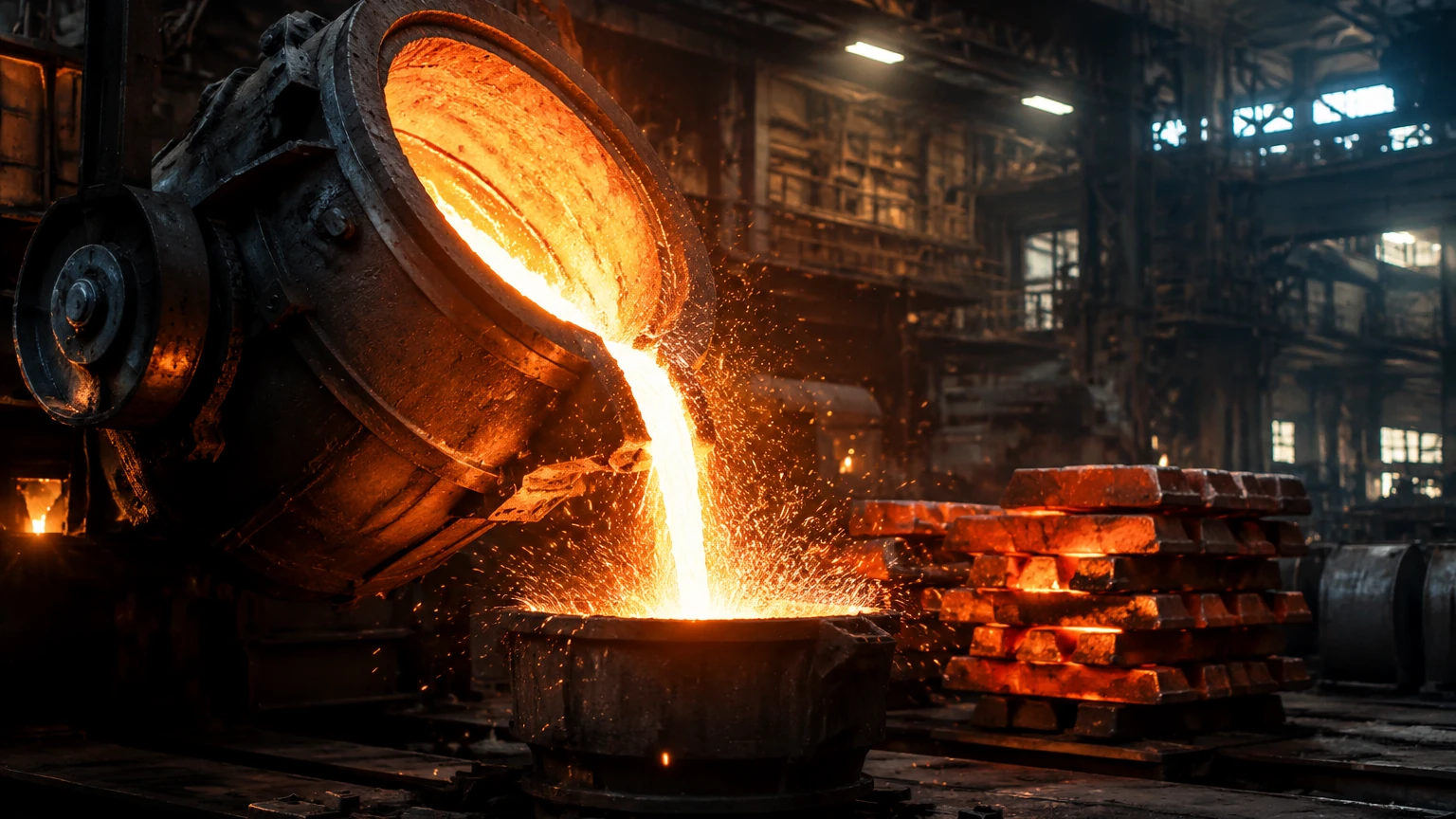
In a Bessemer converter—a large, pear-shaped steel vessel lined with refractory material—air is blasted through the molten iron from the bottom. The oxygen in the air reacts with the impurities:
1. Silicon and Manganese Oxidation: These elements react first, forming a slag that floats to the top.
2. Carbon Oxidation: The oxygen then reacts with the carbon, creating carbon monoxide, which burns off in a spectacular flame at the mouth of the converter.
This reaction is exothermic, meaning it generates its own heat. The temperature of the molten metal actually rises during the process, keeping the iron fluid without the need for additional external fuel. This self-sustaining heat was a revolutionary concept in 19th-century thermodynamics.
How Did the Bessemer Process Improve Manufacturing Efficiency?
The primary way the Bessemer process improved manufacturing was through a drastic reduction in production time and labor costs. Prior to this innovation, producing a few tons of steel could take several days. The Bessemer converter could transform 5 to 30 tons of iron into steel in approximately 20 minutes.
1. Mass Production and Scalability
The speed of the process allowed for a continuous flow of material. Manufacturing shifted from a craft-based, small-batch activity to a high-volume industrial operation. This scalability enabled the construction of massive infrastructure, such as the transcontinental railroads and the first skyscrapers, which required thousands of tons of uniform, high-strength material.
2. Cost Reduction
By eliminating the need for expensive fuel to maintain heat during the refinement process and reducing the labor hours required per ton, the cost of steel plummeted. In the United States, the price of steel rails dropped from over $100 per ton in the 1860s to less than $20 per ton by the 1890s. This democratization of steel allowed manufacturers in other sectors—such as machinery, toolmaking, and vessel fabrication—to replace brittle cast iron with durable steel.
3. Material Standardization
The Bessemer process introduced a level of predictability in material properties. By monitoring the color and duration of the flame at the converter's mouth, operators could determine when the carbon had been sufficiently removed. This led to the development of standardized steel grades, which is a prerequisite for modern precision manufacturing and interchangeable parts.
The Legacy of Steel in Modern Process Industries
The Bessemer process eventually gave way to the Open Hearth process and, later, the Basic Oxygen Steelmaking (BOS) process used today. However, the manufacturing world it created remains. Modern industrial plants are characterized by large-scale storage and processing vessels that would have been impossible to build without the mass-produced steel the Bessemer process pioneered.
In these high-capacity environments, the focus has shifted from *how to make the material* to *how to manage the material* efficiently. This is where level measurement technology becomes critical. Whether a facility is storing raw chemical components or managing wastewater, the ability to accurately measure the contents of a steel vessel is vital for operational safety and inventory management.
Level Measurement Principles in Industrial Manufacturing
Just as the Bessemer process relied on understanding chemical reactions, modern manufacturing relies on understanding the physics of level measurement. Before selecting an instrument for a steel-built industrial environment, engineers must evaluate the measurement principle best suited for the application.
Radar Level Measurement
Radar level meters use high-frequency electromagnetic waves (typically in the GHz range). The sensor emits a signal that reflects off the surface of the material and returns to the receiver. The time-of-flight is used to calculate the distance. This is highly effective for large steel silos because it is non-contact and unaffected by pressure or vacuum.
Ultrasonic Level Measurement
Similar to radar, ultrasonic sensors use sound waves. These are cost-effective for water treatment and simple liquid storage. However, they are sensitive to air temperature changes and heavy dust, which can be common in metal-processing environments.
Hydrostatic Level Measurement
This principle measures the pressure exerted by a liquid column. Since pressure is directly proportional to the height of the liquid (based on its density), this provides a reliable continuous level reading. It is often used in deep tanks where top-down mounting of radar sensors is impractical.
Magnetic Level Gauges
Used for high-pressure and high-temperature applications, these utilize a float containing a magnet that moves with the liquid level, flipping external flags or interacting with a transmitter. This provides a clear visual indication and a digital signal, often used in boiler applications—a direct descendant of the steam-powered era the Bessemer process fueled.
Practical Selection Table for Level Instruments
When managing modern manufacturing processes, selecting the right technology is as important as the material of the vessel itself.
| Application | Recommended Technology | Key Benefit | Limitation |
| :— | :— | :— | :— |
| Molten Metal/Slag | Non-contact Radar (High Temp) | Can withstand extreme heat radiation | Requires specialized cooling jackets |
| Chemical Storage | Ultrasonic or Radar | Non-contact prevents corrosion | Ultrasonic fails in foam or vacuum |
| Water Treatment | Hydrostatic Transmitter | Simple installation, low cost | Sensitive to changes in liquid density |
| High-Pressure Steam | Magnetic Level Gauge | Visual and electronic redundancy | Mechanical parts may require maintenance |
| Bulk Solids (Ore/Coal) | Guided Wave Radar | Ignores dust and signal interference | Probe is subject to physical wear |
Installation Considerations and Limitations
While the Bessemer process allowed us to build bigger, it also introduced challenges in monitoring large volumes. When installing level measurement instruments in large-scale manufacturing environments, consider the following:
1. Vessel Geometry: Steel tanks often have internal reinforcements or agitators. Radar sensors must be positioned to avoid "false echoes" from these structures. Many modern radar units include "false signal suppression" software to map out these obstructions.
2. Temperature and Pressure: In industries like steel refining or chemical synthesis, temperatures can exceed 500°C. Instruments must be equipped with heat sinks or remote electronics to prevent damage.
3. Material Density: For hydrostatic measurements, if the density of the fluid changes (e.g., due to temperature shifts or mixing), the level reading will drift. Integrated temperature compensation is often required.
4. Mounting Position: Sensors should generally be mounted away from the fill stream to avoid turbulence and signal noise. For ultrasonic sensors, a "dead zone" or "blocking distance" exists near the sensor face where measurements cannot be taken; this must be accounted for in the tank design.
Frequently Asked Questions (FAQ)
Q: Did the Bessemer process produce high-quality steel?
A: Initially, it produced steel that was sometimes brittle due to trapped nitrogen and the inability to remove phosphorus. This was later solved by the "Basic Bessemer" process, which used a limestone lining in the converter to neutralize phosphorus.
Q: How does the Bessemer process relate to modern automation?
A: The Bessemer process was the first step toward automated, high-speed industrial control. Today’s automation relies on sensors (level, flow, pressure) to provide the data that once required a skilled operator to judge by the color of a flame.
Q: Can radar level meters be used in the high-dust environments of metal manufacturing?
A: Yes, high-frequency (80GHz) radar is particularly effective in dusty environments because the shorter wavelength can penetrate dust clouds more effectively than ultrasonic or lower-frequency radar signals.
Q: What is the maximum height for level measurement in large silos?
A: Modern radar level meters can measure distances up to 100 meters (approx. 328 feet), making them suitable for the massive storage silos enabled by mass-produced steel.
Conclusion
The question of how did the bessemer process improve manufacturing is answered by the transition from scarcity to abundance. By providing a method to produce steel quickly and cheaply, it allowed for the creation of the modern industrial world. This world, characterized by massive scale and high-speed production, necessitates the use of advanced measurement technologies. From the early days of watching a converter flame to the modern use of radar and ultrasonic sensors, the goal remains the same: achieving precision and efficiency in the heart of the manufacturing process.
Download How Did the Bessemer Process Improve Manufacturing as a PDF