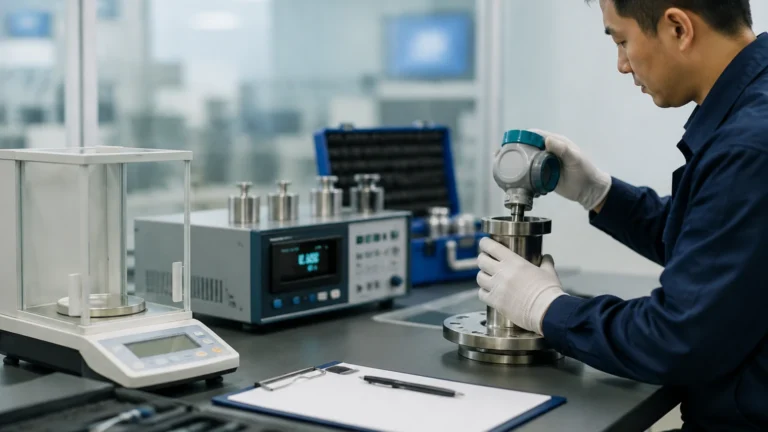
Hvac Differential Pressure Transmitter
Hvac Differential Pressure Transmitter
In the field of industrial automation and building management systems (BMS), the HVAC differential pressure transmitter serves as a critical sensory component. These devices are designed to measure the difference in pressure between two points in a system, translating physical pressure changes into standardized electrical signals. Whether monitoring the cleanliness of air filters, ensuring proper cleanroom pressurization, or controlling variable air volume (VAV) systems, the accuracy of these transmitters directly impacts energy efficiency and indoor air quality.
While often associated with airflow, the underlying technology of differential pressure (DP) is also a cornerstone of industrial level measurement. For engineers and facility managers, understanding the mechanics, selection criteria, and installation nuances of these instruments is essential for maintaining robust process control. For those seeking a broader range of industrial instrumentation, including specialized level sensors, visiting the Main Page of a dedicated manufacturer provides a comprehensive overview of available technologies.
Measurement Principles of Differential Pressure
To effectively implement an HVAC differential pressure transmitter, one must first understand how it perceives the environment. Most modern DP transmitters utilize one of three primary sensing technologies: piezoresistive, capacitive, or micro-electromechanical systems (MEMS).
Piezoresistive Sensing
This principle involves a silicon diaphragm with integrated resistors. When pressure is applied to one side of the diaphragm, it deforms, changing the electrical resistance of the circuit (the Wheatstone bridge effect). In a differential configuration, the diaphragm is exposed to two different pressure ports. The net deformation represents the difference ($P_1 – P_2$). This method is highly reliable and widely used in both air and liquid applications.
Capacitive Sensing
Capacitive sensors measure the change in electrical capacitance between a flexible sensing diaphragm and two fixed interior plates. As the diaphragm moves due to pressure differentials, the capacitance shifts. This technology is known for its high sensitivity, making it ideal for very low-pressure ranges often found in HVAC ductwork, where measurements may be as low as 0 to 25 Pascals (Pa).
Hydrostatic Pressure and Level
In industrial contexts, the principle of differential pressure is frequently applied to liquid level measurement. By measuring the pressure at the bottom of a tank and comparing it to the atmospheric pressure (for vented tanks) or the top-space pressure (for pressurized tanks), the transmitter can calculate the height of the liquid column. This is known as hydrostatic level measurement, a core solution provided by manufacturers like Welk.
Key Applications in HVAC Systems
The HVAC differential pressure transmitter is a versatile tool. Its applications generally fall into three categories: safety, efficiency, and environmental control.
1. Filter Status Monitoring: By placing a DP transmitter across an air filter bank, operators can monitor the pressure drop. As the filter traps particulates, the resistance increases. Once the differential pressure reaches a pre-set threshold, the system triggers a maintenance alert, ensuring filters are changed only when necessary, thus saving costs while protecting downstream components.
2. Fan and Blower Control: Transmitters are used to monitor the pressure produced by fans. This data is fed into Variable Frequency Drives (VFDs) to modulate fan speed, maintaining constant static pressure in the ductwork regardless of how many VAV boxes are open or closed.
3. Cleanroom and Laboratory Pressurization: To prevent cross-contamination, certain rooms must be kept at a higher (positive) or lower (negative) pressure relative to adjacent hallways. DP transmitters with high precision are required to maintain these delicate balances, often measuring differences as small as 5 to 10 Pa.
Selection Criteria for HVAC DP Transmitters
Choosing the right transmitter requires a balance between technical specifications and environmental constraints. The following table provides a comparison of common selection factors.
Practical Selection Table
| Feature | Low-Range Air Transmitters | Industrial Process DP Transmitters |
| :— | :— | :— |
| Media | Clean, dry air / Non-aggressive gases | Liquids, steam, or corrosive gases |
| Pressure Range | 0–25 Pa to 0–5000 Pa | 0–100 mbar to 0–40 bar |
| Accuracy | ±1.0% to ±0.25% FS | ±0.075% to ±0.04% FS |
| Output Signal | 0-10V, 4-20mA, Modbus RTU | 4-20mA HART, Profibus, Foundation Fieldbus |
| Enclosure Rating | IP54 / IP65 | IP67 / NEMA 4X (often Explosion-proof) |
| Typical Use | Duct static pressure, filter status | Tank level, flow measurement, pump control |
Range and Turndown Ratio
It is vital to select a transmitter where the operating pressure falls within the middle 60% of the device's range. Some modern digital transmitters offer a "turndown ratio," allowing the user to re-range the device (e.g., a 0-500 Pa sensor calibrated to operate at 0-100 Pa) without significant loss of accuracy.
Output Signals and Integration
In B2B environments, integration with the Building Management System (BMS) is paramount. While 4-20mA remains the industry standard for its noise immunity over long cable runs, digital protocols like Modbus or BACnet are increasingly popular because they allow for remote diagnostics and multiple data points (pressure, temperature, and device status) over a single pair of wires.
Installation Considerations and Best Practices
Even the most accurate HVAC differential pressure transmitter will provide faulty data if installed incorrectly. Proper installation ensures longevity and reduces the need for frequent recalibration.
Port Orientation and Tubing
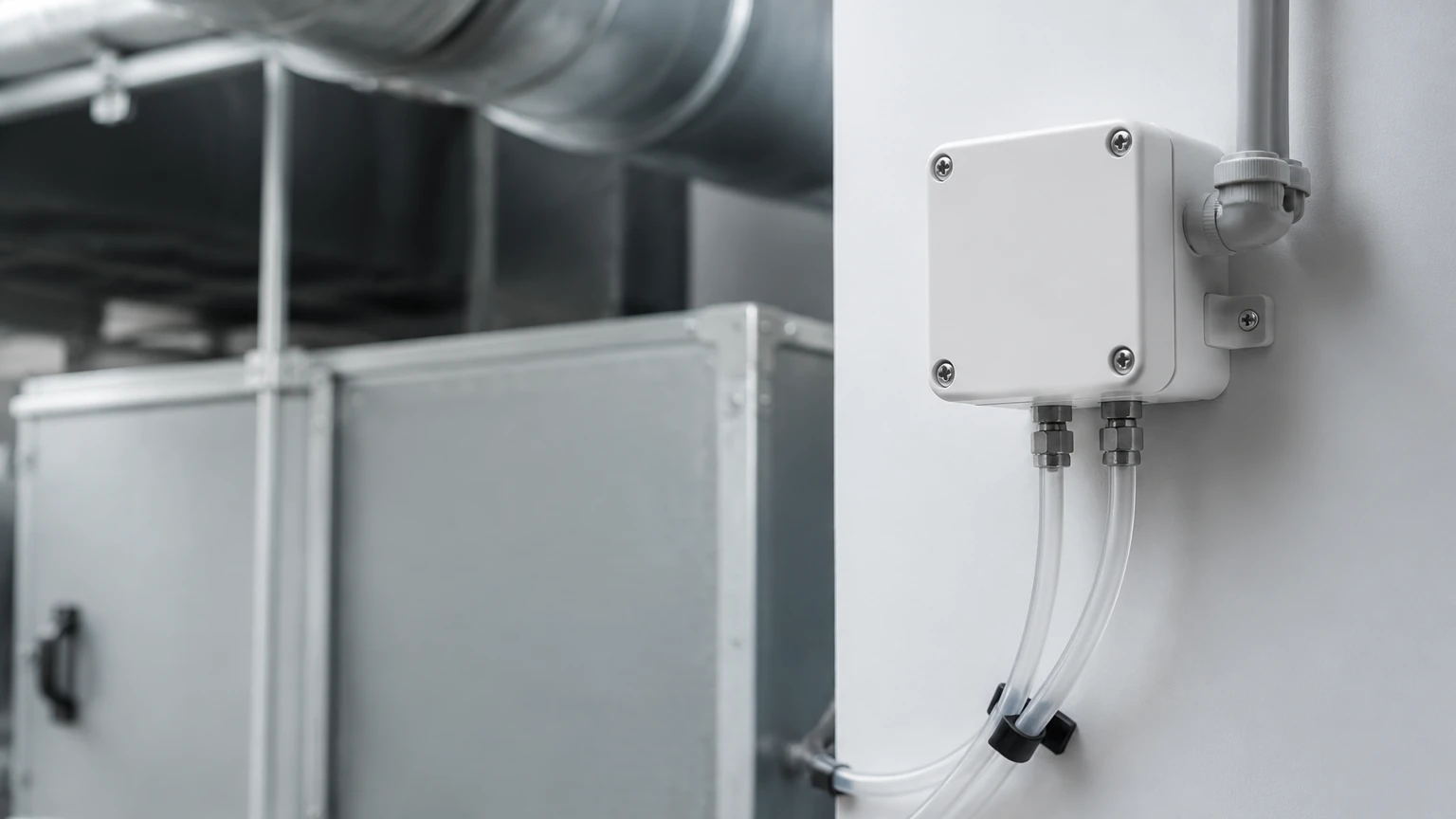
For air applications, the transmitter should ideally be mounted vertically. If the media contains any moisture, the tubing should be sloped toward the duct to allow condensation to drain away from the sensor. Using "drip loops" in the tubing can prevent moisture from entering the sensor housing, which is a common cause of premature failure.
Static Pressure Taps
When measuring duct pressure, the probe must be inserted perpendicular to the airflow. If the probe is angled toward or away from the flow, it will pick up velocity pressure (dynamic pressure), resulting in an inaccurate static pressure reading. In high-velocity ducts, using a static pressure tip with multiple sensing holes is recommended to average out turbulence.
Zeroing the Sensor
Before commissioning, the transmitter must be zeroed. This should be done after the device has reached its operating temperature and with both ports open to the atmosphere. Many high-end units now feature an "auto-zero" function that periodically re-calibrates the zero point using an internal solenoid valve, eliminating manual maintenance requirements.
Limitations and Common Risks
While robust, HVAC differential pressure transmitters have limitations that must be managed:
* Overpressure Events: Every sensor has a maximum overpressure limit. In HVAC systems, rapid damper closures or fan startups can create pressure spikes that may permanently deform the sensing diaphragm. Selecting a device with high overpressure protection is critical for system reliability.
* Media Compatibility: Standard HVAC transmitters are designed for non-corrosive gases. If the application involves exhaust from a chemical lab or high-humidity environments, specialized diaphragms (such as gold-plated or stainless steel) or remote seals may be required.
* Long-Term Drift: All sensors experience some degree of electronic or mechanical drift over time. In critical applications like healthcare or pharmaceutical manufacturing, annual calibration against a NIST-traceable manometer is a standard regulatory requirement.
Frequently Asked Questions (FAQ)
Q: Can an HVAC DP transmitter be used for water flow measurement?
A: Generally, no. Standard HVAC DP transmitters are designed for air and dry gases. Measuring liquid differential pressure requires a transmitter with a 316L stainless steel diaphragm and specific wet/wet pressure ports to prevent corrosion and leakage.
Q: What is the difference between Gauge Pressure and Differential Pressure?
A: Gauge pressure measures pressure relative to the local atmospheric pressure. Differential pressure measures the difference between two specific points. An HVAC differential pressure transmitter can function as a gauge pressure sensor if one port is left open to the atmosphere.
Q: How often should these devices be calibrated?
A: For standard commercial ventilation, a check every 2 years is usually sufficient. For regulated environments (cleanrooms, hospitals), annual or semi-annual calibration is recommended to ensure compliance with safety standards.
Conclusion
The HVAC differential pressure transmitter is an indispensable tool for modern infrastructure, bridging the gap between mechanical movement and digital control. By understanding the specific requirements of an application—from the sensitivity needed for cleanroom monitoring to the ruggedness required for industrial filter banks—engineers can select the most cost-effective and reliable instrumentation.
For professionals looking to integrate these pressure-sensing principles into broader industrial applications, such as liquid level monitoring or chemical process control, exploring advanced measurement solutions is the next logical step. You can Review product options and application support to find instruments tailored for more demanding industrial environments, ensuring that your facility operates with the highest levels of precision and safety.