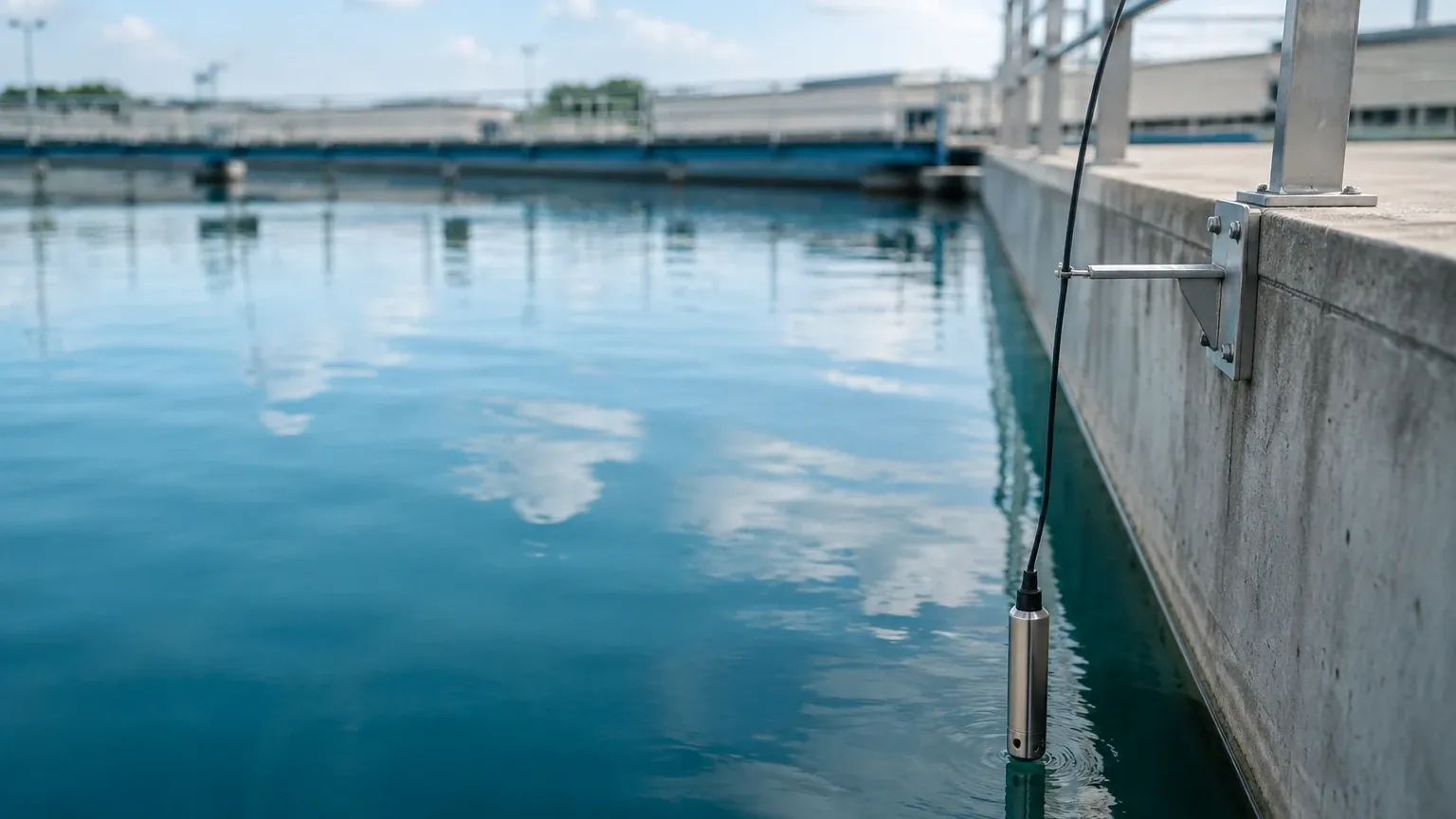
Hydrostatic Level Sensor
Hydrostatic Level Sensor
In the field of industrial process control, the hydrostatic level sensor remains one of the most reliable and widely adopted technologies for measuring the contents of tanks, wells, and reservoirs. Based on the fundamental laws of physics, this method offers a direct relationship between liquid height and pressure, providing a robust solution for industries ranging from water treatment to chemical processing. As a professional manufacturer, Welk provides a comprehensive range of these instruments, ensuring that engineers can select the most appropriate configuration for their specific environmental and chemical requirements.
The Fundamental Principle of Hydrostatic Measurement
Before selecting a hydrostatic level sensor, it is essential to understand the underlying physical principle: the hydrostatic paradox. The pressure at a specific point within a static liquid is determined solely by the height of the liquid column above that point and the specific gravity (density) of the fluid. It is independent of the total volume or the shape of the vessel.
The mathematical relationship is expressed by the formula:
P = ρ × g × h
Where:
* P = Hydrostatic pressure (Pa or bar)
* ρ (rho) = Density of the liquid (kg/m³)
* g = Local acceleration due to gravity (approximately 9.81 m/s²)
* h = Height of the liquid column (meters)
In practical application, the sensor measures the pressure exerted by the liquid. Since gravity is constant and the density of the medium is typically known, the sensor’s internal electronics can convert the pressure signal into a precise linear level reading. For most open-to-atmosphere applications, the sensor must also account for atmospheric pressure to prevent measurement errors caused by changes in weather or altitude. This is typically achieved through a vented capillary tube within the sensor cable or a secondary reference pressure port.
Types of Hydrostatic Level Sensors
Hydrostatic sensors generally fall into two categories based on their installation method and the nature of the application.
1. Submersible Level Transmitters
These sensors are designed to be lowered directly into the medium. They are fully encapsulated, often featuring an IP68 rating. They are the preferred choice for deep wells, boreholes, reservoirs, and wastewater lift stations. The sensor is suspended by its cable, which contains the electrical conductors and the atmospheric vent tube.
2. Externally Mounted (Pressure Transmitters)
In tank-based applications, the sensor is often mounted to the outside of the vessel via a threaded or flanged connection at the lowest point of the tank. This allows for easier maintenance without needing to empty the tank or pull the sensor from the top. These are common in chemical storage and food and beverage processing where hygienic connections are required.
Practical Selection Criteria
Selecting the correct hydrostatic level sensor requires a detailed analysis of the process environment. Engineers should consult the Main Page of the manufacturer’s catalog to review specific material and pressure range options before finalizing a specification.
| Criteria | Considerations |
| :— | :— |
| Measurement Range | The maximum height of the liquid. Sensors are typically rated in bar or meters of water column (mH2O). |
| Chemical Compatibility | The diaphragm material (e.g., 316L Stainless Steel, Tantalum, or Ceramic) must resist corrosion from the medium. |
| Cable Material | For submersible units, the cable jacket (PVC, PUR, or FEP) must be compatible with the fluid. |
| Accuracy Requirements | Standard industrial accuracy is often 0.5% FS, while high-precision applications may require 0.1% FS. |
| Output Signal | Common options include 4-20mA, 0-10V, or digital protocols like RS485 (Modbus) and HART. |
| Temperature Range | Standard sensors handle up to 80°C (176°F); specialized versions are needed for higher temperatures. |
Installation Considerations and Best Practices
Correct installation is as critical as sensor selection for ensuring long-term reliability and accuracy.
Preventing Cable Damage
For submersible sensors, the cable is a critical component. It should not be used as a primary load-bearing element if the sensor is heavy or the depth is extreme; in such cases, a separate stainless steel support wire should be used. The cable should be secured to prevent it from rubbing against sharp edges, which could compromise the outer jacket and the internal vent tube.
Atmospheric Venting
The vent tube must remain unobstructed. If moisture enters the vent tube, it can lead to internal corrosion or sensor drift. Use a moisture-absorbing bellows or a specialized vent filter at the termination point of the cable (usually inside a junction box) to prevent humidity from entering the tube.
Avoiding Turbulence
If the sensor is installed in a tank with an agitator or near an inlet pipe, the resulting turbulence can cause the sensor to swing or produce erratic readings. In these environments, the sensor should be installed inside a stilling well—a vertical pipe with small holes that dampens fluid movement while allowing the level to equalize.
Sediment and Sludge
In wastewater or mining applications, sediment can accumulate at the bottom of the tank and bury the sensor diaphragm. To prevent this, the sensor should be mounted slightly above the bottom of the tank or equipped with a protective nose cone that prevents clogging.
Limitations and Environmental Factors
While the hydrostatic level sensor is highly versatile, it is not a "one-size-fits-all" solution. Engineers must be aware of the following limitations:
* Density Sensitivity: Because the sensor measures weight, any change in the liquid's density (caused by temperature fluctuations or changes in concentration) will result in a level error. If the density changes significantly, a temperature-compensated sensor or a different technology, such as radar, may be required.
* Pressurized Tanks: In a sealed, pressurized tank, the sensor at the bottom will measure the sum of the liquid pressure and the gas pressure in the headspace. To obtain an accurate level, a differential pressure (DP) transmitter must be used to subtract the headspace pressure from the total pressure.
* Mechanical Wear: While hydrostatic sensors have no moving parts, the sensing diaphragm is thin and can be damaged by high-pressure spikes (water hammer) or abrasive solids.
Comparison with Alternative Technologies
To provide a complete engineering reference, it is useful to compare hydrostatic sensors with other common level measurement technologies.
| Feature | Hydrostatic Sensor | Ultrasonic Sensor | Radar Level Meter |
| :— | :— | :— | :— |
| Contact Type | Contact | Non-contact | Non-contact |
| Foam Influence | Minimal | High | Minimal |
| Vapor Influence | None | High | Minimal |
| Installation | Bottom/Submerged | Top-mounted | Top-mounted |
| Cost | Low to Moderate | Moderate | Moderate to High |
| Maintenance | Medium (cleaning) | Low | Very Low |
Frequently Asked Questions (FAQ)
Q: Can a hydrostatic level sensor be used for media other than water?
A: Yes. However, the electronics must be calibrated for the specific gravity of the fluid. For example, if measuring oil with a density of 0.85 g/cm³, the sensor will show a lower pressure than it would for the same height of water.
Q: How often should the sensor be calibrated?
A: For most industrial applications, an annual calibration check is sufficient. However, in critical processes or harsh environments where diaphragm scaling is possible, more frequent checks may be necessary.
Q: What happens if the vent tube is blocked?
A: If the vent tube is blocked, the sensor cannot compensate for changes in barometric pressure. This can result in an error of several centimeters (or inches) of water column as the weather changes.
Q: Is it possible to shorten the cable of a submersible sensor?
A: Yes, but it must be done carefully to ensure the vent tube is not crimped or sealed. It is generally recommended to order the sensor with the correct cable length or to coil the excess cable in a junction box rather than cutting it.
Conclusion
The hydrostatic level sensor remains a cornerstone of industrial instrumentation due to its simplicity and reliability. By understanding the relationship between pressure and depth, and by carefully selecting materials and installation methods, engineers can achieve highly accurate measurements in diverse applications. For those seeking specific product configurations or technical support, it is advisable to Review product options and application support to ensure the selected instrument meets all regulatory and process requirements.