Hygienic Ph Probe
Hygienic Ph Probe
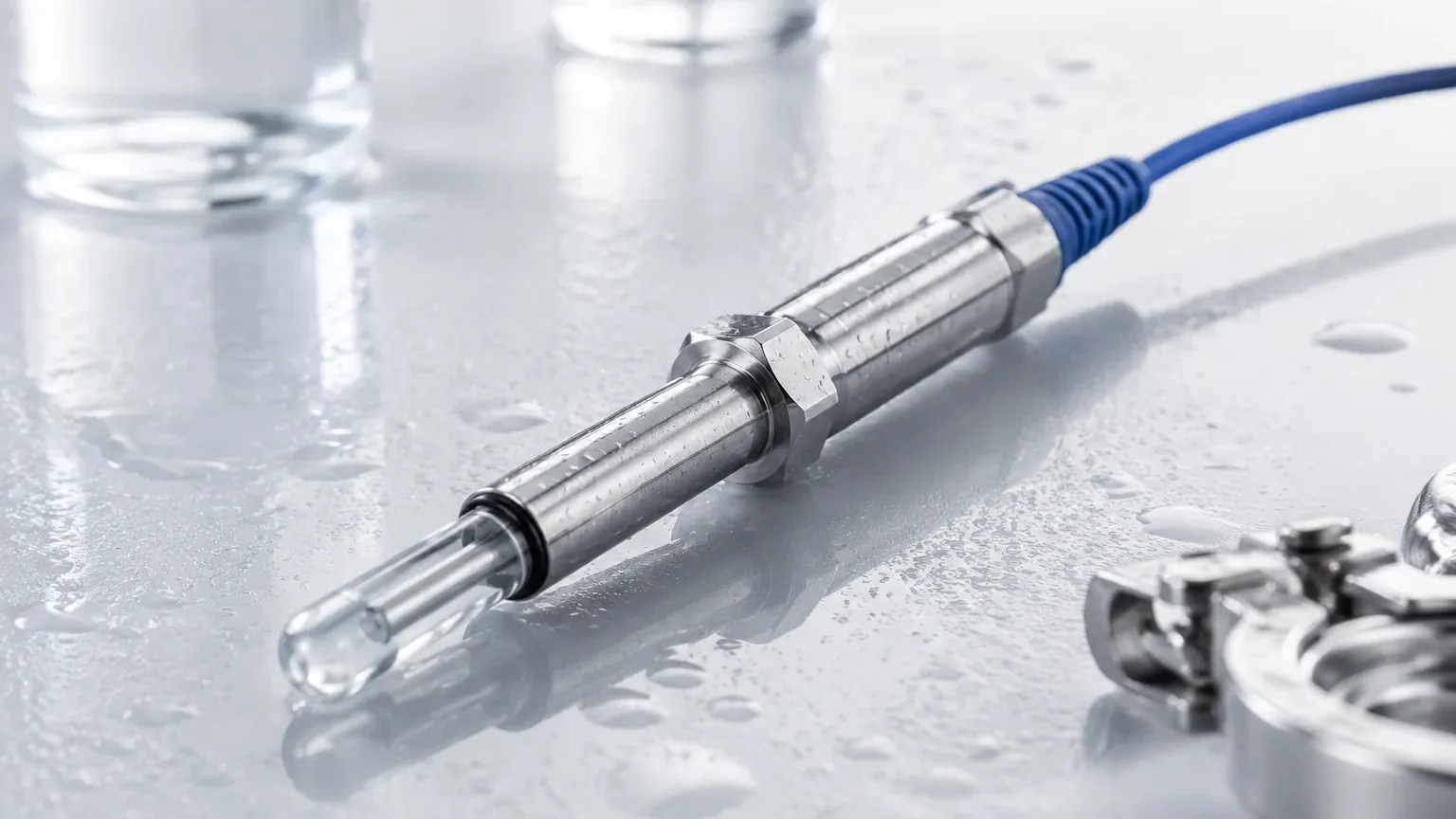
In the specialized fields of biotechnology, pharmaceuticals, and food and beverage processing, maintaining the chemical balance of a medium is as critical as monitoring its physical volume. A hygienic pH probe is a precision electrochemical sensor designed to measure the acidity or alkalinity of a liquid while adhering to strict sanitary standards. Unlike standard industrial sensors, these probes must withstand rigorous cleaning protocols and prevent any microbial growth or batch contamination. This guide examines the underlying principles, design requirements, and selection criteria for implementing pH measurement in sterile process environments.
Understanding pH Measurement Principles in Sanitary Environments
To effectively select a hygienic pH probe, one must first understand the electrochemical process it facilitates. Most pH measurements are based on a potentiometric principle using a glass electrode. The system typically consists of two main components: a pH-sensitive glass membrane (the sensing electrode) and a reference electrode that provides a stable potential.
When the probe is immersed in a liquid, an ion exchange occurs on the hydrated outer layer of the glass membrane. Hydrogen ions ($H^+$) in the process medium interact with the glass, creating a millivolt signal proportional to the hydrogen ion concentration. This relationship is governed by the Nernst equation. Because the internal buffer of the probe has a known, constant pH, the potential difference between the internal and external surfaces of the glass membrane allows the transmitter to calculate the pH value.
In hygienic applications, the challenge lies in the reference system. The reference electrode must maintain electrical contact with the process medium through a junction (diaphragm). In sanitary processes, this junction is a potential site for clogging or bacterial ingress. Consequently, hygienic probes utilize specialized diaphragms—such as ceramic, PTFE, or open apertures with solid electrolytes—to ensure a consistent flow of electrolyte while remaining easy to sterilize.
Key Design Standards for Hygienic pH Probes
Sanitary instrumentation is defined by its ability to be cleaned and sterilized without being removed from the process line. For a pH probe to be classified as "hygienic," it must comply with several international standards and design philosophies:
1. Material Compliance (FDA and USP)
All wetted parts, including the glass bulb, the probe body, and the seals (O-rings), must be made from materials that are physiologically safe. Typically, this involves FDA-compliant EPDM, FKM, or FFKM elastomers and USP Class VI certified plastics or glass. The metal components, usually the sensor head or mounting sleeve, are almost exclusively constructed from 316L stainless steel (1.4404/1.4435).
2. Surface Finish and Geometry
To prevent the adhesion of proteins or bacteria, the surface roughness ($Ra$) of the stainless steel components must be less than 0.8 μ m (32 μ in), often enhanced by electropolishing. The probe design must avoid "dead spaces"—recessed areas where fluid can stagnate and escape the flow of cleaning agents. This is why hygienic probes often feature flush-mounted diaphragms or smooth, rounded geometries.
3. CIP and SIP Compatibility
Clean-in-Place (CIP) and Steam-in-Place (SIP) are standard procedures in modern plants. A hygienic pH probe must survive exposure to caustic chemicals (like 2% NaOH) and high-temperature steam sterilization, which often reaches 130°C to 140°C (266°F to 284°F) at pressures up to 6 bar (87 psi). The glass and the internal electrolyte must be thermally stabilized to prevent the probe from drifting or cracking during these rapid temperature transitions.
Evaluating Probe Technologies: Glass vs. ISFET
While traditional glass electrodes are the industry standard, alternative technologies exist for specific hygienic applications. Choosing between them requires an assessment of the process risks.
Glass Electrodes
Glass electrodes offer the highest accuracy and the broadest chemical resistance. Modern hygienic glass probes use "high-alkali" or "low-temperature" glass formulations depending on the application. The primary drawback is the risk of breakage; in food production, a shattered glass bulb can lead to a total batch rejection. To mitigate this, many manufacturers offer shatter-resistant glass or protective cages.
ISFET (Ion-Sensitive Field-Effect Transistor)
ISFET sensors replace the glass membrane with a semiconductor chip. These are "glass-free" sensors, making them ideal for the food industry where glass-in-process is strictly forbidden. ISFET probes are robust and respond quickly to pH changes. However, they can be more sensitive to electrical interference and may have narrower operating temperature ranges compared to high-end glass electrodes.
Selection Criteria and Technical Specifications
Selecting the correct hygienic pH probe involves balancing the chemical requirements of the process with the mechanical constraints of the installation. Engineers should evaluate the following parameters:
| Feature | Specification Requirement | Impact on Process |
| :— | :— | :— |
| Temperature Range | -10°C to +140°C | Determines suitability for SIP cycles. |
| Pressure Resistance | Up to 10 bar (145 psi) | Essential for pressurized fermentation tanks. |
| Electrolyte Type | Pressurized liquid, gel, or solid | Affects maintenance frequency and junction life. |
| Diaphragm Design | Ceramic, Hole, or PTFE | Determines resistance to fouling and protein buildup. |
| Connection Type | Pg 13.5, Varivent, or Tri-Clamp | Dictates how the probe interfaces with the vessel. |
For complex automation setups, it is often beneficial to review a wider range of instrumentation. For instance, when configuring a complete tank monitoring system, engineers often consult the Main Page of specialized manufacturers like Welk to ensure that level transmitters and pH probes are compatible in terms of mounting and signal integration.
Installation and Integration with Level Measurement Systems
In B2B industrial automation, a pH probe rarely operates in isolation. It is typically part of a control loop that includes temperature sensors and level meters. Proper installation is vital for both measurement accuracy and probe longevity.
Mounting Angle
pH probes containing liquid or gel electrolytes must be installed at an angle of at least 15° above the horizontal. This ensures that the internal electrolyte stays in contact with the pH glass and that any air bubbles inside the probe rise to the top, away from the sensing bulb.
Retractable Assemblies
In many hygienic processes, the probe needs to be cleaned or calibrated while the tank is full. Retractable assemblies allow the probe to be withdrawn into a separate chamber, isolated from the process by a ball valve or a specialized seal. This chamber can then be flushed with water or buffer solutions. This is particularly common in large-scale fermenters where the level of the liquid (monitored by radar or hydrostatic sensors) might stay high for weeks at a time.
Coordination with Level Monitoring
Level measurement is a critical companion to pH monitoring. For example, in a neutralization tank, the control system must know the volume of the liquid (measured by an ultrasonic or radar level meter) to calculate the exact amount of acid or base needed to adjust the pH. If the level is too low, the pH probe might be exposed to air, leading to "dry out" and sensor failure. High-quality level solutions, such as those provided by Welk, ensure that the pH probe remains submerged and functional throughout the process cycle.
Maintenance, Calibration, and CIP/SIP Considerations
The lifespan of a hygienic pH probe is heavily influenced by how it is maintained. Unlike a level meter, which may operate for years with minimal intervention, a pH probe is a consumable item that degrades over time.
1. Calibration: Probes should be calibrated regularly using standard buffer solutions (typically pH 4.0, 7.0, and 10.0). In hygienic industries, automated calibration systems can perform this task without human intervention, reducing the risk of contamination.
2. Cleaning: While CIP removes most residues, some proteins or minerals may require specialized cleaning agents (e.g., pepsin-HCl for protein removal). The diaphragm must remain clear; if it becomes blocked, the probe's response will become sluggish or "drift."
3. Hydration: The pH-sensitive glass must remain hydrated to function. If a probe is left in a dry tank after a batch is drained, it must be kept moist using a storage cap filled with 3M KCl solution.
Limitations and Practical Constraints
Despite their advanced design, hygienic pH probes have inherent limitations:
* Aging: The glass membrane and reference electrolyte naturally deplete. Even under ideal conditions, a probe may only last 6 to 12 months in a process involving frequent SIP cycles.
* Temperature Sensitivity: pH is temperature-dependent. While most modern probes include an integrated Pt100 or Pt1000 temperature sensor for automatic compensation, extreme fluctuations can still cause temporary measurement errors.
* Chemical Attack: Highly acidic or hydrofluoric acid-containing environments can etch the glass, leading to premature failure.
Frequently Asked Questions (FAQ)
Q: Can I use a standard industrial pH probe in a food-grade application?
A: No. Standard probes often contain materials that are not FDA-approved and have geometries that allow bacterial growth. Using non-hygienic probes in food or pharma can lead to regulatory non-compliance and safety risks.
Q: How often should I calibrate my hygienic pH probe?
A: This depends on the process stability and the required accuracy. In pharmaceutical applications, calibration is often performed before every batch. In less critical food processes, weekly calibration may suffice.
Q: What is the difference between a gel-filled and a liquid-filled probe?
A: Gel-filled probes are generally lower maintenance because they do not require refilling or external pressurization. Liquid-filled probes, however, provide a faster response and are better suited for processes with high pressure or very low conductivity, as the electrolyte flow can be more precisely controlled.
Q: How does the probe handle Steam-in-Place (SIP)?
A: Hygienic probes are built with specialized glass and internal pressure compensation to handle the expansion of the electrolyte during heating. However, frequent SIP cycles will eventually "stress" the glass, leading to a gradual shift in the zero point and slope of the sensor.
By understanding these technical nuances, plant engineers can select a hygienic pH probe that ensures both product quality and process safety. Integrating these sensors with reliable level measurement and automation infrastructure is the key to achieving consistent, high-yield production in sanitary environments.