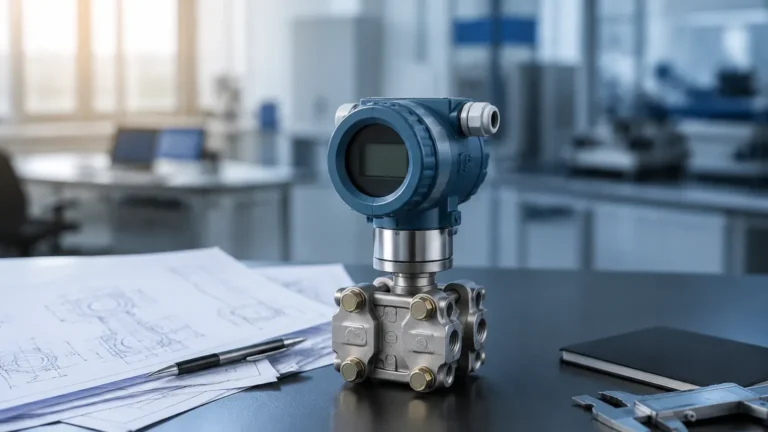
Industrial Pressure Sensor
Industrial Pressure Sensor
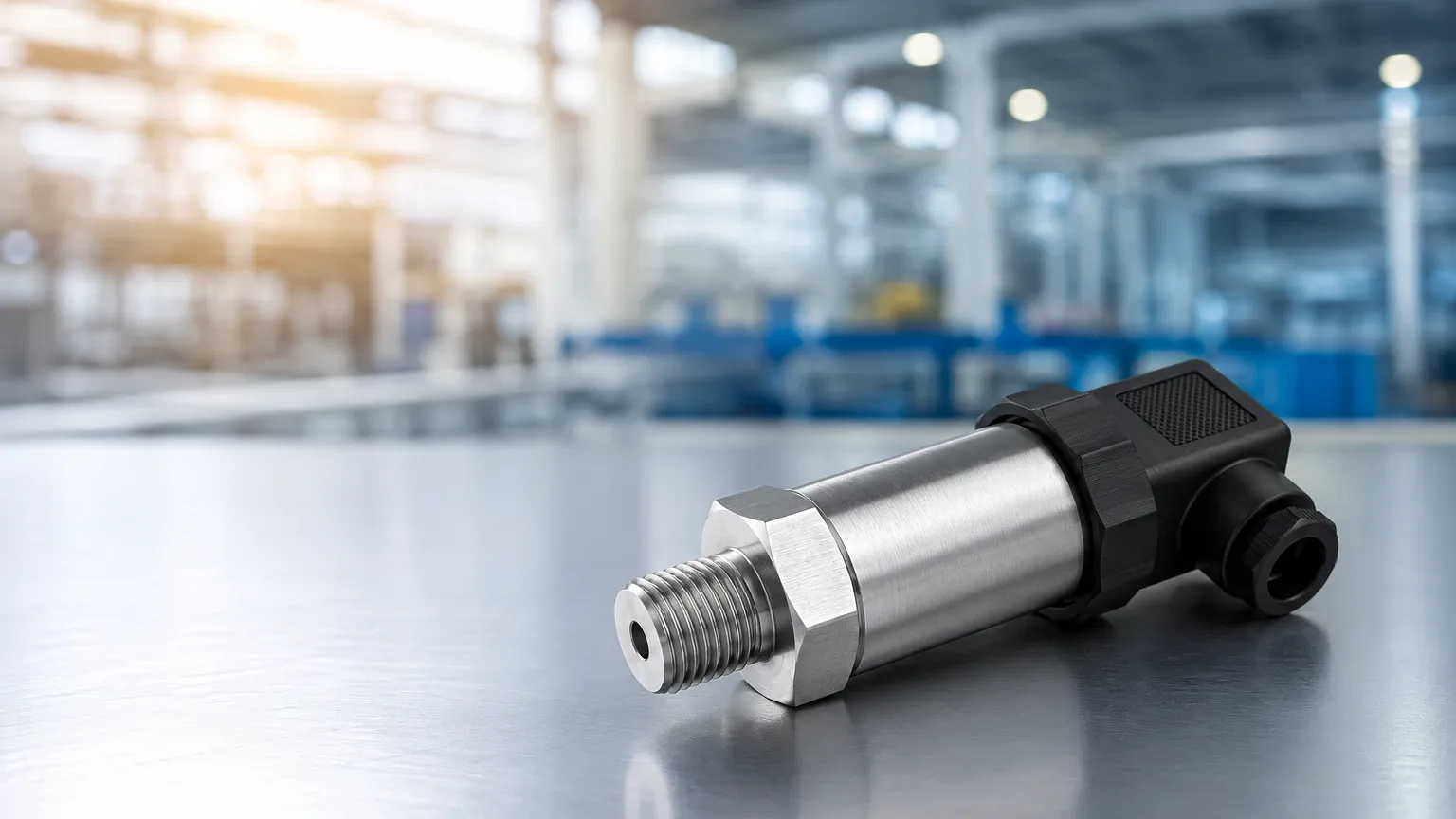
In the landscape of industrial automation and process control, the industrial pressure sensor serves as a fundamental component for monitoring, safety, and efficiency. These devices convert mechanical pressure into an electrical signal, allowing operators to quantify the force exerted by gases or liquids within a system. While pressure measurement is a distinct field, it is inextricably linked to level measurement through hydrostatic principles, where the weight of a liquid column is used to determine its height.
For engineers and plant managers, selecting the correct industrial pressure sensor requires a deep understanding of the underlying sensing technologies, the physical properties of the media being measured, and the environmental conditions of the installation site. This guide provides a technical overview of pressure sensing technologies, their application in level measurement, and practical considerations for industrial deployment.
Understanding Industrial Pressure Sensor Technology
Before selecting a sensor, it is essential to understand the primary measurement principles used in modern industrial environments. Most sensors rely on a diaphragm that deflects under pressure, and the method used to detect this deflection defines the sensor type.
Piezoresistive Pressure Sensors
This is the most common technology for industrial applications. It utilizes the piezoresistive effect of semiconductors (usually silicon) or metal strain gauges bonded to a diaphragm. When pressure is applied, the diaphragm deforms, causing a change in the electrical resistance of the sensing element. This change is proportional to the applied pressure. Piezoresistive sensors are highly sensitive and offer excellent stability over a wide range of pressures.
Ceramic Capacitive Pressure Sensors
In these sensors, a ceramic diaphragm and a ceramic substrate form a variable capacitor. As pressure moves the diaphragm closer to the substrate, the capacitance changes. Because ceramic is highly resistant to corrosion and mechanical wear, these sensors are ideal for aggressive chemical environments or applications involving abrasive slurries. They are also known for their high overpressure resistance.
Thin-Film Strain Gauge Sensors
Thin-film sensors are manufactured by depositing a layer of resistive material directly onto a stainless steel diaphragm using vacuum deposition or sputtering. This creates a very robust bond that is resistant to shock, vibration, and thermal cycling. These sensors are typically used in high-pressure hydraulic systems where durability is paramount.
The Role of Pressure Sensors in Hydrostatic Level Measurement
In many industrial contexts, an industrial pressure sensor is used specifically to measure the level of a liquid in an open or closed tank. This is known as hydrostatic level measurement. The principle is based on the fact that the pressure at the bottom of a liquid column is directly proportional to the height of the liquid and its density.
The Hydrostatic Formula
The relationship is expressed by the formula:
P = ρ × g × h
Where:
* P is the hydrostatic pressure (typically measured in Pascals or bar).
* ρ (rho) is the density of the liquid (kg/m³).
* g is the local acceleration due to gravity (approximately 9.81 m/s²).
* h is the height of the liquid column (meters).
By measuring the pressure (P) and knowing the density (ρ) of the fluid, the height (h) can be calculated accurately. This method is widely used in water treatment, chemical storage, and fuel monitoring because it is reliable and does not require moving parts within the tank.
Key Selection Criteria for Industrial Applications
Choosing the right industrial pressure sensor involves more than just matching a pressure range. Engineers must confirm several technical parameters to ensure long-term reliability.
1. Pressure Type
* Gauge Pressure: Measured relative to atmospheric pressure. Used in vented tanks.
* Absolute Pressure: Measured relative to a perfect vacuum. Necessary for applications where atmospheric pressure changes would affect the process accuracy.
* Differential Pressure: Measures the difference between two pressure points. Essential for level measurement in pressurized (closed) tanks.
2. Media Compatibility
The wetted parts—the components of the sensor that come into contact with the fluid—must be chemically compatible with the media. While 316L stainless steel is standard, aggressive chemicals may require Hastelloy, Monel, or ceramic diaphragms. Seals and O-rings (typically Viton, NBR, or PTFE) must also be verified against the chemical profile of the process.
3. Output Signals and Communication
Modern industrial environments require integration with PLC or SCADA systems. Common outputs include:
* Analog: 4-20 mA (current loop) or 0-10 VDC.
* Digital: HART protocol, RS485 Modbus, or Profibus.
Digital protocols allow for remote configuration and diagnostic feedback, which is critical for predictive maintenance.
Practical Selection Table: Comparing Sensor Technologies
| Feature | Piezoresistive (Silicon) | Ceramic Capacitive | Thin-Film Strain Gauge |
| :— | :— | :— | :— |
| Accuracy | Very High (up to 0.05% FS) | High (0.1% to 0.5% FS) | Moderate to High |
| Pressure Range | Low to Medium | Low to Medium | Medium to Very High |
| Corrosion Resistance | Moderate (Requires isolation) | Excellent (Inherent) | Good |
| Overpressure Limit | Moderate | Very High | High |
| Best Application | Precision lab/process control | Aggressive chemicals/Slurries | Hydraulics/High-pressure gas |
| Cost | Moderate | Competitive | High (for specialized alloys) |
Installation and Maintenance Guidelines
Correct installation is as important as sensor selection. Poor mounting can lead to measurement errors or premature device failure.
Mounting Position
For liquid level applications, the sensor should be installed at the lowest point of the measurement range. If the sensor is installed on a pipe leading from the tank, the "zero level" must be offset in the transmitter electronics to account for the vertical distance between the sensor and the tank floor.
Atmospheric Venting
Gauge pressure sensors, particularly submersible types, require a venting path to the atmosphere. This is usually achieved via a small capillary tube integrated into the sensor cable. It is vital to ensure this tube is not kinked, blocked, or exposed to moisture, as this will cause significant drift in the readings.
Preventing Clogging and Scaling
In wastewater or viscous fluid applications, the pressure port of the sensor can become clogged. Using a "flush diaphragm" design—where the sensing surface is flat and level with the process connection—prevents material buildup and allows for easier cleaning.
Electrical Considerations
Industrial environments are often prone to electromagnetic interference (EMI). Using shielded, twisted-pair cabling and ensuring proper grounding of the sensor housing will minimize signal noise. For outdoor installations, surge protection is recommended to protect the electronics from lightning strikes.
Limitations and Operational Challenges
While an industrial pressure sensor is a versatile tool, it has limitations that must be addressed during the engineering phase.
* Density Fluctuations: Since hydrostatic level measurement relies on the density of the fluid, any change in temperature or concentration that alters the density will result in a level error. If the density varies significantly, a temperature-compensated system or a different measurement technology (like radar) may be required.
* Temperature Drift: All sensors experience some degree of thermal drift. High-quality sensors include internal temperature compensation to maintain accuracy across a specified operating range (e.g., -20°C to +80°C).
* Dynamic Pressure Effects: If a sensor is placed near a pump inlet or an agitator, the moving fluid can create dynamic pressure (Bernoulli effect), which the sensor will interpret as a change in static pressure/level. Baffles or stilling wells are often used to mitigate this.
Frequently Asked Questions (FAQs)
Q: How often should an industrial pressure sensor be calibrated?
A: Most manufacturers recommend annual calibration. However, in critical safety applications or harsh environments with high vibration, semi-annual checks may be necessary. Many modern sensors support "field zeroing" to account for minor shifts over time.
Q: Can a pressure sensor be used for boiling liquids?
A: It is challenging. Boiling creates bubbles (gas) within the liquid, which lowers the effective density. This causes the pressure sensor to report a level lower than the actual physical height. In such cases, non-contact methods are often preferred.
Q: What is the difference between a pressure transducer and a pressure transmitter?
A: While terms are often used interchangeably, a transducer typically outputs a low-level voltage signal (e.g., millivolts), whereas a transmitter includes signal conditioning to provide a standardized industrial output like 4-20 mA or a digital protocol.
Q: How do I protect a sensor from pressure spikes?
A: Pressure snubbers or capillary siphons can be installed between the process and the sensor to dampen rapid pressure fluctuations or "water hammer" effects that could damage the diaphragm.
Conclusion
Selecting the right industrial pressure sensor is a balance of technical specifications, material science, and application-specific logic. By understanding the measurement principles and accounting for environmental variables like media density and temperature, engineers can implement reliable systems for both pressure monitoring and hydrostatic level control. For a comprehensive range of measurement solutions and technical support, you can Review product options and application support at our Main Page to find the ideal instrument for your specific industrial requirements.