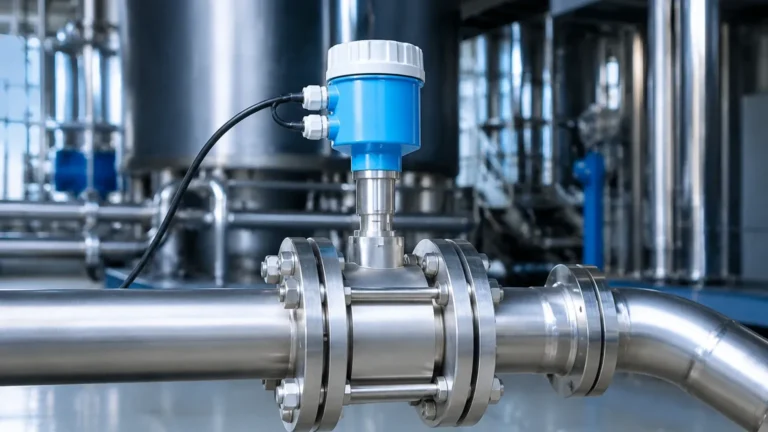
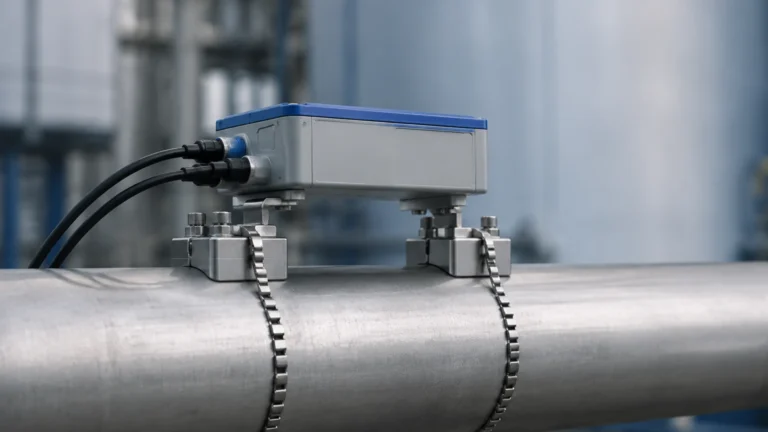
Ldl201
Ldl201
In the landscape of industrial process automation, the ability to distinguish between different media and monitor cleaning cycles is as critical as measuring the volume of liquid in a tank. The LDL201 is a high-precision conductivity sensor designed to meet these challenges, particularly in the food, beverage, and pharmaceutical industries. While traditional level meters focus on the quantity of a substance, the LDL201 focuses on its quality and identity, providing essential data for phase separation and Clean-in-Place (CIP) processes.
As a professional manufacturer of industrial level measurement instruments, Welk integrates advanced sensing technologies like the LDL201 into broader automation frameworks. By understanding the measurement principles, technical specifications, and installation requirements of this sensor, engineers can significantly improve process efficiency and reduce waste. For a comprehensive overview of how these sensors integrate with broader level measurement systems, you can visit the Main Page of our technical resource center.
Measurement Principles of the LDL201
The LDL201 operates on the principle of conductive measurement. Unlike inductive sensors that use magnetic fields, the LDL201 utilizes two metallic electrodes (typically made of high-grade stainless steel) that come into direct contact with the process media.
How Conductivity is Measured
When a voltage is applied between the electrodes, the liquid acts as an electrical conductor. The sensor measures the current flowing through the medium. Since the electrical resistance of a liquid is inversely proportional to its conductivity, the sensor can calculate the electrolytic conductivity of the fluid. This value is usually expressed in microsiemens per centimeter (µS/cm) or millisiemens per centimeter (mS/cm).
Media Differentiation and Level Detection
In practical applications, the LDL201 is used to detect transitions between different liquids. For example, in a pipeline where water follows a cleaning agent, the sensor detects the sharp change in conductivity. This allows the control system to switch valves at the exact moment the media changes, minimizing the loss of product and cleaning chemicals. While it is not a continuous level meter like a radar or ultrasonic sensor, it acts as a sophisticated point-level switch that provides qualitative data about the "level" of a specific phase within a process.
Technical Specifications and Features
The LDL201 is engineered for durability and precision in demanding environments. Its design reflects the requirements of hygienic applications and high-temperature processes.
Material Construction
The wetted parts of the LDL201 are typically constructed from 316L stainless steel (1.4404) and PEEK (Polyetheretherketone). PEEK is chosen for its exceptional chemical resistance and thermal stability, ensuring that the sensor tip does not degrade even when exposed to aggressive caustic or acidic cleaning agents.
Operating Range
* Conductivity Range: 100 to 1,000,000 µS/cm (or 0.1 to 1000 mS/cm).
* Temperature Range: -25°C to 100°C (up to 150°C for short-term sterilization cycles, such as SIP).
* Pressure Rating: Typically rated for up to 16 bar (approximately 232 psi).
Communication and Output
Modern iterations of the LDL201 feature IO-Link technology. This digital interface allows for the transmission of multiple process values over a single cable, including conductivity and temperature. It also enables remote parameterization and advanced diagnostics, which are essential for Industry 4.0 applications.
Application Scenarios in Industrial Automation
The versatility of the LDL201 makes it a staple in various industrial sectors where liquid purity and phase separation are paramount.
1. CIP (Clean-in-Place) Systems
In CIP systems, the LDL201 is used to monitor the concentration of cleaning detergents. By measuring conductivity, the system can determine if the detergent has reached the required strength or if the rinsing process has successfully removed all chemical residues. This ensures food safety and regulatory compliance.
2. Phase Separation
In the dairy industry, the sensor is used to distinguish between milk, whey, and water. Because each of these fluids has a distinct conductivity profile, the LDL201 can trigger automated valve transitions, ensuring that milk is not diluted by rinse water and that water is not contaminated by product.
3. Cooling Tower Water Monitoring
Conductivity is a primary indicator of the concentration of dissolved solids in cooling water. The LDL201 monitors these levels to trigger "blowdown" cycles, where a portion of the concentrated water is drained and replaced with fresh water to prevent scaling and corrosion in heat exchangers.
Selection Criteria and Practical Considerations
Choosing the right sensor requires an analysis of the process environment and the physical properties of the media. The following table provides a comparison for selecting between different media-sensing technologies.
Technology Selection Table
| Feature | LDL201 (Conductive) | Inductive Conductivity | Ultrasonic Level |
| :— | :— | :— | :— |
| Primary Use | Media differentiation/Phase detection | High-concentration chemical monitoring | Continuous level measurement |
| Accuracy | High in low-to-mid ranges | High in very high ranges | High (distance-based) |
| Media Contact | Direct contact required | Non-contact (toroidal) | Non-contact |
| Cleaning | Easy (PEEK/SS) | Easy (No electrodes) | N/A (Sensor is above media) |
| Cost | Cost-effective | Higher | Moderate to High |
Key Evaluation Factors
1. Conductivity Range: Ensure the sensor's range covers both the lowest (e.g., demineralized water) and highest (e.g., 5% caustic soda) expected values.
2. Process Connection: The LDL201 usually comes with standard hygienic connections like G 1/2 A or Tri-Clamp. Compatibility with existing tank or pipe fittings is essential.
3. Response Time: For high-speed phase separation, a sensor with a fast response time (typically < 2 seconds) is required to prevent product loss.

Installation and Maintenance Guidelines
Proper installation is critical to ensure the accuracy and longevity of the LDL201. Incorrect placement can lead to air pockets or sediment buildup, both of which result in false readings.
Positioning in the Pipeline
* Full Pipe Requirement: The sensor must always be completely submerged in the liquid. Installation in a vertical pipe with upward flow is ideal to ensure the pipe remains full.
* Avoid Air Pockets: Do not install the sensor at the highest point of a piping system or on the top of a horizontal pipe, as air bubbles will accumulate there and interfere with the electrical path between the electrodes.
* Orientation: The sensing tip should be positioned in the center of the flow stream to obtain a representative measurement of the media.
Maintenance and Cleaning
While the LDL201 is designed for hygienic environments, certain media can leave deposits on the electrodes.
* Visual Inspection: Regularly check the PEEK tip for signs of scaling or mechanical damage.
* Calibration: Periodically verify the sensor's accuracy using a standard conductivity solution. If the sensor supports IO-Link, calibration offsets can be applied digitally.
* Cleaning: Use appropriate cleaning agents that are compatible with 316L stainless steel and PEEK. Avoid abrasive tools that could scratch the electrode surfaces.
Limitations and Troubleshooting
Despite its robustness, the LDL201 has limitations that engineers must account for during the design phase.
1. Non-Conductive Fluids
The LDL201 cannot measure the level or presence of non-conductive fluids like pure oils, hydrocarbons, or highly purified deionized water (below its detection threshold). In these cases, a capacitive level switch or a radar level meter may be more appropriate.
2. Coating and Scaling
If the media is highly viscous or prone to crystallization, a layer may form over the electrodes. This "coating" acts as an insulator, leading to lower-than-actual conductivity readings. In such environments, inductive (toroidal) sensors or regular automated cleaning cycles are recommended.
3. Turbulence and Bubbles
Excessive aeration or turbulence can cause fluctuating readings. If bubbles are present, they displace the conductive liquid between the electrodes, causing the measured conductivity to drop. Using a stilling well or optimizing the flow profile can mitigate this issue.
Frequently Asked Questions (FAQs)
Q: Can the LDL201 be used for continuous level measurement?
A: No, the LDL201 is a conductivity sensor designed for media detection and phase separation. For continuous level measurement, you should consider Welk’s radar or ultrasonic level transmitters.
Q: Is the LDL201 compatible with CIP processes?
A: Yes, it is specifically designed for CIP. Its PEEK and 316L construction can withstand high temperatures and aggressive cleaning chemicals.
Q: What is the benefit of IO-Link in the LDL201?
A: IO-Link allows the sensor to transmit both conductivity and temperature data simultaneously. It also simplifies replacement, as the controller can automatically upload the previous sensor's parameters to the new one.
Q: Does the sensor require a specific pipe diameter?
A: While it can be installed in various pipe sizes, the sensing tip must be fully immersed. In very small pipes, a T-piece or an expanded section may be necessary to accommodate the sensor length without restricting flow.
Conclusion
The LDL201 represents a vital component in the modern industrial toolkit, bridging the gap between simple point-level detection and complex analytical chemistry. By providing real-time data on media conductivity and temperature, it enables precise control over phase transitions and cleaning cycles, directly contributing to operational efficiency and product quality.
For engineers looking to integrate the LDL201 into their existing infrastructure or those seeking a complete level measurement solution involving radar, ultrasonic, or hydrostatic technologies, selecting a partner with deep technical expertise is essential. To explore our full range of measurement instruments and technical guides, please refer to our Main Page. Proper selection, combined with rigorous adherence to installation best practices, ensures that the LDL201 delivers reliable performance for years to come.