Less Water Usage
Less Water Usage
In the modern industrial landscape, resource efficiency is no longer a secondary objective; it is a core operational requirement. Achieving less water usage is a priority for facility managers and process engineers across sectors ranging from chemical processing to municipal water treatment. Precise level measurement serves as the foundation for water conservation strategies, providing the data necessary to eliminate overflows, detect leaks early, and optimize recycling processes.
Effective water management relies on the integration of reliable instrumentation. By utilizing advanced level sensors, industrial plants can transition from reactive waste management to proactive resource optimization. This guide examines how various level measurement technologies contribute to reduced water consumption and provides technical insights into selecting the right equipment for conservation-focused applications.
Measurement Principles for Water Optimization
Before implementing a water-saving strategy, it is essential to understand the physics behind the sensors that track this resource. Level measurement technologies are generally categorized into non-contact and contact methods, each offering specific advantages for achieving less water usage.
Ultrasonic Level Measurement
Ultrasonic sensors operate on the "time-of-flight" principle. The sensor emits high-frequency sound waves that travel through the air, reflect off the water surface, and return to the transducer. The device calculates the distance based on the time taken for the signal to return.
In the context of water conservation, ultrasonic sensors are frequently used in open-channel flow measurement and sump monitoring. Because they are non-contact, they are not subject to scaling or corrosion from the water, ensuring long-term accuracy. However, they can be affected by air temperature fluctuations and heavy foam, which may dissipate the sound signal.
Radar Level Measurement
Radar sensors also use time-of-flight but utilize high-frequency electromagnetic waves (typically 26GHz or 80GHz) instead of sound. Radar is highly effective for achieving less water usage in challenging environments because the signals are unaffected by steam, pressure, or temperature changes.
80GHz radar, in particular, offers a narrow beam angle, allowing it to measure water levels in narrow tanks or vessels with internal obstructions without interference. This precision is critical for preventing tank overfills, which are a primary source of industrial water waste.
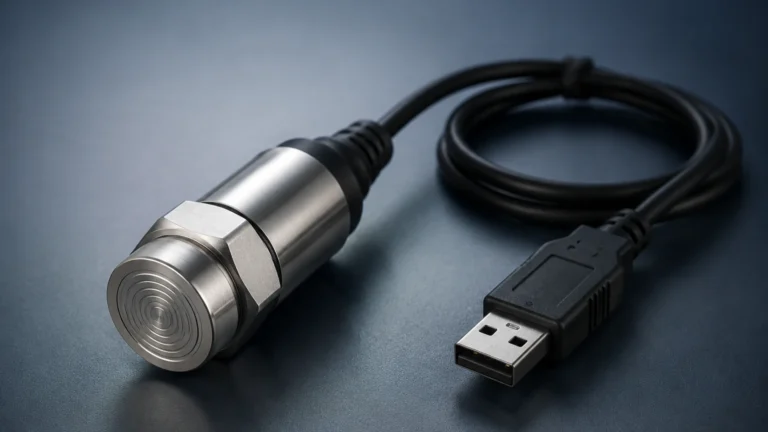
Hydrostatic Pressure Measurement
Hydrostatic level transmitters measure the pressure exerted by the liquid column above the sensor. Based on the formula $P = \rho gh$ (where $P$ is pressure, $\rho$ is liquid density, $g$ is gravity, and $h$ is height), the transmitter converts the pressure reading into a level value. This technology is robust and ideal for deep wells, reservoirs, and large storage tanks where non-contact sensors might face range limitations.
Selection Guide for Water Conservation Instrumentation
Choosing the correct instrument is the first step toward reducing waste. The following table compares common technologies based on their application in water-saving initiatives.
| Technology | Primary Application | Contribution to Less Water Usage | Accuracy |
| :— | :— | :— | :— |
| Radar Level Meter | Process tanks, chemical dosing | Prevents overfills in high-steam or turbulent environments. | ±1 mm to ±2 mm |
| Ultrasonic Sensor | Open channels, sumps | Monitors wastewater discharge and recycling flow rates. | ±0.25% of range |
| Hydrostatic Transmitter | Deep wells, water towers | Detects slow leaks in large-scale storage through precise head pressure. | ±0.1% to ±0.5% |
| Magnetic Level Gauge | Boiler feed water | Provides visual and electronic tracking of high-temperature water. | ±5 mm |
| Capacitance Switch | High/Low alarm | Acts as a redundant fail-safe to stop pumps and prevent overflow. | N/A (Point Level) |
For engineers seeking to upgrade their systems, it is helpful to Review product options and application support to ensure the selected hardware aligns with specific environmental constraints.
Practical Applications for Reducing Water Waste
Leak Detection in Storage and Distribution
In large-scale industrial facilities, even a minor leak in a storage tank can result in thousands of liters of wasted water over a month. By utilizing high-precision radar or hydrostatic sensors, operators can perform "static leak tests." By monitoring the level overnight or during periods of zero demand, any drop in level beyond the calculated evaporation rate indicates a leak. Early detection allows for immediate maintenance, directly contributing to less water usage.
Cooling Tower Optimization
Cooling towers are among the largest consumers of water in industrial plants. Water is lost through evaporation, drift, and "blowdown" (the removal of water to reduce mineral concentration). Precise level control in the cooling tower basin ensures that the make-up water valves only open when absolutely necessary. By integrating level sensors with conductivity meters, plants can optimize the blowdown cycle, ensuring that water is only discharged when mineral levels exceed thresholds, rather than on a simple timer.
Wastewater Recovery and Treatment
Many modern facilities aim for "Zero Liquid Discharge" (ZLD). This involves treating and recycling process water for reuse in non-critical applications. Level sensors are used throughout the treatment plant—from the initial collection sumps to the treated water storage tanks. Accurate level data ensures that pumps operate at peak efficiency and that treatment chemicals are dosed correctly based on the volume of water present, reducing both water and chemical waste.
Installation Considerations for Accuracy
To ensure that level instruments provide the accuracy required for water conservation, proper installation is mandatory. Inaccurate readings can lead to premature tank filling or delayed overflow alarms, both of which counteract efforts for less water usage.
1. Avoid Dead Zones: Every ultrasonic and radar sensor has a "dead zone" or "blocking distance" near the transducer face where measurements cannot be taken. Ensure the sensor is mounted high enough that the maximum water level never enters this zone.
2. Mounting Position: Sensors should be mounted away from the tank wall to avoid signal interference. For radar, a distance of at least 200 mm from the wall is usually recommended, depending on the beam angle.
3. Stilling Wells: In applications with high turbulence or surface agitation (such as mixing tanks), installing the sensor inside a stilling well or bypass pipe can provide a stable surface for measurement, significantly increasing accuracy.
4. Environmental Shielding: For outdoor installations, such as reservoirs or open channels, sunshields should be used to prevent temperature-induced errors in ultrasonic sensors and to protect electronics from UV degradation.

Limitations and Operational Constraints
While modern instrumentation is highly advanced, there are limitations that engineers must account for when designing systems for less water usage:
* Foam and Turbulence: Heavy surface foam can absorb ultrasonic signals and scatter radar waves. In these instances, a hydrostatic transmitter or a radar sensor with specialized signal processing (like Welk’s advanced algorithms) is preferred.
* Vapor and Condensation: High humidity or steam can cause condensation on the sensor face. While radar is largely unaffected by the vapor itself, droplets on the lens can attenuate the signal. Choosing a sensor with a PTFE (Teflon) face or a curved lens helps shed water droplets.
* Density Changes: Hydrostatic sensors are sensitive to changes in liquid density. If the temperature of the water fluctuates significantly, the density changes, which can lead to a level error. In such cases, temperature-compensated transmitters are necessary.
Frequently Asked Questions
Q: How does high-accuracy level measurement directly lead to less water usage?
A: High accuracy (±1mm) allows for tighter control of tank setpoints. This prevents "safety margins" where tanks are overfilled to ensure supply, which often leads to spills. It also enables the detection of very small leaks that would be missed by less precise equipment.
Q: Can I use ultrasonic sensors for outdoor water reservoirs?
A: Yes, but you must account for temperature gradients. Sound travels at different speeds depending on air temperature. Using an ultrasonic sensor with an integrated temperature probe or an external compensation sensor is vital for maintaining accuracy in outdoor environments.
Q: Is radar better than ultrasonic for water applications?
A: Radar is generally superior in terms of accuracy and reliability in the presence of steam, dust, or varying gas compositions. However, ultrasonic sensors are often more cost-effective for simple, open-air applications like monitoring irrigation channels or wastewater sumps.
Q: What maintenance is required to keep water sensors accurate?
A: For non-contact sensors, maintenance is minimal, primarily involving checking for buildup on the sensor face. For contact sensors like hydrostatic probes, periodic cleaning of the diaphragm may be necessary if the water contains high levels of solids or biological growth.
Conclusion
Achieving less water usage is a multi-faceted challenge that requires a combination of process improvements and high-quality instrumentation. By understanding the principles of radar, ultrasonic, and hydrostatic measurement, and applying them to critical areas like cooling towers and leak detection, industrial operators can significantly reduce their environmental footprint. Reliable data is the first step toward sustainability; with the right level measurement solutions, plants can ensure that every drop of water is accounted for and utilized efficiently.