Media Isolated Pressure Sensor
Media Isolated Pressure Sensor
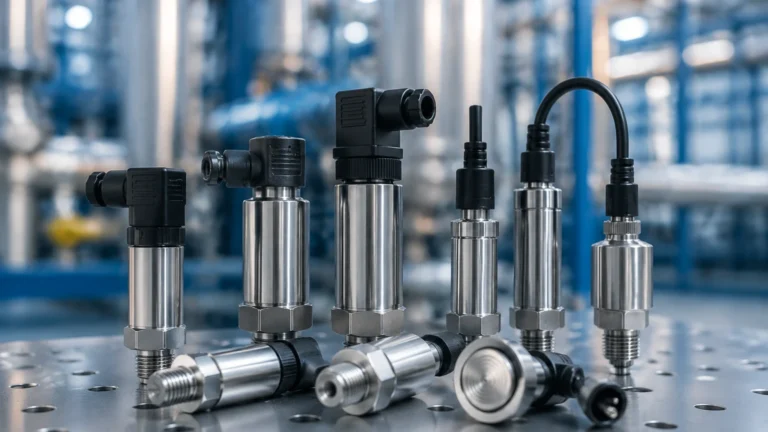
In the realm of industrial automation and process control, the integrity of a measurement signal is only as reliable as the sensor’s ability to withstand its environment. For applications involving corrosive chemicals, wastewater, or high-viscosity fluids, a standard pressure transducer often fails due to direct contact between the sensing element and the process medium. This is where the media isolated pressure sensor becomes an essential component.
By utilizing a physical barrier—typically a metallic diaphragm—to separate the sensitive internal electronics from the external environment, these sensors provide the durability required for long-term industrial level and pressure monitoring. This guide explores the engineering principles, selection criteria, and practical applications of media isolated pressure sensors within the context of modern industrial instrumentation.
Understanding the Media Isolated Pressure Sensor Principle
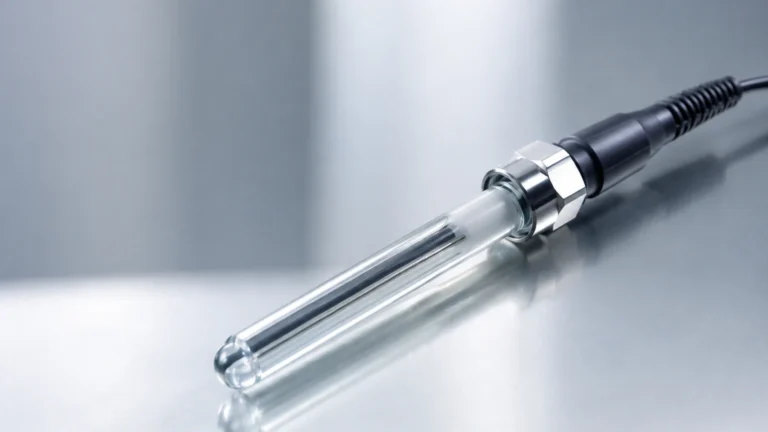
The fundamental goal of a media isolated pressure sensor is to measure the pressure of a fluid without allowing that fluid to touch the actual sensing element (often a piezoresistive silicon chip or a ceramic strain gauge). The architecture of these devices is a masterclass in mechanical and electrical isolation.
The Isolation Mechanism
At the heart of the device is a sensing chip housed in a small chamber. This chamber is sealed with a thin, flexible metal diaphragm. The internal volume between the diaphragm and the chip is filled with an incompressible, chemically stable fluid, such as silicone oil, fluorinated oil, or vegetable oil (for food-grade applications).
When external pressure is applied to the diaphragm, it deflects slightly. Because the fill fluid is incompressible, it transmits this pressure change directly to the sensing chip. The chip then converts the mechanical stress into an electrical signal proportional to the pressure. This design ensures that the "wetted parts" (the parts in contact with the process) are limited to the diaphragm and the sensor housing, protecting the delicate circuitry from corrosion, electrical conductivity, or clogging.
Sensing Technologies
While the isolation principle remains consistent, the underlying sensing technology can vary:
1. Piezoresistive Silicon: Offers high sensitivity and excellent linearity. When isolated, it is the industry standard for general-purpose industrial transmitters.
2. Capacitive: Utilizes the change in capacitance between a flexible diaphragm and a fixed backplate. These are known for high accuracy and stability at very low pressure ranges.
3. Thin-Film Strain Gauge: Sputtered directly onto a substrate, these are exceptionally robust against high-pressure spikes and extreme temperatures.
Key Components and Material Selection
Selecting a media isolated pressure sensor requires a deep dive into material science. The longevity of the instrument depends entirely on whether the diaphragm material can resist the chemical properties of the measured medium.
Diaphragm Materials
* 316L Stainless Steel: The standard material for water, air, and mildly corrosive chemicals. It offers a good balance of flexibility and durability.
* Hastelloy C-276: An alloy with high resistance to strong acids, chlorides, and oxidizing agents. It is frequently used in chemical processing and wastewater treatment.
* Tantalum: Reserved for the most aggressive chemical environments where even Hastelloy might fail, such as concentrated sulfuric or hydrochloric acid.
* Titanium: Preferred for seawater applications or marine environments due to its immunity to chloride-induced corrosion.
Fill Fluids
The choice of fill fluid is equally critical, especially regarding temperature stability. Standard silicone oil is used for most industrial applications (-40°C to +125°C). However, for high-temperature processes, specialized synthetic oils are required to prevent outgassing or thermal expansion that could cause a "zero shift" in the measurement.
Role in Hydrostatic Level Measurement
One of the most common applications for a media isolated pressure sensor is hydrostatic level measurement. In this application, the sensor measures the pressure exerted by a column of liquid at a fixed point. According to the hydrostatic law, the pressure ($P$) is equal to the density of the liquid ($
ho$) multiplied by gravity ($g$) and the height of the liquid ($h$): $P =
ho gh$.
In industrial tanks or open reservoirs, a submersible level transmitter—which is essentially a media isolated pressure sensor packaged in a waterproof housing—is lowered to the bottom. The isolation diaphragm is crucial here because it must withstand constant immersion in potentially silty or chemically active water. For engineers looking to integrate these sensors into broader automation systems, reviewing the Main Page of instrumentation providers can offer insights into how these sensors are integrated into larger level-control architectures.
Practical Selection Criteria for Industrial Applications
When specifying a sensor for a project, engineers must look beyond the basic pressure range. The following table provides a reference for matching sensor characteristics to common industrial scenarios.
| Application | Medium Characteristics | Recommended Diaphragm | Typical Pressure Range |
| :— | :— | :— | :— |
| Wastewater Treatment | Abrasive, mildly corrosive | 316L Stainless Steel | 0–10 mH2O |
| Chemical Processing | Strong Acids / Alkalis | Hastelloy C or Tantalum | 0–10 bar |
| Oil & Gas | Hydrocarbons, H2S | Monel or 316L | 0–700 bar |
| Food & Beverage | Viscous, Sanitary | 316L (Electropolished) | 0–5 bar |
| Marine/Seawater | High Chloride content | Titanium | 0–200 m |
Evaluation Parameters
* Accuracy and Linearity: Typically expressed as a percentage of Full Scale (e.g., ±0.25% FS). High-precision applications may require ±0.1% FS.
* Long-term Stability: The ability of the sensor to maintain its calibration over a year of continuous operation.
* Thermal Error: The deviation in reading caused by changes in the ambient or process temperature. High-quality media isolated sensors include internal temperature compensation.
Installation and Maintenance Guidelines
Proper installation is the difference between a sensor that lasts ten years and one that fails in ten months. For media isolated pressure sensors, several physical factors must be considered.
Orientation and Mounting
While many sensors can be mounted in any orientation, the weight of the fill fluid can cause a slight zero shift if the sensor is tilted. It is best practice to calibrate the sensor in its final mounting position. For hydrostatic applications, the sensor should be mounted away from turbulent areas (like pump inlets or agitators) to avoid "noise" in the pressure signal.
Venting for Gauge Pressure
If the sensor is measuring "gauge pressure" (pressure relative to the atmosphere), it must have a way to reference the current atmospheric pressure. This is usually achieved through a small vent tube inside the signal cable. It is vital to ensure this tube is not kinked, blocked, or exposed to moisture, as this will lead to measurement errors or internal corrosion.
Diaphragm Protection
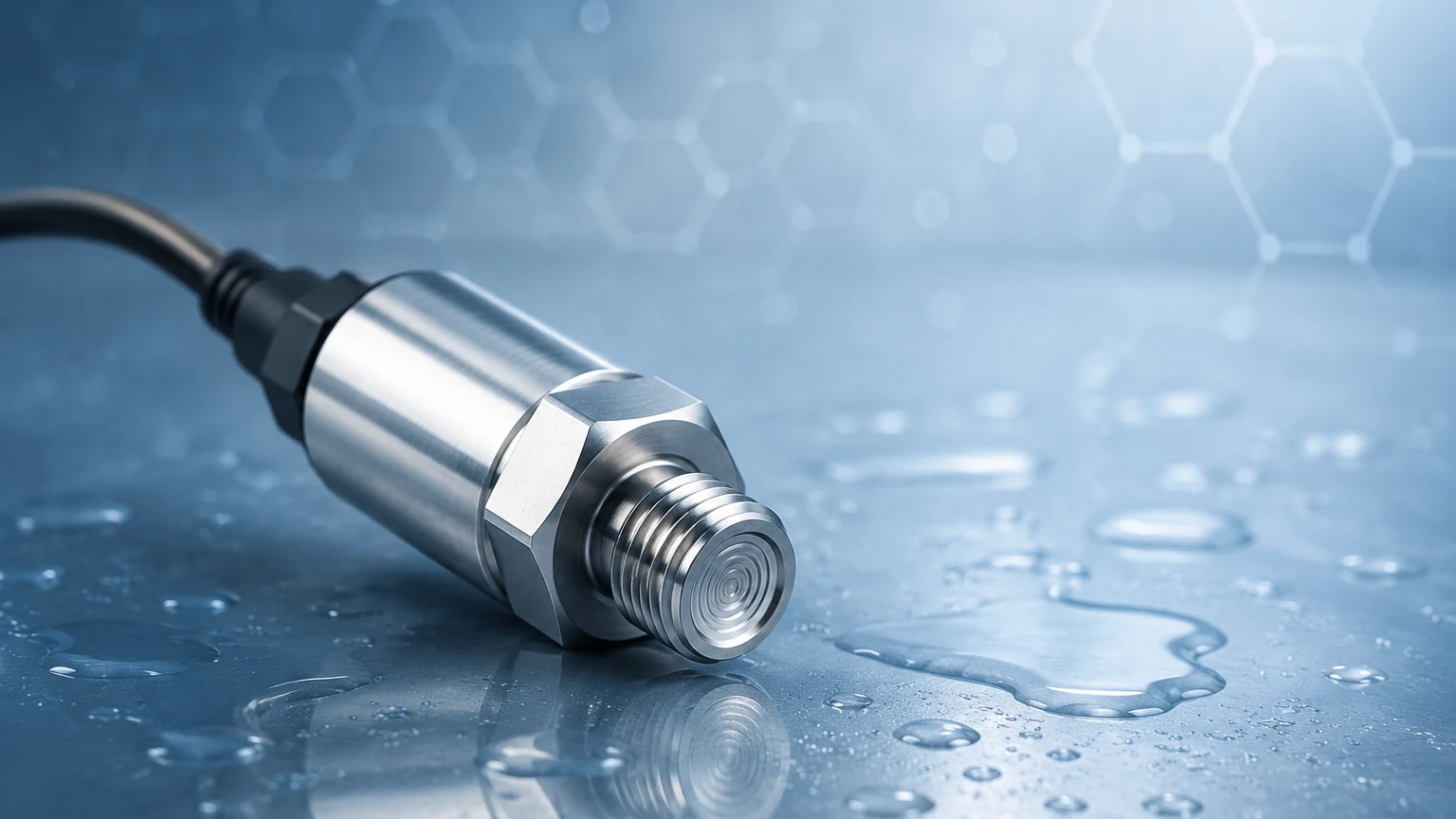
The isolation diaphragm is extremely thin (often less than 0.1 mm). It should never be touched with a finger, tool, or high-pressure washer. If the sensor is used in a medium that tends to crystallize or leave deposits, a "flush diaphragm" design should be chosen. This design eliminates the cavity where material can build up, allowing the diaphragm to be cleaned easily without damage.
Common Risks and Technical Limitations
Despite their robustness, media isolated pressure sensors are not invincible. Engineers should be aware of the following risks:
1. Hydrogen Permeation: In high-pressure hydrogen applications, hydrogen molecules can actually pass through the metal lattice of a stainless steel diaphragm. Once inside, they form bubbles in the fill fluid, causing massive signal drift. Gold-plated diaphragms are often used as a barrier to prevent this.
2. Overpressure Events: Every sensor has a "proof pressure" (the maximum pressure it can withstand without damage) and a "burst pressure." Exceeding these limits will permanently deform the diaphragm, rendering the sensor inaccurate.
3. Thermal Expansion: In very small sensors, the expansion of the fill fluid at high temperatures can exert internal pressure on the diaphragm, creating a false high reading. This is why selecting the correct fill fluid for the operating temperature range is critical.
4. Cavitation: In pumping systems, rapid pressure drops can cause vapor bubbles to form and collapse against the diaphragm. This "pitting" can eventually lead to a breach in the isolation layer.
Frequently Asked Questions (FAQ)
Q: How often should a media isolated pressure sensor be calibrated?
A: For most industrial applications, an annual calibration check is standard. However, in critical safety loops or high-accuracy custody transfer applications, semi-annual calibration may be required.
Q: Can I use a media isolated sensor for vacuum measurements?
A: Yes, but you must ensure the fill fluid is properly degassed during manufacturing. If there are any air bubbles in the oil, they will expand under vacuum and damage the diaphragm or cause significant errors.
Q: What is the difference between a flush diaphragm and a recessed diaphragm?
A: A recessed diaphragm is protected inside a threaded port, which is fine for clean liquids or gases. A flush diaphragm sits level with the process connection, making it ideal for viscous fluids, slurries, or food products that might clog a small port.
Q: Does the length of the cable affect the accuracy of the sensor?
A: For sensors with a 4-20mA output, cable length has a negligible effect on accuracy over hundreds of meters. For voltage output sensors (e.g., 0-5V), long cables can lead to voltage drops and increased susceptibility to electromagnetic interference (EMI).
Conclusion
The media isolated pressure sensor is a cornerstone of industrial process reliability. By providing a rugged interface between sensitive electronics and harsh process fluids, it allows for accurate level and pressure monitoring in conditions that would destroy standard equipment. When selecting a sensor, engineers must carefully weigh the chemical compatibility of the diaphragm, the thermal properties of the fill fluid, and the specific physical demands of the installation site. By following these guidelines and consulting with experienced manufacturers, facilities can ensure long-term operational efficiency and minimize maintenance-related downtime.