Liquefaction of Natural Gas Methods
Liquefaction of Natural Gas Methods
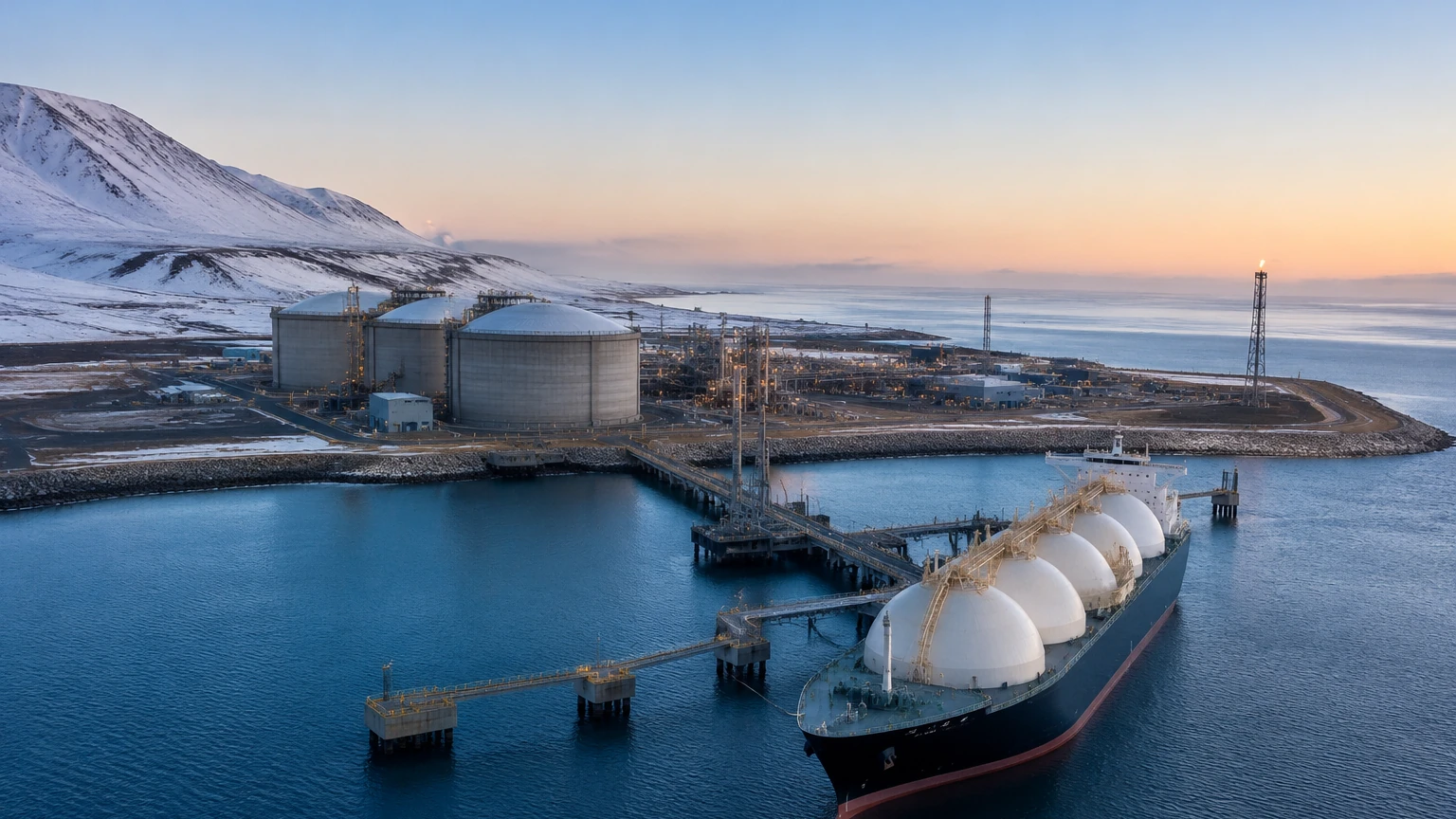
Natural gas plays a critical role in the global energy transition, serving as a lower-carbon alternative to coal and oil. However, the geographic disparity between gas reserves and end-users necessitates efficient transport. While pipelines are effective for overland distances, transoceanic transport requires the gas to be converted into a liquid state. This process, known as liquefaction, reduces the volume of natural gas by approximately 600 times, making it economically viable to transport via specialized LNG carriers.
The liquefaction of natural gas methods employed in modern industry rely on sophisticated thermodynamic cycles designed to cool the gas—primarily methane—to approximately -162°C (-260°F). At this cryogenic temperature, the gas becomes a clear, colorless, and non-toxic liquid. Achieving these temperatures requires a deep understanding of heat exchange, refrigeration cycles, and the precise instrumentation needed to monitor these volatile processes.
Thermodynamic Principles of Liquefaction
Before evaluating specific liquefaction of natural gas methods, it is essential to understand the underlying physics. Liquefaction is essentially a large-scale refrigeration process. It operates on three primary principles:
1. The Joule-Thomson Effect: This involves the temperature change of a real gas when it is forced through a valve or porous plug while kept insulated so that no heat is exchanged with the environment. For natural gas, expansion typically results in cooling.
2. Isentropic Expansion: In this process, gas is expanded through a turbine (expander), performing work. This removal of energy from the gas results in a more significant temperature drop than simple throttling.
3. Heat Exchange: Natural gas is passed through heat exchangers where it transfers heat to a refrigerant. Modern LNG plants often use Spiral Wound Heat Exchangers (SWHE) or Brazed Aluminum Plate-Fin Heat Exchangers (PFHE) to achieve the high surface area required for efficient cooling.
Primary Liquefaction of Natural Gas Methods
The choice of liquefaction technology depends on the required capacity, feed gas composition, available footprint, and economic constraints. The following are the most prevalent methods used in the industry today.
1. Pure Refrigerant Cascade Process
The Cascade process is one of the oldest and most established liquefaction of natural gas methods. It utilizes a series of discrete refrigeration cycles, each using a different pure refrigerant to achieve progressively lower temperatures.
* Propane Cycle: The first stage cools the natural gas and the other refrigerants to approximately -40°C.
* Ethylene Cycle: The second stage further cools the gas to about -100°C.
* Methane Cycle: The final stage brings the gas down to the liquefaction temperature of -162°C.
While highly efficient and easy to control due to the use of pure fluids, the Cascade process requires a significant amount of piping and multiple compressors, leading to higher capital expenditure (CAPEX).
2. Mixed Refrigerant (MR) Processes
To simplify the hardware requirements of the Cascade process, Mixed Refrigerant cycles were developed. These methods use a mixture of hydrocarbons (methane, ethane, propane, butane) and nitrogen as the cooling medium. By adjusting the composition of the mixture, the refrigerant's boiling curve can be tailored to match the cooling curve of the natural gas, minimizing thermodynamic losses.
* Single Mixed Refrigerant (SMR): A single compressor and one refrigeration loop are used. This is often preferred for small-scale LNG plants due to its simplicity and lower cost, though it is less energy-efficient than complex cycles.
* Propane Pre-cooled Mixed Refrigerant (C3MR): This is the industry standard for large-scale baseload plants. It combines a propane pre-cooling loop with a mixed refrigerant main cooling loop. It offers an excellent balance between efficiency and plant complexity.
* Dual Mixed Refrigerant (DMR): This method uses two different mixed refrigerant cycles. It is particularly effective in cold climates or for floating LNG (FLNG) applications where flexibility is paramount.
3. Expander-Based Processes
Expander cycles, often referred to as Brayton cycles, utilize the expansion of a gas (usually nitrogen or the natural gas itself) to produce cooling. Because these cycles do not rely on the evaporation of liquid refrigerants, they are simpler to operate and do not require large storage volumes for flammable refrigerants.
These methods are increasingly popular for small-scale LNG and offshore FLNG units where safety and space are the primary concerns, despite having lower thermal efficiency compared to C3MR or Cascade processes.
The Role of Level Measurement in Liquefaction
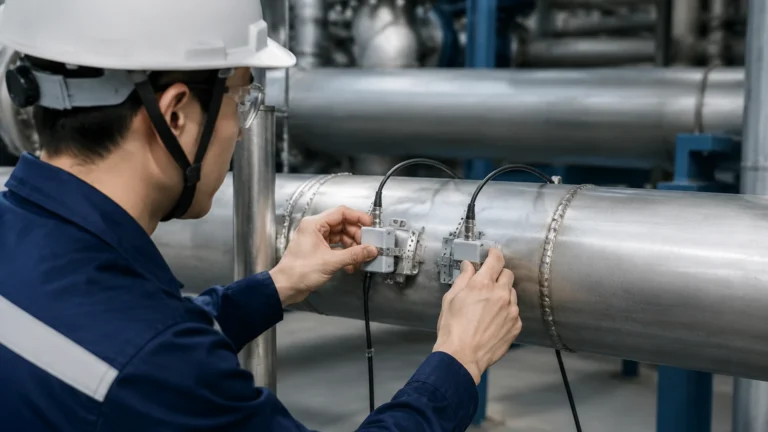
In every liquefaction method, precise level measurement is vital for process safety and efficiency. Level sensors are required in suction drums, refrigerant storage tanks, and the main cryogenic heat exchangers. However, measuring levels in LNG environments presents unique challenges: cryogenic temperatures, the presence of boiling liquids (boil-off gas), and the need for high-pressure containment.
Measurement Principles for Cryogenic Fluids
Radar Level Measurement
Radar technology is the preferred choice for LNG storage and process vessels. It operates on the Time-of-Flight (ToF) principle. A sensor emits a high-frequency signal (typically in the GHz range) that reflects off the liquid surface and returns to the receiver.
In LNG applications, Frequency Modulated Continuous Wave (FMCW) radar is superior to pulse radar. FMCW provides better signal-to-noise ratios, which is critical when dealing with the low dielectric constant (εr ≈ 1.7) of liquid natural gas. Because radar is non-contact, the electronic components are isolated from the extreme cold, significantly increasing the instrument's lifespan.
Hydrostatic Pressure Measurement
This method calculates the level based on the pressure exerted by the liquid column ($P = \rho gh$). In liquefaction plants, differential pressure (DP) transmitters are used. One side measures the liquid pressure at the bottom, while the other measures the gas pressure in the headspace to compensate for the internal vessel pressure.
While reliable, hydrostatic measurement requires accurate knowledge of the liquid's density, which can fluctuate with temperature and composition changes during the liquefaction process.
Magnetic Level Gauges
For local indication and redundant control, magnetic level gauges are often employed. These consist of a float containing a magnet that moves within a non-magnetic bypass chamber. As the float rises and falls with the liquid level, it flips magnetic flags or interacts with a magnetostrictive transmitter. For LNG, these chambers must be vacuum-jacketed to prevent heat ingress and ice formation.
Selection Table: Liquefaction Methods vs. Applications
| Method | Typical Capacity | Efficiency | Complexity | Best Use Case |
| :— | :— | :— | :— | :— |
| SMR | Small (<1 MTPA) | Medium | Low | Peak-shaving, small-scale distribution |
| C3MR | Large (>3 MTPA) | High | High | World-scale baseload LNG export |
| Cascade | Large | High | Very High | Historical baseload plants, high reliability |
| Nitrogen Expander | Small to Mid | Low | Very Low | FLNG, offshore, safety-critical sites |
| DMR | Large | High | Medium | Arctic environments, flexible capacity |
Installation and Engineering Considerations
When implementing instrumentation within any of the liquefaction of natural gas methods, engineers must adhere to strict installation guidelines to ensure accuracy and safety.
1. Still-pipe Installation: For radar meters, the use of a still-pipe (waveguide) is highly recommended. This prevents surface turbulence (caused by boiling) from interfering with the signal and amplifies the reflection from the low-dielectric LNG surface.
2. Material Selection: All wetted parts must be made of materials that remain ductile at cryogenic temperatures, such as 316L stainless steel or specialized alloys. Standard carbon steel will become brittle and fail.
3. Nozzle Design: Nozzles for level instruments should be designed to minimize heat transfer. Long-neck nozzles with proper cryogenic insulation are standard to prevent the "ice ball" effect, which can seize mechanical parts or damage electronics.
4. Redundancy: Given the critical nature of LNG storage, 2oo3 (two-out-of-three) voting logic for level transmitters is often employed to ensure that a single instrument failure does not lead to a costly plant shutdown.
Limitations and Challenges
Despite advancements in liquefaction of natural gas methods, several limitations persist:
* Boil-Off Gas (BOG): As heat inevitably leaks into the system, some LNG reverts to gas. This creates a layer of vapor that can affect the speed of sound (for ultrasonic sensors) or cause pressure fluctuations. This is why non-contact radar is favored over ultrasonic methods.
* Density Stratification: In large storage tanks, different batches of LNG may have different densities, leading to "rollover"—a dangerous phenomenon where a sudden inversion of layers causes rapid gas release. Level instruments must often be paired with multi-point temperature and density sensors to monitor for this risk.
* Energy Intensity: Liquefaction is energy-intensive, often consuming 10-15% of the feed gas as fuel for the compressors. Improving the efficiency of these methods remains a primary focus for the industry.
For engineers and procurement professionals looking to optimize their facility's performance, selecting the right instrumentation is as vital as the liquefaction process itself. You can Review product options and application support to find specific solutions tailored to cryogenic and high-pressure industrial environments.
Frequently Asked Questions
Q: Why is radar preferred over ultrasonic level sensors for LNG?
A: Ultrasonic sensors rely on the speed of sound, which changes significantly with gas temperature and composition (the vapor space in LNG tanks). Radar uses electromagnetic waves, which are largely unaffected by the gas properties in the tank headspace, providing much higher accuracy.
Q: What is the most efficient liquefaction method?
A: Currently, the Cascade process and the C3MR process are among the most thermally efficient for large-scale operations. However, the "best" method is often a trade-off between efficiency, capital cost, and operational simplicity.
Q: How do you handle ice buildup on level instruments?
A: Proper insulation and the use of vacuum-jacketed bypass chambers or extended nozzles are the primary defenses. For electronic heads, heating elements or environmental enclosures may be used to keep the transmitter within its rated operating temperature.
Q: Can hydrostatic transmitters be used for custody transfer?
A: Generally, no. Custody transfer requires extremely high precision (often within +/- 2mm). While hydrostatic sensors are excellent for process control, high-accuracy FMCW radar or servo gauges are typically required for legal metrology and custody transfer in the LNG industry.
By understanding the various liquefaction of natural gas methods and the technical requirements for monitoring them, operators can ensure safer, more efficient, and more reliable energy production. For further technical specifications on level measurement hardware, visiting the Main Page of an industrial manufacturer can provide deeper insights into equipment compatibility.