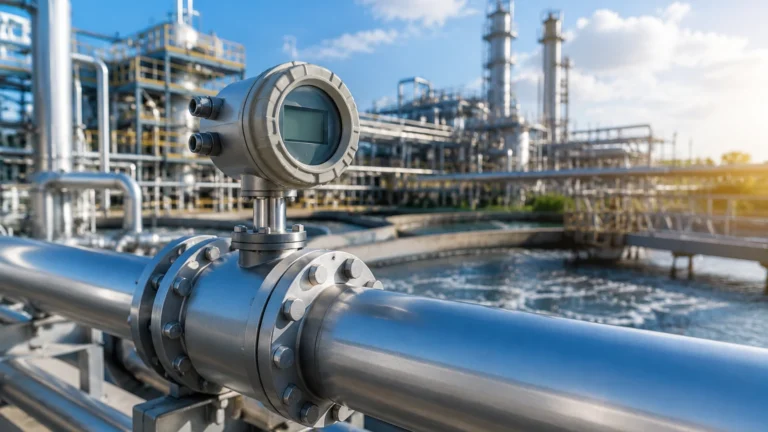
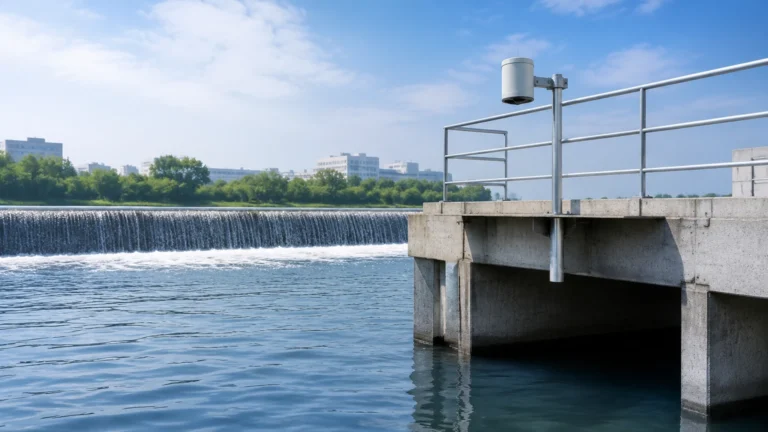
Liquid Level Detection Sensor
Liquid Level Detection Sensor
In the landscape of industrial automation and process control, the liquid level detection sensor serves as a critical interface between physical media and digital monitoring systems. These instruments are tasked with providing real-time data regarding the volume, height, or presence of liquids within tanks, silos, and open channels. Selecting the appropriate sensor technology is not merely a matter of measurement; it is an engineering decision that impacts system safety, operational efficiency, and long-term maintenance costs.
This guide examines the primary technologies used in liquid level detection, explaining their underlying physical principles, application strengths, and inherent limitations. By understanding these factors, engineers and procurement specialists can make informed decisions that align with specific process requirements.
Core Measurement Principles
Before selecting a liquid level detection sensor, it is essential to understand the physical laws they leverage. Industrial level measurement is generally categorized into continuous measurement and point level detection.
1. Radar Level Measurement (Time of Flight)
Radar sensors utilize electromagnetic waves, typically in the microwave frequency range (e.g., 26 GHz or 80 GHz). The sensor emits a pulse toward the liquid surface, which reflects the signal back to the receiver. The distance is calculated based on the Time of Flight (ToF) of the signal.
* Non-Contact Radar: These sensors are mounted at the top of the vessel and do not touch the media. They are ideal for corrosive or hygienic applications.
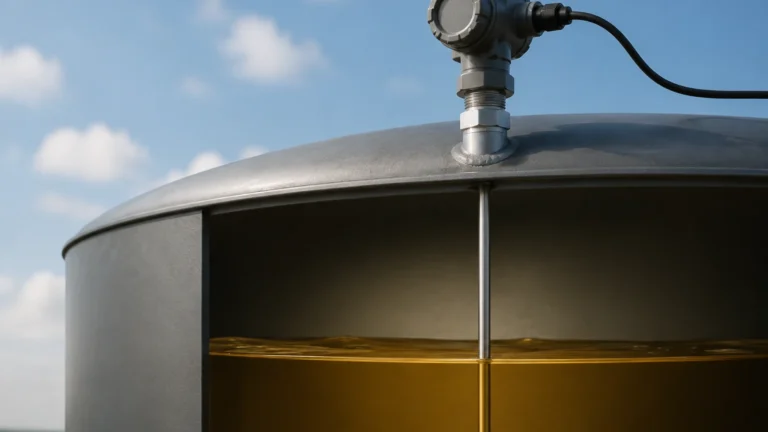
* Guided Wave Radar (GWR): This technology uses a probe (cable or rod) to guide the microwave pulse. GWR is particularly effective in liquids with low dielectric constants or in applications with heavy foam and turbulence.
2. Ultrasonic Level Measurement
Ultrasonic sensors function similarly to radar but use sound waves instead of electromagnetic pulses. The sensor emits high-frequency sound waves that bounce off the liquid surface. The time taken for the echo to return determines the distance.
Because sound requires a medium to travel, ultrasonic sensors are sensitive to air temperature, pressure, and the composition of the gas phase above the liquid. Most modern ultrasonic sensors include integrated temperature compensation to maintain accuracy across varying environmental conditions.
3. Hydrostatic Level Measurement
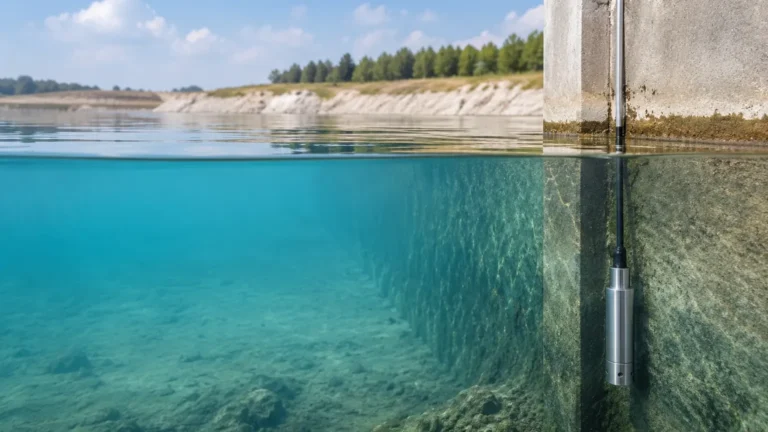
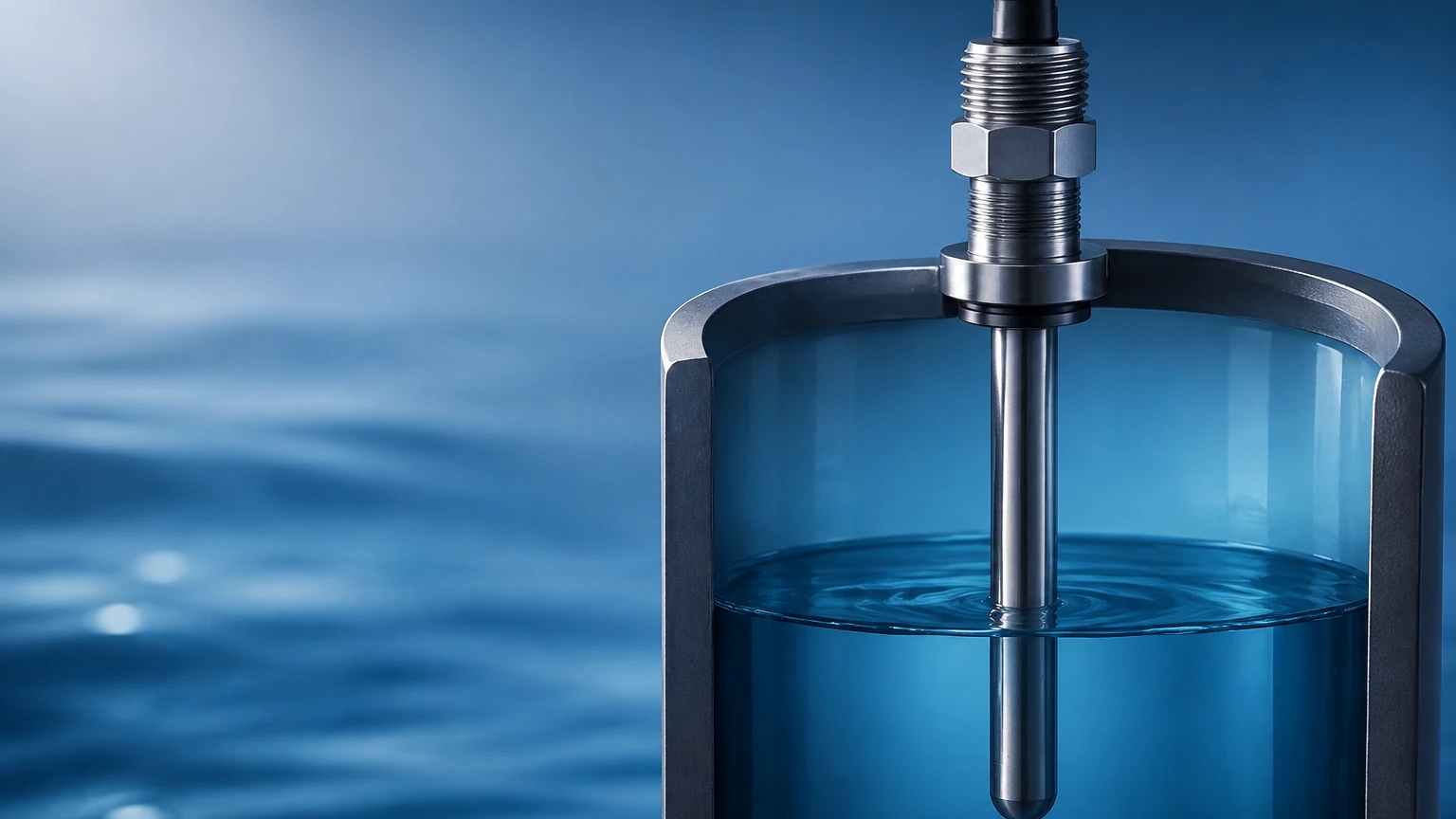
Hydrostatic sensors operate on the principle that the pressure at the bottom of a liquid column is directly proportional to the height of the liquid above it. The relationship is defined by the formula: $P = \rho \cdot g \cdot h$, where $P$ is pressure, $\rho$ is the density of the liquid, $g$ is gravity, and $h$ is the height.
These sensors are typically submerged or mounted to the bottom of a tank via a flange. They are highly reliable for water treatment and deep-well monitoring, provided the density of the liquid remains relatively constant.
4. Magnetic and Float-Based Measurement
Buoyancy-based sensors use a float containing a magnet that moves along a stem or a bypass chamber. As the liquid level changes, the float moves, actuating reed switches or interacting with a magnetostrictive wire to provide a level reading. Magnetic level gauges provide a clear visual indication on the outside of a vessel, making them a staple in high-pressure steam and chemical applications.
Technical Selection Criteria
Choosing the right liquid level detection sensor requires a systematic evaluation of the process environment. The following factors are decisive in technology selection:
Media Properties
* Dielectric Constant ($ε_r$): Crucial for radar sensors. Liquids with low dielectric constants (like oils or hydrocarbons) reflect less energy, requiring more sensitive radar units or guided wave technology.
* Viscosity and Coating: Highly viscous liquids can coat probes, leading to false readings in contact-based sensors. In such cases, non-contact radar or ultrasonic sensors are preferred.
* Corrosiveness: For aggressive acids or bases, sensors must be constructed from compatible materials like PTFE, PVDF, or high-grade stainless steel.
Process Conditions
* Temperature and Pressure: Extreme temperatures can affect the electronics of a sensor or the speed of sound (for ultrasonic). High-pressure vessels often require robust mechanical seals found in magnetic gauges or heavy-duty radar flanges.
* Turbulence and Foam: Surface agitation can scatter ultrasonic and radar signals. Guided wave radar or hydrostatic sensors are often more stable in turbulent environments.
Practical Selection Table
| Technology | Accuracy | Ideal Media | Primary Advantage | Main Limitation |
| :— | :— | :— | :— | :— |
| Non-Contact Radar | ±1-2 mm | Chemicals, Oils, Water | No maintenance, high precision | High initial cost |
| Ultrasonic | ±0.25% of range | Water, Wastewater | Cost-effective, simple setup | Affected by foam and vapor |
| Hydrostatic | ±0.1-0.5% | Water, Fuel, Sludge | Reliable in deep tanks | Sensitive to density changes |
| Guided Wave Radar | ±2-3 mm | Low $ε_r$ liquids, Foam | High reliability in turbulence | Contact-based (probe cleaning) |
| Magnetic Gauge | ±5-10 mm | Hazardous chemicals | Visual local indication | Moving parts can wear |
For a comprehensive overview of available industrial instrumentation, engineers can visit the Main Page to compare specific model specifications and performance data.
Installation Considerations
The performance of a liquid level detection sensor is often determined by its installation. Even the most advanced sensor will fail if placed incorrectly.
1. The Dead Zone (Blocking Distance): Every non-contact sensor has a "dead zone" directly beneath the sensor face where it cannot measure. For ultrasonic sensors, this might be 0.2m to 0.5m. The sensor must be mounted high enough so that the maximum liquid level never enters this zone.
2. Obstructions: Internal tank structures such as ladders, agitators, or heating coils can cause "false echoes." Radar sensors often include software for "false signal suppression" to ignore these fixed objects, but proper placement is still the best defense.
3. Nozzle Geometry: If a sensor is mounted on a tall, narrow nozzle, the signal may reflect off the nozzle walls before reaching the liquid. It is generally recommended that the sensor face extends slightly past the bottom of the nozzle.
4. Inlet Streams: Never install a sensor directly above the point where liquid enters the tank. The turbulence and air entrainment from the filling stream will cause erratic readings.
Limitations and Common Risks
While modern sensors are highly sophisticated, they are not universal solutions. Engineers should be aware of the following risks:
* Vapor and Condensation: In closed tanks, condensation can form on the sensor face. While radar can penetrate most vapors, heavy condensation can attenuate ultrasonic signals. Some sensors feature a "drip-off" antenna design to mitigate this.
* Vacuum Applications: Ultrasonic sensors cannot function in a vacuum because sound waves require a medium. Radar is the standard choice for vacuum or high-pressure gas environments.
* Build-up and Scaling: In wastewater or lime slurry applications, material can build up on contact probes (GWR or Hydrostatic). This can lead to "bridging" or signal loss. Non-contact methods are significantly more reliable in these scenarios.
* Ambient Noise: High-frequency industrial machinery can occasionally interfere with ultrasonic sensors if the frequencies overlap. Proper shielding and frequency selection are necessary.
Frequently Asked Questions (FAQs)
Q: Can a single liquid level detection sensor handle multiple types of liquids?
A: It depends on the technology. Radar is generally indifferent to liquid density, making it versatile for different media. Hydrostatic sensors, however, are calibrated to a specific density; if you switch from water to oil, the reading will be inaccurate unless recalibrated.
Q: How often do these sensors require calibration?
A: Non-contact radar sensors are extremely stable and may only require verification every 2-3 years. Hydrostatic and float-based sensors may require annual checks to ensure seals are intact and there is no mechanical wear.
Q: Is guided wave radar better than non-contact radar?
A: Not necessarily "better," but different. GWR is superior in applications with heavy foam or very low dielectric constants because the probe concentrates the signal. However, non-contact radar is preferred for corrosive or hygienic applications where touching the media is undesirable.
Q: What is the maximum range for these sensors?
A: Ultrasonic sensors typically reach up to 15-20 meters. High-frequency radar sensors can accurately measure distances up to 30 meters or even 100 meters in specialized long-range models.
Conclusion
The selection of a liquid level detection sensor is a foundational step in ensuring the reliability of industrial processes. By prioritizing the measurement principle that best suits the physical properties of the media and the constraints of the vessel, operators can minimize downtime and maintenance. Whether the application involves the precision of 80GHz radar or the rugged simplicity of a hydrostatic transmitter, a well-matched sensor provides the data necessary for optimized automation.
For more detailed technical data and application-specific recommendations, please refer to the Main Page for professional guidance on industrial level measurement solutions.