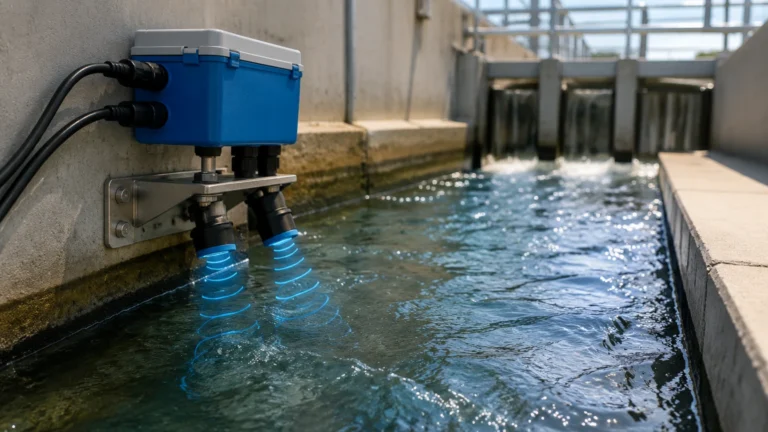
Liquid Level Float Switch
Liquid Level Float Switch
In the realm of industrial automation and process control, the liquid level float switch remains one of the most reliable and cost-effective methods for point-level detection. Despite the emergence of advanced non-contact technologies like radar and ultrasonic sensors, the mechanical simplicity and robust nature of float switches ensure their continued dominance in applications ranging from simple sump pump control to complex chemical processing. This guide provides a technical deep dive into the principles, selection, and installation of liquid level float switches to assist engineers in making informed procurement decisions.
Understanding the Measurement Principle
The fundamental operation of a liquid level float switch is based on Archimedes' Principle of buoyancy. A float—constructed from a material with a lower density than the process liquid—rests on the liquid surface. As the liquid level rises or falls, the float moves accordingly. This mechanical movement is then converted into an electrical signal.
Magnetic Reed Switch Operation
Most modern industrial float switches utilize a magnetic reed switch mechanism. Inside the stationary stem of the device sits a hermetically sealed reed switch. The moving float contains a permanent magnet. When the float reaches the position of the reed switch, the magnetic field causes the reed contacts to close (or open), completing an electrical circuit. Because the contacts are sealed in glass and actuated by a magnetic field rather than direct mechanical contact, they are protected from oxidation and corrosion, leading to a long operational lifespan.
Mechanical Microswitch Operation
In larger or heavy-duty applications, such as large cable-suspended floats, a mechanical microswitch may be used. In these designs, the physical tilting of the float housing causes a ball or weight to move, triggering a microswitch. These are often preferred for high-current applications where the switch must directly control a small motor or solenoid without an intervening relay.
Primary Types of Liquid Level Float Switches
Selecting the correct form factor is essential for both the physical constraints of the tank and the nature of the liquid being measured.
1. Vertical Float Switches
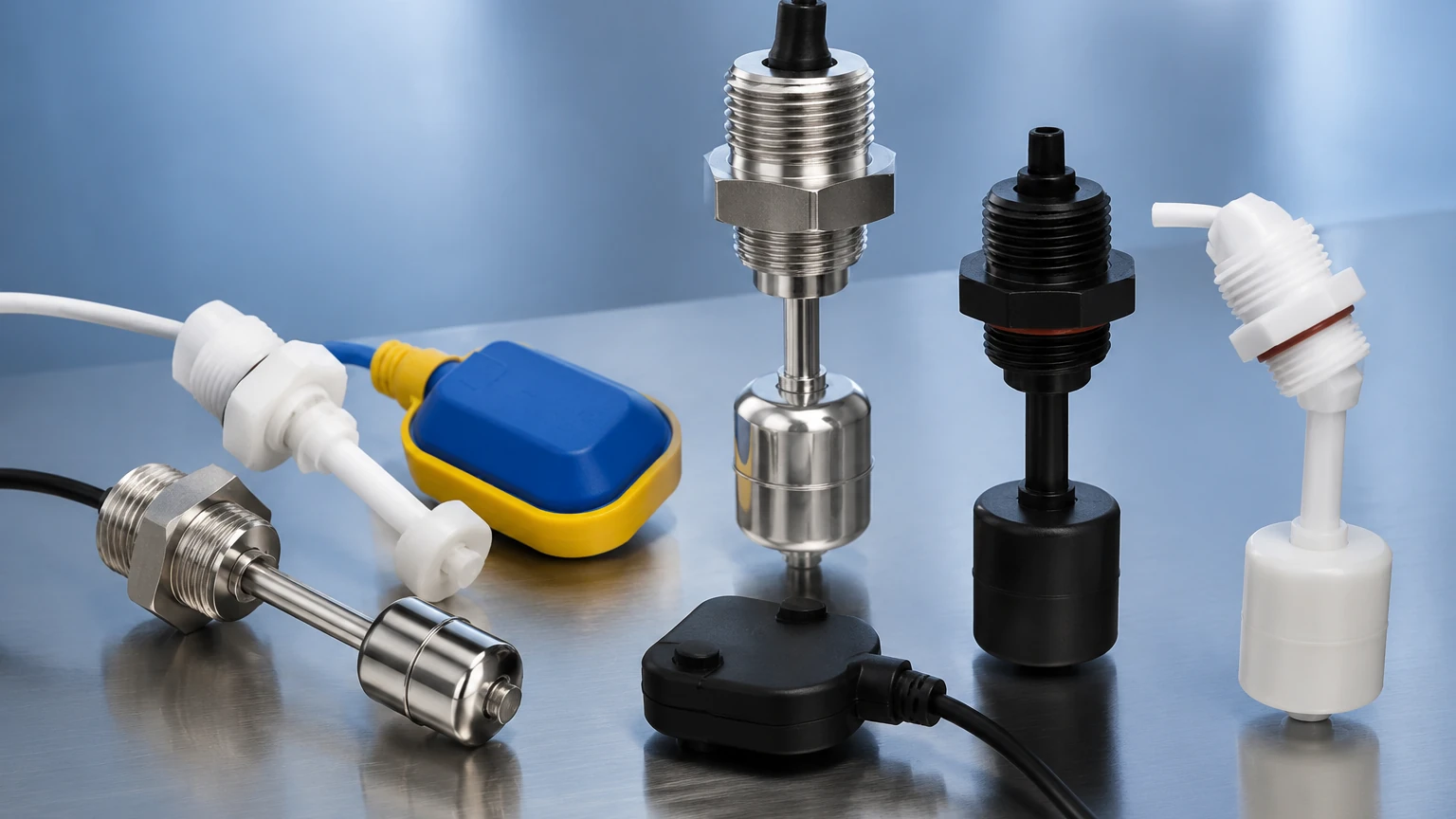
Vertical switches are mounted through the top or bottom of a vessel. They consist of a rigid stem with one or more floats.
- Single-Point: Used for high or low-level alarms.
- Multi-Point: A single stem can contain multiple reed switches at different heights, allowing for "Pump On," "Pump Off," and "High Alarm" signals from a single process entry point.
2. Side-Mounted (Horizontal) Float Switches
These are installed through the side wall of a tank. They typically use a hinged float arm. When the liquid level reaches the arm, it pivots upward, moving a magnet toward a reed switch located in the mounting hex. These are ideal for tanks where top access is restricted or for compact equipment like cooling units.
3. Cable-Suspended Float Switches
Commonly used in wastewater and large sumps, these switches consist of a weighted float body attached to a flexible cable. The switching action occurs when the float tilts beyond a certain angle (usually 45 degrees). They are highly resistant to turbulence and can be easily adjusted by changing the length of the cable or the position of the counterweight.
Material Selection and Chemical Compatibility
The longevity of a liquid level float switch depends heavily on its material compatibility with the process medium. Engineers must consider both the float material and the stem/housing material.
| Material | Temperature Range | Common Applications |
| :— | :— | :— |
| Stainless Steel (304/316L) | -40°C to +200°C (-40°F to +392°F) | High pressure, high temperature, food & beverage, oil, and hydraulic fluids. |
| Polypropylene (PP) | -10°C to +80°C (14°F to 176°F) | General purpose, water treatment, acidic or alkaline chemicals. |
| PVDF (Kynar) | -20°C to +120°C (-4°F to 248°F) | Highly aggressive chemicals, ultrapure water, and pharmaceutical processes. |
| Buna-N (Nitrile) | -20°C to +100°C (-4°F to 212°F) | Specifically designed for oils, fuels, and petroleum-based liquids. |
Technical Selection Criteria
When specifying a float switch for an industrial project, several technical parameters must be confirmed beyond just material compatibility.
Specific Gravity (SG)
For a float to function, its density must be lower than that of the liquid. Most standard floats are designed for liquids with an SG of 0.8 or higher. If you are measuring light hydrocarbons or liquefied gases with an SG of 0.6, a specialized, high-buoyancy float is required. Using a standard float in a low-density liquid will result in the float remaining submerged, failing to trigger the switch.
Pressure Ratings
In pressurized vessels, the float must be able to withstand the external pressure without collapsing. Hollow stainless steel floats are rated for higher pressures—often up to 30 bar (435 psi) or more—whereas plastic floats are typically limited to atmospheric or low-pressure (under 5 bar/72 psi) applications.
Electrical Load and Hysteresis
It is critical to match the switch’s electrical rating with the control system. Most reed-type float switches are designed for low-power signaling (e.g., 10W to 50W). If the switch is intended to drive a pump directly, an interposing relay or a heavy-duty microswitch float must be used. Furthermore, consider the "differential" or hysteresis—the distance between the "on" and "off" points. A small differential can cause "chatter" in turbulent tanks, where the pump rapidly cycles on and off.
For a comprehensive overview of industrial instrumentation and to explore detailed specifications for these devices, you can visit the Main Page of the Welk product catalog.
Installation and Wiring Guidelines
Proper installation is the most significant factor in preventing premature failure of a level switch.
1. Avoid Turbulence: Do not install a float switch directly in the path of an incoming liquid stream. The physical force can damage the stem or cause erratic switching. If turbulence is unavoidable, use a "stilling well" (a length of pipe with vent holes) to surround the switch and provide a calm surface for the float.
2. Orientation: Vertical switches must be mounted within a few degrees of true vertical to prevent the float from binding on the stem. For side-mounted switches, ensure the pivot arm has sufficient clearance from the tank wall and internal baffles.
3. Wiring and Protection: Use a cable gland to ensure a moisture-tight seal at the connection point. In applications involving inductive loads (like solenoids or relays), always use a suppression circuit (such as a flyback diode for DC or a varistor for AC) to protect the reed switch contacts from voltage spikes during switching.
4. Normally Open (NO) vs. Normally Closed (NC): Most vertical float switches are reversible. By removing a retaining clip and flipping the float 180 degrees, the user can change the switch logic from NO to NC. This is a practical feature for adapting a single part number to different alarm configurations.
Limitations and Operational Constraints
While highly versatile, the liquid level float switch is not suitable for every environment. Engineers should be aware of the following limitations:
* Viscous Liquids: Highly viscous fluids or those that tend to crystallize can cause the float to stick to the stem. In these cases, non-contact sensors or tuning fork switches are preferred.
* Coating and Buildup: In wastewater applications, fats, oils, and grease (FOG) can build up on the float, eventually increasing its weight until it no longer floats, or jamming the mechanical movement.
* Magnetic Interference: Since most float switches rely on magnets, the presence of heavy magnetic particles in the liquid (e.g., iron filings in a machining coolant tank) can cause the particles to adhere to the float, interfering with the reed switch operation.
Maintenance and Troubleshooting
In clean-liquid applications, float switches are virtually maintenance-free. However, in industrial environments, a periodic inspection schedule is recommended.
* Visual Inspection: Check for signs of corrosion on the stem or pitting on the float surface.
* Mechanical Check: Manually move the float along the stem to ensure smooth travel without sticking.
* Continuity Test: Use a multimeter to verify that the switch opens and closes at the correct points.
* Cleaning: If buildup is present, clean the assembly with a compatible solvent. Avoid abrasive scrubbers on plastic floats as scratches can provide a foothold for further buildup.
Frequently Asked Questions (FAQs)
Q: Can I use a float switch in a tank with an agitator?
A: Yes, but a stilling well is mandatory. The well protects the float from the lateral forces of the moving liquid and prevents the float from being tossed around, which could break the stem.
Q: What is the difference between a float switch and a float level transmitter?
A: A float switch provides a discrete "on/off" signal at a specific point (point-level detection). A float level transmitter provides a continuous signal (e.g., 4-20mA) representing the exact level across the entire range of the stem (continuous level measurement).
Q: How do I choose between a plastic and a stainless steel float switch?
A: Choose plastic (PP or PVDF) for corrosive chemicals like acids or bleach where metal would corrode. Choose stainless steel for high temperatures (above 80°C), high pressures, or applications requiring food-grade (3A) certification.
Q: Can a float switch be used in hazardous (Ex) areas?
A: Yes, but the switch must be used in conjunction with an intrinsically safe (IS) barrier. Since the switch is a "simple apparatus" (a mechanical contact), it does not generate heat or store significant energy, but the barrier ensures that the energy entering the hazardous area is limited to safe levels.
Conclusion
The liquid level float switch remains a cornerstone of industrial level control due to its reliability, ease of integration, and low cost of ownership. By carefully matching material properties, specific gravity requirements, and electrical loads to the application, engineers can implement a solution that provides years of trouble-free service. For complex applications involving high-pressure steam, aggressive chemical mixtures, or the need for multi-point control, consulting with a specialist manufacturer like Welk ensures that the selected instrument meets all safety and performance standards.
To review specific product options and receive application support for your next project, visit our Main Page for detailed technical datasheets and selection guides.