Marine Tank Monitoring
Marine Tank Monitoring
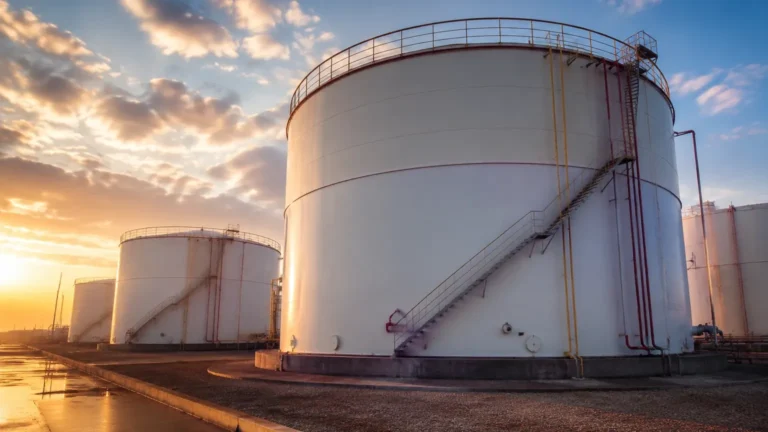
Marine tank monitoring is a critical component of vessel management, encompassing the measurement and oversight of various fluids stored onboard ships, offshore platforms, and marine terminals. Accurate data regarding fuel levels, ballast water, cargo, and bilge levels is essential not only for operational efficiency but also for the structural integrity and safety of the vessel. In the harsh environment of the maritime industry, sensors must withstand corrosive saltwater, extreme vibrations, and the physical movement of the vessel.
This guide examines the fundamental measurement principles, selection criteria, and installation requirements for effective marine tank monitoring systems.
Core Measurement Principles in Marine Environments
Selecting the appropriate technology for marine tank monitoring requires an understanding of how different sensors interact with the stored media and the physical environment of the tank. The following principles represent the most common methods used in modern industrial level measurement.
Hydrostatic Pressure Measurement
Hydrostatic level transmitters operate on the principle that the pressure at the bottom of a tank is directly proportional to the height of the liquid column above it. The relationship is defined by the formula: $P = \rho \times g \times h$, where $P$ is pressure, $\rho$ (rho) is the density of the liquid, $g$ is the gravitational constant, and $h$ is the height of the liquid.
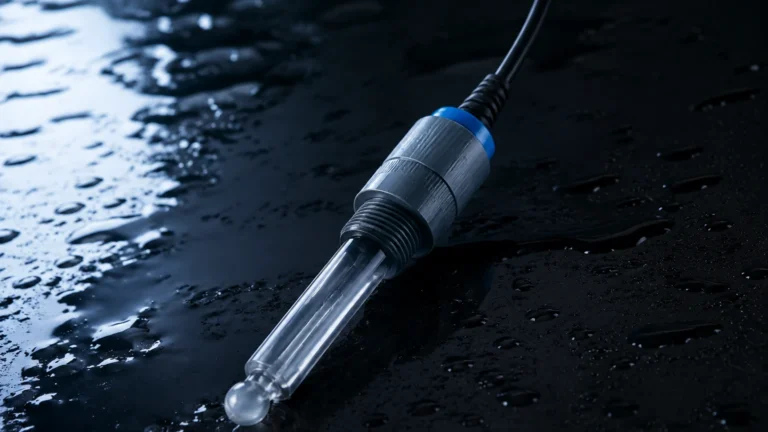
In marine applications, hydrostatic sensors are often submersible or flange-mounted at the bottom of the tank. They are highly effective for ballast water tanks and draft measurement. However, because they measure weight, any change in the liquid's density (due to temperature fluctuations or salinity changes) will affect the accuracy of the level reading unless the system includes density compensation.
Radar (Non-Contact) Measurement
Radar level meters utilize Frequency Modulated Continuous Wave (FMCW) or pulse technology. The sensor emits a high-frequency microwave signal (often at 26GHz or 80GHz) that travels to the surface of the liquid and reflects back to the antenna. The time-of-flight or frequency shift is used to calculate the distance to the product surface.
Radar is increasingly preferred for marine tank monitoring of fuel oils (HFO/MDO) and chemical cargoes. Since the sensor does not contact the media, it is immune to changes in density, pressure, and temperature. High-frequency 80GHz radar is particularly useful in narrow marine tanks because its narrow beam angle avoids interference from internal tank structures like frames and heating coils.
Ultrasonic Measurement
Ultrasonic sensors emit sound waves that reflect off the liquid surface. Like radar, they measure the time-of-flight to determine the level. While cost-effective and easy to install, ultrasonic sensors are sensitive to the vapor space environment. In marine fuel tanks, heavy vapors or significant temperature gradients can alter the speed of sound, leading to measurement errors. They are best suited for potable water tanks or open-sump bilge monitoring where vapors are minimal.
Magnetic Level Gauges
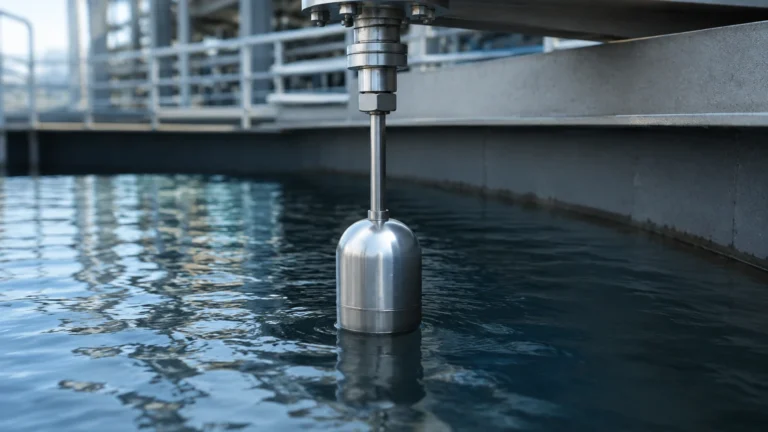
Magnetic level gauges consist of a bypass chamber mounted to the side of the tank containing a float with an internal magnet system. As the float rises and falls with the liquid level, it rotates magnetic flaps or triggers a reed-chain transmitter on the outside of the chamber. This provides both a local visual indication and a remote signal. These are widely used for daily service tanks and lube oil tanks where a mechanical backup to electronic sensors is required for safety.
Technology Selection Matrix
Choosing the right instrument depends on the specific media and tank geometry. The following table provides a comparison of common technologies used in marine tank monitoring.
| Technology | Accuracy | Typical Media | Advantages | Limitations |
| :— | :— | :— | :— | :— |
| Hydrostatic | ±0.1% to ±0.5% | Ballast, Seawater, Draft | Robust, no moving parts, cost-effective | Sensitive to density changes |
| Radar (80GHz) | ±1 mm to ±2 mm | Fuel, Chemicals, Cargo | Non-contact, extremely accurate, ignores obstructions | Higher initial investment |
| Ultrasonic | ±0.25% | Potable Water, Bilge | Low cost, non-contact | Affected by foam and heavy vapors |
| Magnetic Gauge | ±5 mm | Lube Oil, Service Tanks | Visual local display, no power needed for local view | Moving parts can scale or clog |
| Level Switch | N/A (Point) | Bilge, High-Level Alarm | Simple, highly reliable for safety | Only provides point detection |
Key Evaluation Criteria for Marine Applications
When specifying hardware for marine tank monitoring, engineers must look beyond simple accuracy. The maritime environment imposes unique stresses that can lead to premature sensor failure if not properly addressed.
Material Compatibility
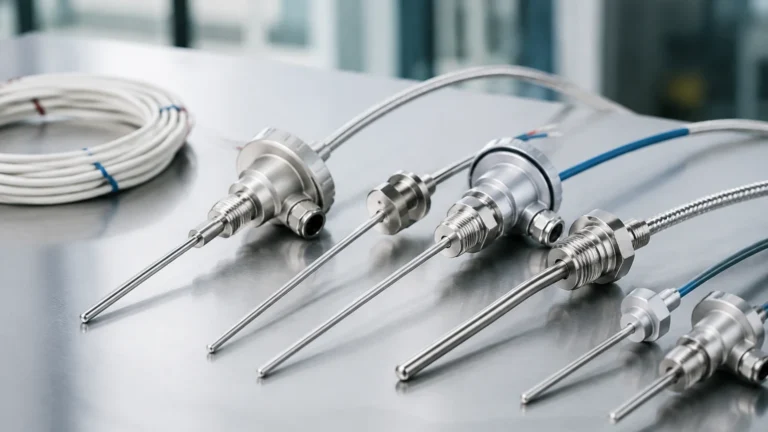
For ballast tanks and seawater applications, sensors must be constructed from corrosion-resistant materials. While 316L stainless steel is standard, aggressive media or long-term submersion in seawater may require Titanium or Hastelloy sensors to prevent pitting and galvanic corrosion.
Ingress Protection (IP Rating)
Sensors located on the deck or submerged in tanks must have high IP ratings. Submersible hydrostatic sensors typically require IP68, capable of withstanding continuous submersion at specific depths (e.g., 20 meters or 2 bar). Deck-mounted radar units should be at least IP67 to protect against heavy seas and high-pressure washdowns.
Vibration and Shock Resistance
Marine engines and thrusters create constant low-frequency vibrations. Sensors must be designed with potted electronics or specialized mounting brackets to prevent internal component fatigue. This is especially critical for sensors mounted near the engine room or on the hull.
Regulatory Compliance
Most commercial marine installations require type approval from classification societies such as DNV, LR (Lloyd's Register), or ABS. These certifications ensure the equipment meets specific safety and performance standards for use at sea, including electromagnetic compatibility (EMC) and flame-proof (Ex) ratings for hazardous cargo areas.
Installation Considerations and Best Practices
Proper installation is as important as technology selection. Even the most advanced radar or hydrostatic sensor will provide poor data if incorrectly positioned.
1. Avoiding Obstructions: In marine tanks, internal structural members (frames, stringers) and heating coils are common. Radar sensors should be mounted in a position where the signal beam does not intersect these structures. If obstructions are unavoidable, a stilling well (a vertical pipe) can be used to guide the signal and provide a clean surface for measurement.
2. Stilling Wells: For tanks subject to heavy sloshing or containing foam, stilling wells are highly recommended. They act as a mechanical damper, smoothing the liquid surface and concentrating the measurement signal. This is a standard practice for marine fuel oil tanks.
3. Mounting Location: Sensors should generally be mounted away from the tank inlet to avoid turbulence and false readings during filling. For hydrostatic sensors, the mounting point should be slightly above the bottom of the tank to prevent sediment or sludge from burying the diaphragm.
4. Cabling and Grounding: Marine environments are prone to electrical noise. Shielded cabling and proper grounding to the ship's hull are essential to prevent signal interference, particularly for 4-20mA analog loops.
Limitations and Risk Mitigation
Marine tank monitoring faces several inherent challenges that require engineering workarounds:
* Vessel Motion (Trim and Heel): As a ship tilts, the liquid level at a specific point in the tank changes even if the volume remains constant. Advanced monitoring systems use inclinometers to measure the ship's trim and heel, applying geometric corrections to the level data to provide an accurate volume calculation.
* Foam and Turbulence: During high-speed bunkering or ballast operations, foam can form on the surface. Ultrasonic sensors often struggle with foam as it absorbs the sound pulse. Radar is more resilient, but choosing a lower frequency or using a stilling well may be necessary in extreme cases.
* Media Build-up: In heavy fuel oil (HFO) tanks, bitumen and paraffin can build up on sensors. Non-contact radar is the preferred solution here, as it has no moving parts to stick and can often "see" through a thin layer of coating on the antenna.
Frequently Asked Questions (FAQ)
Q: How often do hydrostatic sensors need calibration in marine service?
A: While modern sensors are stable, it is recommended to verify calibration annually. In ballast tanks, the sensor should be checked for marine growth or sediment buildup every six months to ensure the diaphragm is not obstructed.
Q: Can one sensor type be used for all tanks on a vessel?
A: While possible, it is rarely cost-effective. A mix of technologies—such as radar for fuel, hydrostatic for ballast, and ultrasonic for potable water—typically provides the best balance of accuracy and budget.
Q: Is 80GHz radar always better than 26GHz for marine tanks?
A: 80GHz offers a narrower beam, which is excellent for avoiding internal tank structures. However, 26GHz radar has a longer wavelength that can be more effective at penetrating heavy steam or condensation in certain high-temperature cargo tanks.
Conclusion
Effective marine tank monitoring requires a specialized approach that accounts for the physical dynamics of a vessel at sea. By understanding the measurement principles of hydrostatic, radar, and ultrasonic technologies, engineers can select the most reliable solution for their specific application. For those seeking detailed technical specifications or looking to Review product options and application support, consulting with a manufacturer that understands the rigors of industrial automation and marine environments is the recommended next step. Before proceeding with a project, always confirm the chemical compatibility of the sensor materials with the intended media and verify that the equipment meets the necessary maritime classification standards for your region.