Mass Flow Transducer
Mass Flow Transducer
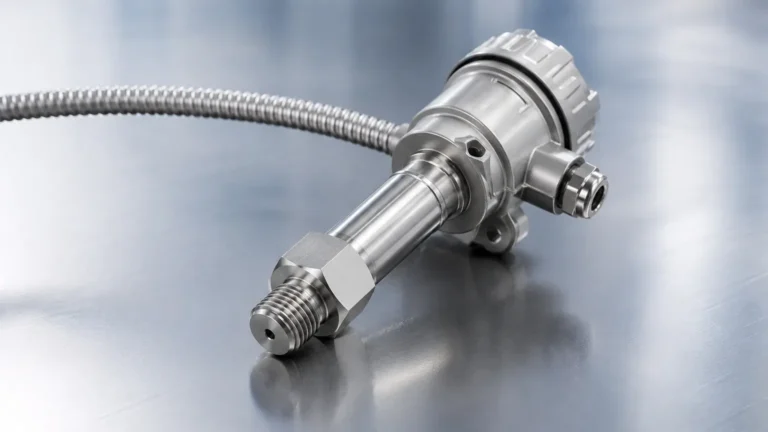
In industrial process control, the ability to measure the quantity of a fluid moving through a system is fundamental. While volumetric flow measurement is common, it is often insufficient for processes where temperature and pressure fluctuations alter fluid density. A mass flow transducer provides a direct measurement of the mass of a fluid passing a specific point per unit of time, typically expressed in kilograms per hour (kg/h) or grams per second (g/s). Unlike volumetric meters, which require additional compensation for temperature and pressure to calculate mass, a mass flow transducer is inherently immune to these variables, making it a critical component in chemical processing, oil and gas, and high-precision industrial automation.
Understanding the distinction between mass and volume is essential for engineering accuracy. For instance, a gas compressed at high pressure occupies less volume than at low pressure, yet its mass remains constant. By utilizing a mass flow transducer, engineers ensure that the actual quantity of the substance—the number of molecules—is accounted for, which is vital for chemical reactions, billing, and safety.
Working Principles of Mass Flow Transducers
There are several technologies used to measure mass flow directly or indirectly. The two most prominent designs in modern B2B applications are Coriolis and Thermal Dispersion.
Coriolis Mass Flow Principle
Coriolis transducers operate on the principles of fluid mechanics and inertia. The device contains one or more vibrating tubes. When a fluid flows through these tubes, the Coriolis force causes the tubes to twist or shift in phase. The amount of twist is directly proportional to the mass flow rate.
Sensors located at the inlet and outlet of the vibrating tubes detect the phase shift. This measurement is highly accurate, often reaching ±0.1% of the flow rate. Because the measurement is based on inertia, it is independent of fluid properties such as viscosity, density, and conductivity. This makes Coriolis transducers the "gold standard" for complex liquids and gases.
Thermal Dispersion Principle
Thermal mass flow transducers are primarily used for gas applications. They consist of two temperature sensors: one is heated, and the other measures the ambient temperature of the fluid. As gas flows past the heated sensor, it carries heat away (the cooling effect). The amount of energy required to maintain a specific temperature differential between the two sensors, or the decrease in temperature at a constant power input, is proportional to the mass flow rate.
This technology is valued for its lack of moving parts and low pressure drop. It is particularly effective in measuring low-flow gas rates in HVAC, aeration, and stack gas monitoring.
Comparison of Mass Flow Technologies
Selecting the right mass flow transducer requires an evaluation of the process media and the required precision. The following table provides a comparison of the primary technologies used in industrial settings.
| Feature | Coriolis Transducer | Thermal Dispersion | Differential Pressure (with compensation) |
| :— | :— | :— | :— |
| Primary Media | Liquids, Slurries, High-pressure Gases | Clean Gases, Air | Liquids, Steam, Gases |
| Typical Accuracy | ±0.1% to ±0.2% | ±1% to ±3% | ±1% to ±2% (Full Scale) |
| Pressure Drop | Moderate to High | Very Low | High |
| Turndown Ratio | 100:1 | 50:1 to 100:1 | 10:1 |
| Maintenance | Low (No moving parts) | Low (No moving parts) | Moderate (Impulse lines) |
| Cost | High | Moderate | Low to Moderate |
Selection Criteria for Industrial Applications
When specifying a mass flow transducer for a project, several technical factors must be confirmed to ensure long-term reliability and accuracy.
1. Fluid Characteristics: Determine if the fluid is a liquid, gas, or steam. For liquids, consider the presence of solids (slurries) or entrained air. Coriolis meters handle slurries well, whereas thermal meters are strictly for clean gases.
2. Flow Rate Range: Define the minimum and maximum expected flow rates. The "turndown ratio" (the ratio of maximum to minimum flow) is critical. If a process has high variability, a Coriolis meter’s wide turndown ratio is advantageous.
3. Process Conditions: Confirm the maximum operating pressure (measured in bar or MPa) and temperature range (°C). Ensure the transducer materials (e.g., 316L Stainless Steel, Hastelloy) are chemically compatible with the media.
4. Accuracy Requirements: For custody transfer (buying/selling fluid), high-precision Coriolis meters are necessary. For general process monitoring or air flow in water treatment, thermal dispersion may be more cost-effective.
5. Output and Integration: Modern transducers offer various outputs, including 4-20mA, Modbus RTU, Profibus, or HART. These must be compatible with the existing PLC or SCADA system.
Installation Considerations and Best Practices
Proper installation is as important as the technology selection itself. Even the most accurate mass flow transducer will fail if installed incorrectly.
* Straight Pipe Runs: While Coriolis meters are generally less sensitive to flow profiles, thermal mass flow transducers require significant straight pipe runs (typically 10 to 20 diameters upstream and 5 diameters downstream) to ensure a stable, laminar flow profile.
* Orientation: For liquid applications, the transducer should be installed in a position where the pipe remains full at all times. Vertical upward flow is often preferred to prevent air trapping. For gas applications, the sensor should be placed to avoid condensate accumulation.
* Vibration Isolation: Coriolis meters are sensitive to external mechanical vibrations. They should be mounted using robust supports and, if necessary, flexible couplings to isolate the meter from pump or compressor vibrations.
* Zero Calibration: After installation and under no-flow conditions (with the pipe full), a "zero-point calibration" should be performed to account for the specific installation stresses and orientation.
Limitations and Operational Risks
Despite their advanced capabilities, mass flow transducers have limitations that engineers must manage:
* Entrained Gas in Liquids: In Coriolis meters, large bubbles of gas can cause the tubes to stall or produce erratic readings. This is a common risk in unloading applications or processes involving volatile liquids.
* Sensor Coating: In thermal dispersion meters, the buildup of oil, moisture, or particulates on the sensor probes can insulate the heat source, leading to significant measurement errors. Regular cleaning or the use of self-cleaning designs is required in dirty gas applications.
* Pressure Drop: Some Coriolis designs involve narrow or curved tubes that create a significant pressure drop. In gravity-fed systems or low-pressure lines, this may impede the process.
Complementary Technologies: Level and Flow Integration
In comprehensive industrial automation, mass flow measurement is rarely used in isolation. It is frequently integrated with level measurement systems to provide a complete picture of mass balance. For example, in a chemical storage tank, a radar level meter or a hydrostatic level transmitter provides continuous volume or head-pressure data. By comparing the change in tank level over time with the data from a mass flow transducer on the inlet or outlet lines, operators can detect leaks, verify pump performance, and ensure inventory accuracy.
For facilities focusing on liquid storage and process vessels, choosing the right level instrumentation is the first step toward effective automation. You can Review product options and application support on our Main Page to see how various level technologies—such as radar, ultrasonic, and magnetic gauges—work alongside flow systems to optimize industrial performance.
Frequently Asked Questions
Q: Can a mass flow transducer measure volume?
Yes. Since mass = volume × density, if the density is known or measured (many Coriolis meters measure density in real-time), the transducer can calculate and output the volumetric flow rate.
Q: Is a mass flow transducer better than a volumetric meter for steam?
Steam is highly compressible. A volumetric meter requires a separate pressure and temperature sensor and a flow computer to calculate mass. A vortex meter with multivariable capabilities or a specialized mass flow meter is generally preferred for steam to ensure accuracy under varying load conditions.
Q: How often should a mass flow transducer be calibrated?
Calibration frequency depends on the criticality of the process and the environment. For custody transfer, annual calibration is standard. For general process control, a check every 2 to 3 years may suffice, provided the internal diagnostics do not report errors.
Q: Does pipe size affect the choice of transducer?
Yes. Coriolis meters become extremely heavy and expensive at large pipe sizes (above 250 mm). In very large ducts or pipes, thermal dispersion insertion probes or differential pressure systems are often more practical.
By carefully evaluating the measurement principles and installation requirements, B2B procurement and engineering teams can implement mass flow transducers that provide the precision necessary for modern industrial standards. Whether used for gas blending, chemical dosing, or combined with level measurement for inventory control, these devices are indispensable for data-driven process management.