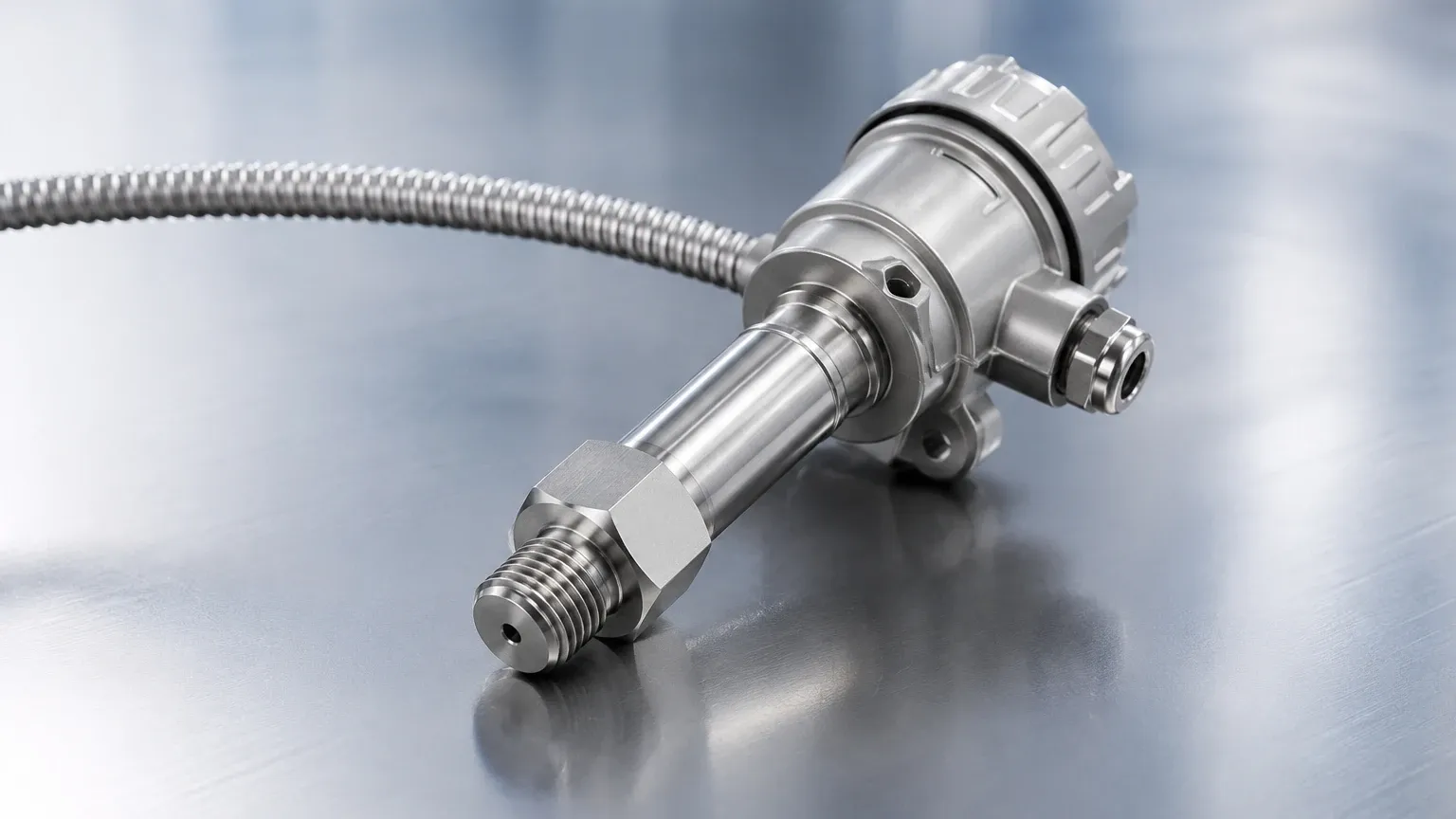
High Temperature Pressure Transmitter
High Temperature Pressure Transmitter
In industrial process control, pressure measurement is a fundamental requirement for safety, efficiency, and inventory management. However, when process temperatures exceed the standard operating limits of conventional sensors—typically around 85°C (185°F)—standard instrumentation begins to fail. A high temperature pressure transmitter is specifically engineered to withstand these thermal stresses while maintaining signal integrity and accuracy. These devices are critical in sectors such as steam power generation, chemical processing, oil refining, and food production, where media temperatures can reach 200°C, 400°C, or even higher.
Selecting the right high temperature pressure transmitter requires an understanding of how heat affects sensor electronics and mechanical components. This guide provides a technical overview of measurement principles, isolation techniques, and practical selection criteria for engineers and procurement specialists.
Measurement Principles and Thermal Management
At its core, a pressure transmitter converts mechanical force into an electrical signal. In high-temperature environments, the primary challenge is protecting the sensitive sensing element and the internal electronics from heat-induced drift or permanent damage.
Sensing Technologies
Most industrial transmitters utilize one of three primary sensing technologies:
1. Piezoresistive Sensors: These use a silicon diaphragm with integrated resistors. While highly accurate, standard silicon sensors are sensitive to temperature changes. High-temperature versions often utilize "Silicon-on-Insulator" (SOI) or "Silicon-on-Sapphire" (SoS) technology, which allows the sensor to operate at much higher temperatures than traditional bulk silicon.
2. Capacitive Sensors: These measure the change in capacitance between a sensing diaphragm and a fixed plate. They are inherently more robust against thermal expansion and are often preferred for high-accuracy applications in fluctuating temperatures.
3. Strain Gauge Sensors: Often bonded to a metal diaphragm, these are used in very high-pressure applications. Special high-temperature adhesives and wire materials are required for these to function in extreme heat.
Thermal Isolation Techniques
To bridge the gap between a 300°C process and a 85°C electronic housing, manufacturers employ several isolation strategies:
* Cooling Fins (Radiators): These are integrated into the neck of the transmitter. By increasing the surface area exposed to the ambient air, they dissipate heat before it reaches the sensor head. This is a cost-effective solution for temperatures up to approximately 200°C (392°F).
* Capillary Tubes and Remote Seals: A remote diaphragm seal is placed at the process connection, and a thin capillary tube filled with a transmission fluid (such as high-temperature silicone oil) carries the pressure signal to the transmitter body located several meters away in a cooler environment. This method can handle temperatures exceeding 400°C (752°F).
* Impulse Lines: In some installations, a length of uninsulated tubing (impulse line) is used to connect the process to the transmitter. The stagnant fluid in the line cools down to ambient temperature, protecting the instrument.
Application in Hydrostatic Level Measurement
High temperature pressure transmitters are frequently used as hydrostatic level sensors. The principle is based on the relationship $P = \rho \cdot g \cdot h$, where $P$ is pressure, $\rho$ is the density of the liquid, $g$ is gravity, and $h$ is the height of the liquid.
In high-temperature tanks, such as boiler feed water or hot oil storage, the density of the liquid changes significantly with temperature. If the transmitter does not account for these changes, the level reading will be inaccurate. Advanced systems often integrate temperature sensors to provide real-time density compensation. For professionals seeking comprehensive level measurement solutions, reviewing the latest hardware options on the Main Page of specialized manufacturers like Welk is essential for matching the transmitter to specific tank geometries and media properties.
Key Evaluation Criteria for Selection
When evaluating a high temperature pressure transmitter for a specific project, engineers must look beyond the maximum temperature rating. The following criteria are vital for long-term reliability:
1. Wetted Material Compatibility
High temperatures often accelerate chemical corrosion. While 316L Stainless Steel is standard, applications involving hot acids or chlorides may require Hastelloy C, Tantalum, or Monel diaphragms. Choosing the wrong material can lead to hydrogen permeation or diaphragm rupture.
2. Temperature Effect on Span and Zero
All transmitters experience some degree of "thermal drift." This is the error introduced as the temperature deviates from the calibration point. Data sheets should specify the "Total Error Band" or the temperature coefficient. High-quality transmitters offer active temperature compensation to minimize this effect.
3. Fill Fluid Selection
For remote seal systems, the fill fluid must remain stable at the process temperature without boiling or degrading. Common fluids include:
* Silicone Oil: Standard for temperatures up to 200°C.
* High-Temperature Oil: Specialized synthetic fluids for up to 400°C.
* Inert Fluids: Used in oxygen service or applications where silicone contamination must be avoided.
Practical Selection Table
The following table summarizes common configurations for different temperature ranges and application needs.
| Configuration Type | Temperature Limit (Typical) | Best Use Case | Limitations |
| :— | :— | :— | :— |
| Direct Mount (Standard) | Up to 85°C (185°F) | General water/air pressure | Not suitable for steam or hot oil. |
| Integrated Cooling Fins | Up to 200°C (392°F) | Steam lines, hot water systems | Requires sufficient ambient airflow for cooling. |
| Remote Seal w/ Capillary | Up to 400°C (752°F) | Reactors, distillation columns | Slower response time due to capillary length. |
| Impulse Line (Water Leg) | Varies by line length | High-pressure steam boilers | Risk of freezing in outdoor winter conditions. |
Installation and Maintenance Considerations
Proper installation is as important as the hardware itself. For high-temperature service, consider the following:
* Mounting Orientation: When measuring steam or hot vapors, the transmitter should be mounted below the process tap with a "pigtail" siphon or a water-filled impulse line. This ensures that condensed liquid, rather than live steam, contacts the sensor.
* Ambient Temperature: Just because the process connection can handle 300°C does not mean the electronics housing can. Ensure the transmitter body is located in a well-ventilated area, away from radiant heat sources.
* Insulation: Never insulate the cooling fins or the transmitter body. Insulation should stop at the process flange to allow the heat dissipation mechanisms to function correctly.
* Zero Calibration: Always perform a zero-point calibration at the actual operating temperature. The expansion of the fill fluid in a remote seal system will cause a zero shift that must be nulled out after the system reaches thermal equilibrium.
Common Risks and Limitations
Despite their robust design, high temperature pressure transmitters face specific risks:
1. Thermal Hysteresis: If a transmitter is subjected to rapid thermal cycling, the materials may not return to their original shape immediately, causing temporary inaccuracies.
2. Diaphragm Fatigue: In high-temperature, high-cycle applications (like batch processing), the metal diaphragm can undergo mechanical fatigue faster than in ambient conditions.
3. Vacuum Limits: High-temperature fill fluids often have higher vapor pressures. If a remote seal system is used in a vacuum application at high temperatures, the fill fluid might boil, causing the diaphragm to bulge and fail.
Frequently Asked Questions (FAQ)
Q: Can I use a standard pressure transmitter for steam if I use a siphon?
A: Yes, a siphon (pigtail or U-type) is a common way to protect a standard transmitter. The siphon traps condensate, which acts as a thermal barrier. However, for direct contact or where a siphon isn't practical, a dedicated high-temperature model is required.
Q: How does the length of the capillary affect the measurement?
A: Longer capillaries introduce a time delay in the pressure signal and increase the potential for temperature-induced errors. It is best to keep capillaries as short as possible while still achieving the necessary thermal isolation.
Q: What happens if the fill fluid leaks?
A: If the diaphragm is breached, the fill fluid will enter the process. In food or pharmaceutical applications, this requires the use of food-grade (FDA-approved) fill fluids to prevent contamination.
Conclusion
Specifying a high temperature pressure transmitter involves balancing accuracy requirements with the physical realities of thermal stress. By understanding the isolation technologies available—from simple cooling fins to complex remote seal systems—engineers can ensure long-term stability and safety in their processes. Before finalizing a purchase, it is critical to confirm the process media's chemical properties, the maximum possible ambient temperature, and whether the application involves vacuum conditions. For further technical specifications and product comparisons, visiting the Main Page of a dedicated manufacturer provides the necessary data to make an informed engineering decision.