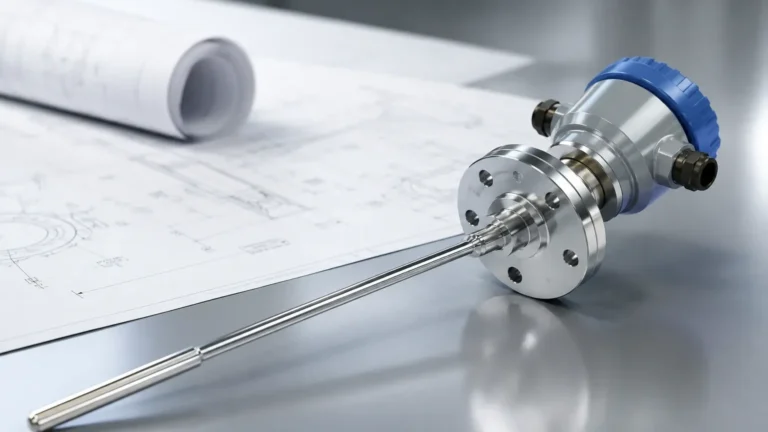
Micromotion Coriolis Meter
Micromotion Coriolis Meter
In the landscape of industrial process control, the micromotion coriolis meter represents one of the most sophisticated and accurate methods for measuring fluid properties. Unlike traditional volumetric flow meters that measure the space a fluid occupies, a Coriolis meter measures the actual mass of the fluid passing through the system. This distinction is critical in industries such as chemical processing, oil and gas, and food production, where temperature and pressure fluctuations can significantly alter the volume of a liquid while its mass remains constant.
Understanding the engineering behind these instruments is essential for technical procurement and system design. By leveraging the Coriolis effect—a phenomenon usually associated with large-scale atmospheric patterns—these meters provide high-precision data on mass flow, density, and temperature simultaneously.
Understanding the Coriolis Measurement Principle
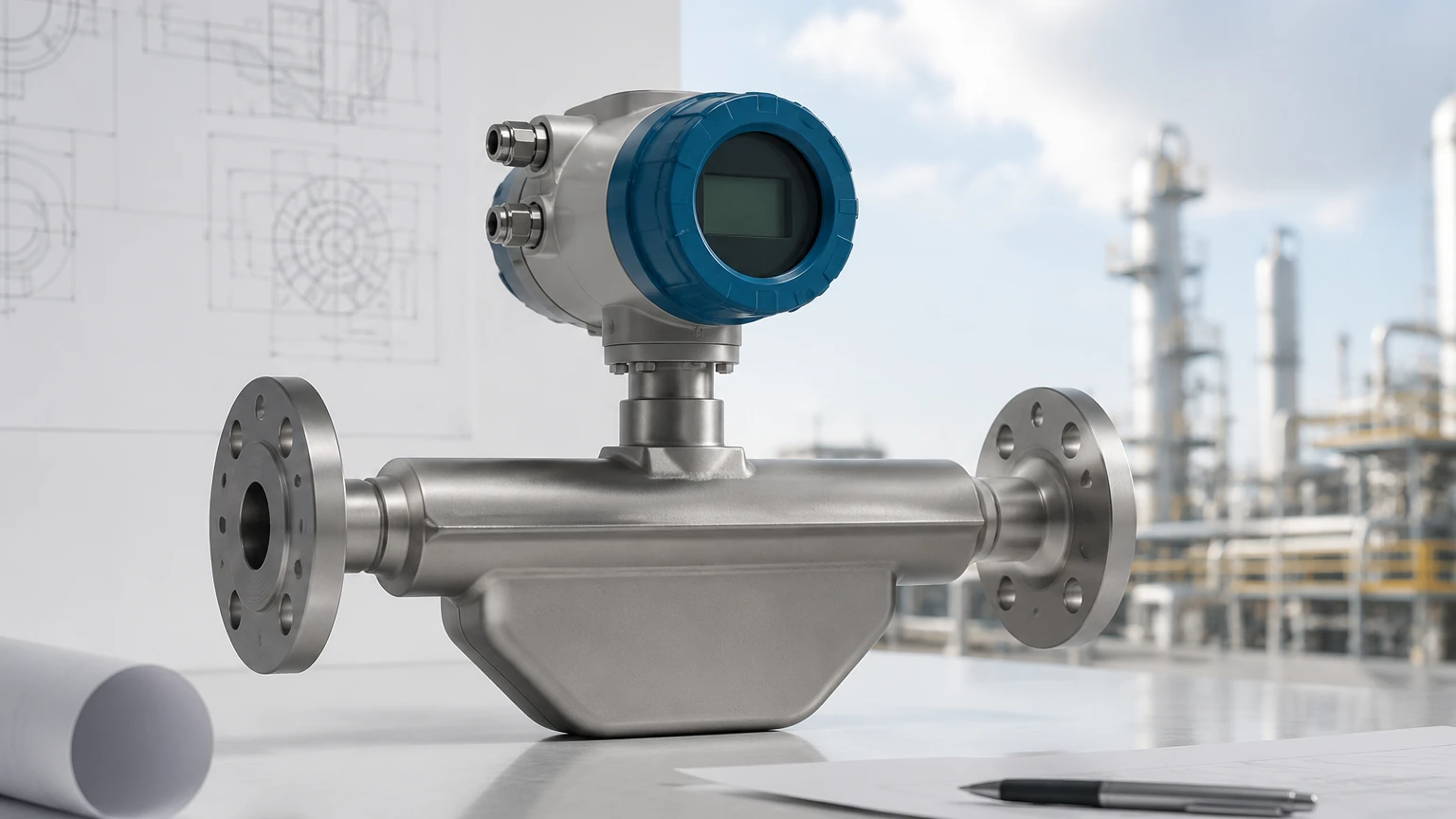
The fundamental operation of a micromotion coriolis meter is based on the principles of classical mechanics. The device typically consists of one or two measuring tubes that are vibrated at their resonant frequency by an electromagnetic drive coil.
The Coriolis Effect in Action
When a fluid flows through these vibrating tubes, it is subjected to Coriolis forces. According to the laws of physics, if a particle in a rotating system moves toward or away from the axis of rotation, it exerts a force on that system. In the context of the meter, the vibration creates a rotating frame of reference.
As the fluid enters the tube and moves toward the point of maximum vibration (the center of the loop), it resists being accelerated upward. Conversely, as the fluid exits the tube and moves away from the center, it resists being decelerated. This results in a "twisting" or phase shift in the tube's vibration.
Signal Processing and Data Acquisition
Sensors located at the inlet and outlet of the tubes (pick-off coils) detect this twist. The time delay between the two signals—known as the phase shift ($\Delta t$)—is directly proportional to the mass flow rate.
Simultaneously, the meter measures the frequency of the vibration. The resonant frequency of the tubes depends on the total mass of the tube and the fluid inside it. Since the mass of the tube is constant, the frequency change allows the transmitter to calculate the fluid's density in real-time. Temperature is also monitored via an internal RTD (Resistance Temperature Detector) to compensate for changes in tube elasticity and to provide a third process variable.
Key Evaluation Criteria for Industrial Applications
When evaluating a micromotion coriolis meter for a specific project, engineers must look beyond simple flow rates. The versatility of the technology allows it to serve as a multi-variable transmitter, but its performance depends on several technical factors.
Accuracy and Repeatability
Most high-end Coriolis meters offer mass flow accuracy of $\pm$0.1% or even $\pm$0.05% of the flow rate. For density measurement, accuracy can reach $\pm$0.0005 g/cm³ (0.5 kg/m³). This level of precision is vital for custody transfer and high-value chemical blending. For more information on integrating these high-precision instruments into your broader measurement strategy, you can refer to the Main Page of our technical resource center.
Turndown Ratio
The turndown ratio (the ratio between maximum and minimum measurable flow) for Coriolis meters is exceptionally high, often exceeding 20:1 or even 100:1. This allows a single meter to handle varying production scales without losing accuracy at the lower end of the range.
Material Compatibility
Since the measuring tubes are in direct contact with the process fluid, material selection is paramount. Standard tubes are often constructed from 316L stainless steel, but for corrosive applications, materials like Hastelloy C-22, Tantalum, or Titanium are required to ensure long-term structural integrity.
Selection Table for Coriolis Flow Meters
The following table provides a comparison of common configurations and their typical application strengths.
| Feature | Dual Bent Tube | Single Straight Tube | Large Bore (High Flow) |
| :— | :— | :— | :— |
| Primary Strength | Highest sensitivity and accuracy | Low pressure drop; easy to clean | High capacity for bulk loading |
| Typical Line Size | 1 mm to 300 mm (0.04" to 12") | 10 mm to 100 mm (0.4" to 4") | 150 mm to 400 mm (6" to 16") |
| Fluid Types | Liquids and Gases | Slurries and viscous fluids | Crude oil, bunker fuel |
| Drainability | Requires specific orientation | Naturally self-draining | Horizontal installation |
| Vibration Resistance | High (balanced design) | Moderate | Moderate |
Installation Considerations and Best Practices
Proper installation is the most significant factor in ensuring the long-term reliability of a micromotion coriolis meter. While these meters are less sensitive to flow profiles than magnetic or ultrasonic meters, they are highly sensitive to mechanical stress and external vibration.
Mounting and Support
The meter must be securely supported to prevent pipe stress from transferring to the sensor tubes. In many cases, it is recommended to support the piping immediately upstream and downstream of the meter. The meter itself should not be used to support the weight of the pipes.
Orientation for Different Media
* Liquids: For liquid applications, the tubes should ideally point downward (in a "U" shape) to prevent gas bubbles from being trapped in the tubes, which can cause measurement noise.
* Gases: For gas applications, the tubes should point upward to prevent condensate or liquids from collecting in the sensor.
* Slurries: A vertical installation with upward flow is often preferred for slurries to ensure that solids do not settle inside the tubes.
Avoiding Entrained Gas
Entrained gas is the "Achilles' heel" of Coriolis technology. Even small amounts of air bubbles can cause the tubes to vibrate erratically, leading to "slug flow" errors. Using air eliminators or ensuring the system pressure is high enough to keep gases in solution is a standard engineering requirement.
Limitations and Common Risks
While the micromotion coriolis meter is a powerful tool, it is not a universal solution for every application. Engineers should be aware of the following limitations:
1. Initial Cost: The capital expenditure for a Coriolis meter is significantly higher than for orifice plates, vortex meters, or ultrasonic sensors. The ROI must be justified by the need for mass flow accuracy or density data.
2. Pressure Drop: Bent-tube designs can introduce a significant pressure drop into the system, especially with high-viscosity fluids. This must be accounted for in pump sizing.
3. Size and Weight: Large-bore Coriolis meters are heavy and bulky, requiring substantial structural support and specialized handling during installation.
4. Zero Stability: Over time, or after significant temperature shocks, the "zero" point of the meter may shift. Periodic zero-verification under no-flow conditions is necessary to maintain accuracy.
Relationship to Level Measurement
In the context of industrial automation, flow and level measurement are often interdependent. A micromotion coriolis meter provides the exact density of a fluid, which is a critical variable for hydrostatic level transmitters. If the density of a liquid in a tank changes due to temperature or composition, a standard pressure-based level sensor will provide an inaccurate reading. By integrating the real-time density data from a Coriolis meter, the control system can calculate the precise liquid level and volume regardless of fluid changes.
For engineers designing complete tank management systems, combining mass flow data with radar or ultrasonic level sensors provides a redundant and highly accurate inventory control solution. You can explore a wide range of these complementary technologies on the Main Page.
Frequently Asked Questions (FAQ)
Q: Can a Coriolis meter measure the flow of non-conductive liquids?
Yes. Unlike electromagnetic flow meters, Coriolis meters do not rely on electrical conductivity. They work perfectly with hydrocarbons, deionized water, and pure chemicals.
Q: How does the meter handle bi-directional flow?
Coriolis meters are inherently bi-directional. They can detect the direction of the phase shift and report flow in both directions, making them ideal for loading and unloading applications.
Q: Is straight-run piping required before and after the meter?
Generally, no. Because the measurement is based on mass and inertia rather than fluid velocity profiles, Coriolis meters are mostly immune to the effects of elbows, valves, or reducers near the inlet. However, extreme turbulence should still be avoided to minimize noise.
Q: What is the typical lifespan of a micromotion coriolis meter?
With no moving parts subject to wear (other than the vibrating tubes), these meters can last 20 years or more if the materials are chemically compatible with the process fluid and the system is protected from extreme water hammer.
Conclusion
The micromotion coriolis meter remains the gold standard for mass-based fluid measurement in modern industry. Its ability to provide simultaneous mass flow, density, and temperature readings in a single instrument reduces the need for multiple penetrations in a pipeline and simplifies data integration. While the initial investment is higher than other technologies, the reduction in measurement uncertainty and the improvement in process consistency often lead to a rapid return on investment.
When selecting a meter, always confirm the chemical compatibility, pressure drop requirements, and the specific density range of your process. For further technical specifications and to view our full range of industrial measurement solutions, visit the Main Page.