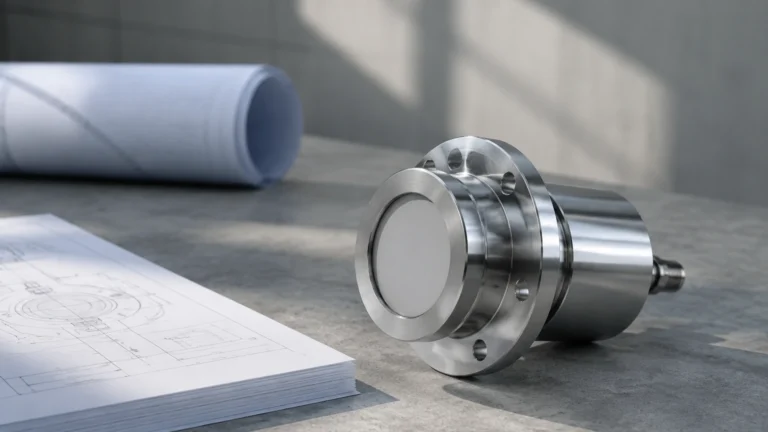
Multi Parameter Transmitter
Multi Parameter Transmitter
In the landscape of modern industrial automation, the demand for high-density data and reduced process footprints has led to the evolution of the multi parameter transmitter. Traditionally, monitoring different physical properties within a tank or vessel required multiple process penetrations, separate wiring runs, and individual calibration cycles. A multi parameter transmitter consolidates these requirements into a single device, capable of measuring variables such as level, temperature, pressure, or interface simultaneously.
For process engineers and system integrators, understanding the integration of these sensors is critical for optimizing water treatment, chemical processing, and oil and gas operations. By reducing the number of vessel openings, these instruments minimize potential leak paths and simplify the overall control architecture.
Measurement Principles and Technology Integration
The fundamental principle behind a multi parameter transmitter is the integration of diverse sensing elements within a single probe or housing, sharing a common processor and communication interface. The method of measurement depends heavily on the primary variable being tracked.
Hydrostatic and Temperature Integration
In hydrostatic level measurement, the transmitter measures the head pressure exerted by a liquid column. However, liquid density changes with temperature. A multi parameter hydrostatic transmitter includes an integrated RTD (Resistance Temperature Detector) or thermocouple. This allows the onboard electronics to perform real-time density compensation, ensuring that the calculated level remains accurate even as the process fluid heats or cools.
Radar and Interface Measurement
Guided Wave Radar (GWR) is a primary candidate for multi-parameter functionality. By utilizing Time Domain Reflectometry (TDR), the instrument sends low-energy microwave pulses down a probe. When the pulse hits a medium with a different dielectric constant, a portion of the energy is reflected. In applications involving two immiscible liquids (such as oil over water), the transmitter can detect both the upper surface level and the interface level between the two liquids. Advanced models also incorporate vapor phase compensation to account for gas layers that might affect pulse velocity.
Ultrasonic Multi-Sensing
Ultrasonic transmitters use sound wave Time-of-Flight (ToF). Since the speed of sound is highly dependent on air temperature, almost all professional-grade ultrasonic level sensors are effectively multi-parameter devices, containing an internal temperature sensor to adjust the distance calculation. Some specialized units may also include humidity or pressure sensors to further refine the measurement in volatile environments.
Technical Selection Criteria
Choosing the right multi parameter transmitter requires a balance between process compatibility and the required precision for each measured variable. Engineers must evaluate whether the device is a "true" multi-parameter instrument (measuring multiple independent variables) or a compensated instrument (using secondary variables only to correct the primary measurement).
| Criteria | Hydrostatic Multi-Sensor | Guided Wave Radar (GWR) | Ultrasonic Transmitter |
| :— | :— | :— | :— |
| Primary Variable | Level / Pressure | Level / Interface | Level / Distance |
| Secondary Variable | Temperature | Interface / Dielectric | Temperature |
| Process Media | Liquids, Slurries | Liquids, Solids, Interfaces | Liquids, Granular Solids |
| Accuracy (Level) | ±0.1% to ±0.25% FS | ±2 mm to ±5 mm | ±0.25% of range |
| Max Temperature | Up to 120°C (standard) | Up to 450°C (specialized) | Up to 80°C |
| Pressure Range | High (Vessel dependent) | Up to 400 bar | Atmospheric to 3 bar |
When evaluating options, it is helpful to consult a comprehensive technical resource. For detailed specifications on various sensor types, you can visit the Main Page to review product options and application support.
Installation and Engineering Considerations
Successful deployment of a multi parameter transmitter depends on more than just the sensor's specifications; the physical installation environment plays a decisive role in long-term reliability.
Process Connections and Orientation
Because these devices often combine multiple sensors, the probe length and diameter may be larger than single-function units. Ensure that the nozzle size on the vessel is sufficient to accommodate the probe without interference. For hydrostatic types, the sensor must be submerged at the lowest point of interest, whereas radar and ultrasonic types require a clear "line of sight" or a dedicated stilling well to avoid false reflections from agitators or internal baffles.
Wiring and Signal Output
One of the primary advantages of a multi parameter transmitter is the reduction in cabling. Most modern units utilize digital protocols such as HART, Modbus, or Foundation Fieldbus. This allows multiple variables to be transmitted over a single twisted pair of wires. If using a standard 4-20mA analog output, the user must determine which parameter is assigned to the primary loop and how the secondary parameters will be accessed (e.g., via HART multidrop).
Calibration and Scaling
Calibration must be performed for each parameter. For level measurement, this involves setting the 4mA (Empty) and 20mA (Full) points. For temperature or pressure, the scaling must align with the expected process range. In multi-parameter units, it is essential to verify that the internal compensation logic is active and correctly mapped to the process fluid's physical properties.
Practical Limitations and Risks
While multi-parameter instruments offer significant advantages, they are not universal solutions. Engineers should be aware of the following limitations:
1. Single Point of Failure: If the main transmitter electronics fail, all measured parameters are lost simultaneously. In safety-critical applications (SIL rated), redundant single-parameter sensors may be preferred over a single multi-parameter unit.
2. Cross-Interference: In some designs, the presence of a second sensing element (like a temperature probe attached to a level float) can increase the risk of material buildup or "clinging," which can lead to measurement drift.
3. Maintenance Complexity: Cleaning or repairing one sensor often requires taking the entire multi-parameter unit out of service, which may halt multiple data streams in the control system.
4. Environmental Sensitivity: Ultrasonic multi-parameter units are sensitive to heavy foam, dust, and extreme turbulence, which can scatter the acoustic signal regardless of how well the temperature compensation is working.

Maintenance and Troubleshooting
To ensure the longevity of a multi parameter transmitter, a proactive maintenance schedule is recommended. This includes:
* Visual Inspection: Check for corrosion on the process connection and buildup on the sensing probe. For radar and ultrasonic units, ensure the sensor face or antenna is clean.
* Loop Verification: Periodically use a HART communicator to verify that the digital values for all parameters (level, temp, pressure) match the readings at the PLC or SCADA interface.
* Zero-Point Checks: For hydrostatic sensors, verify the zero-pressure reading when the tank is empty to account for any sensor drift over time.
Frequently Asked Questions (FAQ)
Q: Can a multi parameter transmitter measure both level and flow?
A: Yes, in open channel applications (like flumes or weirs), a transmitter can measure the liquid level and use pre-programmed hydraulic formulas to calculate the flow rate as a second parameter.
Q: Is it possible to add a parameter to an existing transmitter?
A: Generally, no. Multi-parameter capabilities are integrated at the hardware level. While some modular systems allow for sensor head replacement, most industrial transmitters are fixed-configuration devices.
Q: How does a multi parameter transmitter handle different units of measure?
A: Most modern transmitters allow the user to select units via the local display or software. For example, level can be displayed in meters (m) or millimeters (mm), while temperature can be toggled between Celsius (°C) and Fahrenheit (°F).
Q: What is the benefit of using HART with these devices?
A: HART (Highway Addressable Remote Transducer) allows the transmitter to send the primary variable as an analog signal while simultaneously transmitting secondary and tertiary variables as digital data. This is the most common way to utilize multi-parameter data without adding extra wiring.
Conclusion
The implementation of a multi parameter transmitter represents a move toward more streamlined, data-rich industrial environments. By consolidating level, temperature, and pressure monitoring into a single instrument, facilities can reduce installation costs and improve the accuracy of their process calculations through integrated compensation. When selecting these instruments, it is vital to match the sensing technology to the specific chemical and physical properties of the media. For further engineering guidance and to explore a wide range of measurement solutions, professionals are encouraged to refer to the Main Page for technical support and product selection tools.