Ultrasonic Gap Level Switch
Ultrasonic Gap Level Switch
In the field of industrial automation and process control, the ultrasonic gap level switch represents a specialized and highly reliable solution for point-level detection. Unlike continuous level measurement systems that provide a constant stream of data regarding the height of a liquid, a gap level switch is designed to detect the presence or absence of a liquid at a specific predetermined point. As a professional manufacturer, Welk provides these instruments to address the rigorous demands of water treatment, chemical processing, and oil and gas operations where precision and durability are paramount.
This article provides a technical overview of the ultrasonic gap level switch, exploring its operating principles, selection criteria, and practical installation requirements for engineering professionals.
Understanding the Measurement Principle
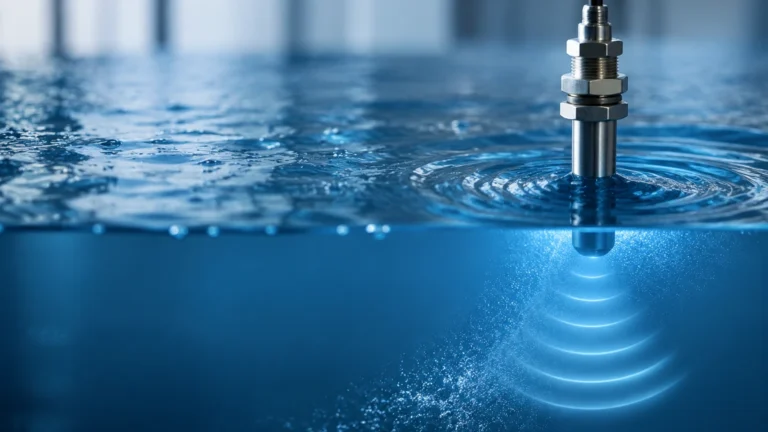
The operation of an ultrasonic gap level switch is based on the transmission of high-frequency sound waves through different media. The sensor typically consists of a probe with a sensing "gap" located between two piezoelectric crystals: a transmitter and a receiver.
The Transmission Mechanism
When the gap is filled with air or gas, the ultrasonic signal generated by the transmitting crystal is significantly attenuated. Air is a poor conductor of high-frequency sound waves (typically in the megahertz range), meaning the signal cannot bridge the gap to reach the receiving crystal. In this state, the electronics within the switch interpret the lack of signal as a "dry" condition.
When the liquid level rises and fills the gap, the physical properties of the medium change. Liquids are much denser than gases and serve as an efficient conductor for ultrasonic energy. The signal travels across the gap with minimal loss, reaching the receiving crystal. The electronics detect this received signal and trigger a state change—usually via a relay or a transistor output—to indicate a "wet" condition.
This principle is inherently robust because it does not rely on the electrical properties of the fluid, such as conductivity or dielectric constant. This makes the ultrasonic gap level switch an excellent alternative to capacitive or conductive sensors in many applications.
Key Advantages in Industrial Applications
Ultrasonic gap level switches offer several distinct benefits that make them preferred in critical process environments:
1. No Moving Parts: Because the device relies on solid-state electronics and piezoelectric crystals, there are no mechanical floats, linkages, or pivots to wear out, jam, or corrode. This significantly reduces maintenance requirements and extends the service life of the instrument.
2. Independence from Fluid Properties: The switch is generally unaffected by changes in liquid density, viscosity (up to a certain limit), or chemical composition, provided the liquid can transmit sound.
3. High Reliability: The "fail-safe" nature of the technology allows for self-diagnostics. If the sensor or the wiring fails, the system can be configured to signal an alarm, ensuring safety in high-level or low-level protection scenarios.
4. Compact Design: The sensors are often smaller than mechanical float switches, allowing for installation in tight spaces or small-diameter pipes.
Selection Criteria for Ultrasonic Gap Level Switches
Choosing the right ultrasonic gap level switch requires a thorough understanding of the process conditions. Engineers must evaluate several factors to ensure long-term accuracy and performance. For comprehensive technical support and to explore specific models, engineers can Review product options and application support to find the ideal match for their facility.
1. Liquid Viscosity
While these switches are versatile, extremely high viscosity can interfere with the signal. Typically, liquids with a viscosity below 5,000 centipoise (cP) are ideal. If the liquid is too thick, it may cling to the gap after the level has dropped, causing a "false wet" reading. For very viscous materials, a larger gap or a different technology might be required.
2. Temperature and Pressure
Standard industrial gap switches are designed to operate within specific thermal ranges, often from -40°C to 150°C (-40°F to 302°F). High-pressure environments also require specialized housing and seal materials to prevent sensor failure. Always verify that the wetted materials (such as 316L Stainless Steel, Monel, or Hastelloy) are compatible with the process chemistry.
3. Presence of Solids and Aeration
Heavy concentrations of suspended solids or high levels of aeration (bubbles) can scatter the ultrasonic signal. If the liquid is highly carbonated or undergoing intense agitation, the signal may be blocked even when the gap is submerged, leading to a "false dry" signal.
Selection Table: Quick Reference
| Feature | Specification / Requirement |
| :— | :— |
| Media Type | Clean or slightly dirty liquids |
| Viscosity Limit | Typically < 5,000 cP |
| Process Pressure | Up to 100 bar (1,450 psi) depending on model |
| Process Temperature | -40°C to +150°C (Standard) |
| Output Options | Relay (DPDT/SPDT), 4-20mA loop powered, or Transistor |
| Wetted Materials | 316L SS, PFA, Carbon Steel |
Installation Best Practices and Considerations
Proper installation is critical to the functionality of an ultrasonic gap level switch. Failure to follow engineering guidelines can result in erratic switching or premature sensor failure.
Orientation
Gap switches can be installed horizontally or vertically.
* Horizontal Installation: The gap should be oriented vertically (the opening facing up and down) to allow the liquid to drain freely as the level recedes. If the gap is oriented horizontally, liquid may become trapped by surface tension, leading to false indications.
* Vertical Installation: When installed from the top of a tank, the probe length must be specified accurately to reach the desired switching point. Ensure the gap is not positioned directly under a fill pipe where turbulent inflow could cause false triggers.
Turbulence and Agitation
In tanks with heavy agitation, the use of a stilling well or a bypass chamber is recommended. This provides a calm environment for the sensor, preventing "chatter" (rapid cycling of the relay) caused by surface waves.
Wiring and Grounding
Industrial environments are often subject to electromagnetic interference (EMI). Using shielded cables and ensuring the instrument is properly grounded to the vessel or the plant's common ground is essential for signal integrity.
Limitations and Application Constraints
While the ultrasonic gap level switch is a robust tool, it is not a universal solution. Engineers should be aware of the following limitations:
* Coating and Scaling: If the process liquid tends to leave heavy deposits or "skins" over the sensor, the gap may become bridged. While some designs are more resistant to coating than others, regular inspection is necessary in scaling applications.
* Foam: Dense foam can sometimes be detected as a liquid, while light, airy foam may not be detected at all. If the primary goal is to detect the liquid level beneath a layer of foam, the sensitivity must be carefully calibrated, or an alternative technology like a tuning fork switch may be more appropriate.
* Vacuum Applications: In extremely high vacuum conditions, the transmission of sound is hindered. However, most standard industrial vacuums do not reach the levels required to stop ultrasonic transmission through the liquid phase.
Comparison with Alternative Point Level Technologies
To better understand where the ultrasonic gap level switch fits in the hierarchy of level measurement, it is helpful to compare it with other common technologies.
vs. Tuning Fork (Vibrating) Switches
Tuning fork switches rely on frequency shifts when submerged. They are excellent for aerated liquids and are generally more resistant to heavy turbulence than ultrasonic gap switches. However, ultrasonic gap switches are often preferred in high-viscosity liquids where a tuning fork might be dampened too easily.
vs. Float Switches
Float switches are simple and cost-effective but contain moving parts that are prone to mechanical failure and buildup. The ultrasonic gap switch provides a solid-state alternative that is much more reliable in chemical and high-pressure applications where a float might collapse or get stuck.
vs. Capacitance Switches
Capacitance switches depend on the dielectric constant of the fluid. If the moisture content or the chemical composition of the liquid changes, a capacitance switch may require recalibration. The ultrasonic gap switch is largely immune to these changes, making it a more "set-and-forget" solution for varying fluid types.
Frequently Asked Questions (FAQ)
Q: Can the ultrasonic gap level switch be used for interface detection?
A: Yes, in some cases. If two immiscible liquids have significantly different ultrasonic transmission properties (such as oil and water), a gap switch can be calibrated to detect the interface between them. However, this requires specific factory calibration and testing.
Q: How do I clean the sensor if buildup occurs?
A: Most sensors can be cleaned with standard industrial solvents or a soft brush. It is important not to use abrasive materials that could scratch the faces of the piezoelectric crystals, as this can degrade signal transmission.
Q: Is the switch suitable for hazardous areas?
A: Welk offers versions of these switches with ATEX, IECEx, or UL certifications for use in explosive atmospheres. These models typically use intrinsically safe (IS) circuits or explosion-proof housings.
Q: What is the typical response time?
A: Most ultrasonic gap switches have a response time of less than one second. Many models also include a programmable delay (e.g., 1 to 30 seconds) to prevent false switching due to splashing or turbulence.
Conclusion
The ultrasonic gap level switch is a cornerstone of modern industrial level control, offering a balance of reliability, simplicity, and precision. By understanding the acoustic principles behind the device and adhering to strict installation and selection guidelines, process engineers can ensure high-performance level detection even in challenging environments. For those looking to integrate these solutions into their systems, visiting the Welk Main Page provides access to technical specifications and expert guidance necessary for successful implementation. Whether managing water treatment facilities or complex chemical reactors, the right level switch is essential for maintaining safety and operational efficiency.