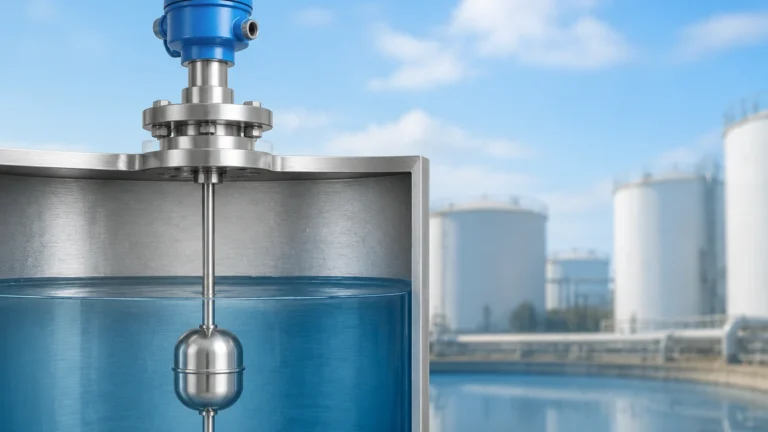
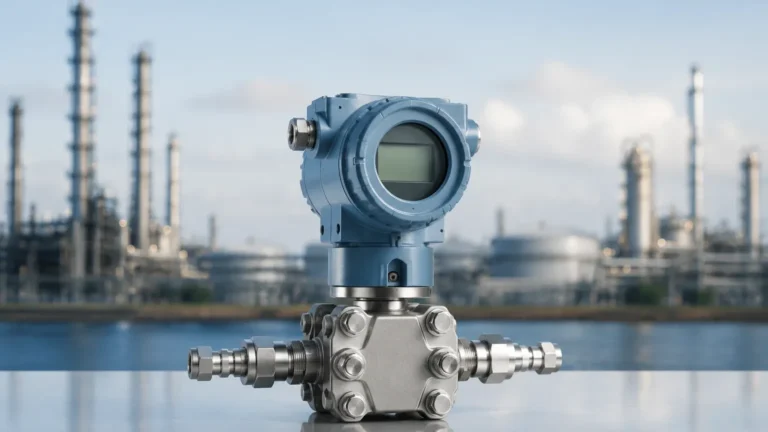
Non-contact Radar Tank Level Transmitter
Non-contact Radar Tank Level Transmitter
In the landscape of industrial process control, the non-contact radar tank level transmitter has emerged as a cornerstone technology for liquid and solid level monitoring. Unlike contact-based methods such as float switches or guided wave radar, non-contact radar systems emit electromagnetic waves that reflect off the surface of the medium without physical interaction. This characteristic makes them indispensable for applications involving corrosive chemicals, high-temperature liquids, or hygienic environments where contamination must be avoided.
As a professional manufacturer of industrial level measurement instruments, Welk provides a range of radar solutions designed to meet the rigorous demands of water treatment, chemical processing, and oil and gas industries. Understanding the underlying physics and selection criteria is essential for engineers tasked with optimizing tank inventory management.
Measurement Principles of Radar Technology
Non-contact radar transmitters operate on the "Time of Flight" (ToF) principle. The device mounted at the top of a tank transmits a high-frequency microwave signal toward the material surface. A portion of this energy is reflected back to the antenna. By measuring the time it takes for the signal to travel the round trip, the instrument calculates the distance to the product surface.
There are two primary modulation techniques used in modern industrial radar:
Pulse Radar
Pulse radar transmitters emit short bursts of microwave energy. The electronics measure the elapsed time between the transmitted pulse and the received echo. While historically common due to lower power consumption, pulse radar is increasingly being replaced by more sophisticated modulation techniques in high-precision applications.
Frequency Modulated Continuous Wave (FMCW)
FMCW technology is the current standard for high-accuracy level measurement. Instead of pulses, the transmitter sends a continuous signal with a frequency that changes linearly over time (a frequency sweep). The reflected signal is received and compared to the signal being transmitted at that exact moment. The frequency difference ($Δf$) between the transmitted and received signals is directly proportional to the distance. FMCW offers superior signal-to-noise ratios, allowing the transmitter to filter out false echoes from internal tank obstructions like agitators or heating coils.
Frequency Considerations: 26GHz vs. 80GHz
The frequency of the radar signal significantly impacts the performance of a non-contact radar tank level transmitter. Frequency determines the beam angle and the ability of the signal to penetrate steam or dust.
* 26GHz Radar: Often referred to as "K-band" radar, these units are versatile workhorses. They offer a balance between beam focus and the ability to handle moderately turbulent surfaces. They are widely used in standard chemical storage and water reservoirs.
* 80GHz Radar: High-frequency radar (W-band) allows for extremely narrow beam angles (as low as 3°). This is critical for tall, narrow tanks or vessels with complex internal structures. The higher frequency also provides better resolution, enabling the measurement of levels very close to the tank bottom or the sensor face.
Comparison Table: Radar Frequency Selection
| Feature | 26 GHz Radar | 80 GHz Radar |
| :— | :— | :— |
| Beam Angle | 8° to 20° (depending on antenna) | 3° to 6° |
| Measurement Range | Up to 30 meters | Up to 120 meters |
| Accuracy | ±3 mm to ±5 mm | ±1 mm |
| Dust/Steam Penetration | Excellent | Good (can be affected by heavy condensation) |
| Small Tank Suitability | Moderate | Excellent |
Key Evaluation Criteria for Selection
When specifying a non-contact radar tank level transmitter, several technical factors must be confirmed to ensure reliable data. Engineers should review product options and application support at the Main Page to align hardware specifications with process conditions.
Dielectric Constant (εr)
The dielectric constant of the medium is the most critical factor in signal reflection. Materials with high dielectric constants, such as water (εr ≈ 80), reflect radar waves very effectively. Conversely, hydrocarbons and oils often have low dielectric constants (εr < 2.0), which result in weaker return signals. For very low εr materials, high-sensitivity FMCW transmitters or specialized antenna designs are required.
Process Temperature and Pressure
Radar electronics are sensitive to heat. While the antenna (the wetted part) can often withstand temperatures exceeding 200°C, the housing containing the processor must be kept within its rated ambient temperature range. High-pressure applications require specialized flange mounts and glass-sealed process separations to prevent leakage into the instrument housing.
Tank Geometry and Internals
The presence of agitators, ladders, or spray balls can create "false echoes." A narrow beam angle (80GHz) helps bypass these obstacles. If obstacles cannot be avoided, modern transmitters include software-based "echo mapping" to record and ignore static reflections from fixed internal structures.
Installation Considerations
Proper installation is paramount to the accuracy of a non-contact radar tank level transmitter. Even the most advanced sensor will fail if placed incorrectly.
1. Nozzle Height and Diameter: The antenna should ideally extend slightly beyond the mounting nozzle to prevent the microwave beam from reflecting off the nozzle walls. If the nozzle is long, a higher frequency radar with a narrower beam is necessary.
2. Positioning: The transmitter should not be mounted in the center of a tank with a domed roof, as this can cause multiple reflections that confuse the sensor. It should also be placed away from the filling inlet to avoid measuring the falling stream of material.
3. Beam Path: Ensure the signal path is clear of obstructions. As a rule of thumb, the sensor should be mounted at a distance from the tank wall equal to at least 1/6th of the tank diameter to avoid wall interference.
4. Dead Zone (Blocking Distance): Every radar has a minimum measurable distance (typically 0.1m to 0.5m from the antenna). The transmitter must be mounted high enough so that the maximum liquid level never enters this dead zone.
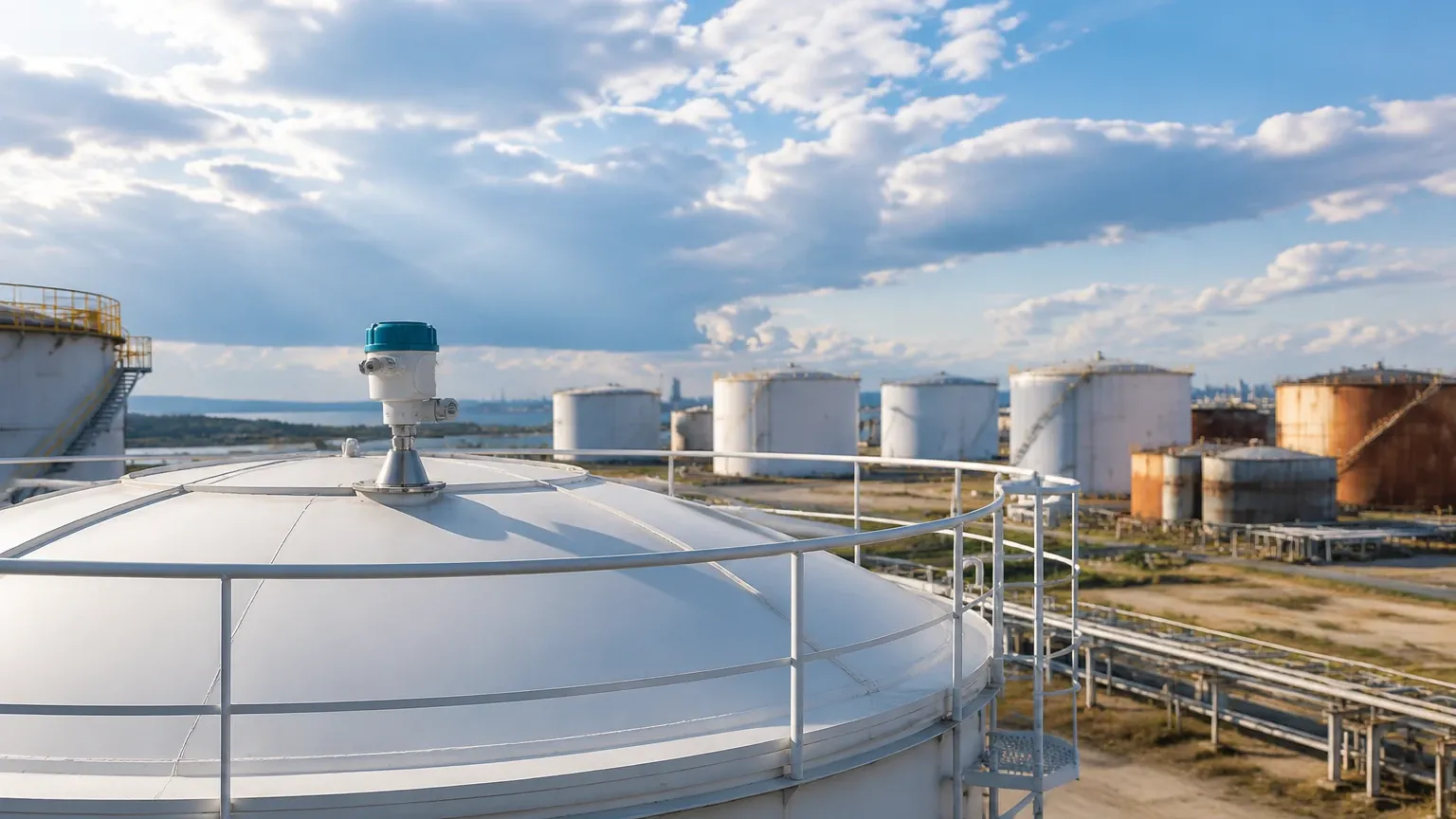
Limitations of Non-contact Radar
While highly versatile, non-contact radar is not a universal solution. Certain conditions can impede performance:
* Heavy Foam: Dense, thick foam can absorb radar signals rather than reflecting them. In such cases, a guided wave radar or a hydrostatic pressure transmitter may be more appropriate.
* Extremely Low Dielectric Media: In vacuum conditions with very low εr liquids, the signal may pass through the liquid and reflect off the tank bottom instead.
* Rapid Turbulence: While FMCW handles surface ripples well, extreme turbulence can scatter the signal. Using a stilling well or bypass pipe can stabilize the measurement surface.
Maintenance and Troubleshooting
One of the primary B2B advantages of non-contact radar is the low maintenance requirement. Since there are no moving parts and no contact with the medium, mechanical wear is non-existent. However, periodic checks are recommended:
* Antenna Buildup: In applications with heavy vapors or splashing, material may accumulate on the antenna (lens or horn). While many modern radars can "see through" thin layers of buildup, heavy crusting will attenuate the signal. Integrated air purge connections can be used to keep the antenna clean.
* Signal Strength Monitoring: Most digital transmitters provide a "signal quality" or "echo margin" metric. A declining signal strength over time usually indicates antenna fouling or a changing process condition.
Frequently Asked Questions (FAQ)
Q: Can a non-contact radar tank level transmitter measure through a plastic tank lid?
A: Yes. Microwaves can penetrate non-conductive materials like plastic (polyethylene, PVC) or glass. This allows for measurement without cutting a hole in the tank, provided the material is not too thick and does not contain conductive additives.
Q: How does radar compare to ultrasonic level sensors?
A: Ultrasonic sensors use sound waves, which require a medium (air) to travel and are affected by air temperature, pressure, and vapor composition. Radar uses electromagnetic waves, which travel at the speed of light and are unaffected by vacuum, pressure, or temperature fluctuations in the vapor space.
Q: Is 80GHz always better than 26GHz?
A: Not necessarily. While 80GHz offers better focus and accuracy, 26GHz is often more robust in applications with heavy steam or condensation, as the longer wavelength is less likely to be scattered by small water droplets.
Conclusion
The selection of a non-contact radar tank level transmitter requires a detailed analysis of the chemical properties of the medium, the physical constraints of the vessel, and the precision requirements of the process. By leveraging FMCW technology and selecting the appropriate frequency and antenna type, industrial operators can achieve reliable, maintenance-free level monitoring in even the most challenging environments. For technical specifications and customized OEM/ODM level measurement solutions, engineers are encouraged to consult professional manufacturing resources to ensure the selected instrument aligns with their specific industrial automation goals.