Non Contact Raman Optic
Non Contact Raman Optic
In the evolving landscape of industrial process control, the integration of advanced analytical techniques with traditional level measurement has become a cornerstone of efficiency. Among these sophisticated methods, the non contact raman optic configuration stands out as a premier solution for real-time, non-invasive molecular analysis. While traditional level measurement instruments—such as those detailed on the Main Page—focus on the physical position of a medium, optical Raman systems provide a deeper look into the chemical composition and phase state of the material without ever making physical contact.
For B2B stakeholders in the chemical, pharmaceutical, and oil and gas sectors, understanding the synergy between non-contact optical sensing and level instrumentation is vital for optimizing reactor yields and ensuring safety in hazardous environments. This guide explores the technical principles, application criteria, and engineering considerations for implementing non-contact Raman optics in industrial workflows.
Measurement Principles of Non-Contact Raman Optics
To appreciate the utility of a non contact raman optic system, one must first understand the underlying physics of Raman spectroscopy and how it is adapted for remote, non-invasive sensing.
The Raman Effect
At the heart of this technology is the Raman effect, a phenomenon of inelastic light scattering. When a high-intensity monochromatic light source, typically a laser, illuminates a substance, the photons interact with the molecular bonds of the material. Most of these photons scatter elastically (Rayleigh scattering) at the same wavelength as the source. However, a tiny fraction—approximately one in a million—scatters at different wavelengths. This shift in energy corresponds to the vibrational, rotational, or other low-frequency transitions within the molecules.
Optical Delivery and Collection
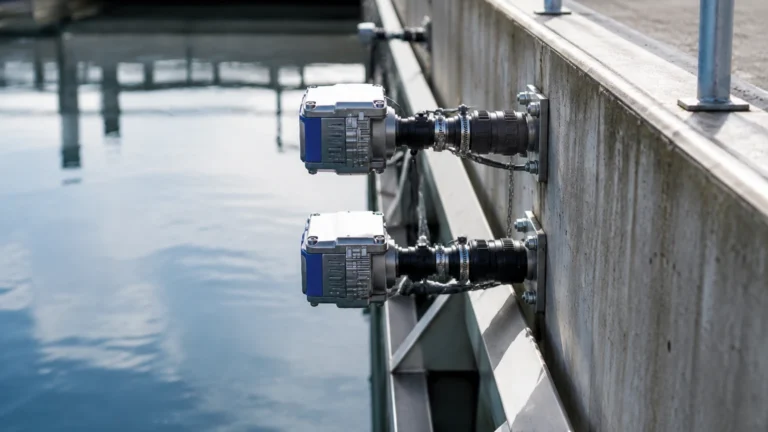
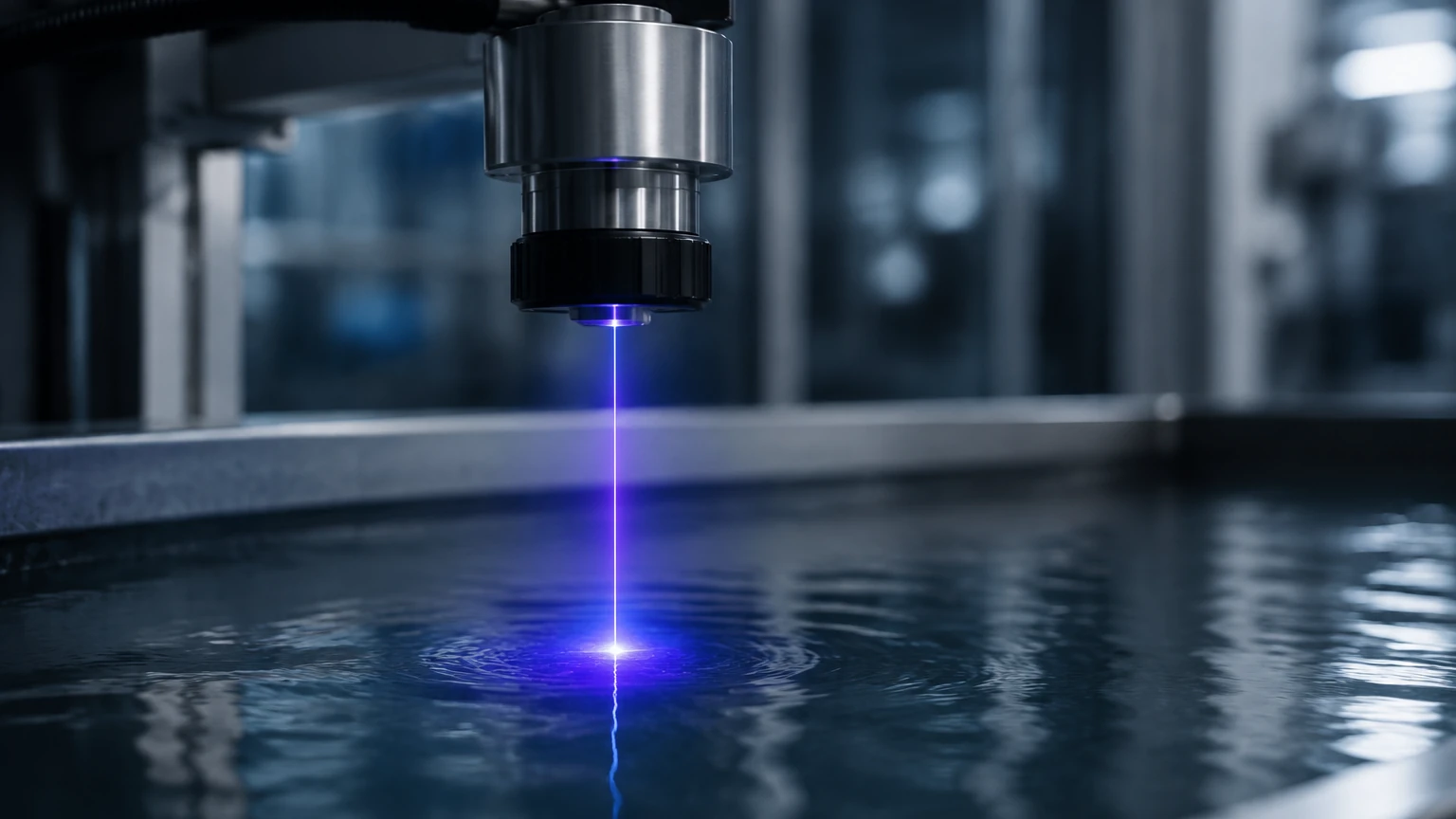
In a non-contact setup, the "optic" refers to the lens assembly and probe head designed to project the laser beam across a distance and collect the backscattered light. Unlike contact probes that are immersed in the fluid, a non contact raman optic system utilizes a long-focal-length lens. This allows the sensor to be positioned behind a pressure-rated sight glass or at a safe distance from a moving conveyor belt.
The system typically consists of:
1. Laser Source: Often operating in the 785 nm or 532 nm range to balance signal strength with the risk of fluorescence.
2. Fiber Optic Cables: Used to transmit the laser light to the probe head and return the collected signal to the spectrometer.
3. The Non-Contact Probe Head: Containing filters to block the Rayleigh line and lenses to focus the beam on the target medium.
4. Spectrometer and Detector: Where the scattered light is dispersed into a spectrum and recorded by a CCD or CMOS sensor.
Integration with Level Measurement
In many industrial applications, knowing "what" is in the tank is just as important as knowing "how much" is in the tank. This is where non-contact Raman optics complement the level sensors provided by manufacturers like Welk. While a radar level meter provides the precise distance to the surface, the Raman optic can verify the concentration of a specific reactant or detect the presence of impurities at that surface.
Interface Detection
In multi-phase separators, traditional level meters may struggle to distinguish between layers of similar density. A non contact raman optic system can be calibrated to recognize the unique spectral fingerprint of oil versus water or foam. By scanning the focal point vertically, the system provides a chemical map of the interface, which can be cross-referenced with the physical level data from a hydrostatic or ultrasonic transmitter.
Technical Selection Criteria
Selecting the right instrumentation requires a balance between precision, environmental constraints, and cost. The following table compares non-contact Raman optics with standard non-contact level measurement technologies commonly found in industrial settings.
Technology Comparison Table
| Feature | Non Contact Raman Optic | Radar Level Meter | Ultrasonic Level Sensor |
| :— | :— | :— | :— |
| Primary Function | Chemical Composition / Phase Identification | Distance / Level Measurement | Distance / Level Measurement |
| Measurement Range | Typically < 500 mm (focal distance) | Up to 30 m or 100 m | Up to 15 m |
| Medium Compatibility | Transparent/Translucent Liquids, Solids | All liquids and solids | Most liquids and solids |
| Pressure Limits | Limited by sight glass rating | Up to 40 Bar (standard) | Typically < 3 Bar |
| Accuracy | Molecular sensitivity (ppm levels) | ±1 mm to ±5 mm | ±0.25% of range |
| Maintenance | Cleaning of optical window | Minimal (non-contact) | Minimal (non-contact) |
Application Engineering and Practical Use Cases
Pharmaceutical Crystallization
In pharmaceutical manufacturing, maintaining the correct crystal form (polymorphism) is critical. A non contact raman optic probe can monitor the crystallization process through a reactor window. Because it is non-contact, there is no risk of the probe acting as a nucleation site or contaminating the sterile batch. This data, combined with precise level monitoring to manage volume changes during solvent addition, ensures batch consistency.
Chemical Synthesis and Polymerization
In high-pressure polymerization reactors, the viscosity of the medium can change rapidly. While a radar or magnetic level gauge monitors the filling level, the Raman optic monitors the monomer-to-polymer conversion rate. This dual-sensor approach allows for real-time adjustments to catalyst feed rates based on both volume and chemical progress.
Installation Considerations
Successful implementation of a non contact raman optic system depends heavily on the physical installation environment. Unlike radar, which is relatively indifferent to visual clarity, optical systems require a clear line of sight.
1. Optical Windows (Sight Glasses): The choice of window material is paramount. Fused silica or sapphire is preferred for their high transmission in the Raman-relevant spectrum and their ability to withstand high process pressures and temperatures. The window must be kept free of fouling; air purges or mechanical wipers are often integrated into the flange assembly.
2. Alignment and Focus: Because the Raman signal is weak, the probe must be precisely aligned so that the focal point falls within the medium. In fluctuating level applications, the probe may need to be mounted on a motorized stage or designed with a large depth of field to account for surface movement.
3. Ambient Light Interference: Industrial lighting can introduce noise into the Raman spectrum. The installation should include shrouding or optical filters to ensure that only the laser-induced scattering reaches the detector.
4. Safety and Classification: Since these systems use Class 3B or Class 4 lasers, the installation must comply with laser safety standards (e.g., IEC 60825-1). In explosive atmospheres (ATEX/IECEx), the probe head must be certified as intrinsically safe or housed in an explosion-proof enclosure.
Limitations and Challenges
While powerful, the non contact raman optic method has specific limitations that engineers must account for during the design phase:
* Fluorescence: Some organic compounds fluoresce strongly when hit by a laser, which can overwhelm the much weaker Raman signal. Choosing a longer wavelength laser (e.g., 1064 nm) can mitigate this, though it results in a lower overall signal intensity.
* Turbidity and Opacity: Raman spectroscopy relies on light penetration. In highly opaque or dark-colored slurries, the laser may only penetrate a few micrometers, limiting the analysis to the very surface of the medium.
* Distance Constraints: Unlike radar, which can measure across tens of meters, non-contact optics are generally limited to shorter distances (usually under 1 meter) to maintain a sufficient signal-to-noise ratio.
Frequently Asked Questions (FAQs)
Q: Can a non-contact Raman optic replace a standard level meter?
A: Generally, no. They serve different purposes. A level meter provides volume and height data, while the Raman optic provides chemical data. However, in specific micro-fluidic or high-precision interface applications, the optic can be used to determine the position of a specific chemical boundary.
Q: How often does the optical window need cleaning?
A: This depends entirely on the process. In clean solvent applications, cleaning may only be required during annual shutdowns. In heavy oil or polymerizing environments, daily cleaning via an automated system may be necessary to prevent signal degradation.
Q: Is the technology safe for food and beverage applications?
A: Yes. Because the sensor is non-contact and can measure through a glass barrier, there is no risk of leaching or contamination, making it ideal for hygienic processes.
Conclusion
The implementation of a non contact raman optic system represents a significant step forward for industries requiring high-fidelity process data. By combining the molecular insights of Raman scattering with the robust level measurement solutions found on the Main Page, engineers can achieve a level of process transparency that was previously unattainable.
When selecting a system, it is essential to evaluate the optical properties of the medium, the physical constraints of the vessel, and the integration requirements of the wider control system. As laser technology and detector sensitivity continue to improve, the role of non-contact optical sensing in industrial automation is set to expand, providing safer, faster, and more accurate monitoring for complex chemical processes worldwide.