Numero De Serie De Un Producto
Numero De Serie De Un Producto
In the realm of industrial automation and process control, the identification and traceability of instrumentation are fundamental to operational safety and efficiency. For engineers and procurement specialists, the "numero de serie de un producto" (product serial number) serves as the unique identifier that links a physical device to its technical specifications, calibration history, and manufacturing origin. In the context of level measurement instruments—such as radar level meters, ultrasonic sensors, and hydrostatic transmitters—this number is the key to ensuring that the right equipment is used in the right application and maintained according to strict industrial standards.
At Welk, a professional manufacturer of industrial level measurement instruments, the serial number is not merely a sequence of digits; it is a critical component of the quality control and lifecycle management process. Whether you are managing water treatment facilities, chemical processing plants, or oil and gas storage, understanding how to interpret and utilize the numero de serie de un producto is essential for long-term reliability.
Understanding Level Measurement Principles
Before diving into the specifics of device identification, it is important to understand the measurement principles that govern the instruments these serial numbers represent. Different technologies are suited for different environments, and their serial numbers often reflect these technical variations.
1. Radar Level Measurement
Radar level meters operate on the Time-of-Flight (ToF) principle. They emit high-frequency electromagnetic waves (typically in the 26 GHz or 80 GHz range) toward the surface of the medium. The waves are reflected back to the sensor. By measuring the time it takes for the signal to travel to the surface and back, the device calculates the distance.
* FMCW (Frequency Modulated Continuous Wave): Modern radar units often use FMCW, which allows for higher precision by measuring frequency shifts rather than just time pulses.
* Advantage: Radar is non-contact and unaffected by pressure, temperature, or vacuum conditions.
2. Ultrasonic Level Measurement
Ultrasonic sensors also use the ToF principle but utilize sound waves instead of electromagnetic waves. The sensor emits an ultrasonic pulse that bounces off the liquid or solid surface.
* Temperature Sensitivity: Because the speed of sound varies with air temperature, these devices typically include an integrated temperature sensor to compensate for changes and maintain accuracy.
* Advantage: Cost-effective for open-channel flow and standard water storage applications.
3. Hydrostatic Level Measurement
This principle is based on the measurement of the pressure exerted by a liquid column at a specific depth. The formula used is $P = \rho \cdot g \cdot h$, where $P$ is pressure, $\rho$ is the density of the liquid, $g$ is gravity, and $h$ is the height of the liquid.
* Advantage: Highly reliable for deep wells, reservoirs, and vented tanks where contact with the liquid is permissible.
4. Magnetic Level Gauges
Magnetic gauges use a float containing a permanent magnet that moves with the liquid level inside a bypass chamber. This magnet acts upon a series of flags or a transmitter outside the chamber.
* Advantage: Provides clear visual indication without requiring power, making it ideal for high-pressure boilers and hazardous areas.
The Significance of the Numero De Serie De Un Producto
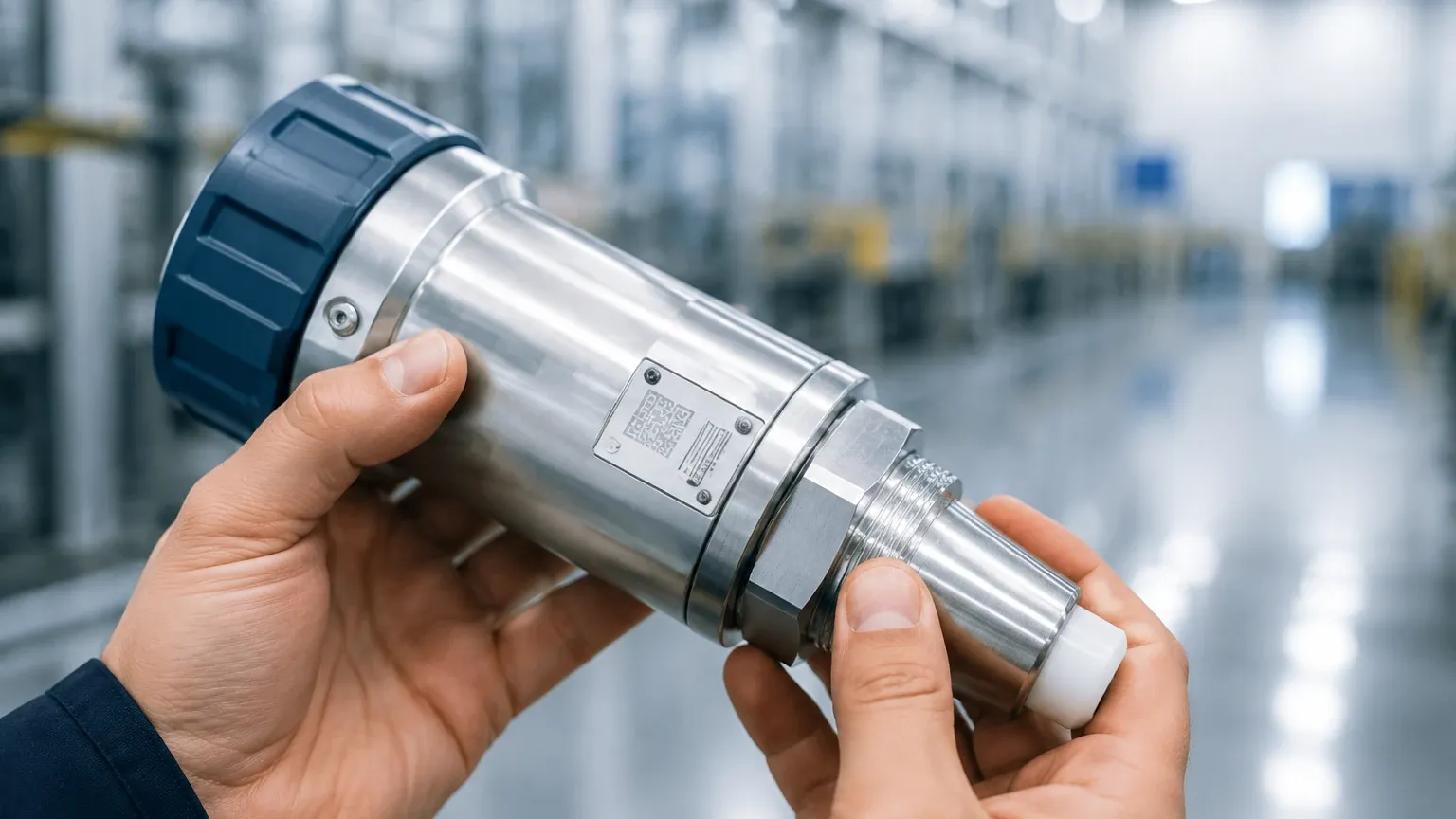
The numero de serie de un producto is typically found on the nameplate of the instrument, often laser-etched into stainless steel or printed on a durable synthetic label. In B2B transactions and industrial maintenance, this number provides several layers of information:
1. Traceability: It allows the manufacturer to track the batch of raw materials used, the specific technicians involved in assembly, and the date of production.
2. Calibration Data: Most industrial level meters come with a calibration certificate. The serial number on the certificate must match the numero de serie de un producto on the device to ensure the accuracy of the measurements.
3. Warranty and Support: When requesting technical assistance or filing a warranty claim, the serial number is the first piece of information required to identify the exact configuration of the device.
4. Spare Parts Compatibility: For modular systems, such as radar meters with interchangeable antennas, the serial number ensures that replacement parts are compatible with the original electronics.
For a detailed look at the various models and their specific identification protocols, you can refer to our Main Page.
Selection Guide for Level Measurement Instruments
Choosing the correct instrument requires an evaluation of the process conditions and the physical properties of the medium. The following table provides a general comparison to assist in the selection process.
| Technology | Typical Accuracy | Max Range | Medium Type | Key Benefit |
| :— | :— | :— | :— | :— |
| Radar (80 GHz) | ±2 mm | 120 m | Liquids/Solids | Extremely precise, small beam angle |
| Ultrasonic | ±0.25% of range | 30 m | Liquids/Slurries | Non-contact, economical |
| Hydrostatic | ±0.5% FS | 200 m | Clean Liquids | Simple installation, deep measurement |
| Magnetic Gauge | ±5 mm | 6 m | Corrosive/High Temp | Visual local indication, no power needed |
| Level Switch | N/A (Point) | N/A | Various | Overfill protection, low-cost |
Practical Installation Considerations
Even the highest quality instrument, identified by a valid numero de serie de un producto, will fail if not installed correctly. Engineers must consider the following factors during the design and installation phases:
Radar and Ultrasonic Constraints
* Blind Zone (Dead Band): Every non-contact sensor has a minimum distance it cannot measure (the area immediately below the sensor). Ensure the maximum liquid level does not enter this zone.
* Beam Angle: The signal spreads as it travels. Ensure there are no obstructions like ladders, agitators, or pipes within the signal cone.
* Nozzle Height: For radar, the antenna should ideally extend slightly beyond the mounting nozzle to prevent signal interference from the nozzle walls.
Hydrostatic Constraints
* Positioning: The sensor should be placed away from areas of high turbulence, such as near an inlet pipe, to prevent erratic readings.
* Atmospheric Venting: Ensure the capillary tube in the cable is not kinked or blocked, as it needs to reference atmospheric pressure for accurate depth calculation.
Magnetic Gauge Constraints
* Vertical Alignment: The bypass chamber must be perfectly vertical to allow the float to move freely without friction.
* Magnetic Interference: Keep the gauge away from large motors or high-voltage cables that could create magnetic fields and affect the float's performance.
Limitations and Environmental Factors
No single technology is a universal solution. Understanding the limitations is as important as understanding the principles.
* Foam and Turbulence: Thick foam can absorb ultrasonic and radar signals, leading to "lost echo" errors. In these cases, a stilling well or a specific radar frequency may be required.
* Dielectric Constant (εr): Radar relies on the dielectric constant of the material. Low εr liquids (like oils) reflect less energy than high εr liquids (like water), requiring more sensitive electronics.
* Vapor and Dust: Heavy dust in silos can scatter ultrasonic waves. High-frequency radar (80 GHz) is generally better at penetrating dust and vapor.
* Temperature Extremes: While the sensor head might be rated for high temperatures, the electronics inside the housing have limits. Remote mounting or cooling fins may be necessary for applications exceeding 150°C (302°F).
Maintenance, Calibration, and the Role of Serial Numbers
To maintain the integrity of a process, level meters should be calibrated periodically. The numero de serie de un producto is the primary reference for this activity. During a maintenance cycle, the following steps are recommended:
1. Verification: Cross-reference the numero de serie de un producto with the plant's asset management software to ensure the device's service history is updated.
2. Visual Inspection: Check the housing for signs of corrosion or moisture ingress. Ensure the cable glands are tight.
3. Zero-Point Check: For hydrostatic and ultrasonic sensors, verify the reading when the tank is empty. Adjust the offset if necessary.
4. Full-Scale Verification: If possible, compare the instrument's reading against a manual dip tape or a sight glass at different levels.
By maintaining a database linked to the numero de serie de un producto, plants can implement predictive maintenance, replacing components before they fail based on the known lifespan of specific batches or models.
Frequently Asked Questions (FAQs)
Q: Where can I find the numero de serie de un producto if the label is damaged?
A: In many modern digital instruments, the serial number is stored in the device's firmware. You can retrieve it using a HART communicator, a PC with specialized software, or via the device's integrated display menu under the "Information" or "Diagnostics" section.
Q: Does the serial number change if the device is repaired?
A: Generally, no. The serial number stays with the main housing or the primary electronic module. However, if the entire electronic insert is replaced, the manufacturer may provide a new label or update the firmware to reflect the original serial number to maintain traceability.
Q: Can I determine the age of my level meter from the serial number?
A: Yes, most manufacturers, including Welk, encode the production year and month into the serial number. For example, a number starting with "2305" might indicate a production date of May 2023. Contact technical support with your specific number for clarification.
Q: Is the numero de serie de un producto the same as the part number?
A: No. The part number (or model code) identifies the type of product and its configuration (e.g., a 26GHz radar with a 4-20mA output). The serial number is a unique identifier for that specific individual unit.
Conclusion
In the complex landscape of industrial level measurement, the numero de serie de un producto is the foundation of device management. It ensures that every radar, ultrasonic, and hydrostatic sensor can be accurately tracked from the manufacturing floor to the heart of a critical industrial process. By understanding the measurement principles, adhering to strict installation guidelines, and respecting the limitations of each technology, engineers can leverage these instruments to achieve precise and safe operations.
For more information on selecting the right level measurement technology for your specific application or to browse our full catalog of industrial solutions, please visit our Main Page. Our team of experts is available to provide customized OEM/ODM services and technical support to meet the unique demands of your industry.