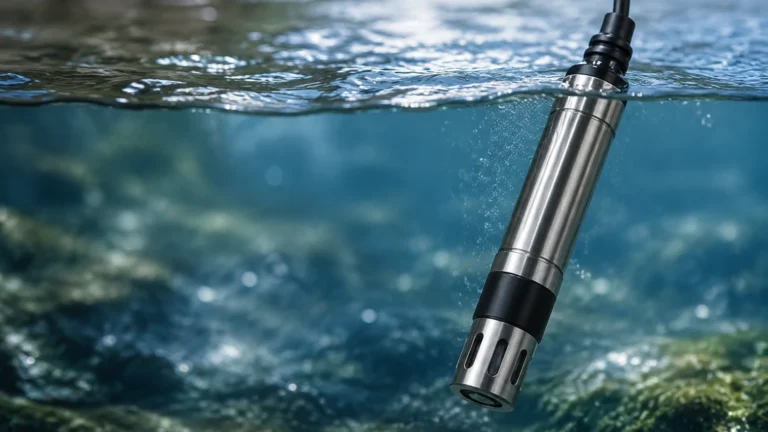
Ph Probe
Ph Probe
In the landscape of industrial process control, the measurement of liquid properties is fundamental to ensuring product quality, environmental compliance, and equipment longevity. While level measurement provides critical data regarding the quantity of a medium, the ph probe serves as the primary instrument for determining the chemical nature of that medium. For engineers and plant managers, understanding the synergy between chemical analysis and physical level monitoring is essential for optimizing automated systems.
At Welk, we specialize in providing comprehensive instrumentation solutions, from advanced radar level meters to precision sensors. Integrating a reliable ph probe into your process workflow allows for a holistic approach to liquid management, particularly in demanding sectors such as water treatment, chemical manufacturing, and oil and gas.
The Fundamental Science: How a pH Probe Operates
To select the appropriate instrumentation, one must first understand the electrochemical principles that allow a ph probe to function. At its core, a pH sensor measures the activity of hydrogen ions in a solution, which is expressed on a logarithmic scale from 0 to 14.
The Nernst Equation
The operation of a ph probe is governed by the Nernst equation. The sensor acts as a galvanic cell, where the potential difference (voltage) generated is proportional to the hydrogen ion concentration. The mathematical representation is:
$$E = E_0 + \frac{2.303 RT}{nF} \log(aH^+)$$
Where:
* E: The measured potential.
* E0: The standard electrode potential.
* R: The universal gas constant.
* T: The absolute temperature in Kelvin.
* n: The charge of the ion (for H+, n=1).
* F: The Faraday constant.
* aH+: The activity of hydrogen ions.
In practical terms, a ph probe produces a millivolt (mV) signal. At a neutral pH of 7.0 and a temperature of 25°C (298.15 K), the theoretical potential is 0 mV. As the solution becomes more acidic, the mV output increases positively; as it becomes more alkaline, the output becomes negative. Each pH unit change corresponds to approximately 59.16 mV at 25°C.
Anatomy of an Industrial pH Probe
An industrial-grade ph probe is a sophisticated assembly designed to withstand harsh process conditions. Unlike laboratory sensors, industrial versions are built for continuous immersion and high-pressure environments.
1. Glass Electrode: This contains a specialized pH-sensitive glass membrane. When immersed, a thin hydrated layer forms on the outer and inner surfaces of the glass, allowing ion exchange to occur.
2. Reference Electrode: To measure the potential of the glass electrode, a stable reference point is required. This is typically a silver/silver chloride (Ag/AgCl) system housed in a potassium chloride (KCl) electrolyte.
3. Junction: Also known as the diaphragm, this is the interface where the internal reference electrolyte meets the process liquid. The design of the junction (e.g., ceramic, Teflon, or open) is critical in preventing fouling and electrolyte depletion.
4. Temperature Element: Since the Nernst slope is temperature-dependent, most modern probes include an integrated PT100 or PT1000 thermistor for Automatic Temperature Compensation (ATC).
Selecting the Right pH Probe for Industrial Environments
Choosing the correct ph probe requires a detailed analysis of the process medium. Factors such as temperature, pressure, and the presence of solids significantly impact sensor lifespan and accuracy.
Selection Matrix for Process Applications
| Application | Temperature Range | Pressure Limit | Junction Type | Housing Material |
| :— | :— | :— | :— | :— |
| General Water Treatment | 0°C to 60°C | Up to 6 bar | Ceramic / Porous | Polycarbonate / PPS |
| Chemical Processing | -10°C to 110°C | Up to 10 bar | PTFE / Teflon | PVDF / Stainless Steel |
| Wastewater (High Solids) | 0°C to 80°C | Up to 4 bar | Open / Large Pore | Epoxy / Ryton |
| Pure Water (Low Conductivity) | 0°C to 50°C | Atmospheric | Sleeve / Liquid | Glass / Stainless Steel |
When evaluating your system requirements, it is often helpful to Review product options and application support on our Main Page to see how chemical sensors integrate with broader level control architectures.
Complementing pH Monitoring with Level Measurement Solutions
In many industrial setups, a ph probe does not operate in isolation. It is usually part of a larger control loop that includes level measurement. For instance, in a neutralization tank, the liquid level must be monitored to ensure the volume is sufficient for chemical dosing.
* Hydrostatic Level Transmitters: These are ideal for open tanks where the ph probe is also installed. They provide a continuous depth measurement based on the liquid's head pressure.
* Ultrasonic and Radar Level Meters: For aggressive chemicals where non-contact measurement is preferred, Welk’s radar level meters offer high precision without being affected by the chemical fluctuations that a ph probe is monitoring.
* Magnetic Level Gauges: In high-pressure chemical reactors, magnetic gauges provide a visual and electronic level reading, ensuring the ph probe remains submerged at all times to prevent the glass membrane from drying out.
Installation Strategies for Process Reliability
The physical placement of a ph probe is as important as the sensor technology itself. Improper installation can lead to sluggish response times and frequent sensor failure.
Orientation and Placement
* Angle of Installation: A ph probe should never be installed horizontally or upside down. An angle of at least 15° to 80° from the horizontal is recommended to ensure the internal electrolyte remains in contact with the glass membrane and to prevent air bubbles from being trapped in the electrode tip.
* Submersion Depth: The probe must be fully submerged in a representative part of the flow. Avoid stagnant areas or "dead legs" where the pH might not reflect the actual process state.
* Flow Velocity: In-line installations require a balance. High velocity can cause "streaming potentials" (noise), while low velocity can lead to sediment buildup on the junction.
Connection Types
Industrial probes typically use NPT threads (e.g., 3/4" or 1") for mounting into T-pieces or immersion pipes. For pressurized lines, retractable assemblies allow the ph probe to be removed for maintenance without shutting down the entire process.
Maintenance, Calibration, and Troubleshooting
A ph probe is a consumable item; its sensitivity will naturally degrade over time. Regular maintenance is the only way to ensure ongoing accuracy.
Calibration Protocols
Calibration should be performed using standard buffer solutions (typically pH 4.0, 7.0, and 10.0). A two-point calibration is standard for most industrial applications:
1. Zero Point (Offset): Usually performed at pH 7.0. This accounts for any drift in the reference electrode.
2. Slope (Efficiency): Performed at pH 4.0 or 10.0. This measures the health of the glass membrane. A healthy probe should have a slope between 90% and 105% of the theoretical Nernst value.
Cleaning Procedures
Fouling is the leading cause of ph probe failure. Depending on the contaminant, different cleaning agents are required:
* General Scale: 5% Hydrochloric acid (HCl).
* Oil and Grease: Mild detergent or isopropyl alcohol.
* Proteins: Pepsin in HCl solution.
Common Challenges and Limitations
Despite their versatility, ph probes have inherent limitations that engineers must account for in their system design.
1. Temperature Sensitivity: High temperatures accelerate the chemical aging of the glass membrane. For every 10°C increase in temperature, the lifespan of a ph probe is roughly halved.
2. Chemical Incompatibility: Hydrofluoric acid (HF) will actively dissolve the glass membrane of a standard ph probe. In such cases, specialized antimony or non-glass sensors must be used.
3. Ground Loops: In industrial tanks with metallic components or motors, stray electrical currents can interfere with the high-impedance signal of the ph probe. Using a differential sensor with a ground rod (solution ground) can mitigate this issue.
4. Dehydration: If the glass membrane dries out, the hydrated layer is lost. While some probes can be rejuvenated by soaking in KCl solution, prolonged dehydration often results in permanent damage.
Frequently Asked Questions (FAQs)
Q: How long does an industrial ph probe typically last?
A: In clean water applications at ambient temperatures, a probe may last 12 to 24 months. In harsh chemical processes or high temperatures, the lifespan may be reduced to 3 to 6 months.
Q: Can I use a standard ph probe in deionized (DI) water?
A: Standard probes struggle in low-conductivity water because there are few ions to carry the current, leading to unstable readings. A specialized "low ionic strength" probe with a high-flow junction is required.
Q: How often should I calibrate my sensor?
A: This depends on the required accuracy and the process environment. Some critical chemical processes require weekly calibration, while stable water treatment plants may only require monthly checks.
Q: Why is my pH reading drifting?
A: Drift is often caused by a clogged junction or a depleted reference electrolyte. Cleaning the probe and performing a fresh calibration is the first step in troubleshooting.
By integrating high-quality chemical analysis with robust level measurement technologies, industrial operators can achieve superior process stability. For more information on how to optimize your liquid measurement systems, visit our Main Page to explore our full range of industrial instrumentation.