Ph Sensor Electrode
Ph Sensor Electrode
In the realm of industrial process control and liquid analysis, the pH sensor electrode is an indispensable tool for maintaining chemical balance, ensuring product quality, and protecting infrastructure. While level measurement instruments, such as those found on our Main Page, provide critical data on the volume and presence of fluids, the pH electrode provides the qualitative data necessary for complex chemical reactions and wastewater treatment. This guide explores the engineering principles, selection criteria, and installation best practices for pH sensor electrodes in industrial environments.
Measurement Principles of the pH Sensor Electrode
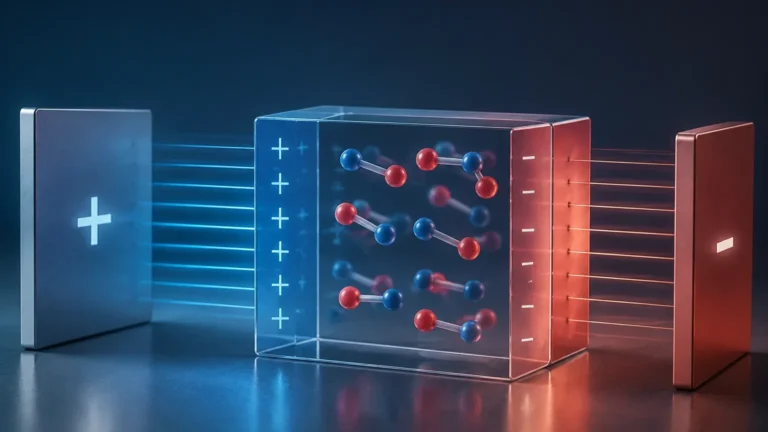
The operation of a pH sensor electrode is based on the principle of potentiometry. To determine the acidity or alkalinity of a solution, the sensor measures the electrical potential difference between two distinct electrochemical elements: the sensing electrode (glass electrode) and the reference electrode.
The Nernst Equation
The relationship between the measured voltage and the pH value is governed by the Nernst equation. In a simplified form for pH measurement, the equation is expressed as:
$$E = E_0 + \frac{2.303RT}{nF} \log[H+]$$
Where:
- E is the measured potential.
- E0 is the standard potential of the electrode.
- R is the gas constant.
- T is the absolute temperature in Kelvin.
- n is the charge of the ion (for $H+$, $n=1$).
- F is the Faraday constant.
At a standard temperature of 25°C (298.15 K), the theoretical slope of a pH electrode is 59.16 mV per pH unit. This means that for every change of one pH unit, the electrode generates a potential change of approximately 59 millivolts. Understanding this principle is vital because it highlights the sensitivity of the electrode to temperature fluctuations, necessitating temperature compensation in most industrial applications.
The Glass Membrane Potential
The sensing part of the pH sensor electrode is typically a thin bulb made of specialized pH-sensitive glass. When this glass comes into contact with an aqueous solution, a hydrated gel layer forms on both the outer and inner surfaces. Hydrogen ions ($H+$) in the process liquid exchange with ions in the gel layer. This ion exchange creates a charge buildup, resulting in a potential that is proportional to the concentration of hydrogen ions in the solution.
Components of an Industrial pH Electrode
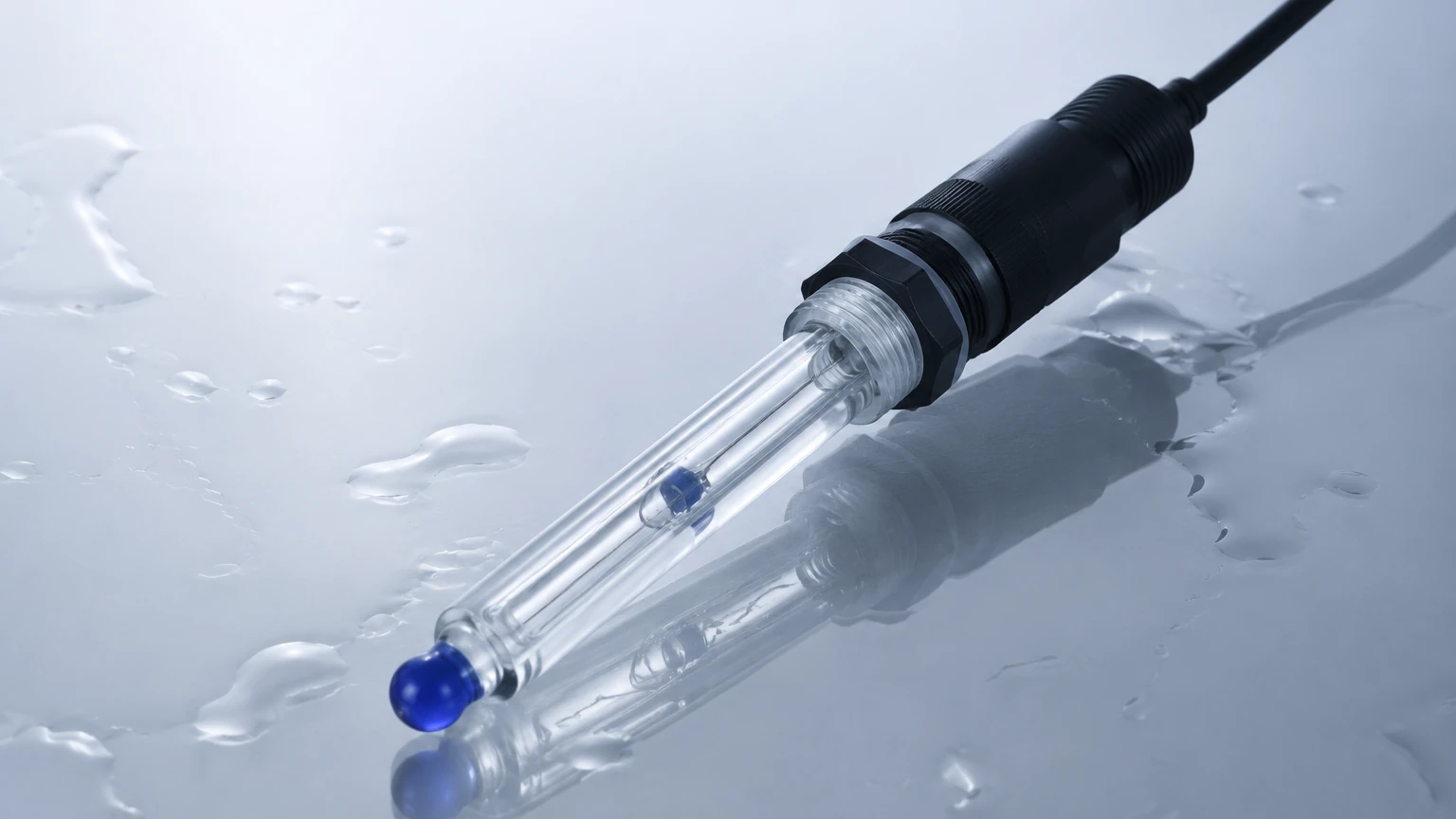
Modern industrial pH sensors are often "combination electrodes," meaning both the sensing glass electrode and the reference electrode are housed within a single body. The primary components include:
1. Sensing Glass Bulb: The ion-selective membrane. Different glass formulations are used for high temperatures, low temperatures, or aggressive chemical environments.
2. Internal Buffer Solution: A solution with a known, stable pH (usually pH 7) that provides a reference point for the internal side of the glass membrane.
3. Reference System: Usually an Ag/AgCl (Silver/Silver Chloride) wire immersed in a concentrated KCl (Potassium Chloride) electrolyte. It provides a stable, constant potential against which the sensing potential is compared.
4. Reference Junction: Also known as the diaphragm, this is a porous path that allows a small amount of electrolyte to leak into the process liquid, completing the electrical circuit. Common materials include ceramic, PTFE (Teflon), or wood.
5. Temperature Sensor: Often integrated (Pt100 or Pt1000) to provide real-time data for slope correction.
Selection Criteria for Industrial Applications
Selecting the correct pH sensor electrode requires a thorough understanding of the process conditions. Using a laboratory-grade electrode in an industrial setting often leads to premature failure. Engineers should Review product options and application support to ensure that all instrumentation, including level and analytical sensors, is compatible with the specific media.
1. Junction Type and Material
The junction is the most common point of failure in a pH sensor electrode. If the junction becomes clogged or poisoned, the sensor will drift or become unresponsive.
| Junction Type | Material | Recommended Application |
| :— | :— | :— |
| Ceramic | Porous Ceramic | General water treatment, clean liquids, low-viscosity chemicals. |
| PTFE (Teflon) | Porous PTFE | Wastewater containing oils, fats, or suspended solids; resistant to fouling. |
| Open Hole | Solid Electrolyte | High-solid slurries, paints, and very dirty media where clogging is certain. |
| Annular | Large Surface Area | High-pressure applications or processes where high flow rates occur. |
2. Temperature and Pressure
Standard glass electrodes are sensitive to thermal stress. For processes exceeding 80°C, high-temperature glass formulations are required. Similarly, if the process pressure is high (e.g., above 6 bar), a pressurized reference system or a solid-state electrolyte is necessary to prevent the process liquid from flowing backward into the electrode and contaminating the reference electrolyte.
3. Chemical Compatibility
Hydrofluoric acid (HF) is a known enemy of glass pH electrodes, as it dissolves the glass membrane. In such cases, antimony electrodes or specialized HF-resistant glass must be used. Furthermore, in high-alkalinity environments (pH > 12), "sodium error" can occur, where the sensor responds to sodium ions instead of hydrogen ions, leading to inaccurate readings. Low-sodium glass is the solution for these scenarios.
Installation and Mounting Guidelines
Proper installation is critical for the longevity and accuracy of a pH sensor electrode. Unlike hydrostatic level transmitters or radar level meters, which can often be mounted vertically without issue, pH sensors have specific orientation requirements.
Mounting Angle
A pH sensor electrode should never be installed horizontally or upside down. The internal buffer solution must always be in contact with the inner surface of the glass bulb. Therefore, the electrode should be mounted at an angle of at least 15° to 20° from the horizontal. This ensures that any air bubbles inside the electrode rise to the top and do not interfere with the measurement.
Flow and Velocity
In pipe installations, the sensor should be placed where the flow is representative of the entire process. However, excessively high flow velocities (above 2-3 meters per second) can cause a "streaming potential," which adds noise to the signal. Conversely, in stagnant water, the sensor may become coated with biofilm or sediment. A bypass loop is often the best solution for high-pressure or high-velocity lines.
Cable Management
The signal generated by a pH sensor electrode is a high-impedance voltage signal (often in the range of $10^7$ to $10^9$ ohms). This makes the signal extremely susceptible to electromagnetic interference (EMI) and moisture. Cables should be kept as short as possible, and high-quality shielded coaxial cables must be used. If the distance between the sensor and the transmitter exceeds 10-15 meters, a pre-amplifier or a digital (Memosens or similar) sensor should be employed.
Maintenance, Calibration, and Storage
Industrial pH sensors are consumable items; they have a finite lifespan that depends on the harshness of the environment. Regular maintenance can significantly extend this life.
Calibration Procedures
Calibration should be performed using at least two buffer solutions (usually pH 7.00 and pH 4.01 or pH 10.01).
1. Zero Point (Offset): Calibrate in pH 7 buffer. The ideal output is 0 mV. An offset of ±30 mV usually indicates the sensor needs cleaning or is nearing the end of its life.
2. Slope: Calibrate in the second buffer. The slope should be between 85% and 105% of the theoretical 59.16 mV/pH. If the slope drops below 80%, the electrode should be replaced.
Cleaning and Storage
If the electrode becomes coated with scale (calcium carbonate), a 5% HCl solution can be used for cleaning. For protein deposits, pepsin in HCl is effective. For oils and greases, a mild detergent or ethanol may be used.
Never store a pH sensor electrode in distilled or deionized water. Doing so will leach the ions out of the glass membrane and the reference electrolyte, destroying the sensor. The ideal storage solution is 3M KCl or the specific storage solution recommended by the manufacturer.
Common Challenges and Troubleshooting
In industrial automation, troubleshooting a pH sensor electrode requires a systematic approach:
* Slow Response Time: Usually caused by a coating on the glass bulb or a clogged junction. Cleaning often resolves this.
* Drifting Readings: Often due to a contaminated reference junction or ground loops in the piping system. Ensure the transmitter and the process liquid are properly grounded.
* Fixed Reading (e.g., always pH 7): This often indicates a cracked glass membrane, which creates a short circuit between the internal and external solutions.
Synergy with Level Measurement Systems
In many industrial sectors, such as chemical manufacturing or water treatment, pH monitoring and level measurement are two sides of the same coin. For instance, in a neutralization tank, an ultrasonic or radar level meter (details of which can be found on our Main Page) ensures that the tank does not overflow, while the pH sensor electrode controls the dosing of acids or bases.
Integrating these sensors into a unified PLC (Programmable Logic Controller) or DCS (Distributed Control System) allows for automated safety interlocks. For example, if the level sensor detects a low-level condition, it can automatically disable the pH-controlled dosing pumps to prevent chemical waste or equipment damage.
Frequently Asked Questions (FAQs)
Q: How long does an industrial pH sensor electrode typically last?
In clean water applications, an electrode may last 1 to 2 years. In harsh chemical processes or high-temperature environments, the lifespan may be reduced to 3 to 6 months.
Q: Can I use a pH electrode to measure non-aqueous solutions?
Standard pH electrodes require water to form the hydrated gel layer on the glass bulb. Measuring non-aqueous solutions (like pure oils) requires specialized electrodes with low-resistance glass and non-aqueous electrolytes.
Q: What is the difference between a Pt100 and a Pt1000 temperature sensor in a pH electrode?
Both are resistance temperature detectors (RTDs). The Pt1000 has a higher resistance and is generally preferred for pH measurement because it is less affected by lead wire resistance over long cable runs.
Q: Why does my pH reading change when I turn on a nearby motor?
This is likely due to electromagnetic interference or a ground loop. Ensure the pH cable is shielded and routed away from power lines, and verify that the sensor and transmitter are correctly grounded to the process piping.
By understanding the electrochemical foundations and the practical limitations of the pH sensor electrode, engineers can design more robust and reliable analytical systems. Whether managing a simple wastewater discharge or a complex chemical reactor, the right combination of pH analysis and level instrumentation ensures process efficiency and regulatory compliance.