High Accuracy Temperature Sensor
High Accuracy Temperature Sensor
In the landscape of industrial process control, temperature measurement is as fundamental as pressure or flow. However, the requirement for a high accuracy temperature sensor extends beyond simple monitoring; it is often the linchpin for safety, efficiency, and quality in complex chemical reactions, custody transfer in oil and gas, and precision water treatment. For Welk, a professional manufacturer specializing in level measurement, understanding the synergy between temperature and level is critical, as temperature fluctuations directly impact the accuracy of various level sensing technologies.
This guide explores the underlying principles of high-accuracy temperature measurement, its integration with level sensing systems, and the practical considerations engineers must address when selecting and installing these instruments.
Principles of High Accuracy Temperature Measurement
To achieve high precision, industrial sensors primarily rely on two physical phenomena: the predictable change in electrical resistance of metals (Resistance Temperature Detectors) and the voltage generated by the junction of dissimilar metals (Thermocouples).
Resistance Temperature Detectors (RTDs)
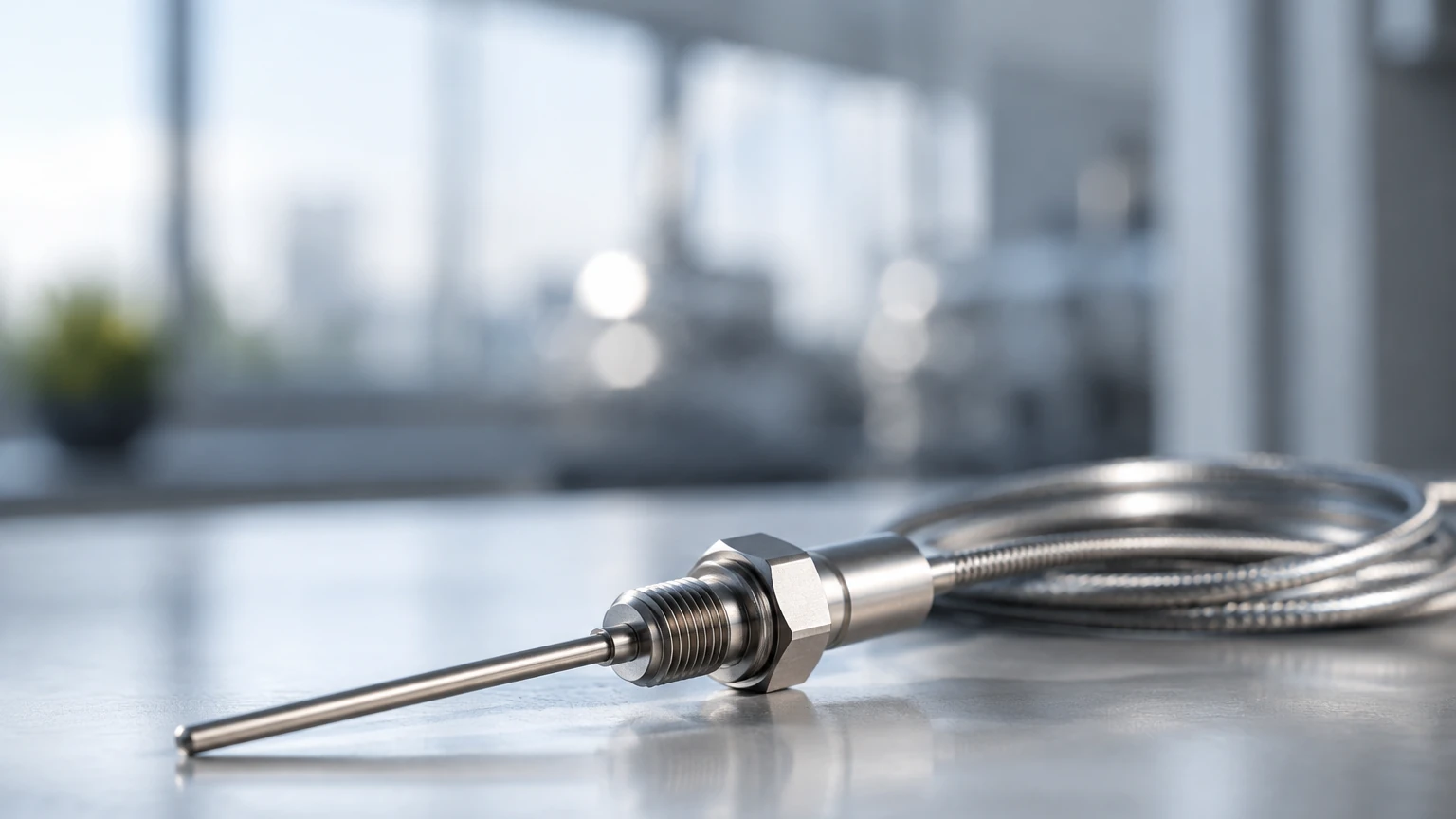
RTDs are the gold standard for applications requiring a high accuracy temperature sensor. They operate on the principle that the electrical resistance of a metal increases as its temperature rises. Most industrial RTDs utilize platinum (Pt) due to its chemically inert nature and linear resistance-to-temperature relationship.
* PT100 and PT1000: These are the most common types, where "100" or "1000" refers to the resistance in ohms at 0°C. PT100 sensors are widely used in industrial automation due to their stability and standardized curves.
* Wiring Configurations: To maintain high accuracy, wiring must be considered. A 2-wire configuration is susceptible to lead-wire resistance errors. A 3-wire configuration compensates for lead resistance, while a 4-wire configuration provides the highest precision by completely isolating the measurement circuit from lead-wire effects.
Thermocouples
Thermocouples operate based on the Seebeck effect, where a temperature gradient across two different conductors produces a voltage. While generally less accurate than RTDs over narrow ranges, they are indispensable for extremely high-temperature applications (up to 1700°C or higher).
* Type K (Chromel/Alumel): The most common general-purpose thermocouple.
* Type T (Copper/Constantan): Often used in cryogenic or low-temperature applications where higher accuracy is needed compared to other thermocouple types.
The Relationship Between Temperature and Level Measurement
In many industrial scenarios, a high accuracy temperature sensor is not a standalone device but a critical component of a level measurement system. Welk’s range of radar level meters, ultrasonic sensors, and hydrostatic transmitters often requires temperature data to maintain their rated precision.
Ultrasonic Level Sensors
Ultrasonic sensors measure the time it takes for a sound pulse to travel to the liquid surface and back. Because the speed of sound in air changes by approximately 0.6 meters per second for every 1°C change in temperature, an uncompensated ultrasonic sensor can experience significant errors. Integrating a high accuracy temperature sensor allows the transmitter to recalculate the distance based on the actual atmospheric conditions inside the tank.
Hydrostatic Level Transmitters
Hydrostatic sensors measure the pressure exerted by a liquid column. However, the density of a liquid is temperature-dependent. For high-precision volume calculations in chemical storage, the system must use temperature data to correct the density value, ensuring that the calculated level reflects the true mass or volume of the medium.
Radar Level Meters
While radar (microwave) signals are largely unaffected by temperature variations in the vapor space, the physical expansion of the tank itself or the dielectric constant changes in certain media can necessitate temperature monitoring for secondary compensation or process safety.
Selection Criteria for Industrial Temperature Sensors
Choosing the right sensor requires balancing accuracy requirements with environmental constraints. The following table provides a comparison of common high-accuracy options:
| Feature | RTD (Class AA/A) | Thermocouple (Special Limits) | Integrated Digital Sensors |
| :— | :— | :— | :— |
| Accuracy | Very High (±0.1°C to ±0.15°C) | Moderate (±0.5°C to ±1.1°C) | High (±0.1°C to ±0.5°C) |
| Stability | Excellent (Low drift) | Moderate (Drift over time) | Good |
| Temperature Range | -200°C to 600°C | -200°C to 1700°C+ | -50°C to 150°C |
| Response Time | Slower (due to mass) | Very Fast | Moderate |
| Cost | Higher | Lower | Moderate |
| Linearity | Highly Linear | Non-linear (requires curves) | Linearized Output |
When evaluating a high accuracy temperature sensor, engineers should confirm the "Class" of the sensor. For RTDs, IEC 60751 defines Class AA, A, and B. Class AA offers the tightest tolerances, essential for laboratory-grade industrial processes.
Installation Considerations for Maximum Precision
Even the most expensive high accuracy temperature sensor will provide incorrect data if installed improperly. Practical engineering requires attention to the following factors:
1. Immersion Depth: To avoid "stem conduction" (where heat travels along the sensor probe to the outside environment), the sensor must be immersed deep enough into the process. A general rule is an immersion depth of at least 10 times the diameter of the protection tube or thermowell.
2. Thermowell Selection: In high-pressure or high-velocity flows, a thermowell protects the sensor. However, the thermowell adds thermal mass, which slows the response time. Using thermally conductive paste inside the thermowell can bridge the air gap and improve heat transfer.
3. Environmental Interference: Electromagnetic interference (EMI) can degrade the signal of RTDs and thermocouples. Using shielded cables and 4-20mA transmitters located close to the sensing point (head-mounted transmitters) helps maintain signal integrity over long distances.
4. Process Media: For corrosive chemical applications, the wetted parts of the sensor or thermowell must be compatible with the medium. Materials such as 316L stainless steel, Hastelloy, or PTFE coatings are common choices in Welk’s industrial solutions.
Limitations and Potential Risks
While high-accuracy sensors are robust, they are not immune to failure or degradation. Understanding these limitations is vital for long-term reliability.
* Sensor Drift: Over time, the physical properties of the sensing element can change due to thermal cycling or contamination. Regular calibration against a reference standard is required to ensure the "high accuracy" claim remains valid.
* Self-Heating: In RTDs, the current used to measure resistance generates a small amount of heat. If the excitation current is too high, the sensor will report a temperature higher than the actual process temperature. Modern transmitters minimize this by using very low excitation currents.
* Vibration: In heavy industrial environments, constant vibration can cause mechanical fatigue in the fine wires of an RTD or thermocouple. In such cases, vibration-resistant or mineral-insulated (MI) sensors should be specified.
Confirmation Steps Before Implementation
Before finalizing a project specification for a high accuracy temperature sensor, technical teams should verify the following:
* Calibration Certification: Does the sensor come with a NIST-traceable or equivalent calibration certificate? For B2B applications, documentation is often as important as the hardware.
* Compatibility with Level Meters: If the sensor is intended for temperature compensation in a level system, ensure the communication protocols (e.g., HART, Modbus, or 4-20mA) are compatible with the Main Page controller or PLC.
* Response Time Requirements: If the process involves rapid temperature swings, a thin-film RTD or a small-diameter thermocouple may be necessary despite potential trade-offs in ruggedness.
Frequently Asked Questions
Q: How often should a high accuracy temperature sensor be calibrated?
A: In most industrial applications, annual calibration is standard. However, in critical chemical or pharmaceutical processes, semi-annual or even quarterly verification may be required to meet regulatory standards.
Q: Can I use a high accuracy RTD in a high-vibration environment?
A: Standard wire-wound RTDs are fragile. For high vibration, thin-film RTDs or specially designed ruggedized sensors with mineral insulation are recommended to prevent internal wire breakage.
Q: Why is a 4-wire RTD better than a 3-wire RTD?
A: A 3-wire RTD assumes all three leads have identical resistance. If there is any imbalance in the lead wires, an error is introduced. A 4-wire RTD measures the voltage drop across the element directly, making lead wire resistance irrelevant to the measurement accuracy.
Q: Does Welk provide customized temperature sensing solutions?
A: Yes, as a professional manufacturer, Welk offers OEM/ODM services to integrate high-accuracy temperature sensing into customized level measurement assemblies, ensuring that the sensors meet specific chemical compatibility and pressure requirements.
By prioritizing the measurement principle, selecting the appropriate accuracy class, and adhering to strict installation guidelines, industrial operators can ensure that their temperature and level measurement systems provide the reliable data necessary for modern process automation.