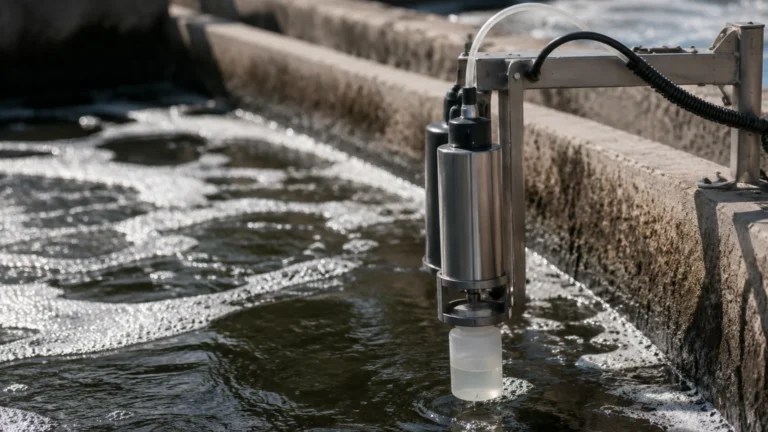
Pmp21
Pmp21
In the landscape of industrial automation and process control, accurate level measurement is a cornerstone of operational efficiency. Among the various instruments used to achieve this, the PMP21 stands out as a compact, cost-effective pressure transmitter designed specifically for the measurement of absolute and gauge pressure in gases, vapors, liquids, and dust. While primarily recognized as a pressure transmitter, its role in hydrostatic level measurement makes it a vital component in tank monitoring and process vessel management.
For engineers and procurement specialists seeking reliable instrumentation, understanding the technical nuances of the PMP21 and how it compares to broader level measurement solutions is essential. This guide explores the measurement principles, technical specifications, and practical application of the PMP21 within the context of modern industrial level sensing.
The Principle of Hydrostatic Level Measurement
Before evaluating specific hardware like the PMP21, it is necessary to understand the physics of hydrostatic level measurement. This method relies on the relationship between the height of a liquid column and the pressure it exerts at the bottom of a vessel.
In a stationary liquid, the pressure ($P$) at a specific depth is determined by the formula:
$P = \rho \cdot g \cdot h$
Where:
- $P$ is the hydrostatic pressure (measured in Pascals or bar).
- $\rho$ (rho) is the density of the liquid (kg/m³).
- $g$ is the acceleration due to gravity (approximately 9.81 m/s²).
- $h$ is the height of the liquid column (meters).
Because gravity is constant and the density of the medium is usually known, the pressure measured by a transmitter at the bottom of the tank is directly proportional to the level of the liquid. The PMP21 utilizes a piezoresistive sensor element to detect this pressure. When pressure is applied to the metallic diaphragm, it causes a slight deformation, which is converted into an electrical signal (typically 4 to 20 mA). This signal is then interpreted by a control system to provide a real-time level reading.
Technical Specifications and Performance of the PMP21
The PMP21 is engineered for environments where space is limited but performance cannot be compromised. It is constructed with a 316L stainless steel housing, ensuring durability in harsh industrial conditions.
Key Technical Attributes:
- Measurement Range: Capable of measuring pressures from 400 mbar (6 psi) up to 400 bar (6000 psi).
- Accuracy: Standard reference accuracy is typically $\pm 0.3\%$ of the span, with options for higher precision depending on the specific calibration.
- Output Signal: Standard 4 to 20 mA analog output, often supplemented by IO-Link capabilities for digital integration and remote parameterization.
- Process Temperature: Designed to operate in temperatures ranging from $-40^{\circ}C$ to $+100^{\circ}C$ ($-40^{\circ}F$ to $+212^{\circ}F$).
- Protection Class: Usually rated at IP65/67 or IP68, making it suitable for wash-down areas or outdoor installations.
These specifications allow the PMP21 to serve as a versatile tool for both simple pressure monitoring and complex level calculations. For organizations looking for a broader range of industrial level measurement instruments, including radar and ultrasonic options, visiting the Main Page of a specialized manufacturer can provide additional context on how hydrostatic sensors fit into a comprehensive automation strategy.
Application-Specific Selection Criteria
Choosing between the PMP21 and alternative technologies requires a detailed analysis of the process media and the vessel environment. While hydrostatic transmitters are highly effective, they are density-dependent. If the density of the liquid changes due to temperature fluctuations or chemical composition shifts, the level reading may require compensation.
Selection Comparison Table
| Criteria | PMP21 (Hydrostatic) | Ultrasonic Sensors | Radar Level Meters |
| :— | :— | :— | :— |
| Measurement Type | Contact (Pressure) | Non-contact (Sound) | Non-contact (Microwave) |
| Media Type | Liquids and Slurries | Liquids and Solids | Liquids, Solids, and Corrosives |
| Accuracy | High ($\pm 0.3\%$) | Moderate | Very High (up to $\pm 1mm$) |
| Installation | Bottom or Side Mounted | Top Mounted | Top Mounted |
| Foam/Vapor Impact | Negligible | Significant Interference | Minimal Interference |
| Cost | Low to Moderate | Moderate | High |
The PMP21 is particularly favored in the food and beverage industry, water treatment, and general process utilities where the medium is relatively stable and the cost-to-performance ratio is a primary concern.
Installation Guidelines for Industrial Environments
Proper installation is critical to the longevity and accuracy of the PMP21. Because it measures the weight of the liquid, the sensor must be positioned where it can accurately sense the full column of fluid.
Positioning and Mounting
1. Avoid Turbulence: Do not install the transmitter directly near an inlet pipe or an agitator. Rapidly moving fluid can cause pressure spikes (noise) that lead to erratic readings.
2. Stilling Wells: In tanks with high agitation, a stilling well or bypass pipe can be used to protect the diaphragm from mechanical stress and ensure a stable pressure reading.
3. Venting: For gauge pressure measurements, the transmitter must be vented to the atmosphere to compensate for changes in barometric pressure. Ensure the vent tube or breather is protected from moisture ingress.
4. Orientation: While the PMP21 can be mounted in any orientation, it is best practice to mount it such that the diaphragm is vertical to prevent the accumulation of sediment or air bubbles against the sensor face.
Electrical Connection
Wiring should be performed using shielded cables to prevent electromagnetic interference (EMI) from nearby high-voltage equipment. If using the IO-Link version, ensure the cable length does not exceed the standard 20-meter limit for digital communication without signal boosters.

Limitations and Alternative Technologies
While the PMP21 is a robust instrument, it is not a "one-size-fits-all" solution. Engineers must be aware of its limitations to avoid measurement errors or premature device failure.
- Vacuum Applications: Standard hydrostatic transmitters may not be suitable for high-vacuum vessels, as the vacuum can pull on the diaphragm and damage the internal sensor.
- Aggressive Chemicals: Although 316L stainless steel is highly resistant, certain concentrated acids or chlorides can cause pitting. In such cases, a transmitter with a Tantalum or Monel diaphragm, or a non-contact radar solution, might be required.
- Density Variations: As noted, if the process involves mixing liquids of different densities, a hydrostatic sensor alone cannot distinguish between a change in level and a change in density. A dual-sensor setup or a different technology like guided wave radar would be more appropriate.
For more complex applications involving bulk solids or highly corrosive chemicals, reviewing advanced options on the Main Page can help engineers identify the correct technology for their specific constraints.
Maintenance and Troubleshooting
The PMP21 is designed to be maintenance-free, but periodic checks are recommended in critical applications.
- Diaphragm Inspection: In applications with viscous or crystallizing media, the diaphragm should be inspected for buildup. Cleaning should be done with a soft cloth and compatible solvent; never use sharp objects to scrape the diaphragm, as this will destroy the sensor.
- Zero-Point Adjustment: Over time, sensors may experience a slight "drift." Periodically venting the sensor to atmospheric pressure and checking the 4 mA output ensures that the zero-point remains accurate.
- Signal Troubleshooting: If the output signal is lost or frozen at 20 mA, check for a breached diaphragm or a short circuit in the wiring. A reading of 3.8 mA or lower often indicates a diagnostic error within the transmitter's electronics.
Frequently Asked Questions (FAQ)
Q: Can the PMP21 be used in pressurized tanks?
A: The PMP21 measures gauge or absolute pressure. If used for level in a pressurized tank, it will measure the sum of the liquid head pressure and the headspace pressure. To measure level in a closed, pressurized vessel, you would typically need a differential pressure (DP) transmitter or a second sensor to subtract the headspace pressure.
Q: What is the difference between the PMP21 and the PMC21?
A: The PMP21 uses a metallic (piezoresistive) sensor, which is ideal for high-pressure ranges and hygienic applications. The PMC21 typically features a ceramic sensor, which offers superior abrasion resistance and is often preferred for vacuum applications or aggressive media.
Q: Is the PMP21 suitable for drinking water applications?
A: Yes, many versions of the PMP21 come with international approvals for potable water and food contact, provided the process connections and seals meet local regulatory standards (such as FDA or NSF).
Q: How does temperature affect the measurement?
A: The PMP21 includes internal temperature compensation. However, extreme temperatures can still cause a small "thermal effect" on the zero point and span. Always check the data sheet for the "thermal change" coefficient if your process undergoes wide temperature swings.
In conclusion, the PMP21 is a highly capable and efficient instrument for a wide range of industrial pressure and level measurement tasks. By understanding its measurement principles and following rigorous installation practices, process engineers can ensure long-term reliability and accuracy in their automation systems.