Predictive Service Maintenance
Predictive Service Maintenance
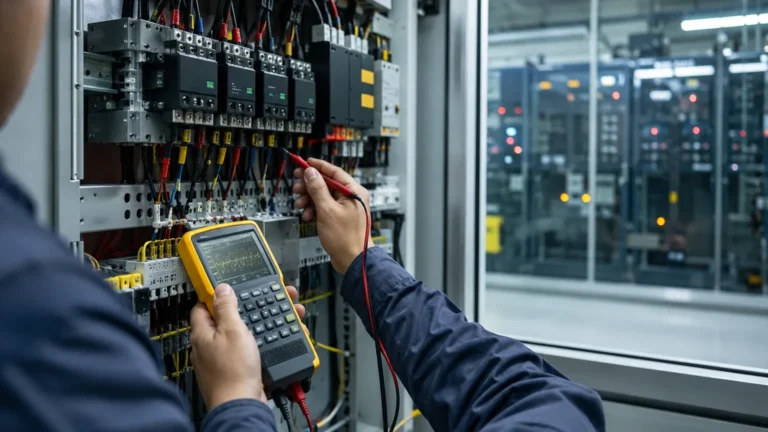
In the modern industrial landscape, the transition from reactive repair cycles to proactive management is driven by the integration of smart instrumentation. Predictive service maintenance represents a strategic approach where the actual condition of equipment—such as industrial level measurement sensors—is monitored to determine when maintenance should be performed. This methodology minimizes downtime, reduces unnecessary labor costs, and extends the operational lifespan of critical assets in water treatment, chemical processing, and oil and gas sectors.
For a professional manufacturer like Welk, providing reliable level measurement instruments is only the first step. Ensuring these instruments support a robust predictive maintenance framework requires a deep understanding of measurement principles, diagnostic capabilities, and the environmental factors that influence sensor health.
Understanding Level Measurement Principles for Predictive Maintenance
Before implementing a predictive maintenance strategy, engineers must understand the physical principles governing the sensors. Different technologies offer varying levels of diagnostic data, which is the cornerstone of predictive service maintenance.
Radar Level Measurement (Non-Contact)
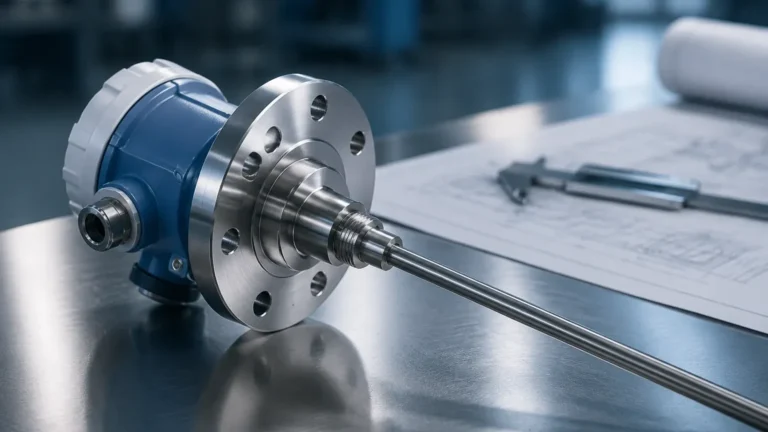
Radar level meters typically utilize Frequency Modulated Continuous Wave (FMCW) or pulse technology. They emit high-frequency electromagnetic waves (often in the 26GHz or 80GHz range) toward the medium. The time it takes for the signal to reflect back to the sensor is used to calculate the distance.
From a maintenance perspective, radar sensors are highly valued because they have no moving parts and do not contact the medium. Advanced radar units provide signal-to-noise ratio (SNR) data. A declining SNR can predict issues such as heavy foam formation, antenna coating, or internal electronic degradation before the measurement signal is lost entirely.
Ultrasonic Level Sensors
Ultrasonic sensors function by emitting high-frequency sound pulses. These pulses reflect off the surface of the liquid or solid and return to the transducer. The duration of the flight is proportional to the distance.
Predictive maintenance for ultrasonic sensors often focuses on the transducer's health. Since sound velocity changes with air temperature, these sensors include temperature compensation. Monitoring the consistency between the internal temperature sensor and the reflected signal strength allows operators to identify potential transducer crystallization or environmental changes that might lead to inaccurate readings.
Hydrostatic Level Transmitters
Hydrostatic sensors measure the pressure exerted by a liquid column. Based on the formula $P = \rho gh$ (where $P$ is pressure, $\rho$ is density, $g$ is gravity, and $h$ is height), the level is derived.
In predictive maintenance, the focus is on the integrity of the diaphragm. A drifting zero-point or a sluggish response to level changes can indicate diaphragm fatigue or the buildup of sludge in the sensing area. Regular monitoring of the output current (4-20mA) stability provides early warnings of sensor drift.
Transitioning to Predictive Service Maintenance in Industrial Automation
Traditional maintenance often follows a "run-to-fail" model or a fixed-interval schedule. The former leads to expensive emergency shutdowns, while the latter often results in performing maintenance on instruments that are functioning perfectly.
Predictive service maintenance leverages digital communication protocols such as HART, Modbus, or Profibus. These protocols allow the instrument to transmit not just the primary variable (the level), but also secondary diagnostic variables. For instance, a Welk radar level meter can report its internal electronics temperature and signal amplitude. If the amplitude drops below a predefined threshold, the system triggers a maintenance alert. This allows the facility to schedule a cleaning of the antenna during a planned window, rather than reacting to a sudden loss of signal that halts production.
Selection Criteria for Reliable Level Instrumentation
Choosing the right technology is the first step in ensuring a low-maintenance lifecycle. When reviewing options on the Main Page, engineers should evaluate the following criteria:
1. Media Characteristics: Is the liquid corrosive, viscous, or prone to foaming? Corrosive liquids may require non-contact radar or PTFE-coated hydrostatic probes.
2. Process Conditions: High temperatures (above 150°C) and high pressures (above 40 bar) demand robust housing and specialized sealing, such as those found in high-frequency radar meters.
3. Accuracy Requirements: For custody transfer, high-accuracy radar (±1mm) is necessary. For general sump level monitoring, ultrasonic sensors (±0.25% of range) are often sufficient.
4. Diagnostic Capability: Does the instrument support remote diagnostics? Predictive maintenance is significantly easier when the sensor can perform self-checks and report its status to a central PLC or SCADA system.
Technical Comparison: Choosing the Right Sensor Technology
The following table provides a practical selection guide based on common industrial requirements and their impact on maintenance frequency.
| Technology | Typical Accuracy | Max Range | Maintenance Profile | Best Use Case |
| :— | :— | :— | :— | :— |
| 80GHz Radar | ±1 mm | 120 m | Very Low (Non-contact, self-cleaning) | Chemical tanks, solids, precision liquids |
| Ultrasonic | ±2-5 mm | 30 m | Low (Requires clear path, no foam) | Water treatment, open channels |
| Hydrostatic | ±0.1-0.5% FS | 200 m | Moderate (Check for diaphragm coating) | Deep wells, pressurized tanks |
| Magnetic Gauge | ±5-10 mm | 6 m | Moderate (Mechanical float cleaning) | Boiler level, oil/gas bypass |
| Level Switch | N/A | N/A | Low (Check for material buildup) | Overfill protection, pump dry-run |

Installation Best Practices for Data Integrity
Even the most advanced sensor will fail to support predictive maintenance if installed incorrectly. Poor installation introduces "noise" into the data, making it impossible to distinguish between a failing sensor and a poorly configured one.
* Avoid Dead Zones: Every sensor has a "blocking distance" or dead zone near the face of the transducer. For an ultrasonic sensor, this might be 0.25m to 0.5m. Ensure the highest liquid level never enters this zone.
* Mounting Position: Radar and ultrasonic sensors should be mounted perpendicular to the liquid surface. For tanks with agitators, the sensor must be positioned to avoid reflecting off the blades, which can be achieved through software "false echo suppression."
* Stilling Wells: In applications with heavy turbulence or foam, installing the level meter inside a stilling well or bypass pipe can provide a stable surface for measurement, significantly reducing the diagnostic alarms caused by environmental interference.
* Cable Integrity: For hydrostatic transmitters, the vent tube in the cable must remain unobstructed to allow for atmospheric pressure compensation. Using a moisture filter at the end of the vent tube is a critical predictive measure to prevent internal condensation.
Limitations and Risk Management in Level Measurement
While predictive service maintenance reduces risk, it is not a panacea. Engineers must be aware of the inherent limitations of each technology:
1. Vacuum Conditions: Ultrasonic sensors cannot function in a vacuum because sound waves require a medium (air) to travel. In such cases, radar or hydrostatic sensors must be used.
2. Heavy Vapor/Dust: High-frequency radar (80GHz) is generally better at penetrating dust than ultrasonic waves, but extreme steam can still attenuate the signal.
3. Coating and Buildup: If a medium is highly prone to crystallization, even non-contact sensors can suffer from antenna coating. Predictive maintenance systems should be set to monitor "signal strength" to alert operators before the coating becomes thick enough to cause a total signal loss.
4. Dielectric Constant (dk): Radar relies on the dielectric constant of the medium. Liquids with a very low dk (like some oils) reflect less energy. If the dk is below 1.4, specialized guided wave radar or high-sensitivity pulse radar is required.
Frequently Asked Questions (FAQ)
Q: How often should I calibrate my level meters in a predictive maintenance program?
A: In a predictive framework, you don't calibrate on a fixed schedule. Instead, you monitor for "drift." If the sensor's reported level deviates from a secondary check (like a manual dip tape) beyond a certain threshold, a calibration is triggered. For most digital sensors, a verification check every 12 to 24 months is standard unless diagnostics suggest otherwise.
Q: Can predictive maintenance detect a leak in a hydrostatic sensor diaphragm?
A: Yes. A compromised diaphragm usually results in erratic output or a steady climb in the "zero" pressure reading when the tank is empty. Smart transmitters will often flag this as a hardware error via the HART protocol.
Q: Does foam affect all level sensors equally?
A: No. Ultrasonic sensors are most affected as foam absorbs sound waves. Radar is more resilient, though heavy, dense foam can still cause signal attenuation. Hydrostatic sensors are unaffected by foam as they measure the weight of the liquid column beneath the foam.
Q: What is the first sign that a radar level meter needs service?
A: The most common early indicator is a decrease in the return signal amplitude or an increase in the number of "lost echo" errors recorded in the device's internal log. This usually points to antenna contamination or a change in the process surface conditions.
Conclusion
Implementing predictive service maintenance for level instrumentation is an investment in operational stability. By selecting the appropriate technology—whether it be radar, ultrasonic, or hydrostatic—and leveraging the diagnostic data these devices provide, industrial facilities can move away from costly reactive repairs.
For engineers and procurement professionals, the key is to partner with a manufacturer that offers both high-quality hardware and the technical support necessary to interpret diagnostic data. To explore the full range of industrial level measurement solutions and technical specifications, visit the Main Page to review product options and application support. Ensuring your sensors are correctly selected and installed today is the foundation for a successful predictive maintenance strategy tomorrow.