Pressure Detector
Pressure Detector
In the landscape of industrial automation and process control, the pressure detector serves as a fundamental component for monitoring, safety, and efficiency. Whether it is measuring the force within a steam pipe or determining the volume of liquid in a deep storage tank, these instruments provide the critical data necessary for informed decision-making. For engineers and procurement specialists, selecting the right pressure detector requires a deep understanding of physical principles, material compatibility, and environmental constraints.
This guide explores the technical foundations of pressure detection, its specific application in level measurement, and the practical considerations required to integrate these devices into complex industrial systems.
Understanding the Fundamentals of Pressure Detection
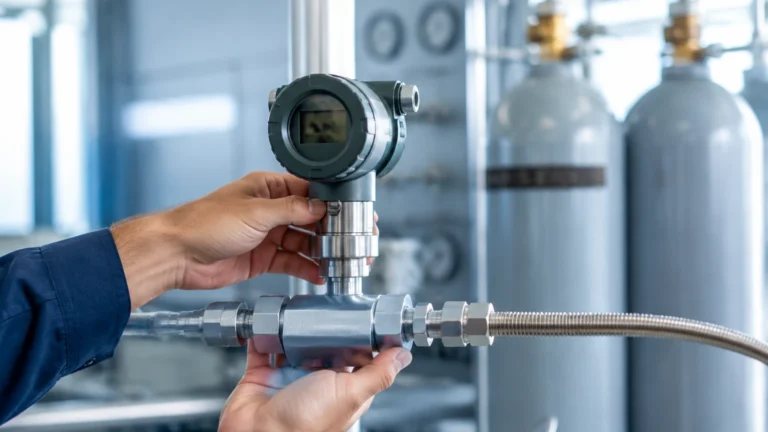
A pressure detector is an instrument designed to sense the physical force exerted by a fluid (liquid or gas) on a surface and convert that force into a measurable electrical signal. In industrial contexts, the term often encompasses pressure sensors, transducers, and transmitters, though they differ slightly in their output characteristics.
Pressure Reference Types
Before selecting a device, it is essential to define the reference point against which the pressure is measured:
1. Gauge Pressure: Measured relative to the local atmospheric pressure. This is the most common type used in vented tanks or open-air piping systems.
2. Absolute Pressure: Measured relative to a perfect vacuum. This is critical for applications involving vacuum distillation or high-altitude meteorological monitoring.
3. Differential Pressure: Measures the difference between two distinct pressure points. This is frequently used to monitor filter clogging or to calculate flow rates across an orifice plate.
Working Principles of Industrial Pressure Detectors
Modern pressure detectors utilize several physical phenomena to translate mechanical stress into electrical data. Understanding these principles helps in identifying the strengths and limitations of each technology.
Piezoresistive Sensors
Piezoresistive detectors are among the most common in the industry. They utilize a diaphragm with integrated strain gauges. When pressure is applied, the diaphragm deforms, causing a change in the electrical resistance of the strain gauges. This change is proportional to the applied pressure. These sensors are valued for their high sensitivity and robustness in general-purpose applications.
Capacitive Sensors
Capacitive pressure detectors measure the change in electrical capacitance between a flexible sensing diaphragm and a fixed metal plate. As pressure moves the diaphragm, the distance between the electrodes changes, altering the capacitance. These devices are exceptionally stable and are often preferred for low-pressure ranges or applications requiring high precision over long periods.
Hydrostatic Pressure Principle
In the context of level measurement, the hydrostatic principle is the most relevant. It states that the pressure at the bottom of a liquid column is directly proportional to the height of the liquid and its density. The formula is expressed as:
P = ρ × g × h
* P = Hydrostatic pressure (Pa or bar)
* ρ (rho) = Density of the liquid (kg/m³)
* g = Gravitational acceleration (approx. 9.81 m/s²)
* h = Height of the liquid column (m)
By measuring the pressure at a fixed point (usually the bottom of a tank), a pressure detector can accurately calculate the liquid level, provided the density remains constant.
The Role of Pressure Detectors in Level Measurement
While radar and ultrasonic sensors are popular for non-contact measurement, the pressure detector remains a staple for liquid level monitoring due to its reliability in challenging environments where foam, vapor, or internal tank obstructions might interfere with signal-based technologies.
Submersible Level Transmitters
For deep wells, reservoirs, or open-top tanks, a submersible pressure detector is used. These units are designed with high ingress protection (IP68) and are lowered directly into the medium. A specialized cable provides both the electrical connection and a small vent tube to equalize the internal sensor reference with atmospheric pressure.
External Tank Mounting
In closed or pressurized vessels, the pressure detector is typically mounted to a flange or threaded connection at the bottom of the tank. If the tank is pressurized, a differential pressure (DP) transmitter is used. One side measures the total pressure (liquid + gas head), while the other side measures only the gas head pressure. The transmitter subtracts the gas pressure to provide an accurate reading of the liquid level alone.
Key Selection Criteria for Industrial Applications
Choosing the correct pressure detector involves more than just matching a pressure range. Engineers must evaluate the entire process environment to ensure long-term reliability.
1. Media Compatibility and Materials
The wetted parts—the components of the detector that touch the fluid—must be chemically compatible with the media.
* Stainless Steel (316L): Standard for water and non-corrosive oils.
* Tantalum or Hastelloy: Required for aggressive acids or chlorides.
* Ceramic Diaphragms: Excellent for abrasive slurries where metal might wear down.
2. Pressure Range and Overpressure Protection
The detector should be selected so that the operating pressure falls within the middle 50-70% of its rated range. Additionally, it is vital to check the "burst pressure" or overpressure limit to prevent sensor failure during unexpected process surges.
3. Temperature Limits
High-temperature fluids can damage sensitive electronics. For applications exceeding 80°C (176°F), cooling elements like siphons or capillary tubes with remote seals should be used to protect the sensor body.
4. Output Signals and Integration
In modern industrial automation, the output signal must be compatible with the PLC (Programmable Logic Controller) or DCS (Distributed Control System). Common options include:
* 4-20 mA Analog: The industry standard for long-distance transmission with low noise interference.
* HART Protocol: Allows digital communication over the 4-20 mA loop for remote configuration and diagnostics.
* RS485/Modbus: Ideal for digital networking and multi-sensor configurations.
Practical Selection Table
| Application Type | Recommended Sensor Principle | Typical Material | Key Advantage |
| :— | :— | :— | :— |
| Open Water Reservoir | Hydrostatic (Submersible) | SS316L / PUR Cable | Easy installation, no tank modification |
| Corrosive Chemical Tank | Pressure Transmitter with PTFE Seal | Tantalum / Hastelloy | High chemical resistance |
| High-Pressure Steam Line | Piezoresistive with Siphon | Stainless Steel | Handles high temperature and pressure |
| Vacuum Distillation | Absolute Pressure Detector | Ceramic | Accurate below atmospheric pressure |
| Filter Monitoring | Differential Pressure | SS316L | Measures pressure drop across media |

Installation Best Practices and Considerations
Correct installation is as critical as the selection of the instrument itself. Improper mounting can lead to inaccurate readings or premature device failure.
Atmospheric Venting
For gauge pressure detectors, especially submersible ones, the reference side of the sensor must be vented to the atmosphere. If the vent tube is blocked or kinked, the sensor will not account for changes in barometric pressure, leading to errors (e.g., a 10 mbar change in weather can result in a 10 cm error in water level).
Avoiding Turbulence
In tanks with agitators or high-velocity inlet flows, the pressure detector should be installed in a "stilling well" or a quiet zone. Direct fluid impact on the diaphragm can cause "noise" in the signal and mechanical fatigue.
Orientation and Zeroing
While many modern detectors can be mounted in any orientation, the weight of the internal oil fill in some diaphragms can cause a small zero-shift. It is best practice to mount the device according to the manufacturer’s instructions and perform a zero-calibration at atmospheric pressure before commissioning.
Potential Risks and Limitations
While highly versatile, the pressure detector is not a universal solution. Awareness of its limitations prevents operational failures.
* Density Changes: Since hydrostatic level measurement relies on the formula $P = ρgh$, any change in the liquid's density (caused by temperature fluctuations or mixing different chemicals) will result in a level error. If density varies significantly, a different technology or density compensation logic is required.
* Sediment and Clogging: In wastewater or slurry applications, solids can accumulate on the diaphragm or plug the pressure port. Using a flush-diaphragm design can mitigate this risk by eliminating the cavity where debris collects.
* Mechanical Vibration: Excessive vibration in piping systems can lead to electronic failure or fatigue in the sensing element. In such cases, remote mounting using capillary lines is recommended.
Frequently Asked Questions (FAQ)
Q: How often should a pressure detector be calibrated?
A: Most industrial manufacturers recommend an annual calibration check. However, in critical safety applications or harsh environments, semi-annual checks may be necessary to ensure accuracy.
Q: Can a pressure detector measure the level of a boiling liquid?
A: It is difficult. Boiling liquids have fluctuating densities due to gas bubbles, and the vapors can create pressure fluctuations. A differential pressure transmitter with remote seals is often used, but careful engineering is required to account for the vapor phase.
Q: What is the difference between a pressure sensor and a pressure transmitter?
A: A sensor is the raw element that produces a low-level signal (like millivolts). A transmitter includes signal conditioning electronics to provide a standardized output like 4-20mA or a digital protocol.
Q: Are submersible pressure detectors safe for drinking water?
A: Yes, provided they are constructed with food-grade materials and cables (such as FDA-approved polyurethane) and carry the necessary certifications (e.g., WRAS or NSF).
Conclusion
The pressure detector remains one of the most reliable and cost-effective tools in the industrial engineer's arsenal. By understanding the relationship between pressure and the physical properties of the media, and by carefully selecting materials and mounting configurations, facilities can achieve precise control over their processes.
For those seeking specific hardware specifications or technical support for complex installations, it is advisable to Review product options and application support to ensure the selected instrumentation aligns with the unique demands of the project. Whether the goal is simple tank monitoring or sophisticated process automation, the right pressure detector is the foundation of a safe and efficient system.