Production of Hydrogen
Production of Hydrogen
The global shift toward decarbonization has placed the industrial production of hydrogen at the forefront of the energy transition. Whether hydrogen is produced through traditional hydrocarbon reforming or modern water electrolysis, precise process control is essential for safety, efficiency, and purity. Among the various process parameters, level measurement stands as a critical factor in managing separators, storage tanks, and chemical feed systems.
In this guide, we examine the technical requirements for level instrumentation within the hydrogen sector, focusing on the measurement principles and selection criteria necessary for reliable operation in high-pressure and often corrosive environments.
The Role of Level Measurement in Hydrogen Production
In the production of hydrogen, level sensors perform several vital functions. In electrolysis, they monitor the level of electrolytes (such as potassium hydroxide) and the water supply to ensure the cells remain submerged and operational. In gas-liquid separators, level transmitters control the interface to prevent gas carry-over into liquid lines or liquid carry-over into gas streams, both of which can damage downstream compressors or purification units.
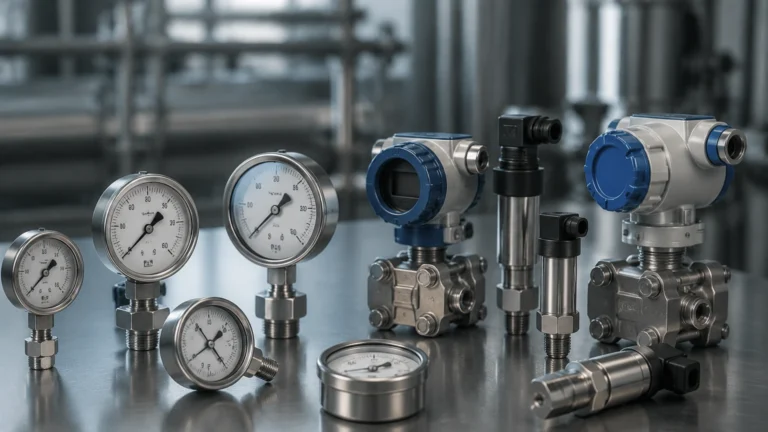
Accurate level data is also fundamental for inventory management in storage vessels. Given that hydrogen is often stored at high pressures or cryogenic temperatures, the instrumentation must withstand extreme conditions while maintaining high accuracy. For a detailed look at the instrumentation suites available for these applications, professionals often consult the Main Page of specialized manufacturers to match sensor specifications with process requirements.
Primary Methods for the Production of Hydrogen
Steam Methane Reforming (SMR)
Currently, the most common method for the production of hydrogen is Steam Methane Reforming. In this process, methane (usually from natural gas) reacts with steam at high temperatures (700°C–1,000°C) in the presence of a catalyst to produce hydrogen and carbon monoxide.
Level measurement in SMR plants is primarily focused on the auxiliary systems, such as steam drums, condensate separators, and feedstock storage. These applications often involve high temperatures and pressures, requiring robust instrumentation like guided wave radar or magnetic level gauges.
Water Electrolysis
Electrolysis uses electricity to split water into hydrogen and oxygen. This is the primary route for "green" hydrogen when powered by renewable energy. There are three main types of electrolyzers:
1. Alkaline Electrolysis (AEL): Uses a liquid electrolyte (typically 20-30% KOH solution). Level measurement is critical in the electrolyte circulation tanks and the gas-liquid separators.
2. Proton Exchange Membrane (PEM): Uses a solid polymer electrolyte and pure water. High-purity water levels must be strictly maintained.
3. Solid Oxide Electrolyzer Cell (SOEC): Operates at high temperatures using steam. This requires specialized high-temperature level solutions.
Measurement Principles for Industrial Level Sensors
Before selecting a device for hydrogen production facilities, it is essential to understand the physics behind the primary measurement technologies.
Radar Level Measurement
Radar sensors operate on the Time of Flight (ToF) principle. The device emits a high-frequency electromagnetic pulse (typically in the 80 GHz range for non-contact radar) that reflects off the surface of the liquid and returns to the sensor.
* Non-Contact Radar: Ideal for corrosive electrolytes because the sensor does not touch the media. It is unaffected by pressure changes and can see through foam if the frequency is correctly selected.
* Guided Wave Radar (GWR): Uses a probe to guide the pulse. GWR is particularly effective in low-dielectric media (like liquid hydrogen) or in narrow bypass chambers where internal obstructions might interfere with a non-contact beam.
Ultrasonic Level Sensors
Ultrasonic sensors emit sound waves that bounce off the liquid surface. The time taken for the echo to return determines the distance. While cost-effective, ultrasonic sensors are sensitive to the gas composition above the liquid. In a hydrogen-rich atmosphere, the speed of sound changes significantly compared to air, which can lead to large measurement errors unless the sensor is specifically calibrated for a hydrogen environment.
Hydrostatic Pressure Measurement
This principle relies on the relationship between the height of a liquid column and the pressure it exerts at the base ($P = \rho \cdot g \cdot h$). In vented tanks, a simple pressure transmitter at the bottom suffices. In pressurized electrolyzer tanks, a differential pressure (DP) transmitter is required to compensate for the overhead gas pressure.
Magnetic Level Gauges (MLG)
MLGs utilize a float containing a magnet that moves with the liquid level inside a bypass chamber. Outside the chamber, a series of magnetic flags or a transmitter detects the float's position. This provides a clear visual indication without the need for power, making it a preferred safety backup in many hydrogen plants.
Selecting Level Instruments: Application Matrix
The following table provides a general guideline for selecting technology based on common hydrogen production stages.
| Application | Recommended Technology | Pressure Range | Temperature Range | Key Benefit |
| :— | :— | :— | :— | :— |
| KOH Electrolyte Tank | Non-contact Radar | Up to 40 bar | Up to 90°C | Corrosion resistance |
| Gas-Liquid Separator | Guided Wave Radar | Up to 100 bar | Up to 150°C | High accuracy in turbulence |
| Deionized Water Tank | Ultrasonic / Hydrostatic | Ambient | Ambient | Cost-effective, reliable |
| Liquid H2 Storage | GWR / Cryogenic DP | High / Vacuum | -253°C | Handles low dielectric |
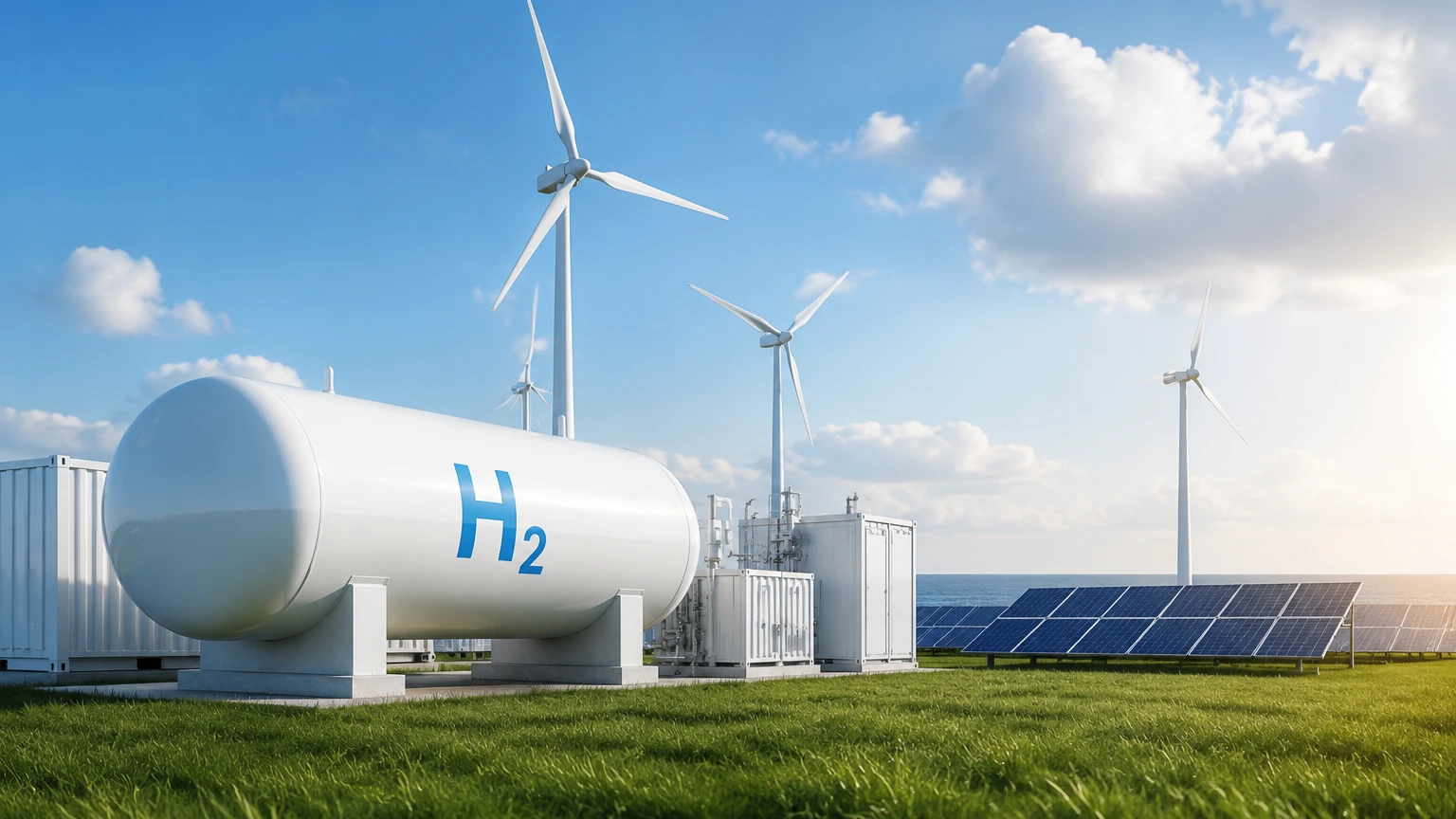
| High-Pressure Buffer | Magnetic Level Gauge | Up to 400 bar | Ambient | Visual safety backup |
Installation and Engineering Considerations
When implementing level measurement in the production of hydrogen, several engineering factors must be addressed to ensure long-term reliability:
1. Hydrogen Permeation and Embrittlement: Hydrogen atoms are the smallest in the periodic table and can permeate through metal structures, especially at high pressures. This can lead to hydrogen embrittlement in stainless steel components. For diaphragms in pressure transmitters, materials like gold-plating or specialized alloys (Hastelloy C276) are often used to prevent hydrogen diffusion.
2. Explosion Protection: Hydrogen is highly flammable with a wide flammability range (4% to 75% in air). All electronic level instruments must carry appropriate hazardous area certifications, such as ATEX or IECEx (typically Ex d or Ex i ratings).
3. Nozzle Geometry: For radar installations, the diameter and height of the mounting nozzle can affect the signal. 80 GHz radar is more forgiving of narrow nozzles than older 26 GHz models, but engineers should still ensure the beam path is clear of internal vessel structures like heating coils or agitators.
4. Sealing and Gaskets: Hydrogen's small molecular size makes it prone to leaks. Level instruments should use high-quality seals (e.g., FFKM or specialized metallic seals) and, where possible, welded bypass chambers to minimize potential leak points.
Limitations and Technical Challenges
Despite the advanced technology available, certain limitations persist in hydrogen applications:
* Dielectric Constant ($ε_r$): Liquid hydrogen has a very low dielectric constant (approximately 1.23). Standard non-contact radar may struggle to receive a strong enough echo from such a transparent surface. In these cases, Guided Wave Radar with a coaxial probe is usually the only viable radar solution.
* Gas Composition Shifts: In SMR processes, the gas composition in the headspace can fluctuate between methane, CO, and H2. This changes the vapor space density and speed of sound, potentially affecting the accuracy of hydrostatic and ultrasonic measurements respectively.
* Foam and Turbulence: In high-current electrolysis, the gas-liquid separation process can be turbulent and produce foam. Radar sensors with advanced signal processing algorithms are required to filter out noise caused by these surface conditions.
Frequently Asked Questions (FAQs)
Q: Why is 80 GHz radar preferred over 26 GHz for hydrogen separators?
A: 80 GHz radar has a much narrower beam angle, which allows it to avoid reflections from the walls of narrow separator vessels and internal baffles. It also provides better resolution, which is critical for precise level control in small-volume tanks.
Q: Can I use a standard stainless steel level transmitter for hydrogen?
A: While 316L stainless steel is commonly used, for high-pressure hydrogen service, there is a risk of hydrogen embrittlement over time. It is recommended to use transmitters with hydrogen-resistant coatings or specialized alloys for the wetted parts.
Q: How does the production of hydrogen impact sensor maintenance?
A: Maintenance cycles are often dictated by the corrosive nature of electrolytes (in AEL) or the mechanical wear on seals in high-pressure systems. Non-contact sensors generally require less maintenance as they have no moving parts and do not touch the process media.
Q: Is SIL certification necessary for level sensors in hydrogen plants?
A: Yes, most modern hydrogen production facilities require Safety Integrity Level (SIL) 2 or SIL 3 certification for level instruments used in overfill protection or dry-run protection of pumps, as these are critical safety functions.
Conclusion
The production of hydrogen is a complex industrial process that demands high-precision instrumentation to ensure safety and operational efficiency. By understanding the underlying measurement principles—from the electromagnetic waves of radar to the buoyancy of magnetic gauges—engineers can select the most appropriate technology for their specific application. As the industry scales, the integration of robust, certified level measurement solutions will remain a cornerstone of reliable hydrogen infrastructure. For those seeking technical support or specific product ranges, visiting the Main Page of an experienced instrument manufacturer provides the necessary data to make informed procurement decisions.