Prosonic Flow 92f
Prosonic Flow 92f
In the landscape of industrial process automation, the accurate measurement of liquid flow is as critical as the monitoring of tank levels. The Prosonic Flow 92f represents a specific class of ultrasonic flowmeters designed to bridge the gap between high-precision measurement and cost-effective installation. As a loop-powered (2-wire) device, it is frequently selected for applications in water treatment, chemical processing, and general utility monitoring where infrastructure constraints limit the availability of high-voltage power lines.
Understanding the technical nuances of the Prosonic Flow 92f requires an exploration of ultrasonic transit-time principles, the mechanical requirements of inline flow measurement, and the integration of these sensors into broader process control systems. This guide provides a factual engineering overview of the technology, its selection criteria, and its operational limitations.
Measurement Principles: Transit-Time Difference
The Prosonic Flow 92f operates on the ultrasonic transit-time difference principle. Unlike Doppler-effect meters, which require particles or bubbles to reflect sound, transit-time meters are designed for clean or minimally contaminated liquids.
The Physics of Sound Propagation
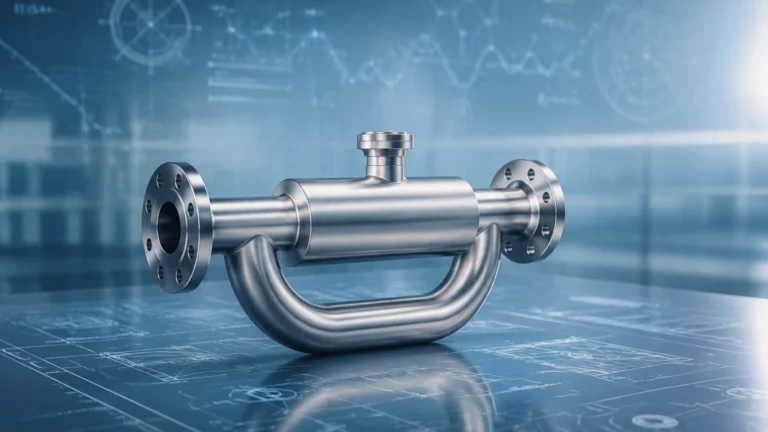
The device utilizes two or more ultrasonic transducers mounted on a measuring tube. These transducers act as both transmitters and receivers. The system emits sound pulses alternately in the direction of the flow and against the direction of the flow.
1. Downstream Propagation: Sound waves traveling with the flow move faster relative to the pipe wall.
2. Upstream Propagation: Sound waves traveling against the flow move slower.
The time difference ($Δt$) between the two pulse paths is directly proportional to the flow velocity of the liquid. By integrating this velocity with the known cross-sectional area of the measuring tube, the device calculates the instantaneous volume flow rate. Because the speed of sound in a liquid varies with temperature and pressure, modern electronics in the Prosonic Flow 92f perform real-time compensation to maintain accuracy across varying process conditions.
The 2-Wire (Loop-Powered) Architecture
One of the defining characteristics of the 92f series is its 2-wire technology. In traditional flowmetering, 4-wire systems were required to provide enough power for the ultrasonic transducers and the signal processing electronics. The Prosonic Flow 92f is engineered to operate on a 4-20 mA loop, meaning the same pair of wires provides both the power and the signal output. This significantly reduces cabling costs and simplifies integration into existing PLC (Programmable Logic Controller) architectures that are already optimized for 2-wire level transmitters and pressure sensors.
Technical Specifications and Evaluation Criteria
When evaluating the Prosonic Flow 92f for a specific project, engineers must consider the fluid properties and the physical environment. The device is typically used for conductive and non-conductive liquids, making it a versatile alternative to electromagnetic flowmeters (magmeters).
Key Performance Indicators
* Accuracy: Typically ranges from ±0.3% to ±0.5% of the flow rate, depending on the calibration and installation conditions.
* Repeatability: ±0.1%.
* Turndown Ratio: Often exceeds 100:1, allowing for precise measurement during both peak flow and low-flow periods.
* Process Temperature: Standard models handle temperatures from -40°C to +150°C.
* Nominal Diameters: Available in sizes ranging from DN 25 to DN 100 (1" to 4").
Comparison Table: Ultrasonic vs. Alternative Technologies
| Feature | Prosonic Flow 92f (Ultrasonic) | Electromagnetic (Magmeter) | Vortex Flowmeter |
| :— | :— | :— | :— |
| Fluid Conductivity | Not required | Required (>5 μS/cm) | Not required |
| Pressure Loss | Negligible (Full bore) | Negligible (Full bore) | Moderate (Bluff body) |
| Moving Parts | None | None | None |
| Power Supply | 2-wire loop powered | 2-wire or 4-wire | 2-wire loop powered |
| Primary Limitation | Gas bubbles/Solids | Conductive liquids only | Minimum Reynolds number |
Application and Selection Guidelines
The Prosonic Flow 92f is best suited for applications where the liquid is relatively homogeneous. While it can handle a small percentage of entrained solids or gas bubbles (typically less than 1% to 2% by volume), excessive aeration will attenuate the ultrasonic signal and lead to measurement errors or "signal loss" alarms.
Ideal Use Cases
1. Demineralized Water: Since ultrasonic meters do not require conductivity, they are ideal for DI water where magmeters fail.
2. Chemical Dosing: The 2-wire design allows for easy installation in chemical skids where space for power supplies is limited.
3. Process Water Management: Monitoring flow in cooling loops or water distribution networks.
For facilities managing complex liquid inventories, flow measurement is often paired with level measurement. While the Prosonic Flow 92f tracks the movement of fluid, radar or ultrasonic level sensors track the volume within storage vessels. For a comprehensive range of instrumentation that complements flow systems, engineers can Review product options and application support to ensure total system compatibility.
Installation Considerations
The performance of any ultrasonic flowmeter is heavily dependent on the velocity profile of the liquid. For the Prosonic Flow 92f to provide accurate data, the flow must be fully developed and laminar.
Straight Pipe Runs
To minimize turbulence, specific lengths of straight pipe are required upstream and downstream of the sensor:
* Upstream (Inlet): Minimum 5 x DN (Nominal Diameter). If the upstream piping includes pumps or multiple bends, this should be increased to 10 x DN or 20 x DN.
* Downstream (Outlet): Minimum 2 x DN.
Orientation and Mounting
* Horizontal Pipes: The sensor should be installed such that the transducers are in a horizontal plane (at the 3 o'clock and 9 o'clock positions). This prevents air bubbles at the top of the pipe or sediment at the bottom from interfering with the sound path.
* Vertical Pipes: Upward flow is preferred. This ensures the pipe is always full, which is a prerequisite for ultrasonic measurement. Downward flow should be avoided unless a siphon or back-pressure valve is used to keep the pipe filled.
Grounding and Interference
As a sensitive electronic instrument, the Prosonic Flow 92f must be properly grounded to prevent electromagnetic interference (EMI) from affecting the signal. In 2-wire installations, shielded twisted-pair cabling is recommended to protect the 4-20 mA HART signal.

Limitations and Common Risks
While the Prosonic Flow 92f is a robust instrument, certain process conditions can compromise its reliability. Engineers should be aware of the following risks:
1. Acoustic Short-Circuiting: If the pipe material is highly resonant or if there is significant mechanical vibration in the process line, "noise" can interfere with the transducers' ability to distinguish the ultrasonic pulses.
2. Scaling and Buildup: Over time, the internal walls of the measuring tube may develop scale (calcium deposits) or biofilm. Because transit-time measurement relies on the internal diameter and the speed of sound through the medium, significant buildup can introduce a drift in accuracy.
3. Reynolds Number Sensitivity: Ultrasonic meters are calibrated for specific flow regimes. If the fluid viscosity changes significantly or the flow rate drops into the laminar-to-turbulent transition zone, the meter's internal algorithms must compensate for the changing velocity profile.
Integration with Process Systems
The Prosonic Flow 92f is rarely a standalone device. In modern industrial IoT (IIoT) environments, it serves as a data point for mass balance calculations. For example, in a chemical blending plant, the flow rate from a 92f is compared against the level drop in a supply tank measured by a radar level transmitter. If the flow rate does not match the volume change in the tank, the system can trigger a leak detection alarm.
By utilizing the HART protocol, the Prosonic Flow 92f can transmit secondary variables, such as the speed of sound or signal strength, which serve as diagnostic tools for predictive maintenance. A sudden drop in signal strength may indicate that the fluid has become aerated or that the pipe is beginning to scale.
Frequently Asked Questions (FAQs)
Q: Can the Prosonic Flow 92f measure gas flow?
A: No. The 92f is specifically designed for liquid applications. Gas flow measurement requires different transducer frequencies and higher power levels due to the lower density of the medium.
Q: Does the device require periodic recalibration?
A: Under stable process conditions with clean liquids, the Prosonic Flow 92f is highly stable. However, in regulated industries (like pharmaceutical or food and beverage), annual calibration verification is often required to ensure compliance with quality standards.
Q: How does the 92f handle varying fluid temperatures?
A: The device includes an internal temperature compensation algorithm. However, for maximum precision in applications with extreme temperature fluctuations, an external temperature sensor can be integrated via the control system to provide real-time fluid density corrections.
Q: Is the Prosonic Flow 92f suitable for hazardous areas?
A: Yes, most configurations of the 92f are available with ATEX, FM, or CSA certifications for use in intrinsically safe or explosion-proof environments, leveraging its low-power 2-wire design.
Conclusion
The Prosonic Flow 92f is a sophisticated yet practical solution for liquid flow measurement in the B2B sector. By understanding the transit-time principle and adhering to strict installation guidelines regarding pipe runs and orientation, engineers can achieve high-precision data with the simplified infrastructure of a 2-wire system. When integrated with reliable level measurement technologies, such as those found on the Main Page, the Prosonic Flow 92f contributes to a comprehensive and efficient process control strategy.