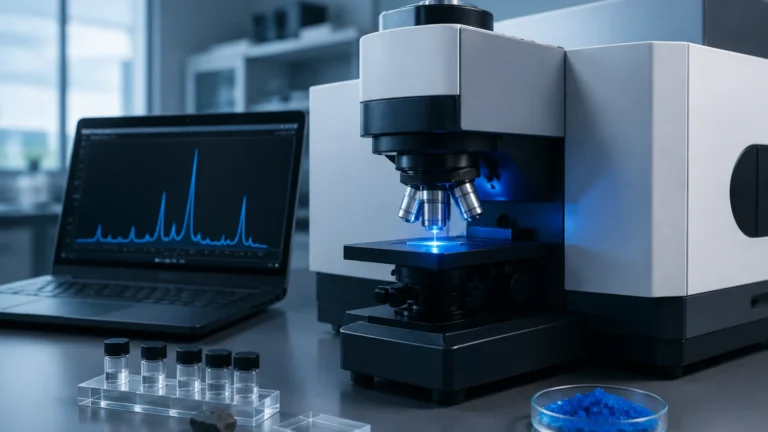
Raman Analyzers for Light Gas Streams
Raman Analyzers for Light Gas Streams
In the landscape of industrial process control, the real-time analysis of gas composition is critical for optimizing efficiency, ensuring safety, and maintaining product quality. While traditional methods like Gas Chromatography (GC) have long been the standard, the emergence of Raman spectroscopy as a robust online tool has transformed how engineers monitor light gas streams. Raman analyzers for light gas streams offer a non-destructive, multi-component analysis capability with response times measured in seconds rather than minutes. This guide explores the principles, selection criteria, and practical implementation of Raman technology in gas phase applications, particularly in sectors where Welk provides integrated level and flow solutions.
Measurement Principles of Raman Spectroscopy
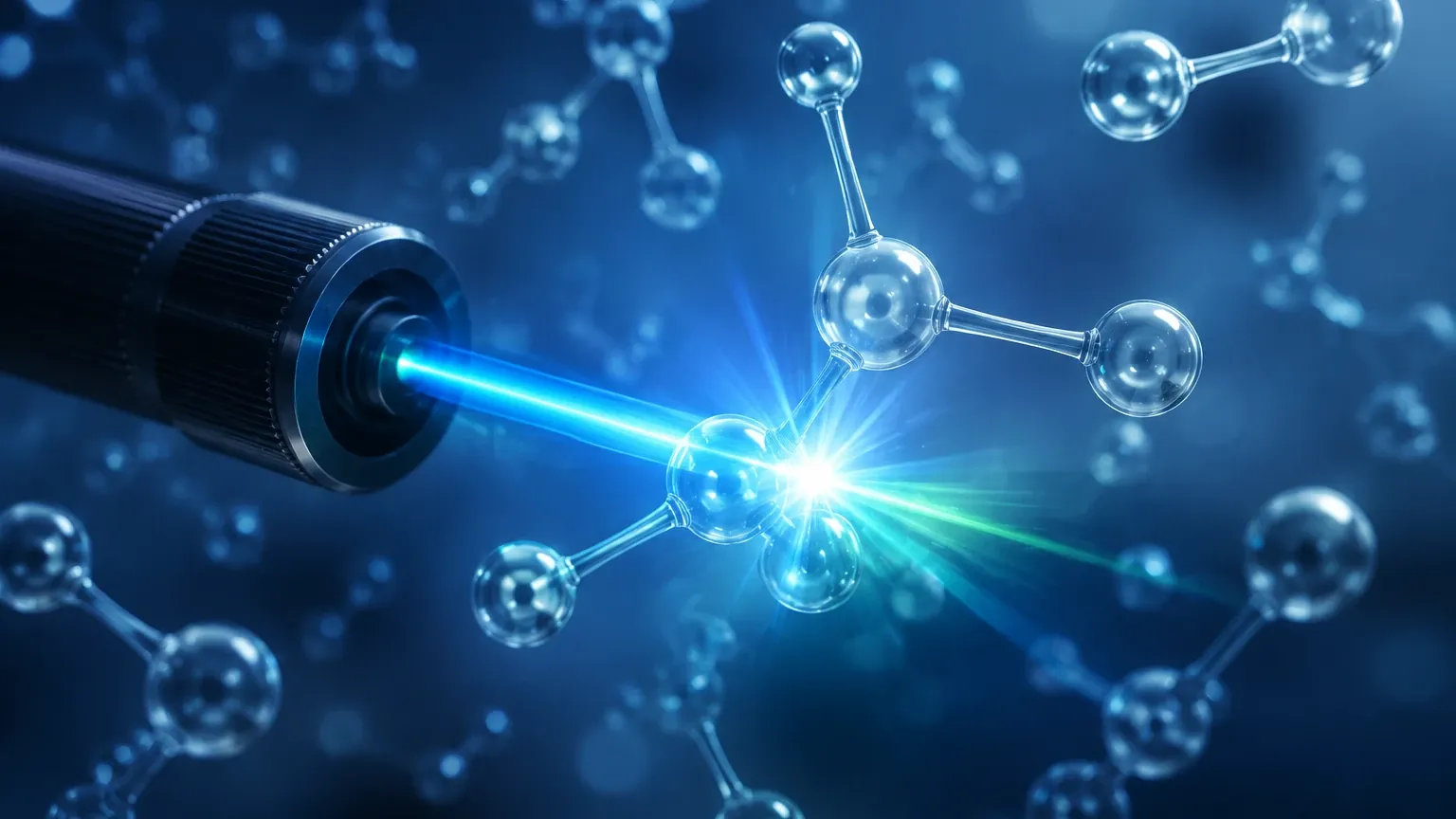
To understand the utility of Raman analyzers for light gas streams, one must first understand the underlying physics of the Raman effect. When a monochromatic light source—typically a high-intensity laser—interacts with gas molecules, the light is scattered. The vast majority of this scattering is elastic, meaning the scattered photons have the same frequency as the incident light (Rayleigh scattering).
However, a very small fraction of the light (approximately one in ten million photons) undergoes inelastic scattering. This is the Raman effect. During this interaction, energy is transferred between the photon and the molecule’s vibrational or rotational states. This results in a frequency shift in the scattered light, known as the Raman shift. Because every molecular species has a unique set of energy levels, the resulting spectrum serves as a "molecular fingerprint."
Stokes and Anti-Stokes Scattering
In industrial gas analysis, we primarily focus on Stokes scattering, where the scattered photon has lower energy (and a longer wavelength) than the incident light. The specific shift in wavelength corresponds directly to the chemical bonds within the gas molecules. For light gases such as Hydrogen ($H_2$), Nitrogen ($N_2$), Oxygen ($O_2$), and Methane ($CH_4$), Raman spectroscopy is particularly effective because these homonuclear diatomic and simple hydrocarbon molecules produce distinct, sharp spectral peaks.
Advantages of Raman Analyzers for Light Gas Streams
Traditional gas analysis often relies on extractive sampling and Gas Chromatography. While accurate, GC systems are complex, require carrier gases, and involve significant lag times due to the separation process. Raman analyzers offer several distinct advantages for modern process plants:
1. Real-Time Response: Raman systems provide continuous data, often updating the entire composition of a stream every 1 to 10 seconds. This is vital for closed-loop control in applications like turbine fuel blending or syngas optimization.
2. Multi-Component Capability: A single Raman probe can simultaneously detect and quantify multiple gases, including $H_2$, $N_2$, $O_2$, $CO$, $CO_2$, and $C_1$ through $C_6+$ hydrocarbons. Unlike Tunable Laser Diode Absorption Spectroscopy (TDLAS), which is often limited to one or two species per unit, Raman covers the entire spectrum.
3. No Consumables: Raman analyzers do not require carrier gases, columns, or frequent calibration standards once the initial model is established, significantly reducing the Total Cost of Ownership (TCO).
4. Remote Sensing via Fiber Optics: The analyzer electronics can be located in a safe, climate-controlled room up to 200 meters (approx. 650 feet) away from the process. High-quality fiber optic cables transmit the laser light to the probe and return the scattered signal to the detector.
Technical Selection Criteria
Selecting the right Raman analyzer for light gas streams requires a deep dive into the process conditions and the specific gases involved. The following factors are critical for a successful deployment:
Laser Wavelength and Power
Most industrial Raman systems use lasers in the 532 nm (green) or 785 nm (near-infrared) range. For light gas streams, 532 nm is often preferred because the Raman scattering intensity is inversely proportional to the fourth power of the wavelength ($λ^{-4}$). Shorter wavelengths yield stronger signals, which is necessary for the lower molecular density of gases compared to liquids.
Detector Sensitivity
Since the Raman signal from gases is inherently weak, high-sensitivity Charge-Coupled Device (CCD) detectors are required. These detectors must be thermoelectrically cooled (often to -15°C or lower) to minimize thermal noise, ensuring that low concentrations of gases can be detected accurately.
Probe Design and Pressure Ratings
In gas phase analysis, the signal strength is proportional to the number of molecules in the laser’s focal volume. Therefore, higher process pressures actually improve the Raman signal. Probes must be rated for the specific pressure and temperature of the stream. For example, in LNG or high-pressure hydrogen applications, probes must withstand pressures exceeding 200 bar (2900 psi).
Comparison Table: Raman vs. Traditional Technologies
| Feature | Raman Spectroscopy | Gas Chromatography (GC) | TDLAS |
| :— | :— | :— | :— |
| Measurement Speed | 1–10 Seconds | 3–15 Minutes | <5 Seconds |
| Gases Detected | Multi-component ($H_2, O_2, N_2, HC$) | Multi-component | Typically 1 or 2 |
| Carrier Gas Required | No | Yes | No |
| Maintenance | Low (No moving parts) | High (Valves, Columns) | Low |
| Installation | In-situ or Extractive | Extractive only | In-situ or Extractive |
Integration with Level Measurement Systems
In many industrial processes, gas composition analysis is not an isolated requirement. It often works in tandem with level measurement to provide a complete picture of vessel dynamics. For instance, in high-pressure separators or storage tanks, the composition of the gas blanket can affect the performance of level instruments.
At Welk, we emphasize that understanding the gas phase is essential for accurate level readings. For example, if a user is employing a radar level meter, the dielectric constant of the gas space (vapor space) can change based on the concentration of light gases. While the effect is negligible at atmospheric pressure, at high pressures (e.g., in ammonia synthesis), the gas composition significantly impacts the speed of the radar signal. By integrating data from Raman analyzers for light gas streams, engineers can apply real-time compensation to their level measurement devices, ensuring the highest accuracy. For more information on selecting compatible instrumentation, you may visit our Main Page.
Installation Considerations and Best Practices
To ensure reliable performance of Raman analyzers in industrial environments, several installation factors must be addressed:
Sample Conditioning
While Raman probes can be inserted directly into a pipe (in-situ), many light gas streams require a simple sample conditioning system. The primary goal is to ensure the gas is free of entrained liquids (mists) or solid particulates, which can cause scattering interference or coat the probe window. A coalescing filter is a common requirement.
Probe Window Maintenance
The interface between the laser and the gas is typically a sapphire window. Sapphire is chosen for its extreme hardness and broad spectral transparency. However, if the gas stream is "dirty," the window may require periodic cleaning. Some Raman probes feature integrated "air curtains" or wash ports to keep the window clear without removing the probe.
Safety and Certification
Because Raman analyzers use high-power Class 3B or Class 4 lasers, the installation must comply with laser safety standards (IEC 60825-1). Furthermore, for installations in hazardous areas (refineries, chemical plants), the probe and the analyzer enclosure must be certified (ATEX, IECEx, or Class/Division) to prevent ignition of the gas stream.
Limitations of Raman Analysis
While powerful, Raman spectroscopy is not a universal solution. Engineers should be aware of the following limitations:
* Fluorescence Interference: Some heavier hydrocarbons or process contaminants may fluoresce when hit by the laser. Fluorescence is orders of magnitude stronger than the Raman signal and can "drown out" the peaks. This is less common in light gas streams than in heavy oils but still a factor to consider.
* Detection Limits: Raman is generally used for percent-level (%) or high parts-per-million (ppm) analysis. It is typically not suitable for trace analysis (low ppb levels) where specialized GC or Mass Spectrometry is required.
* Dark/Opaque Streams: The laser must be able to penetrate the medium and the scattered light must return to the probe. If the gas stream contains high concentrations of black soot or smoke, the signal will be attenuated.
Frequently Asked Questions (FAQs)
Q: Can Raman analyzers detect Hydrogen ($H_2$)?
A: Yes, Raman is exceptionally good at detecting $H_2$. Unlike many infrared (IR) based technologies, which cannot detect homonuclear diatomic molecules, Raman provides a very strong and clear signal for Hydrogen.
Q: How often does a Raman analyzer need to be calibrated?
A: Raman analyzers are highly stable. In most light gas applications, the system only requires a periodic "validation" against a known gas standard once every 6 to 12 months. The internal laser wavelength is usually calibrated automatically using an internal reference.
Q: What is the maximum distance between the probe and the analyzer?
A: Using high-quality fiber optics, the analyzer can be placed up to 200 meters (approx. 650 feet) from the measurement point. This allows the sensitive electronics to be housed in a safe zone while the probe is in a hazardous process area.
Q: How does pressure affect the measurement?
A: In gas analysis, higher pressure is generally beneficial. Higher pressure increases the molecular density in the laser's path, which results in a stronger Raman signal and better detection limits.
Conclusion
Raman analyzers for light gas streams represent a significant leap forward in process analytical technology. By providing instantaneous, multi-component data without the maintenance burden of traditional chromatography, they enable tighter process control and improved safety. When combined with reliable level measurement solutions from manufacturers like Welk, these analyzers form the backbone of a modern, automated industrial facility. For engineers looking to optimize their gas phase processes, Raman technology offers a clear path toward more efficient and data-driven operations.