Remote Tank Level Monitoring Software
Remote Tank Level Monitoring Software
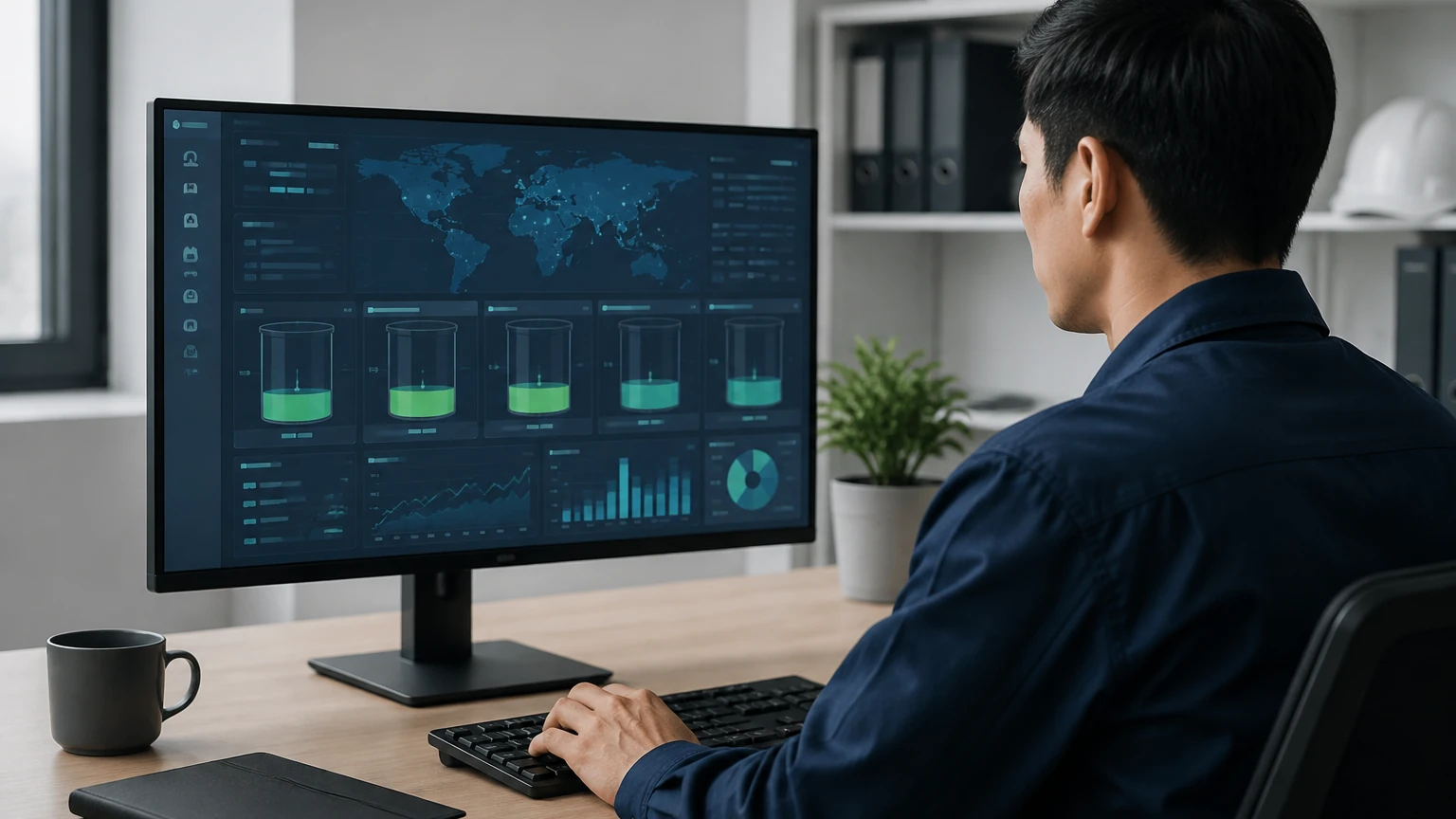
In modern industrial automation, the transition from manual tank gauging to digital oversight has become a standard for operational efficiency. Remote tank level monitoring software serves as the central intelligence layer that aggregates data from field-level sensors, providing real-time visibility into inventory, process states, and safety parameters. For facility managers and process engineers, selecting the right software involves understanding the underlying measurement physics and how that data is translated into actionable insights.
The Role of Measurement Principles in Remote Monitoring
Before data can be analyzed by remote tank level monitoring software, it must be accurately captured by field instruments. The reliability of the software is directly dependent on the measurement principle employed by the sensor. Different technologies excel in specific environments, and the software must be configured to interpret these signals correctly.
Radar Level Measurement
Radar level meters, particularly those operating at high frequencies such as 80 GHz, utilize the Time-of-Flight (ToF) principle. The sensor emits a microwave pulse that reflects off the surface of the medium and returns to the receiver. The software calculates the distance based on the time interval. Because microwaves are unaffected by air temperature, pressure, or vacuum, radar provides high-precision data (often within ±2 mm) that remains stable even in volatile chemical environments.
Ultrasonic Level Sensors
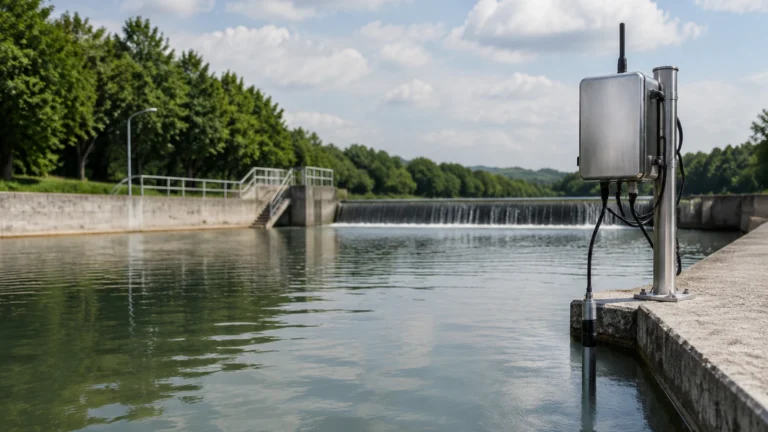
Ultrasonic sensors function by emitting high-frequency sound waves. These waves bounce off the liquid surface and return to the transducer. The software calculates the level by measuring the duration of the sound's travel. While cost-effective, ultrasonic measurements are sensitive to air temperature fluctuations and heavy foam. Advanced remote tank level monitoring software often includes temperature compensation algorithms to maintain accuracy when using these sensors in outdoor environments.
Hydrostatic Level Transmitters
Hydrostatic measurement relies on the principle that the pressure at the bottom of a tank is proportional to the height of the liquid column above it. The formula used is $P = \rho \times g \times h$, where $P$ is pressure, $\rho$ is the density of the fluid, $g$ is gravity, and $h$ is the height. For the software to display an accurate volume, the user must input the specific gravity of the liquid. This method is highly effective for deep tanks and reservoirs where non-contact sensors might struggle with range.
Key Components of Remote Tank Level Monitoring Software
Effective software platforms for tank management are more than just digital displays; they are comprehensive data management tools. Most industrial systems include the following core functionalities:
1. Real-Time Dashboarding: A visual representation of tank levels, often using percentage scales, metric volume (liters or cubic meters), or weight (kilograms or tonnes).
2. Historical Trending: The ability to log data over months or years, allowing engineers to identify consumption patterns, detect slow leaks, or optimize delivery schedules.
3. Alarm Management: Configurable thresholds for High-High (HH), High (H), Low (L), and Low-Low (LL) levels. These triggers can send automated alerts via SMS, email, or push notifications.
4. Inventory Calculation: Advanced software can convert linear height measurements into volume for non-linear vessels, such as horizontal cylindrical tanks or spherical containers, using built-in strapping tables.
5. Connectivity Protocols: Support for industry-standard protocols like Modbus RTU/TCP, MQTT, and 4G/5G cellular backhaul ensures that data from the field reaches the cloud or local server without loss.
Selection Criteria for Industrial Applications
Choosing the right combination of hardware and remote tank level monitoring software requires a technical assessment of the application requirements. The following table provides a comparison of common technologies used in remote monitoring setups:
| Technology | Typical Accuracy | Max Range | Ideal Application | Software Requirement |
| :— | :— | :— | :— | :— |
| Radar (80GHz) | ±1-2 mm | 120 m | Corrosive chemicals, high-temp solids | Needs high-resolution data logging |
| Ultrasonic | ±0.25% of range | 15-30 m | Water treatment, open channels | Requires temperature compensation |
| Hydrostatic | ±0.1% to 0.5% | 200 m+ | Deep wells, fuel storage | Requires density input for volume |
| Magnetic Gauge | ±5-10 mm | 6 m | High-pressure boilers | Digital output via reed chain or magnetostrictive |
When evaluating software, engineers should prioritize platforms that offer "Vendor Agnostic" compatibility, allowing the integration of various sensor types into a single interface. For detailed technical specifications on sensor hardware compatible with these systems, visit the Main Page.
Installation and Integration Considerations
The deployment of a remote monitoring system involves several critical steps to ensure data integrity between the tank and the software interface.
Physical Mounting and Dead Zones
Every sensor has a "dead zone" or "blocking distance" near the transducer where measurements are impossible. When configuring the remote tank level monitoring software, the mounting height must be factored in as an offset. If a sensor is mounted 500 mm above the maximum fill line, the software must subtract this distance to report the true liquid level.
Signal Transmission
In remote locations, power consumption is a primary concern. Many systems use battery-powered IoT nodes that transmit data at set intervals (e.g., every 15 minutes) to conserve energy. The software must be capable of handling intermittent data packets and distinguishing between a "zero level" reading and a "sensor offline" status.
Calibration and Mapping
For tanks with internal obstructions like agitators, heating coils, or ladders, the software should support "False Echo Suppression." This allows the system to map out static reflections and ignore them, focusing only on the true signal from the liquid surface.
Limitations and Operational Risks
While remote tank level monitoring software significantly enhances oversight, it is not without limitations. Engineering teams must account for the following risks:
* Latency: In cellular-based systems, there may be a delay between the actual event and the software alert. This makes software-based monitoring unsuitable for high-speed emergency shutdowns, which should always be handled by hard-wired level switches.
* Cybersecurity: Cloud-based monitoring introduces potential vulnerabilities. Systems should utilize end-to-end encryption (TLS/SSL) and multi-factor authentication to prevent unauthorized access to industrial data.
* Data Overload: Without proper alarm filtering, staff may suffer from "alarm fatigue." Software should be configured with deadbands (hysteresis) to prevent flickering alarms when the liquid surface is turbulent.
* Environmental Interference: Extreme weather, such as heavy snow or torrential rain, can occasionally interfere with the signal of non-contact sensors. The software should include diagnostic flags to alert users to poor signal quality.
Frequently Asked Questions (FAQs)
Q: Can remote tank level monitoring software calculate the weight of the contents?
A: Yes, provided the software allows for the input of the fluid's density. By multiplying the calculated volume by the density, the system can provide real-time mass measurements.
Q: Is it possible to monitor tanks in locations without a power grid?
A: Absolutely. Many modern systems use low-power sensors paired with solar panels or long-life lithium batteries. These units use LPWAN (Low-Power Wide-Area Network) technologies like LoRaWAN or NB-IoT to send data to the software.
Q: How many tanks can a single software instance manage?
A: Most enterprise-grade remote tank level monitoring software can handle thousands of tanks across multiple geographic locations, aggregating them into a single global dashboard.
Q: What happens if the internet connection is lost?
A: Professional systems often include local data logging at the gateway level. Once the connection is restored, the gateway uploads the buffered data to the software to ensure there are no gaps in the historical record.
Conclusion
Implementing remote tank level monitoring software is a strategic investment that reduces the need for manual inspections, prevents costly overflows, and optimizes supply chain logistics. By selecting a system based on sound measurement principles—whether radar, ultrasonic, or hydrostatic—and ensuring robust software integration, industrial operators can achieve a higher standard of process safety and accuracy. For those seeking to upgrade their current infrastructure, focusing on data reliability and ease of integration will provide the greatest long-term value.