Rheonik Rhm 04
Rheonik Rhm 04
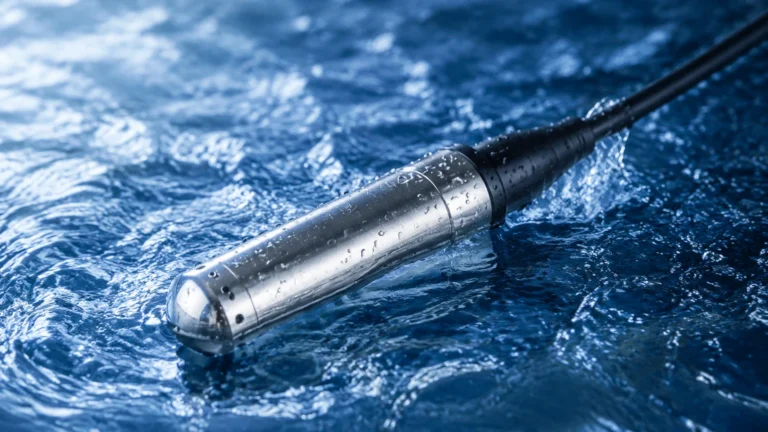
In the landscape of industrial process control, the measurement of low flow rates with high precision is a critical requirement for applications ranging from chemical injection to high-pressure gas dosing. The Rheonik RHM 04 is a specialized Coriolis mass flow meter designed specifically for these low-flow environments. While level measurement technologies—such as radar or ultrasonic sensors—are the primary tools for monitoring bulk inventory in tanks, Coriolis meters like the RHM 04 provide the necessary data for mass balance and real-time process monitoring that level sensors alone cannot capture.
Understanding the operational principles, technical specifications, and integration strategies for the Rheonik RHM 04 is essential for engineers tasked with designing accurate dosing or filling systems. This guide explores the engineering behind this instrument and how it complements standard level measurement solutions found on the Main Page of industrial instrumentation portfolios.
Measurement Principles of Coriolis Technology
Before evaluating the specific capabilities of the Rheonik RHM 04, it is necessary to understand the Coriolis principle that governs its operation. Unlike volumetric flow meters that measure the space fluid occupies, Coriolis meters measure mass directly.
The Coriolis Effect
The meter consists of one or more vibrating tubes, typically driven at their resonant frequency by an electromagnetic coil. When a fluid (liquid or gas) flows through these vibrating tubes, it experiences a Coriolis force. This force causes a slight distortion or "twisting" of the tubes. Sensors located at the inlet and outlet sections of the tubes detect this phase shift.
Because the phase shift is directly proportional to the mass flow rate, the instrument provides an extremely accurate mass measurement regardless of changes in fluid density, viscosity, or temperature. In the case of the Rheonik RHM 04, the manufacturer utilizes a unique "Omega" shape for the tubes, which enhances the sensitivity of the meter at very low flow rates.
Simultaneous Density and Temperature Measurement
In addition to mass flow, Coriolis meters like the RHM 04 measure the frequency of the tube vibration. Since the resonant frequency of the tube changes based on the mass of the fluid inside it, the meter can calculate the fluid's density in real-time. Integrated RTD (Resistance Temperature Detector) sensors also provide temperature data, allowing the transmitter to calculate volumetric flow if required, though mass remains the primary output.
Technical Specifications and Performance
The Rheonik RHM 04 is positioned as a "micro-flow" instrument. It is engineered to handle flow rates that would be difficult for standard industrial flow meters to track accurately.
Flow Ranges
The RHM 04 typically supports flow rates starting as low as 0.002 kg/min (0.0044 lb/min) and can reach maximum rates of approximately 10 kg/min (22 lb/min), depending on the specific pressure rating and tube material. This range makes it ideal for pilot plants, laboratory settings, and precise chemical dosing in water treatment or oil and gas production.
Pressure and Temperature Capabilities
One of the defining features of the Rheonik series is the ability to withstand extreme process conditions. The RHM 04 is often available in versions capable of handling pressures up to 1,000 bar (14,500 psi) or more, which is a common requirement in offshore chemical injection or hydrogen refueling applications. Temperature ratings typically span from -196°C (-320°F) for cryogenic applications to over 350°C (662°F) for high-temperature process fluids.
Materials of Construction
To ensure compatibility with corrosive media, the wetted parts of the RHM 04 are available in several alloys:
* Stainless Steel 316L: Standard for most non-corrosive industrial liquids.
* Alloy C22 (Hastelloy): Used for highly corrosive acids and chemicals.
* Super Duplex: Ideal for high-pressure seawater or oilfield applications.
* Tantalum: Reserved for the most aggressive chemical environments.
Integration: Flow Meters vs. Level Measurement
In many industrial setups, there is a choice between measuring the amount of fluid in a tank using level sensors and measuring the fluid entering or leaving the tank using flow meters. For a complete engineering solution, both are often used in tandem.
Mass Balance and Inventory Control
Level measurement instruments, such as the radar level meters and ultrasonic sensors available through Welk, provide a direct reading of the volume remaining in a vessel. However, if the density of the fluid changes due to temperature fluctuations, the mass of the product may vary even if the level remains constant.
By integrating a Rheonik RHM 04 at the inlet or outlet of a vessel, engineers can perform a "mass balance" calculation. This involves comparing the mass added (via the flow meter) against the change in level (via the level transmitter). If the two do not align, it may indicate a leak, sensor drift, or an unexpected change in fluid density.
Selection Table: Flow vs. Level Measurement
| Feature | Coriolis Flow Meter (RHM 04) | Radar Level Meter | Hydrostatic Level Transmitter |
| :— | :— | :— | :— |
| Primary Measurement | Mass Flow Rate | Distance/Volume | Pressure/Liquid Head |
| Accuracy | Extremely High (0.1% of rate) | High (±2mm to ±5mm) | Moderate (0.1% to 0.5% FS) |
| Density Dependency | Independent | Independent | Highly Dependent |
| Installation Point | Inline (Piping) | Top of Tank (Non-contact) | Bottom/Side of Tank |
| Best Use Case | Dosing and Batching | Inventory Management | Constant Density Liquids |
| Cost | High | Moderate | Low to Moderate |
| Maintenance | Low (No moving parts) | Very Low | Periodic Cleaning Required |
Installation Considerations for the RHM 04
Proper installation is critical for the Rheonik RHM 04 to maintain its specified accuracy. Because the device relies on subtle vibrations, external factors can introduce noise into the measurement.
1. Vibration Isolation: The meter should be installed in a section of piping that is free from excessive mechanical vibration. While the Omega-tube design is naturally resistant to external noise, mounting the meter on a rigid, vibration-dampened support is recommended.
2. Orientation: For liquid applications, the meter should ideally be installed so that the tubes are pointing downward (in a "U" or "Omega" shape) to prevent gas bubbles from becoming trapped. For gas applications, the tubes should point upward to prevent condensate buildup.
3. Zero Calibration: After installation and under full process pressure and temperature, a "zero-point calibration" must be performed. This involves stopping the flow completely (using valves upstream and downstream) and allowing the transmitter to calibrate itself to the static environment.
4. Straight Pipe Runs: Unlike ultrasonic or turbine flow meters, Coriolis meters generally do not require long straight runs of pipe before or after the meter. This makes the RHM 04 suitable for compact skid-mounted systems.

Limitations and Constraints
While the Rheonik RHM 04 is a highly versatile instrument, it is not a universal solution for every application. Engineers must consider the following limitations:
* Pressure Drop: Due to the relatively small diameter of the internal tubes and the Omega-shape geometry, there can be a significant pressure drop across the meter at high flow rates. This must be factored into the pump sizing for the system.
* Gas Entrainment: While Coriolis meters can handle small amounts of entrained gas in liquids, excessive gas (slug flow) can cause the tubes to stop vibrating or produce erratic readings. In these cases, a level sensor in a de-aerator tank might be a better primary measurement tool.
* Initial Cost: The RHM 04 represents a significant investment compared to simpler technologies like rotameters or hydrostatic level sensors. It is typically reserved for applications where the cost of inaccuracy is high.
Frequently Asked Questions (FAQ)
Q: Can the Rheonik RHM 04 measure both liquids and gases?
A: Yes, the RHM 04 is designed to measure mass flow for both liquids and gases. However, the flow range and pressure drop will differ significantly between the two media types.
Q: How does the RHM 04 handle pulsating flow from a diaphragm pump?
A: Pulsating flow can interfere with the vibration frequency of the Coriolis tubes. It is recommended to use a pulsation dampener or a length of flexible hose between the pump and the meter to smooth the flow profile.
Q: Is the RHM 04 suitable for hygienic applications?
A: Yes, Rheonik offers versions of the RHM 04 with hygienic connections (such as Tri-Clamp) and polished internal surfaces for use in the food, beverage, and pharmaceutical industries.
Q: What is the typical lifespan of the instrument?
A: Because the RHM 04 has no moving parts that rub or wear out (like bearings in a turbine meter), it has an exceptionally long service life, often exceeding 10 to 15 years if the wetted materials are compatible with the process fluid.
Conclusion
The Rheonik RHM 04 stands as a benchmark for low-flow mass measurement, offering precision that is essential for modern industrial automation. By providing direct mass flow data, it fills a critical gap in process monitoring that traditional level measurement cannot address alone. Whether used for chemical injection, high-pressure gas dosing, or as part of a complex mass balance system alongside the level sensors found on the Main Page, the RHM 04 ensures that process engineers have the accurate data required for safety, efficiency, and quality control. When selecting such an instrument, careful attention to material compatibility, pressure ratings, and installation environment will ensure the long-term reliability of the measurement system.