Cm442
Cm442
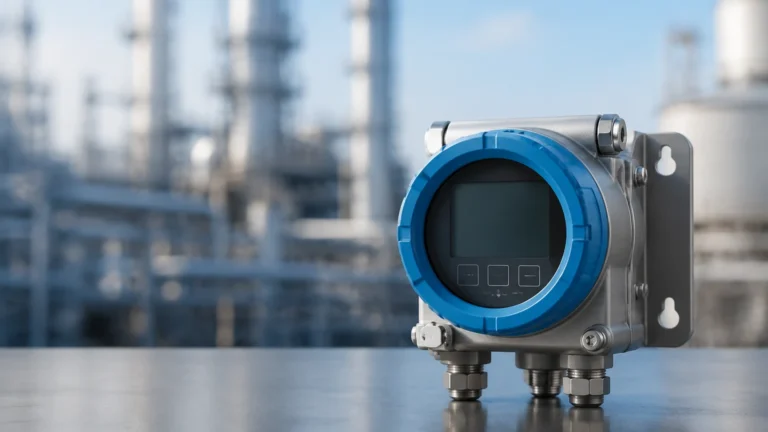
In the field of industrial process automation, the CM442 represents a sophisticated class of multi-parameter transmitters designed to manage and interpret data from various liquid analysis and level measurement sensors. As industrial processes become increasingly complex, the need for a centralized, modular, and highly reliable transmitter has become paramount. This guide explores the technical architecture, measurement principles, and practical application of the CM442 transmitter within modern industrial frameworks, particularly focusing on its integration with level measurement technologies.
Understanding the CM442 Multi-Parameter Transmitter Principle
The fundamental principle of the CM442 lies in its ability to act as a digital bridge between field sensors and the higher-level control system (PLC/SCADA). Unlike traditional analog transmitters that are often limited to a single parameter, the CM442 is built on a modular platform that supports multiple sensor types simultaneously.
Digital Signal Processing and Memosens Technology
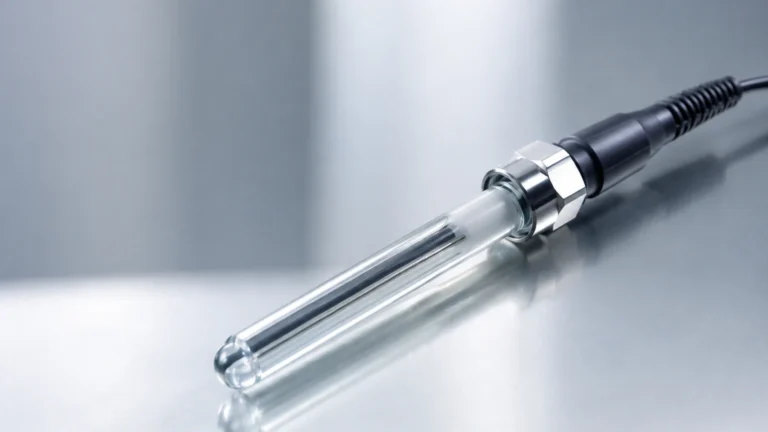
One of the defining characteristics of high-end transmitters like the CM442 is the use of digital sensor technology, often referred to as Memosens. In this configuration, the sensor itself contains a microprocessor that converts the raw physical measurement (such as pH, conductivity, or pressure) into a digital signal right at the sensor head. This digital signal is then transmitted to the CM442 via an inductive, non-contact connection.
This principle offers several advantages:
1. Interference Resistance: Because the signal is digital, it is immune to moisture, electromagnetic interference, and cable resistance issues that typically plague analog 4-20mA or high-impedance signals.
2. Calibration Storage: Calibration data is stored directly in the sensor head, allowing for "plug-and-play" functionality where sensors can be calibrated in a laboratory environment and then deployed in the field without needing recalibration at the transmitter.
3. Predictive Maintenance: The digital link allows the CM442 to monitor sensor health, tracking operating hours and extreme process conditions to alert operators before a failure occurs.
Core Features and Technical Capabilities
The CM442 is engineered for versatility. Its modular design allows users to customize the input and output configurations based on specific project requirements. Below are the primary technical specifications and features typically associated with this class of transmitter.
Hardware Modularity
The device usually consists of a base unit with a power supply and a display, which can then be expanded with various modules. These modules include:
* Sensor Input Modules: Capable of connecting up to two sensors in the standard CM442 configuration.
* Current Output Modules: Providing 4-20mA signals for process control.
* Relay Modules: Used for limit monitoring, alarm signaling, or controlling cleaning systems.
* Digital Communication Modules: Supporting protocols such as HART, PROFIBUS DP, Modbus TCP/RTU, and EtherNet/IP.
Technical Specification Summary
| Feature | Specification |
| :— | :— |
| Number of Channels | 1 to 2 channels (expandable in related models) |
| Supply Voltage | 100 to 230 V AC / 24 V AC/DC |
| Enclosure Material | Polycarbonate (IP66/IP67 / NEMA 4X) |
| Operating Temperature | -20°C to +60°C (-4°F to 140°F) |
| Dimensions | Approx. 237 mm x 194 mm x 162 mm |
| Display | Backlit graphic display with multi-language support |
Integration with Level Measurement Systems
While frequently associated with liquid analysis (pH, dissolved oxygen, turbidity), the CM442 plays a critical role in level measurement applications. In many industrial water treatment and chemical processing plants, level and quality parameters must be monitored in tandem.
Hydrostatic Level Integration
Hydrostatic level transmitters, such as those provided by Welk, measure the pressure exerted by a liquid column to determine the height of the fluid. The CM442 can accept the digital or analog output from these sensors. When integrated, the transmitter performs the necessary mathematical conversions to turn pressure readings into volume or mass measurements, accounting for tank geometry and fluid density.
Ultrasonic and Radar Coordination
In applications where non-contact measurement is required, such as in open channels or corrosive chemical tanks, ultrasonic or radar level meters are utilized. The CM442 can serve as the local display and control hub for these sensors. For engineers seeking comprehensive hardware options, including advanced radar and ultrasonic sensors, the Main Page provides a detailed overview of compatible level measurement instruments.
By centralizing the data from a level sensor and an analysis sensor (e.g., pH) into a single CM442 unit, operators can implement complex control logic, such as automatic chemical dosing based on both the volume of liquid in a tank and its current chemical concentration.
Selection Criteria for Industrial Applications
Choosing the correct configuration for a CM442 transmitter requires a thorough understanding of the process environment and the required data outputs. Engineers should evaluate the following criteria:
1. Environmental Conditions
The housing material must be compatible with the atmosphere. For most industrial environments, polycarbonate is sufficient; however, in highly corrosive or hygienic environments, stainless steel alternatives may be required. Ensure the IP rating (typically IP66/67) matches the washdown requirements of the facility.
2. Communication Infrastructure
If the facility relies on a modern fieldbus system, the CM442 must be equipped with the corresponding digital communication card. For legacy systems, multiple 4-20mA outputs are necessary. The integration of HART protocol is often recommended as it allows for remote configuration and diagnostics over the existing analog wiring.
3. Power Requirements
The CM442 is available in both high-voltage (AC) and low-voltage (DC) versions. In remote water treatment sites, 24V DC is common, often powered by solar arrays or battery banks. In factory settings, 110V/230V AC is usually the standard.

Installation and Commissioning Best Practices
Proper installation is vital to ensure the longevity and accuracy of the CM442 and its connected sensors. Following these guidelines will minimize measurement errors and hardware fatigue.
Mounting Considerations
* Vibration: Mount the transmitter on a stable, vibration-free surface. If mounting on a pipe, use a dedicated pipe-mounting kit with rubber dampeners.
* Sunlight: While the displays are backlit, direct sunlight can cause UV degradation of the polycarbonate housing over many years and may make the screen difficult to read. A weather protection cover is highly recommended for outdoor installations.
* Accessibility: Ensure the device is mounted at eye level to facilitate easy operation and maintenance by technicians.
Wiring and Shielding
* Cable Separation: Keep signal cables (Memosens or 4-20mA) separate from high-voltage power lines to prevent induced noise.
* Grounding: Ensure the transmitter housing and the cable shields are properly grounded according to local electrical codes. This is particularly important when using digital communication protocols like Modbus or Profibus.
Commissioning Steps
1. Check Connections: Verify that all modules are firmly seated and that wiring matches the terminal diagram.
2. Configure System Settings: Set the date, time, and language.
3. Sensor Recognition: Connect the sensors; the CM442 should automatically recognize Memosens sensors and display their serial numbers and calibration status.
4. Output Mapping: Assign the measured values (e.g., Level in meters, pH) to the desired current outputs or fieldbus registers.
5. Relay Testing: Manually trigger relays to ensure that pumps, valves, or alarms respond correctly to the transmitter signals.
Comparison of Transmitter Configurations
When planning a project, it is helpful to compare the CM442 with other common transmitter configurations to ensure the most cost-effective and functional choice.
| Feature | Single-Channel Analog | CM442 (Multi-Parameter) | PLC Direct Input |
| :— | :— | :— | :— |
| Sensor Support | 1 Analog sensor only | Up to 2 Digital sensors | Multiple (requires I/O cards) |
| Local Display | Basic/None | Advanced Graphic | None (requires HMI) |
| Diagnostics | Minimal | Advanced/Predictive | Dependent on programming |
| Maintenance | High (field calibration) | Low (lab calibration) | High (field calibration) |
| Cost | Low | Medium | High (system level) |
Limitations and Maintenance
While the CM442 is a robust instrument, it does have limitations that must be managed through proper engineering and maintenance.
Limitations
* Channel Density: The CM442 is limited to two sensor inputs. For applications requiring 4 or 8 sensors in a single location, the CM444 or CM448 models are more appropriate.
* Distance Limits: While digital Memosens cables are more resilient than analog ones, there are still maximum cable lengths (typically up to 100 meters) before signal boosters or different communication strategies are required.
Maintenance Schedule
* Monthly: Inspect the housing for signs of damage or moisture ingress. Check that the cable glands are tight.
* Quarterly: Clean the display screen with a soft, damp cloth. Avoid harsh chemicals that could cloud the polycarbonate.
* Annually: Verify the accuracy of the 4-20mA outputs using a calibrated multimeter. Check for firmware updates that may provide new features or security patches.
Frequently Asked Questions (FAQs)
Q1: Can the CM442 be used for flow measurement?
A1: Yes, if connected to a hydrostatic level sensor or an ultrasonic sensor, the CM442 can be configured with flow formulas (e.g., for flumes or weirs) to calculate and totalize flow rates in open channels.
Q2: What happens if a sensor fails?
A2: The CM442 will immediately trigger a diagnostic message on the display and can be programmed to set the current outputs to a "fail-safe" state (e.g., 21.5mA or 3.5mA) to alert the control system.
Q3: Is the CM442 compatible with non-Memosens sensors?
A3: The standard CM442 is designed for digital Memosens sensors. However, specific modules can be added to accommodate certain analog inputs, though this negates many of the digital diagnostic benefits.
Q4: How does the CM442 handle power outages?
A4: The device features non-volatile memory, meaning all configuration settings and calibration data are retained even during a total power loss. Once power is restored, the device resumes measurement automatically.
Q5: Can I upgrade a 1-channel CM442 to a 2-channel version later?
A5: Yes, because of its modular design, you can add a second sensor input module to an existing CM442 at any time, provided there is an available slot in the housing.
For industrial professionals tasked with optimizing their level measurement and liquid analysis processes, the CM442 offers a reliable, scalable, and technically advanced solution. By understanding its core principles and following established installation guidelines, facilities can achieve higher accuracy and reduced downtime in their critical process loops.