Sensor De Nivel Combustible
Sensor De Nivel Combustible
In industrial automation and process control, the accurate measurement of fuel levels is a fundamental requirement for operational efficiency, safety, and inventory management. Whether managing diesel for backup generators, aviation fuel in storage farms, or heavy fuel oil in maritime applications, selecting the appropriate sensor de nivel combustible is a critical engineering decision.
Modern fuel level measurement transcends simple buoyancy-based systems. Today, engineers must navigate a landscape of radar, ultrasonic, and hydrostatic technologies to ensure reliability in environments that are often hazardous, pressurized, or subject to extreme temperature fluctuations. This guide provides a technical overview of the primary measurement principles, selection criteria, and installation best practices for industrial fuel level monitoring.
Measurement Principles for Fuel Level Sensors
Understanding the underlying physics of level measurement is the first step in selecting the right instrument. Different fuels possess varying dielectric constants, densities, and vapor pressures, all of which influence sensor performance.
Radar Level Measurement (Guided and Non-Contact)
Radar technology has become the industry standard for high-precision fuel measurement. It operates on the Time-of-Flight (ToF) principle, where microwave pulses are emitted toward the fuel surface and reflected back to the sensor.
* Guided Wave Radar (GWR): This technology uses a probe (rod or cable) to guide the microwave pulse. It is particularly effective for fuels with low dielectric constants, as the probe concentrates the signal energy. GWR is unaffected by foam or turbulence on the surface.
* Non-Contact Radar: These sensors emit pulses through the air. They are ideal for corrosive fuels or applications where the sensor should not touch the medium. High-frequency radar (e.g., 80 GHz) allows for narrow beam angles, minimizing interference from tank internals.
Ultrasonic Level Sensors
Ultrasonic sensors emit high-frequency sound waves. The time taken for the echo to return from the fuel surface determines the distance. While cost-effective, ultrasonic sensors are sensitive to the vapor space composition. Since fuel vapors can change the speed of sound, temperature compensation and careful calibration are required. They are best suited for atmospheric tanks containing stable fuels like diesel.
Hydrostatic Pressure Transmitters
Hydrostatic sensors measure the pressure exerted by the liquid column above the sensor diaphragm. The relationship is defined by the formula: *P = ρ * g * h* (where P is pressure, ρ is density, g is gravity, and h is height). Because fuel density changes with temperature, hydrostatic systems often require integrated temperature sensors to maintain accuracy. These are frequently used in submersible formats for underground storage tanks.
Magnetic Level Gauges and Switches
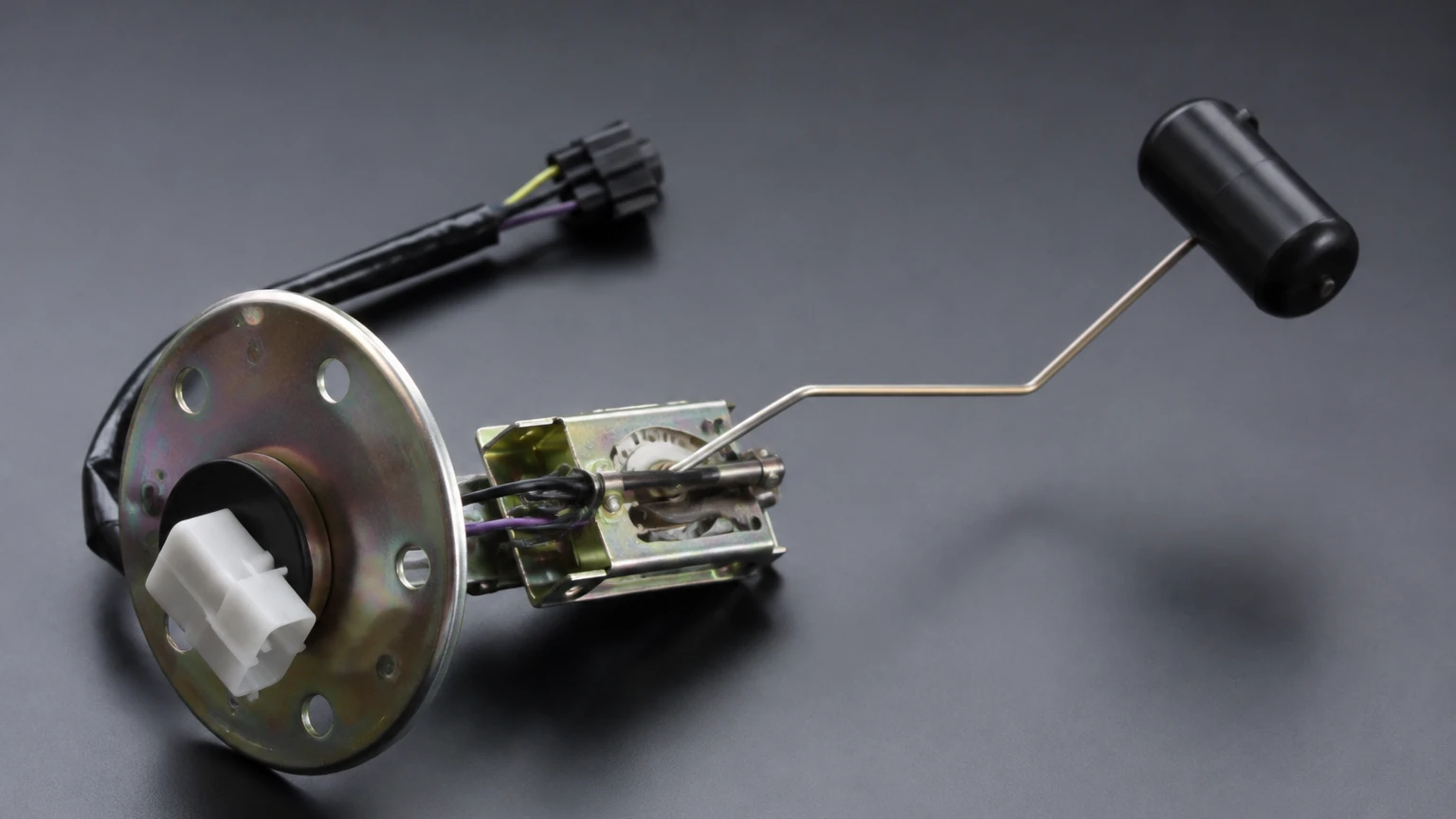
Magnetic gauges utilize a float containing a permanent magnet that travels with the fuel level. This float interacts with an external indicator or a series of reed switches. This provides a clear visual indication and can be used for high/low-level alarms without requiring a continuous power supply for the visual component.
Selection Criteria for Industrial Applications
Choosing a sensor de nivel combustible requires a thorough analysis of the application environment. Engineers should consult the Main Page of technical providers to compare specific model tolerances against project requirements.
1. Fuel Characteristics
* Dielectric Constant (εr): Radar sensors require a minimum dielectric constant to reflect signals. While diesel (εr ≈ 2.1) is measurable, specialized high-sensitivity probes may be needed for very low-dielectric fluids.
* Viscosity: High-viscosity fuels like Bunker C may coat probes, making non-contact radar or hydrostatic sensors more appropriate than guided wave radar or floats.
* Volatility: Highly volatile fuels create dense vapor layers that can attenuate ultrasonic signals.
2. Tank Geometry and Material
The height and diameter of the tank, as well as the presence of internal structures (agitators, heating coils, or baffles), dictate the sensor choice. For example, a narrow tank with internal obstructions favors guided wave radar, which avoids signal interference by confining the pulse to the probe.
3. Environmental Conditions
* Pressure: Sensors must be rated for the maximum operating pressure of the vessel.
* Temperature: Fuel storage can range from cryogenic temperatures to heated heavy oil tanks (up to 200°C).
* Hazardous Areas: Most fuel applications require ATEX, IECEx, or UL certifications for explosive atmospheres.
Technical Selection Table
| Technology | Accuracy | Max Range | Medium Contact | Best For |
| :— | :— | :— | :— | :— |
| Guided Wave Radar | ±2 mm | Up to 30m | Yes | Low dielectric fuels, pressurized tanks |
| Non-Contact Radar | ±1 mm | Up to 70m | No | Large storage tanks, corrosive additives |
| Ultrasonic | ±0.25% FS | Up to 15m | No | Atmospheric diesel tanks, cost-sensitive projects |
| Hydrostatic | ±0.1% FS | Up to 200m | Yes | Underground tanks, deep wells |
| Magnetic Gauge | ±5 mm | Up to 6m | Yes | Visual monitoring, high-pressure bypass |
Installation Considerations
Proper installation is as critical as sensor selection. Even the most advanced sensor de nivel combustible will fail if poorly positioned.
1. Dead Zones (Blocking Distance): Every sensor has a "dead zone" near the transmitter where measurement is impossible. Ensure the sensor is mounted high enough so the maximum fuel level does not enter this zone.
2. Nozzle Dimensions: For non-contact radar and ultrasonic sensors, the mounting nozzle should be as short and wide as possible to prevent signal interference from the nozzle walls.
3. Positioning: Avoid mounting sensors directly above the fuel inlet to prevent false readings caused by turbulence or splashing during filling cycles.
4. Grounding: In fuel applications, static electricity is a significant risk. Ensure the sensor and the tank are properly bonded and grounded according to local electrical codes.
5. Stilling Wells: In tanks with high turbulence or foam, installing the sensor inside a stilling well (a vertical pipe) can provide a calm surface for more accurate measurement.
Limitations and Operational Challenges
While modern instrumentation is robust, certain limitations must be acknowledged:
* Condensation: In outdoor fuel tanks, temperature swings cause moisture to condense on sensor faces. This is particularly problematic for ultrasonic sensors. Radar sensors with PTFE drip-off antennas are designed to mitigate this.
* Foaming: During high-speed filling, some fuels produce foam. Foam absorbs ultrasonic and radar signals, potentially leading to a "loss of echo." Guided wave radar is generally the most resilient to surface foam.
* Density Fluctuations: Hydrostatic sensors assume a constant density. If the fuel type changes or temperature varies significantly without compensation, the level reading will drift.
Maintenance and Calibration
To ensure long-term reliability of a sensor de nivel combustible, a scheduled maintenance program should include:
* Visual Inspection: Check for signs of corrosion on housing and cable entries.
* Cleaning: For contact-type sensors (GWR or floats), remove any buildup of paraffin or heavy oil residues.
* Verification: Periodically compare the electronic reading against a manual dip-tape measurement. Many modern sensors support remote diagnostics, allowing technicians to verify signal strength and electronics health without climbing the tank.
Frequently Asked Questions (FAQ)
Q: Can I use an ultrasonic sensor for gasoline?
A: It is generally not recommended. Gasoline is highly volatile, and the resulting vapors change the speed of sound in the vapor space, leading to significant errors. Furthermore, gasoline tanks require explosion-proof equipment, and many low-cost ultrasonic sensors lack the necessary certifications.
Q: What is the benefit of 80 GHz radar over 26 GHz radar for fuel?
A: 80 GHz radar has a much narrower beam angle. This allows it to be installed in smaller nozzles and avoids reflections from tank walls or internal pipes, providing a much cleaner signal in complex tank geometries.
Q: How do I measure fuel level in a horizontal cylindrical tank?
A: The sensor measures the linear distance to the surface. To get the volume, the controller or PLC must apply a strapping table or a mathematical formula to account for the tank's curved geometry. Many high-end transmitters have this "volume conversion" function built-in.
Q: Is hydrostatic measurement safe for flammable fuels?
A: Yes, provided the transmitter is intrinsically safe (IS) or explosion-proof rated. Submersible hydrostatic sensors are a standard solution for underground diesel storage at service stations.
Conclusion
Selecting a sensor de nivel combustible involves balancing precision, environment, and budget. For large-scale industrial storage, radar technology offers the highest reliability and lowest maintenance. For simpler, atmospheric applications, ultrasonic or hydrostatic sensors provide a cost-effective alternative. By understanding the measurement principles and adhering to strict installation guidelines, facility managers can ensure accurate inventory tracking and prevent overfill incidents. For detailed technical specifications and product comparisons, engineers are encouraged to Review product options and application support to find the optimal solution for their specific fuel management needs.