Serbatoi Per Prodotti Farmaceutici
Serbatoi Per Prodotti Farmaceutici
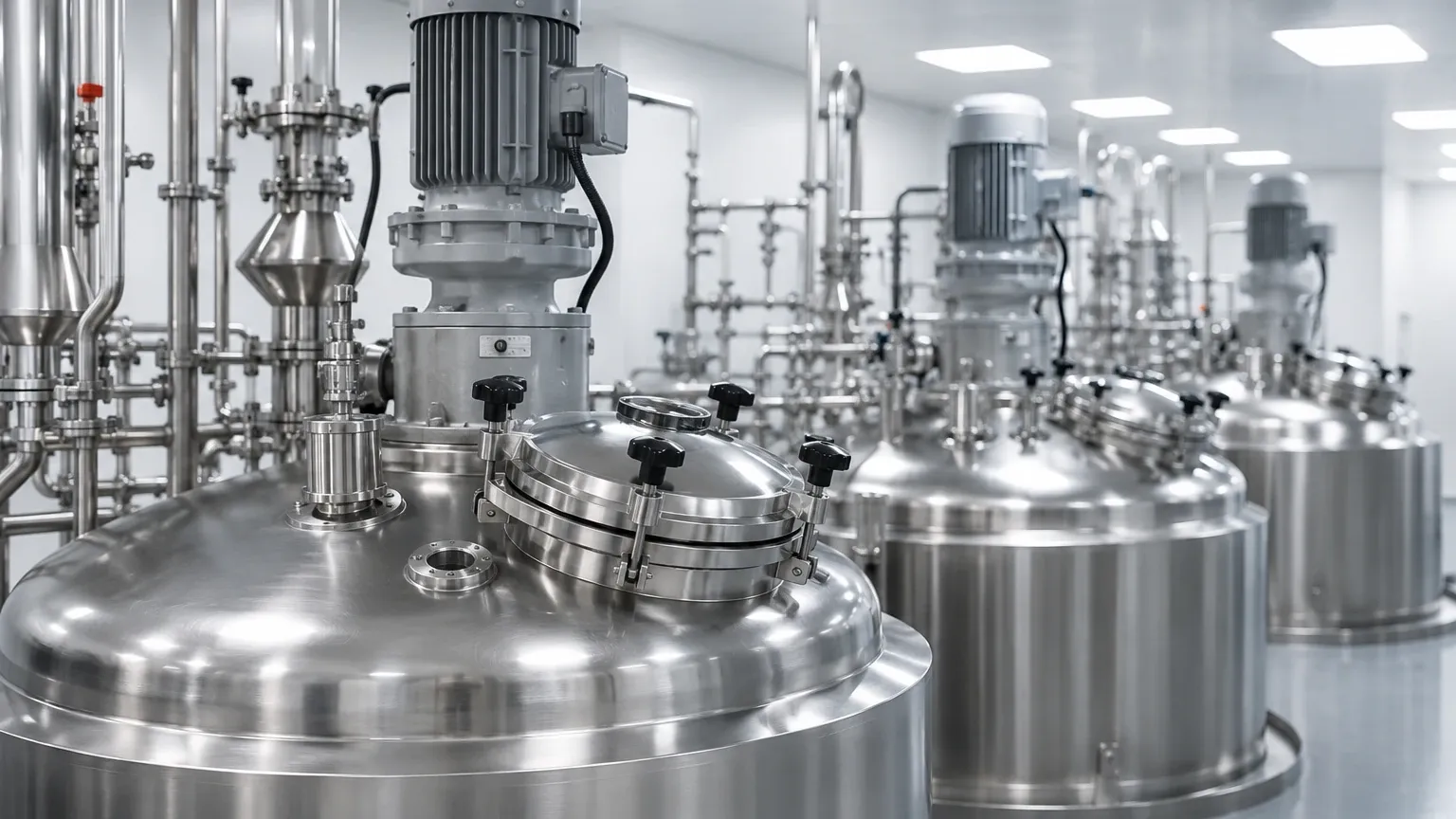
In the pharmaceutical industry, the storage and processing of liquids require the highest standards of hygiene, precision, and reliability. The vessels used—often referred to as serbatoi per prodotti farmaceutici—are the backbone of production lines for everything from intravenous fluids and vaccines to liquid-based active pharmaceutical ingredients (APIs). Because these substances are often high-value and sensitive to contamination, the instrumentation used to monitor them must be equally specialized.
Accurate level measurement within these tanks is essential for maintaining batch consistency, preventing overflow, and ensuring that pumps do not run dry. This article explores the engineering principles of level measurement in pharmaceutical applications, provides selection criteria for various technologies, and outlines the practical considerations for installation and maintenance.
Measurement Principles for Pharmaceutical Applications
Before selecting a sensor for *serbatoi per prodotti farmaceutici*, it is vital to understand the physics behind the primary measurement technologies used in the industry. Pharmaceutical environments typically demand non-contact or highly sanitary contact methods to maintain sterile conditions.
1. Radar Level Measurement (Non-Contact)
Radar level meters operate on the "Time of Flight" (ToF) principle. The sensor emits a high-frequency electromagnetic wave (typically 26GHz or 80GHz) toward the liquid surface. The wave reflects off the product and returns to the sensor. The distance is calculated based on the time it takes for the signal to travel to the surface and back.
* FMCW (Frequency Modulated Continuous Wave): Modern 80GHz radar sensors use FMCW technology, which provides superior accuracy (up to ±1 mm) by continuously varying the frequency of the signal. This allows the sensor to distinguish between the actual product level and internal tank obstructions like agitators or spray balls.
2. Ultrasonic Level Measurement (Non-Contact)
Ultrasonic sensors emit high-frequency sound pulses. Like radar, they measure the time it takes for the sound to reflect off the liquid surface. However, because sound requires a medium (air) to travel, these sensors are influenced by the air's temperature, pressure, and turbulence.
3. Hydrostatic Level Measurement (Contact)
This method relies on the principle of pressure. The pressure at the bottom of a tank is directly proportional to the height of the liquid column and its density ($P = \rho \cdot g \cdot h$). In pharmaceutical tanks, hydrostatic transmitters use a flush-mounted sanitary diaphragm to prevent liquid from entering the sensor housing, ensuring no "dead zones" where bacteria could grow.
4. Magnetic Level Gauges
Used for visual indication and electronic feedback, these consist of a float containing a magnet that moves inside a bypass chamber or directly within the tank. As the float moves with the liquid level, it flips magnetic flaps on an external scale or triggers a reed-chain transmitter. For *serbatoi per prodotti farmaceutici*, these must be constructed from 316L stainless steel with a high-polish finish.
Engineering Selection Criteria
Choosing the right instrument for pharmaceutical tanks requires a thorough evaluation of the process conditions and the physical properties of the stored medium. For a complete range of industrial-grade measurement tools, engineers often consult the Main Page of specialized manufacturers like Welk to review technical specifications.
Material Compatibility and Surface Finish
In the pharmaceutical sector, all wetted parts must be chemically inert and resistant to corrosion. The industry standard is 316L stainless steel. Furthermore, the surface roughness (Ra) is critical. To prevent microbial growth, wetted surfaces are typically electropolished to a finish of Ra < 0.4 µm.
CIP and SIP Resistance
Clean-in-Place (CIP) and Steam-in-Place (SIP) are standard procedures. Instruments must withstand high-temperature steam (up to 140°C) and aggressive cleaning agents (such as caustic soda or nitric acid) without losing calibration or suffering mechanical failure.
Dielectric Constant (εr)
For radar sensors, the dielectric constant of the liquid determines the strength of the reflected signal. Most pharmaceutical liquids are water-based and have a high dielectric constant, making them excellent candidates for radar measurement. However, some solvents or oils may have lower εr values, requiring more sensitive radar units.
Selection Comparison Table
| Technology | Accuracy | Cleaning Suitability | Foam Resistance | Best Use Case |
| :— | :— | :— | :— | :— |
| 80GHz Radar | ±1 mm | Excellent (Non-contact) | High | Small tanks with agitators |
| Ultrasonic | ±0.25% FS | Good (Non-contact) | Low | Simple storage of water/buffers |
| Hydrostatic | ±0.1% FS | Excellent (Flush) | High | Pressurized process vessels |
| Magnetic Gauge| ±5 mm | Moderate | High | Visual backup for large tanks |
Installation Considerations for Serbatoi Per Prodotti Farmaceutici
Correct installation is as important as the technology itself. In the context of *serbatoi per prodotti farmaceutici*, the following factors must be addressed during the design phase:
1. Sanitary Connections: Instruments should be mounted using standard sanitary fittings, such as Tri-Clamp or DIN 11851. These connections eliminate threads and crevices where product could accumulate.
2. Nozzle Height and Diameter: For radar and ultrasonic sensors, the mounting nozzle should be as short as possible. A long, narrow nozzle can create internal reflections (ringing) that interfere with the signal, creating a "dead zone" at the top of the tank.
3. Agitator Interference: Many pharmaceutical tanks use agitators for mixing. Radar sensors with a narrow beam angle (e.g., 3° to 4°) are preferred because they can be aimed to avoid the blades of the agitator, preventing false echoes.
4. Venting and Condensation: In hot-filling processes or SIP cycles, condensation can form on the sensor face. Some radar sensors feature a convex PTFE lens designed to shed droplets, ensuring the signal remains clear even in high-humidity environments.
Operational Limitations and Environmental Factors
No measurement technology is universal. Engineers must be aware of the following limitations when equipping *serbatoi per prodotti farmaceutici*:
* Foaming: Thick foam can absorb ultrasonic and radar signals. If heavy foaming is expected, hydrostatic transmitters or guided wave radar (GWR) may be more reliable, though GWR involves a probe that must be cleaned.
* Pressure Variations: Hydrostatic sensors measure total pressure. If the tank is pressurized (e.g., with a nitrogen blanket), a differential pressure setup or a compensated hydrostatic transmitter is required to subtract the headspace pressure from the total reading.
* Ambient Temperature Fluctuations: Ultrasonic sensors are sensitive to air temperature changes, which alter the speed of sound. While most have built-in temperature compensation, they may still struggle in tanks with significant temperature gradients between the liquid and the sensor head.
Maintenance and Calibration
In a GMP (Good Manufacturing Practice) environment, regular calibration is mandatory. Level instruments should be checked at least annually.
* Hydrostatic Sensors: These are typically calibrated using a pressure calibrator to simulate the liquid column.
* Radar/Ultrasonic: Calibration involves verifying the distance reading against a manual dip-tape measurement or a sight glass.
* Documentation: All maintenance activities must be logged, and instruments should be provided with material certificates (e.g., 3.1 according to EN 10204) and calibration reports to satisfy regulatory audits.
Frequently Asked Questions (FAQ)
Q: Can I use a standard industrial level sensor in a pharmaceutical tank?
A: Generally, no. Standard sensors often have threaded connections or internal gaskets that are not sanitary. For *serbatoi per prodotti farmaceutici*, you must use sensors with sanitary certifications and appropriate surface finishes.
Q: What is the advantage of 80GHz radar over 26GHz radar?
A: 80GHz radar has a much narrower beam and a shorter wavelength. This allows it to be used in smaller tanks, provides better resolution, and makes it easier to avoid internal obstructions like heating coils or baffles.
Q: How does the sensor handle Clean-in-Place (CIP) cycles?
A: High-quality sanitary sensors are designed with IP68 or IP69K ratings. Non-contact sensors like radar are unaffected by the cleaning liquid because they do not touch it, though the housing must be able to withstand the external washdown.
Q: Is hydrostatic measurement affected by changes in liquid density?
A: Yes. Since hydrostatic sensors measure pressure, if the density of the product changes (e.g., due to temperature or concentration changes), the level reading will shift. If density is variable, a non-contact method like radar is usually preferred.
Conclusion
Selecting the appropriate level measurement technology for serbatoi per prodotti farmaceutici is a critical engineering decision that impacts product safety and process efficiency. While 80GHz radar has become the gold standard for its precision and non-contact nature, hydrostatic and ultrasonic methods still offer valuable solutions for specific applications. By adhering to sanitary design principles and considering the physical properties of the medium, manufacturers can ensure reliable, long-term performance in even the most demanding pharmaceutical environments.