Single Use Pressure Sensors
Single Use Pressure Sensors
In the evolving landscape of bioprocessing, pharmaceuticals, and high-purity industrial automation, the shift toward single-use technology (SUT) has redefined how engineers approach process monitoring. Single use pressure sensors represent a critical component of this shift, providing a disposable yet highly accurate alternative to traditional stainless steel instrumentation. By eliminating the need for Clean-in-Place (CIP) and Steam-in-Place (SIP) cycles, these sensors reduce the risk of cross-contamination and significantly lower capital expenditure and operational downtime.
For engineers and facility managers, understanding the underlying technology, selection criteria, and integration requirements of single use pressure sensors is essential for maintaining process integrity. This guide explores the technical foundations of these instruments and provides a framework for selecting the right solution for modern industrial applications.
Measurement Principles of Single Use Pressure Sensors
Before selecting a sensor, it is vital to understand how it converts physical pressure into a readable electronic signal. Most single use pressure sensors utilize Micro-Electro-Mechanical Systems (MEMS) technology, specifically piezoresistive or capacitive sensing elements.
Piezoresistive Sensing
The most common principle used in single use pressure sensors is the piezoresistive effect. A small silicon chip with integrated resistors is mounted onto a flexible diaphragm. When process pressure is applied to the diaphragm, it deforms slightly, causing a change in the electrical resistance of the silicon resistors (typically arranged in a Wheatstone bridge circuit). This change in resistance is proportional to the applied pressure. The resulting voltage signal is then conditioned and digitized for the control system.
Capacitive Sensing
Capacitive sensors measure pressure by detecting changes in electrical capacitance. The sensor consists of two conductive plates—one fixed and one flexible (the diaphragm). As pressure moves the diaphragm, the distance between the plates changes, altering the capacitance. This method is often preferred for applications requiring high sensitivity at very low pressure ranges, though it is less common in disposable formats than piezoresistive designs due to manufacturing complexity.
Signal Conditioning and Data Transmission
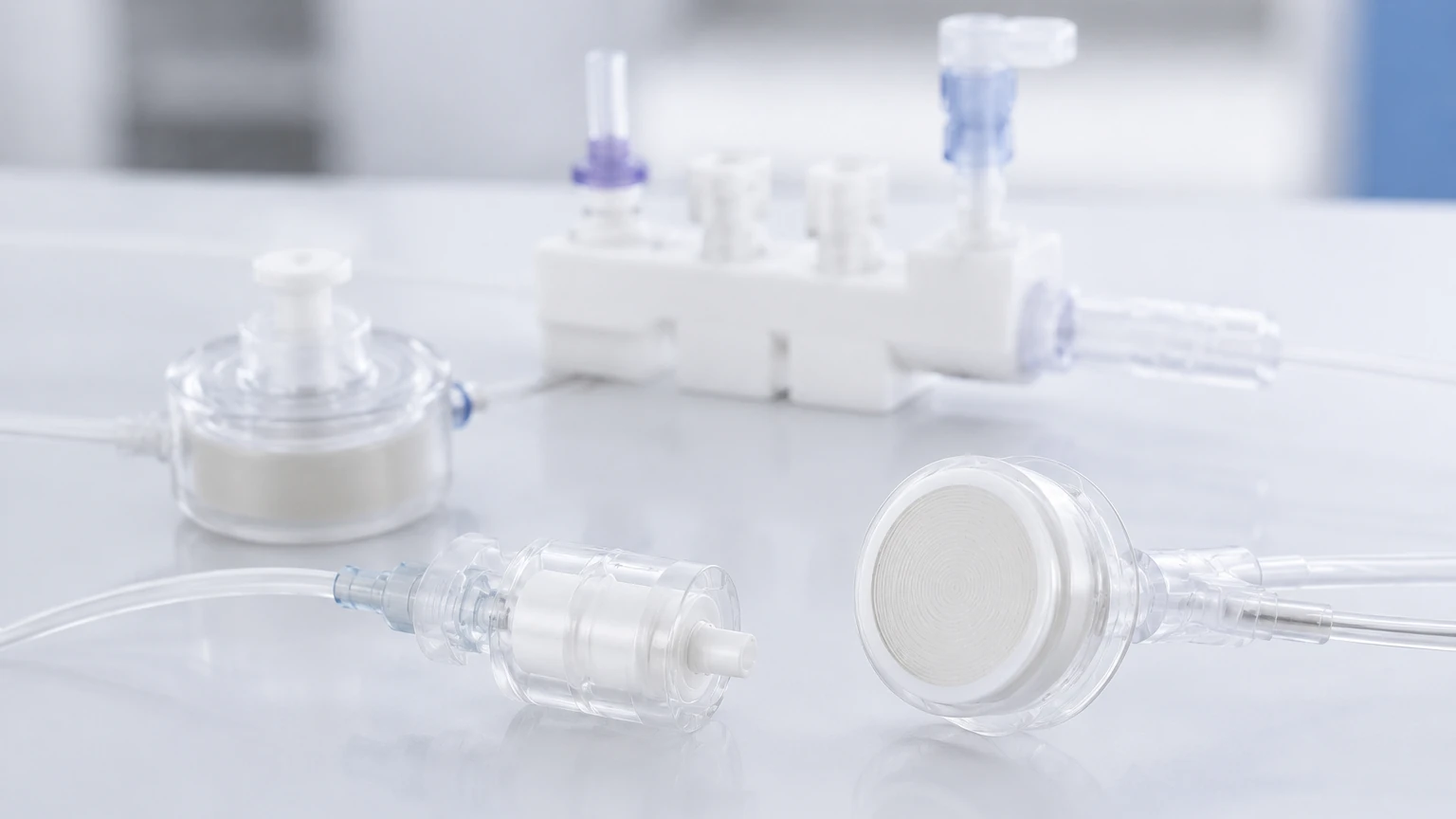
Because these sensors are designed for single use, the sensing element is often integrated into a plastic flow-through connector or a polycarbonate housing. The raw signal is processed by an onboard chip or an external transmitter. Modern systems often use digital protocols to ensure that calibration data is stored directly on the sensor, allowing for "plug-and-play" functionality without manual field calibration.
Key Evaluation Criteria for Industrial Applications
When evaluating single use pressure sensors for a specific process, engineers must look beyond the basic pressure range. The following criteria are essential for ensuring long-term reliability and regulatory compliance.
1. Material Compatibility and Regulatory Compliance
Since the sensor is in direct contact with the process fluid, the materials must be chemically inert and biocompatible. Standard requirements include:
* USP Class VI: Ensures the plastic materials do not produce biological reactivity.
* Animal-Derived Component Free (ADCF): Critical for biopharmaceutical production to prevent contamination.
* Chemical Resistance: The housing (often Polycarbonate or Polysulfone) must withstand the specific buffers, media, or chemicals used in the process.
2. Sterilization Tolerance
Single use components are typically sterilized before use. The sensor must be able to withstand either Gamma irradiation (typically 25–45 kGy) or Autoclave cycles without degrading the sensing element or the integrity of the housing. Gamma stability is particularly important for pre-assembled, irradiated single-use manifolds.
3. Accuracy and Drift
In B2B industrial environments, accuracy is often defined as a percentage of the Full Scale (FS). For single-use applications, a common standard is ±1% to ±2% FS. However, "drift" is a significant concern. Because the sensors are disposable, they are not typically recalibrated during a run. The sensor must maintain its accuracy over the entire duration of the batch, which could range from a few hours to several weeks in perfusion processes.
Selection Guide and Technical Specifications
Choosing the right sensor requires matching the technical capabilities of the device to the process requirements. The following table provides a generalized comparison of common specifications found in industrial-grade single use pressure sensors.
| Feature | Specification Range | Typical Application |
| :— | :— | :— |
| Pressure Range | -0.5 to 5.0 bar (-7 to 75 psi) | Filtration, Chromatography |
| Operating Temperature | 2°C to 50°C | Bioprocessing, Buffer Prep |
| Accuracy | ±0.01 bar to ±0.05 bar | Critical Process Control |
| Connection Types | Luer Lock, Hose Barb, TC Flange | Manifold Integration |
| Burst Pressure | >10 bar (145 psi) | Safety Compliance |
| Output Signal | 4-20mA, RS-485, or I2C | PLC/SCADA Integration |
For complex systems involving multiple level and flow parameters, engineers often consult a comprehensive Main Page of instrumentation to ensure that pressure sensors are integrated into a cohesive automation strategy.
Installation and Operational Best Practices
Proper installation is critical to prevent leaks and ensure accurate readings. Unlike permanent stainless steel sensors, single-use versions require specific handling to avoid damaging the delicate MEMS elements.
Orientation and Air Traps
Sensors should be installed in a vertical orientation whenever possible to prevent air bubbles from becoming trapped against the diaphragm. Air is compressible, and trapped bubbles can cause dampened readings or "noise" in the pressure signal, leading to inaccuracies in automated flow control.
Connection Integrity
Most single use pressure sensors use hose barbs or Tri-Clamp (TC) compatible fittings. When using hose barbs, ensure that the tubing is secured with pharmaceutical-grade cable ties or specialized clamps to prevent blow-offs at high pressures. For TC fittings, use the correct gasket material (e.g., Silicone or EPDM) that matches the sensor's material properties.
Zeroing the Sensor
While many sensors come pre-calibrated, it is standard practice to perform a "zero" or "tare" at the start of a process. This should be done when the sensor is at atmospheric pressure, before the pump is started. This accounts for any minor offsets introduced during the installation or sterilization process.
Limitations and Risk Mitigation
While single use pressure sensors offer numerous advantages, they are not without limitations. Engineering teams must account for these factors during the design phase.
* Mechanical Fragility: The plastic housings and thin diaphragms are more susceptible to mechanical damage than stainless steel. They should be protected from physical impact and excessive vibration.
* Temperature Sensitivity: MEMS sensors can be sensitive to rapid temperature fluctuations. If the process involves significant thermal shifts, ensure the sensor has integrated temperature compensation.
* Single-Point Failure: Since the sensor is disposable, a failure during a run usually means the entire unit must be replaced. In critical applications, redundant sensors (two sensors in series or parallel) are often used to mitigate the risk of losing a batch due to a single component failure.
* Pressure Spikes: Single-use systems are generally rated for lower pressures than traditional piping. Sudden valve closures can cause hydraulic shock (water hammer), which may exceed the burst pressure of the plastic sensor housing.
Frequently Asked Questions (FAQ)
Q: Can single use pressure sensors be reused if they are cleaned?
A: No. These sensors are designed and validated for a single process cycle. The materials and sensing elements are not intended to withstand repeated cleaning or the mechanical stresses of multiple installations. Reusing them voids all manufacturer warranties and introduces significant contamination risks.
Q: How do single use pressure sensors relate to hydrostatic level measurement?
A: In many single-use bags or tanks, pressure sensors are placed at the bottom of the vessel to measure the head pressure of the liquid. By knowing the density of the fluid, the control system can calculate the liquid level. This is a common method for monitoring volume in disposable bioreactors.
Q: What is the shelf life of these sensors?
A: Typically, single use pressure sensors have a shelf life of 2 to 3 years, depending on the packaging and storage conditions. It is important to check the expiration date, especially for sensors that are part of a pre-sterilized manifold.
Q: Are these sensors compatible with all control systems?
A: Most sensors provide standard industrial outputs, but some require a specific proprietary transmitter or "monitor" to convert the raw MEMS signal into a standard 4-20mA or digital signal. Always verify the electronic interface requirements before procurement.
Conclusion
Single use pressure sensors have become indispensable in modern high-purity manufacturing. By understanding the piezoresistive principles that drive these devices and adhering to strict selection and installation guidelines, B2B organizations can achieve high levels of process precision without the overhead of traditional reusable systems. As industrial automation continues to lean toward modular and disposable solutions, the integration of reliable pressure monitoring remains a cornerstone of successful process engineering. For those looking to expand their measurement capabilities, reviewing a wide range of industrial solutions on the Main Page can provide the necessary context for building a robust and scalable monitoring infrastructure.