Steam-as-a-service
Steam-as-a-service
In the evolving landscape of industrial utility management, the "as-a-service" model has migrated from software into heavy infrastructure. Steam-as-a-service (SaaS) represents a paradigm shift where industrial facilities no longer own, operate, or maintain their own boiler plants. Instead, they outsource the entire steam generation process to a third-party provider. This provider installs, owns, and manages the equipment, while the end-user pays only for the steam consumed, typically measured in metric tons or pounds per hour.
For this model to be commercially viable and technically sound, precision in measurement is paramount. Because the provider is selling a physical commodity (thermal energy delivered via steam), the accuracy of level measurement in boiler drums, condensate tanks, and feedwater systems becomes the foundation of the billing and operational contract. This guide explores the engineering requirements, measurement principles, and selection criteria necessary to implement a successful steam-as-a-service agreement.
The Engineering Logic of Steam-as-a-Service
The transition to steam-as-a-service is driven by a desire to convert Capital Expenditure (CAPEX) into Operational Expenditure (OPEX). However, the technical burden of reliability remains. In a traditional setup, a plant might tolerate minor inefficiencies in their own boiler. In a service model, the provider must maximize efficiency to maintain profitability, and the customer must ensure they are not overpaying for poorly measured output.
Reliable steam generation requires a delicate balance of water level, fuel input, and pressure control. If the water level in a boiler drum is too high (carryover), moisture enters the steam lines, damaging turbines and reducing heat transfer efficiency. If the level is too low (low water condition), the boiler tubes can overheat and fail catastrophically. In a steam-as-a-service contract, the instrumentation—specifically level meters—serves as the "cash register" and the primary safety guard.
Level Measurement Principles in Steam Systems
Before selecting instrumentation for a steam-as-a-service project, engineers must understand the physics of how different sensors interact with high-temperature, high-pressure environments. The following principles are the most common in modern steam applications.
1. Guided Wave Radar (GWR)
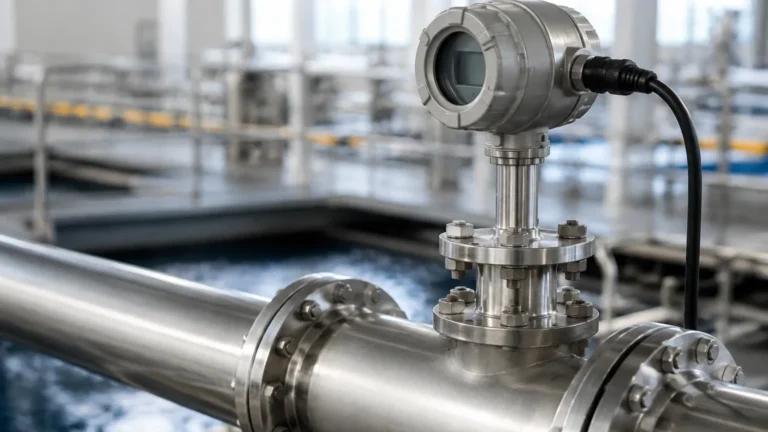
Guided Wave Radar operates on the principle of Time Domain Reflectometry (TDR). The sensor emits a low-energy microwave pulse down a probe (waveguide). When the pulse hits the surface of the medium (water or condensate), a portion of the energy is reflected back to the transmitter.
In steam applications, GWR is highly valued because it is largely unaffected by changes in pressure or vapor space density. However, at high pressures (typically above 40 bar / 580 psi), the dielectric constant of the steam vapor increases, which can slow down the microwave pulse. Advanced GWR units used in steam-as-a-service setups include a "gas phase compensation" reference to account for this shift, ensuring accuracy within ±3 mm.
2. Hydrostatic Pressure Measurement
This principle relies on the relationship between the height of a liquid column and the pressure it exerts at the base. The formula $P =
ho gh$ (where $P$ is pressure, $
ho$ is density, $g$ is gravity, and $h$ is height) governs the calculation.
In steam boilers, differential pressure (DP) transmitters are used. One side of the transmitter measures the total pressure (steam + water), while the other side (the reference leg) measures only the steam pressure. The difference represents the water level. While reliable, this method is sensitive to changes in water density caused by temperature fluctuations, requiring active compensation via the control system.
3. Magnetic Level Gauges
Magnetic level gauges utilize a float containing a high-intensity magnet inside a non-magnetic bypass chamber. As the water level in the boiler or tank rises and falls, the float moves accordingly. Outside the chamber, a series of magnetic flags or a continuous transmitter tracks the float's position.
This is a mechanical principle that provides both a visual indication for site operators and a 4-20mA or HART signal for the steam-as-a-service provider's remote monitoring system. It is particularly robust for condensate recovery tanks where steam flashing might interfere with non-contact sensors.
4. Ultrasonic Level Sensors
Ultrasonic sensors emit high-frequency sound waves that reflect off the liquid surface. The time-of-flight determines the distance. While cost-effective, these are generally limited to ambient-temperature feedwater storage tanks. In actual steam-generating environments, the high temperature and presence of heavy steam vapor attenuate the sound waves, making ultrasonic technology unsuitable for the boiler drum itself.
Technical Selection Criteria
When establishing the infrastructure for steam-as-a-service, the following table provides a baseline for selecting the appropriate level measurement technology based on the specific application point.
| Application Point | Recommended Technology | Temperature Range | Pressure Range | Key Advantage |
| :— | :— | :— | :— | :— |
| Boiler Drum | Guided Wave Radar (GWR) | Up to 450°C | Up to 160 bar | Unaffected by turbulence or foam. |
| Condensate Tank | Magnetic Level Gauge | Up to 250°C | Up to 40 bar | Visual confirmation + electronic output. |
| Feedwater Tank | Hydrostatic / Ultrasonic | Up to 100°C | Atmospheric | Cost-effective for large volumes. |
| Deaerator | Differential Pressure | Up to 200°C | Up to 20 bar | Proven reliability in pressurized vessels. |
Installation Considerations for Steam Environments
Proper installation is the difference between a functional steam-as-a-service contract and a legal dispute over billing. Steam environments are inherently hostile to electronics.
1. Stilling Wells and Bypass Chambers: To protect level sensors from the turbulence of boiling water, they should be installed in a stilling well or an external bypass chamber. This provides a stable surface for radar or float-based measurements.
2. Heat Dissipation: For transmitters mounted directly on the boiler, the use of cooling fins or siphons is mandatory. Most industrial sensors are rated to 80°C (176°F) at the electronics head; if the process is 250°C, the heat must be dissipated before it reaches the circuitry.
3. Steam Blanketing: In condensate tanks, steam blankets can form. Radar sensors must be configured to ignore the signal attenuation caused by this vapor layer. This is why Welk and other manufacturers emphasize the importance of selecting the correct frequency and probe type for GWR units.
4. Redundancy: In a service-based model, downtime is often penalized. Installing redundant level switches (high/low alarms) alongside continuous level transmitters ensures that a single sensor failure does not trigger a full plant shutdown.

Potential Risks and Limitations
While steam-as-a-service offers financial benefits, it introduces specific technical risks that must be managed through instrumentation:
* Scaling and Fouling: Boiler water contains minerals. Over time, scale can build up on probes or inside bypass chambers. Regular blowdown procedures and water treatment are necessary to prevent "sticky" floats or radar signal degradation.
* Signal Attenuation: In very high-pressure saturated steam, the vapor becomes dense enough to interfere with non-compensated radar signals. Providers must confirm that the installed meters are rated for the specific steam table parameters of the plant.
* Data Integrity: Since billing is based on these measurements, the data path from the level meter to the provider's billing software must be secure and calibrated. For those seeking reliable hardware for these critical nodes, you can Review product options and application support to ensure the chosen instruments meet the rigorous demands of steam service contracts.
Frequently Asked Questions (FAQ)
Q: How often should level meters in a steam-as-a-service contract be calibrated?
A: Typically, an annual calibration is required to maintain billing accuracy. However, many modern digital transmitters offer self-diagnostic features that can extend calibration intervals by monitoring signal strength and electronics health.
Q: Can I use a standard pressure transmitter for steam level?
A: Only if it is configured as a differential pressure (DP) system with a wet or dry leg to compensate for the static steam pressure. A standard gauge pressure transmitter will not provide an accurate level reading in a pressurized boiler.
Q: What happens if the level meter fails in a service-based model?
A: Most SaaS contracts include a Service Level Agreement (SLA). If the meter fails and the boiler shuts down, the provider may be liable for lost production. This is why high-quality, industrial-grade sensors from established manufacturers like Welk are preferred over lower-cost alternatives.
Q: Is Guided Wave Radar better than Differential Pressure?
A: GWR is generally easier to maintain because it has no moving parts and does not require a reference leg that can freeze or leak. However, DP transmitters are still widely used in legacy systems and very high-pressure utility boilers where they have decades of proven performance.
Conclusion
Steam-as-a-service is a robust solution for industries looking to focus on their core competencies while leaving utility management to experts. However, the success of this model hinges on the invisible work performed by level measurement instruments. By understanding the principles of radar, hydrostatic, and magnetic measurement, and by adhering to strict installation standards, both the service provider and the end-user can ensure a fair, efficient, and safe steam supply. Precise level control is not just a safety requirement; in the world of SaaS, it is the primary metric of business success.