Steam Pressure Sensor
Steam Pressure Sensor
In the realm of industrial thermal energy and process control, the steam pressure sensor is a fundamental component for ensuring both operational efficiency and personnel safety. Steam, as a high-energy medium, presents unique challenges to instrumentation due to its high temperatures, potential for phase changes, and the corrosive nature of condensate in certain environments. For engineers and facility managers, selecting the correct pressure measurement technology is not merely a matter of range, but a critical decision involving material science, thermal protection, and long-term reliability.
Industrial steam systems are used across a vast array of sectors, from power generation and chemical processing to food production and sterilization. In each of these applications, maintaining the correct pressure is vital for process consistency. A high-quality steam pressure sensor provides the real-time data necessary for boiler control, pressure-reducing valve (PRV) monitoring, and steam trap performance evaluation. This guide examines the technical principles, selection criteria, and installation requirements for these essential devices.
Measurement Principles of Steam Pressure Sensors
To understand how a steam pressure sensor functions, one must first look at the transduction methods used to convert physical pressure into an electrical signal. While several technologies exist, three are most common in industrial steam applications: piezoresistive, capacitive, and strain gauge.
Piezoresistive Sensors
Piezoresistive sensors utilize a semiconductor material, typically silicon, integrated into a diaphragm. When steam pressure is applied to the diaphragm, it causes a physical deformation that changes the electrical resistance of the silicon. This change is proportional to the pressure. For steam applications, these sensors are usually "isolated," meaning a thin stainless steel or Hastelloy diaphragm protects the sensitive silicon element from the steam, with a fill fluid (such as silicone oil) transmitting the pressure.
Capacitive Sensors
Capacitive pressure sensors measure the change in electrical capacitance between a flexible diaphragm and a fixed metal plate. As steam pressure moves the diaphragm, the distance between the plates changes, altering the capacitance. These sensors are known for their high accuracy and stability, making them suitable for low-pressure steam applications where precision is paramount.
Strain Gauge Sensors
In a strain gauge sensor, metal foils or thin-film resistors are bonded to a diaphragm. As the diaphragm flexes under steam pressure, the resistors stretch or compress, changing their resistance. These are robust and widely used in high-pressure steam lines. Modern thin-film technology allows these sensors to operate reliably at higher base temperatures before requiring external cooling.
Key Components and Material Compatibility
The harsh environment of a steam line requires specific construction materials to prevent premature failure. When evaluating a steam pressure sensor, the following components must be scrutinized:
1. Wetted Parts: The diaphragm and process connection are the only parts in contact with the medium. 316L stainless steel is the industry standard due to its resistance to corrosion and high-temperature tolerance. For specialized chemical steam or highly corrosive condensate, exotic alloys like Hastelloy C-276 may be required.
2. The Housing: Typically constructed from 304 or 316 stainless steel, the housing protects the internal electronics from the ambient environment, which is often humid and hot in boiler rooms.
3. The Fill Fluid: In isolated diaphragm designs, the fill fluid must be rated for high-temperature operation. Standard silicone oils may degrade or vaporize if the sensor is exposed to temperatures exceeding their rating, leading to measurement drift or diaphragm rupture.
For a comprehensive look at available instrumentation and technical specifications, professionals often consult the Main Page of specialized manufacturers to compare sensor ratings against their specific process requirements.
Selection Criteria for Industrial Steam Applications
Choosing the right steam pressure sensor involves more than matching the maximum pressure of the boiler. Engineers must consider the dynamic nature of steam systems.
Pressure Range and Overpressure
The sensor should be selected so that the operating pressure falls within 50% to 75% of the sensor's full-scale range. This provides enough headroom for pressure surges without sacrificing resolution at lower pressures. Furthermore, the "proof pressure" (the maximum pressure the sensor can withstand without permanent damage) should be at least 200% of the operating pressure to account for water hammer or valve malfunctions.
Temperature Compensation
Steam temperatures can fluctuate significantly. A high-quality sensor includes internal temperature compensation to ensure that thermal expansion of the sensor components does not result in false pressure readings. This is often achieved through an integrated thermistor that allows the onboard microprocessor to adjust the output signal based on the ambient and process temperature.
Output Signals and Communication
In modern industrial automation, the 4-20 mA analog signal remains the standard for its noise immunity over long distances. However, many facilities now require digital protocols like HART (Highway Addressable Remote Transducer), which allows for remote calibration, diagnostics, and the transmission of secondary variables (like temperature) over the same two wires.
Practical Selection Table
| Application Type | Recommended Sensor Technology | Typical Pressure Range | Key Material Requirement |
| :— | :— | :— | :— |
| Saturated Steam (Low Pressure) | Capacitive or Piezoresistive | 0–10 bar (0–145 psi) | 316L Stainless Steel |
| Superheated Steam (High Pressure) | Thin-film Strain Gauge | 10–100+ bar (145–1450+ psi) | High-temp Alloy Diaphragm |
| Boiler Feedwater | Piezoresistive | 0–40 bar (0–580 psi) | Corrosion-resistant coating |
| Steam Flow (Differential) | Differential Pressure (DP) | 0–500 mbar (DP) | High Static Pressure Rating |
Installation Considerations and Thermal Protection
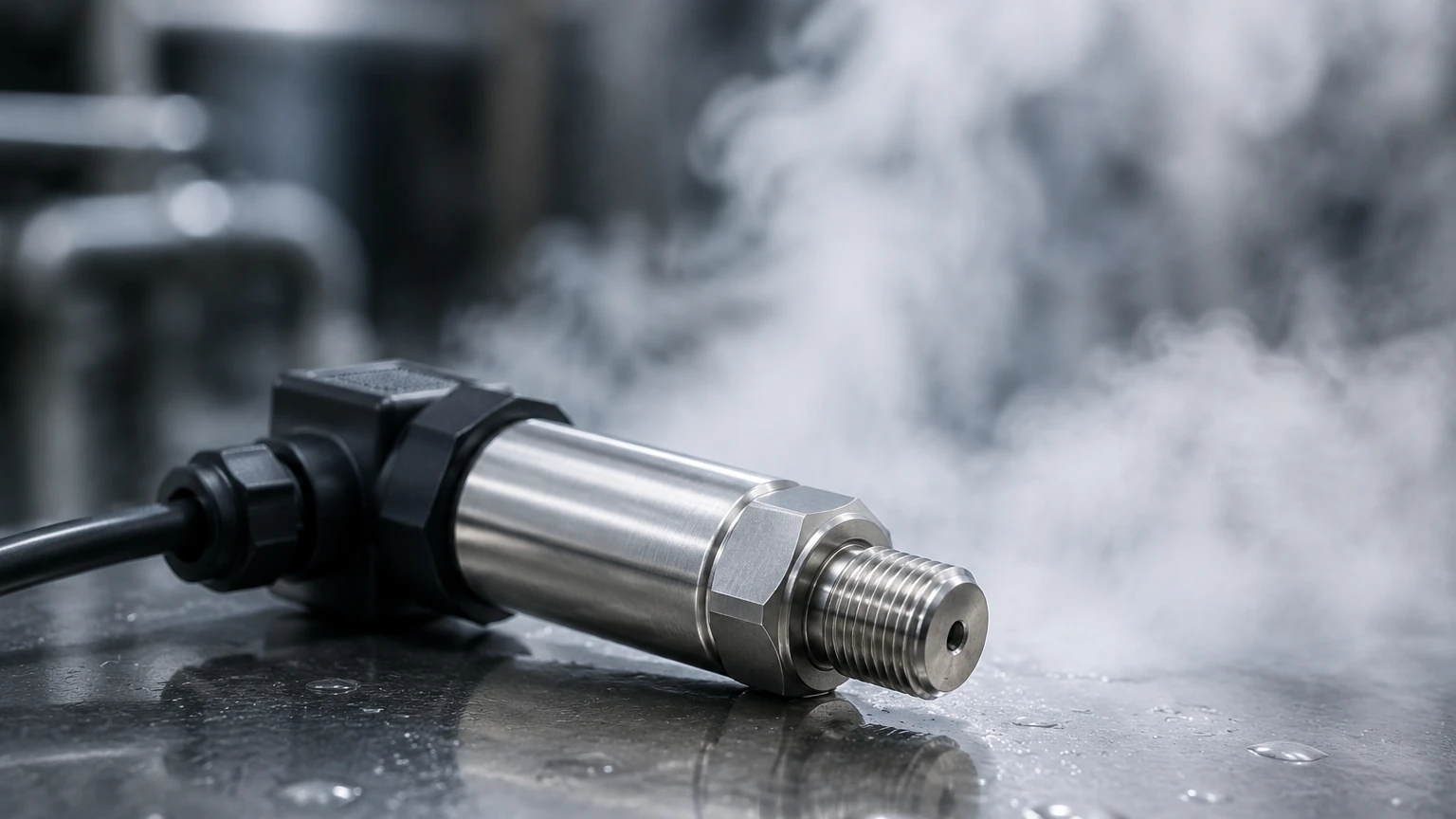
The single most common cause of steam pressure sensor failure is overheating the electronics. While the wetted parts might handle 150°C (302°F), the internal circuitry often cannot exceed 85°C (185°F). Proper installation is therefore critical.
Use of Siphons (Pigtail and Coil)
A siphon is a simple but effective tool for protecting a steam pressure sensor. It is a loop of pipe installed between the process line and the sensor. Before startup, the siphon is filled with water. As steam enters the line, it is trapped by the water seal in the siphon. The pressure is transmitted through the water, but the high-temperature steam never reaches the sensor diaphragm. Pigtail siphons are used for vertical runs, while coil siphons are used for horizontal runs.
Impulse Piping and Manifolds
For differential pressure sensors used in steam flow measurement, impulse piping should be sloped to allow condensate to drain back into the process line or into a condensate pot. A three-valve or five-valve manifold should be installed to allow for zero-point calibration and sensor removal without shutting down the entire steam system.
Orientation and Mounting
Sensors should ideally be mounted away from vibration sources like heavy pumps or reciprocating compressors. If the sensor must be mounted in a high-vibration area, a remote capillary system can be used to move the electronics to a more stable location.
Limitations and Common Risks
Despite their robustness, steam pressure sensors are susceptible to specific industrial risks:
* Water Hammer: Rapid valve closure or improper condensate management can cause high-velocity slugs of water to hit the sensor diaphragm. This can lead to instantaneous overpressure and permanent deformation. Installing a snubber can help dampen these spikes.
* Condensation in Housing: If the sensor housing is not properly sealed (IP67 or higher), the high humidity of a steam plant can lead to internal condensation, causing short circuits in the electronics.
* Thermal Drift: Even with compensation, extreme temperature swings can cause a "zero shift." Regular calibration cycles are necessary to maintain accuracy over time.
Frequently Asked Questions (FAQs)
Q: Can I use a standard air pressure sensor for steam?
A: Generally, no. Standard air sensors lack the high-temperature fill fluids and diaphragm materials required for steam. Using them without a siphon will likely lead to immediate failure.
Q: How often should a steam pressure sensor be calibrated?
A: For critical safety and control loops, annual calibration is recommended. In less critical applications, every two years may suffice, provided there is no evidence of drift.
Q: What is the difference between gauge and absolute pressure in steam systems?
A: Most steam applications use gauge pressure (relative to atmospheric pressure). Absolute pressure sensors are typically reserved for vacuum systems or specific scientific calculations where atmospheric fluctuations would impact the process.
Q: Why is my sensor reading low when the boiler gauge is high?
A: This often indicates a blockage in the siphon or impulse line. Condensate can sometimes freeze in uninsulated lines or become clogged with pipe scale (rust/debris), preventing the pressure from reaching the sensor.
Conclusion and Next Steps
Implementing a reliable steam pressure sensor requires a holistic approach that considers the physical properties of steam and the limitations of electronic instrumentation. By utilizing thermal protection like siphons and selecting materials compatible with the specific steam quality of the plant, operators can ensure long-term accuracy and safety.
Before finalizing a procurement decision, project managers should confirm the maximum process temperature, the expected ambient temperature at the mounting point, and the required communication protocol for integration into the existing PLC or SCADA system. For technical support and a detailed review of product options, visiting the Main Page of an experienced industrial manufacturer is the most effective way to ensure the selected instrumentation meets the rigorous demands of modern steam infrastructure.