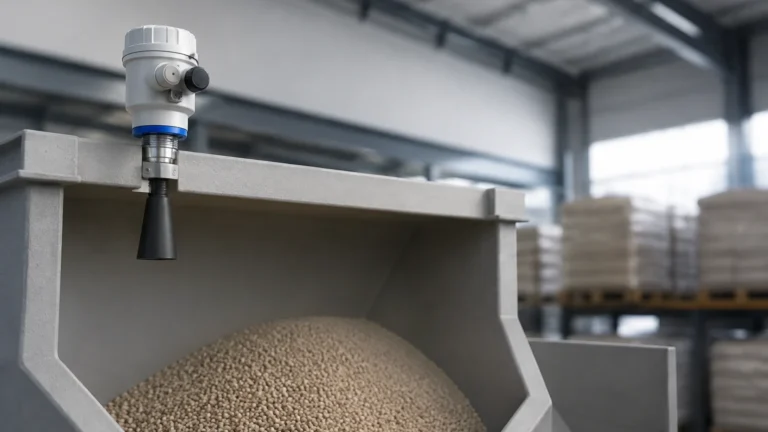
Sugar Silo
Sugar Silo
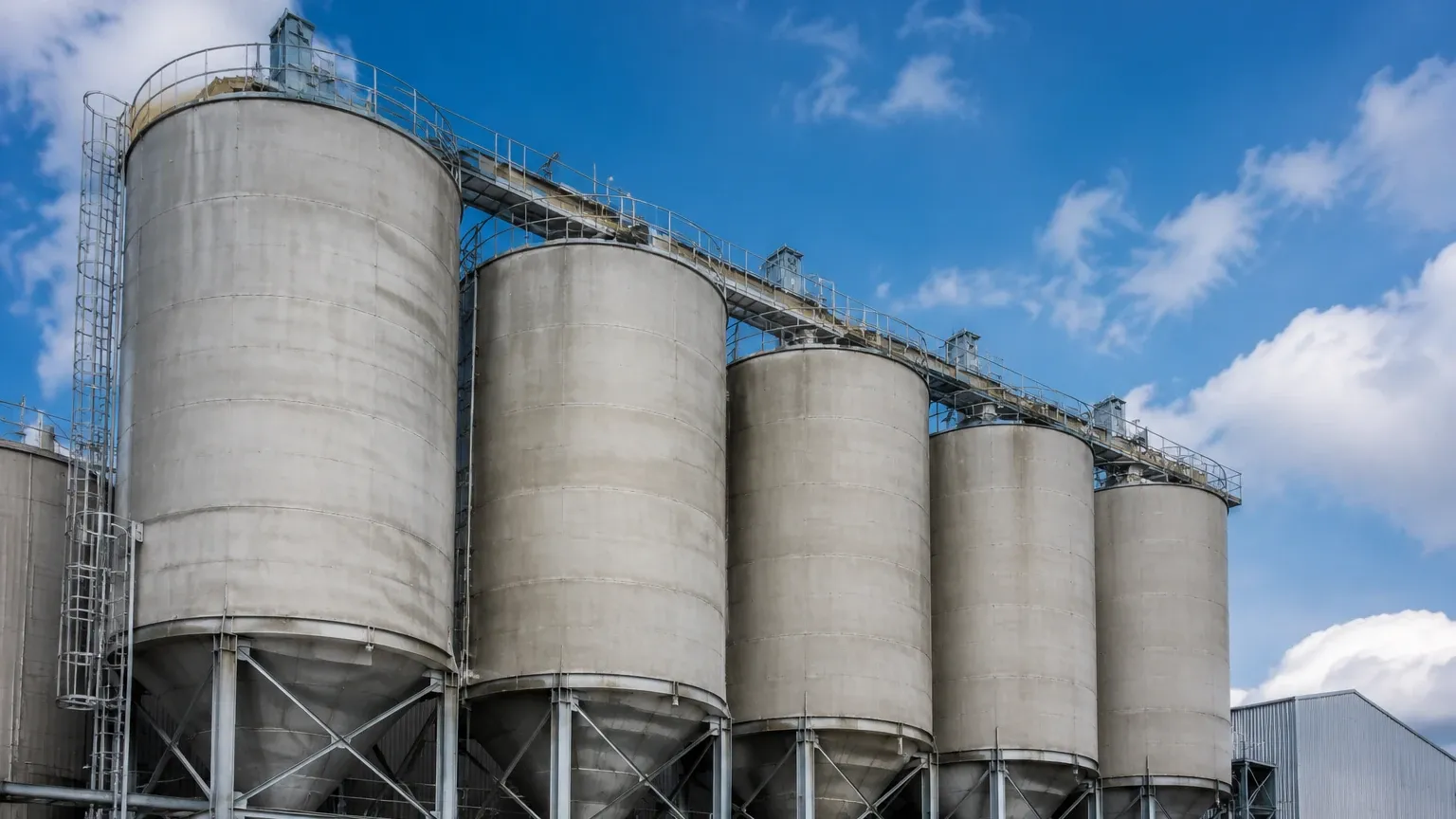
In the industrial processing of bulk solids, the sugar silo represents one of the most challenging environments for level measurement. Whether storing raw cane sugar, refined granulated sugar, or powdered confectioner’s sugar, plant operators require precise inventory data to manage production flows and prevent costly overflows. Achieving reliable measurement requires an understanding of the physical properties of sugar—such as its angle of repose, hygroscopic nature, and the presence of combustible dust—and how these factors interact with different sensing technologies.
Effective level monitoring in a sugar silo ensures that downstream packaging lines remain supplied while upstream refining processes do not face backlogs. This article explores the technical principles of level measurement in sugar storage, provides selection criteria for instrumentation, and outlines best practices for installation and maintenance.
Measurement Principles for Sugar Silos
To select the correct instrument, it is essential to understand the underlying physics of how different sensors interact with bulk sugar. The most common technologies used in modern silos include radar, ultrasonic, and electromechanical systems.
Frequency Modulated Continuous Wave (FMCW) Radar
Radar level meters, particularly those operating at high frequencies like 80GHz, are the preferred choice for sugar silos. The principle involves the emission of a continuous microwave signal with a constantly changing frequency. The signal reflects off the sugar surface and returns to the sensor. The frequency difference between the emitted and received signal is proportional to the distance.
High-frequency radar (80GHz) offers a narrow beam angle, often as small as 3 degrees. This is critical in sugar silos where internal structural reinforcements, ladders, or buildup on the walls could otherwise create false echoes. The narrow beam ensures the energy is focused on the material surface rather than the silo infrastructure.
Ultrasonic Time-of-Flight
Ultrasonic sensors emit acoustic pulses that reflect off the material surface. The sensor measures the time it takes for the pulse to return. While cost-effective, ultrasonic technology relies on the air medium to transmit sound. In sugar silos, heavy dust during filling can attenuate the sound waves, and temperature fluctuations can change the speed of sound, leading to inaccuracies if not properly compensated.
Guided Wave Radar (GWR)
GWR utilizes a cable or rod probe that extends to the bottom of the silo. A low-energy microwave pulse travels along the probe, reflects off the sugar, and returns. This technology is immune to dust and foam. However, in large sugar silos, the mechanical pull-down force exerted by the sugar on the cable (tensile load) can be extreme, potentially damaging the probe or the silo roof if not engineered correctly.
Point Level Detection
Beyond continuous measurement, point level switches are used for overfill protection (High-High) or run-dry protection (Low-Low). Common types include:
* Rotary Paddle Switches: A motor-driven paddle rotates until it is stalled by the presence of sugar.
* Vibrating Fork/Rod: The sensor vibrates at its resonant frequency; when covered by sugar, the vibration is dampened, triggering an alarm.
Challenges Specific to Sugar Storage
Sugar presents several unique environmental challenges that can interfere with standard instrumentation.
1. Combustible Dust and ATEX Requirements
Sugar dust is highly combustible. Silos are classified as hazardous zones (typically ATEX Zone 20, 21, or 22). All instrumentation must be certified for use in explosive dust atmospheres to prevent the sensor from becoming an ignition source.
2. Angle of Repose and Surface Profile
When sugar is fed into a silo from a central point, it forms a cone. Conversely, during discharge, it forms a depression. This "angle of repose" means the level is not uniform across the silo diameter. Single-point sensors measure only one spot, which may lead to volume calculation errors. Advanced radar systems often use signal processing to average the return or require strategic placement to represent the mean level.
3. Hygroscopic Nature and Caking
Sugar absorbs moisture from the air. This can lead to "caking" or the formation of a hard crust on the silo walls and the sensor face. If a sensor lens becomes coated in a thick layer of moist sugar, the signal may be blocked (blinding). Sensors with flush-mounted antennas or those equipped with air purging systems are often required to mitigate this.
Technology Selection and Comparison
Choosing the right instrument depends on the silo height, the type of sugar, and the budget. The following table compares common technologies for sugar silo applications.
| Feature | 80GHz Radar | Guided Wave Radar | Ultrasonic | Rotary Paddle |
| :— | :— | :— | :— | :— |
| Measurement Type | Continuous (Non-contact) | Continuous (Contact) | Continuous (Non-contact) | Point Level |
| Dust Tolerance | Excellent | Excellent | Moderate | High |
| Max Range | Up to 120m (393 ft) | Up to 30m (98 ft) | Up to 15m (49 ft) | N/A |
| Accuracy | ±2mm | ±5mm | ±0.25% of range | N/A |
| Mechanical Load | None | High (on cable) | None | Low |
| Primary Benefit | High precision, no wear | Immune to dust/vapor | Cost-effective | Simple, reliable |
For most industrial-scale operations, the Main Page of a professional instrument provider will highlight 80GHz radar as the standard for bulk solids like sugar due to its maintenance-free nature and high reliability.
Engineering and Installation Best Practices
Successful level measurement in a sugar silo depends as much on installation as it does on the technology itself.
Nozzle Design and Placement
The sensor should not be mounted in the exact center of the silo, as this is typically where the filling stream is located. Mounting too close to the wall can result in interference from wall reflections or sugar buildup. Ideally, the sensor should be placed at 1/3 to 1/2 of the silo radius to get a representative reading of the material cone.
Aiming and Alignment
For radar sensors, an adjustable flange (swivel holder) is highly recommended. This allows the operator to aim the radar beam toward the discharge outlet at the bottom of the silo. Proper alignment ensures the strongest possible return signal from the sugar surface and helps the sensor track the level down to the very bottom of the cone.
Integration with Control Systems
In B2B industrial environments, level data must be integrated into a PLC or SCADA system. Most modern transmitters provide a 4-20mA HART output, while others support digital protocols like Modbus RS485, Profibus, or Foundation Fieldbus. This integration allows for real-time inventory monitoring and automated re-ordering processes.
Maintenance and Operational Limitations
While modern radar sensors are marketed as "maintenance-free," certain operational conditions require attention:
* Air Purging: If the sugar is particularly dusty or processed in a high-humidity environment, the sensor antenna may require an air purge connection. A small flow of dry compressed air keeps the lens clean.
* Vessel Mapping: Upon commissioning, a "false echo suppression" or vessel map should be performed. This tells the sensor to ignore static reflections from internal braces or manways.
* Cable Tension: If using Guided Wave Radar, the tension on the probe must be checked periodically. The weight of the sugar during draw-down can stretch or even snap a cable if it is not rated for the specific silo height and material density.
Frequently Asked Questions
Q: Can radar measure the level of powdered sugar?
A: Yes. While powdered sugar has a lower dielectric constant than granulated sugar, 80GHz radar is sensitive enough to detect the reflection. However, the dust generated during pneumatic filling of powdered sugar is much denser, making high-frequency radar the only reliable non-contact option.
Q: How do I calculate the volume if the sugar surface is uneven?
A: Most advanced level transmitters allow you to input a strapping table or vessel dimensions into the software. However, for the highest accuracy in volume, some facilities use multiple sensors or a 3D solids scanner, though a well-placed 80GHz radar is sufficient for most inventory management needs.
Q: Is ultrasonic measurement suitable for outdoor sugar silos?
A: It can be used, but with caution. Outdoor silos experience significant temperature swings. Since the speed of sound changes with temperature, the sensor must have an integrated temperature probe for compensation. Additionally, condensation on the ultrasonic transducer face can cause measurement failure, whereas radar is unaffected by these factors.
Q: What is the dielectric constant of sugar, and why does it matter?
A: The dielectric constant (Er) of sugar is typically between 1.5 and 2.5. Radar signals rely on the difference in dielectric constants between the air (Er = 1) and the material. Because sugar has a relatively low Er, a high-sensitivity sensor is required to ensure the signal is not lost.
For engineers and procurement professionals looking to optimize their bulk storage, consulting the Main Page of a specialized measurement manufacturer can provide additional technical specifications and customized OEM/ODM options for specific silo configurations.