Chemical Line System
Chemical Line System
In modern industrial processing, a chemical line system is more than a simple network of pipes and tanks; it is a precision-engineered environment designed to handle volatile, corrosive, and often hazardous substances. Ensuring the safety and efficiency of these systems requires rigorous monitoring, where level measurement serves as a primary safeguard against overfills, dry runs, and process inefficiencies. For engineers and facility managers, selecting the correct instrumentation for a chemical line system involves a deep understanding of fluid dynamics, material science, and sensor physics.
Industrial level measurement instruments, such as those provided by Welk, are fundamental to maintaining the integrity of these systems. Whether managing bulk storage or intricate dosing lines, the choice of technology—ranging from radar and ultrasonic to hydrostatic and magnetic—must align with the specific chemical properties and environmental conditions of the application.
Fundamental Principles of Level Measurement
Before selecting a sensor for a chemical line system, it is essential to understand the underlying physical principles that govern different measurement technologies. Each method has distinct advantages and limitations based on the medium's characteristics.
Radar Level Measurement (ToF Principle)
Radar level meters operate on the Time-of-Flight (ToF) principle. The sensor emits high-frequency electromagnetic waves (typically in the 26GHz or 80GHz range) toward the surface of the chemical. These waves reflect off the liquid surface and return to the sensor. By measuring the time interval between emission and reception, the device calculates the distance to the product surface.
In a chemical line system, radar is often preferred because it is non-contact. Since the sensor does not physically touch the corrosive medium, the risk of instrument degradation is significantly reduced. High-frequency 80GHz radar is particularly effective for chemical lines because its narrow beam angle avoids interference from internal tank structures or narrow piping.
Ultrasonic Level Measurement
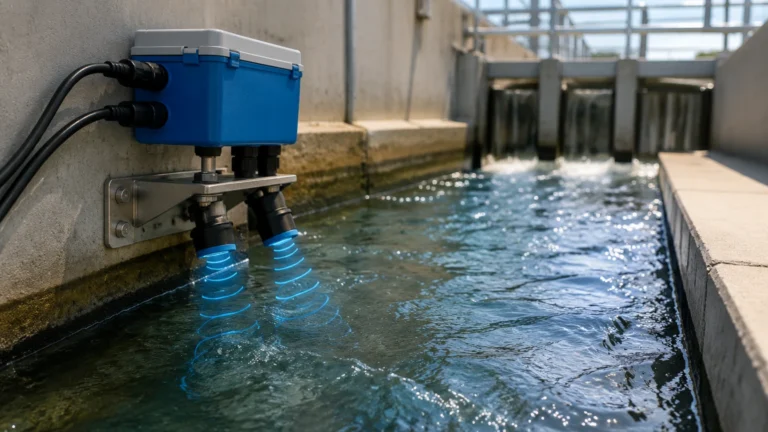
Similar to radar, ultrasonic sensors use the ToF principle but utilize sound waves instead of electromagnetic waves. The transducer emits an ultrasonic pulse that travels through the air, reflects off the liquid, and returns.
While cost-effective, ultrasonic sensors are sensitive to the vapor space within a chemical line system. Changes in temperature, pressure, or the presence of heavy chemical vapors can alter the speed of sound, leading to measurement errors. Consequently, ultrasonic technology is best suited for stable, ambient-pressure liquid storage where vapors are minimal.
Hydrostatic Level Measurement
Hydrostatic transmitters measure the pressure exerted by a liquid column. The principle is based on the formula: $P = \rho \cdot g \cdot h$, where $P$ is pressure, $\rho$ is the liquid density, $g$ is gravity, and $h$ is the height of the liquid.
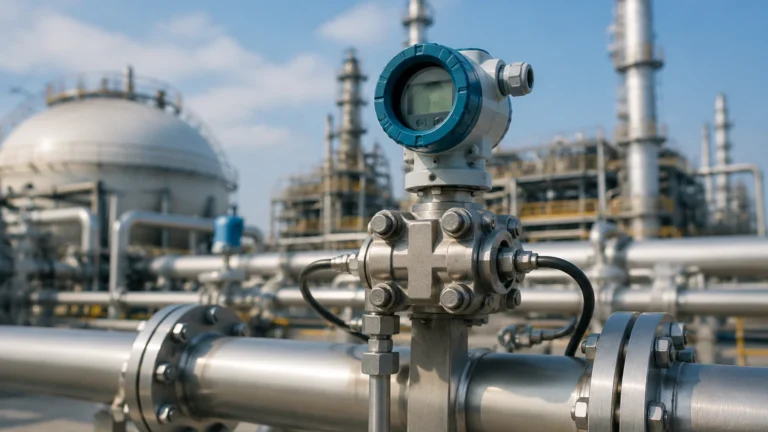
In a chemical line system, hydrostatic sensors are often installed at the bottom of tanks or in-line via a flange. For corrosive chemicals, these sensors must be equipped with specialized diaphragm seals made of materials like Hastelloy C, Tantalum, or PTFE-coated stainless steel to prevent chemical attack on the sensing element.
Magnetic Level Gauges
Magnetic level gauges utilize a float containing a permanent magnet that moves with the liquid level inside a bypass chamber. Outside the chamber, a series of magnetic flags or a transmitter responds to the float's position. This provides a clear visual indication and can be paired with reed switches for point-level control or a magnetostrictive transmitter for continuous data output. This technology is highly valued in chemical lines for its robustness and the fact that it provides a physical, visual backup to electronic systems.
Engineering Considerations for Chemical Line Systems
Designing a chemical line system requires a holistic approach to instrumentation. The interaction between the chemical medium and the sensor hardware is the most critical factor in long-term reliability.
Chemical Compatibility and Material Selection
The primary challenge in any chemical line system is corrosion. Standard stainless steel (304 or 316L) may suffice for mild chemicals, but aggressive acids like sulfuric acid, hydrochloric acid, or sodium hypochlorite require specialized materials.
* PTFE/PFA Linings: Often used for radar antennas and hydrostatic diaphragms to provide near-universal chemical resistance.
* PVDF: A common choice for ultrasonic sensor housings and float materials in magnetic gauges when dealing with high-purity or reactive chemicals.
* Hastelloy/Titanium: Used for metallic components that must withstand both high pressure and extreme corrosion.
Pressure and Temperature Dynamics
Chemical processes often involve exothermic reactions or high-pressure transfers. A chemical line system must be rated for the maximum possible excursion of these variables. Radar sensors are generally the most resilient to temperature and pressure fluctuations, as electromagnetic waves are not affected by the density of the gas phase. In contrast, hydrostatic sensors must be compensated if the tank is pressurized (using a differential pressure setup).
Practical Selection Table for Chemical Applications
When evaluating options for a chemical line system, the following table provides a general guide for technology selection based on common process conditions:
| Technology | Accuracy | Chemical Resistance | Best Use Case | Limitations |
| :— | :— | :— | :— | :— |
| 80GHz Radar | ±1 mm | Excellent (with PTFE) | Small tanks, volatile liquids | Higher initial cost |
| Ultrasonic | ±0.25% | Good (Plastic bodies) | Water-based chemicals | Affected by foam/vapor |
| Hydrostatic | ±0.1% | Excellent (with seals) | Deep tanks, consistent density | Density-dependent |
| Magnetic Gauge | ±5 mm | High (Bypass design) | High-pressure/temp visual | Moving parts (float) |
| Guided Wave Radar| ±2 mm | Excellent | Low dielectric liquids | Contacting (probe) |
Installation Guidelines for Optimal Performance
Proper installation is as critical as sensor selection in a chemical line system. Incorrect mounting can lead to signal interference or premature mechanical failure.
1. Nozzle Geometry: For radar and ultrasonic sensors, the nozzle height and diameter must be considered to avoid "ringing" or false reflections. Ensure the sensor face extends slightly beyond the nozzle or follows the manufacturer's specific "dead zone" requirements.
2. Agitation and Turbulence: If the chemical line system includes reactors with agitators, radar sensors with advanced software filtering (False Signal Suppression) should be used to ignore the moving blades.
3. Vapor and Condensation: In systems with high humidity or steaming chemicals, radar antennas should be equipped with a drip-off (conical) design to prevent droplets from accumulating on the lens and attenuating the signal.
4. Positioning: Sensors should never be mounted directly above the chemical inlet. The turbulence and air entrainment from the filling process will cause erratic readings.
Maintenance and Limitations
While modern instruments are designed for longevity, a chemical line system demands a proactive maintenance schedule.
* Fouling and Scaling: Some chemicals may crystallize or create buildup on the sensor face. Non-contact radar is less susceptible, but even it may require periodic cleaning if the buildup becomes excessive.
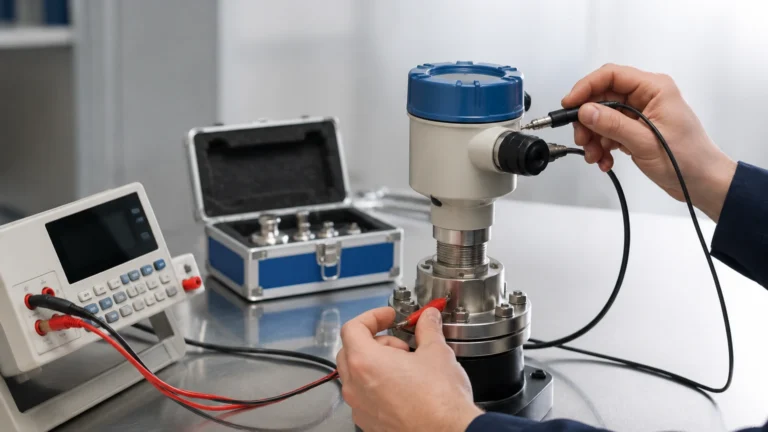
* Calibration Verification: Over time, electronic drift or changes in the chemical's dielectric constant (for some technologies) may necessitate recalibration. Using a Main Page resource to review product-specific calibration procedures is recommended for maintaining system accuracy.
* Seal Integrity: For hydrostatic and magnetic systems, the integrity of O-rings and gaskets must be inspected annually. A breach in a seal in a chemical line system can lead to hazardous leaks and environmental contamination.
Frequently Asked Questions (FAQs)
Q: How does the dielectric constant (DK) affect radar measurement in a chemical line system?
A: Radar relies on the reflection of waves. Liquids with a high DK (like water-based acids) reflect signals strongly. Liquids with a very low DK (like certain hydrocarbons or solvents) reflect less energy. Guided wave radar is often used for low-DK fluids to ensure the signal stays focused along the probe.
Q: Can ultrasonic sensors be used in pressurized chemical tanks?
A: Generally, no. Ultrasonic sensors are designed for atmospheric or near-atmospheric conditions. High pressure increases the density of the air/gas, which significantly changes the speed of sound, leading to large measurement errors unless the sensor is specifically designed for such environments.
Q: What is the benefit of 80GHz radar over 26GHz radar in chemical lines?
A: The 80GHz radar has a much narrower beam angle. This allows it to be installed in smaller nozzles and prevents the signal from hitting the walls of narrow tanks or pipes, which is common in a complex chemical line system.
Q: Are hydrostatic sensors affected by changes in chemical concentration?
A: Yes. Hydrostatic measurement is density-dependent. If the concentration of a chemical changes (e.g., diluting 98% sulfuric acid to 50%), the density changes, and the sensor will report an incorrect level unless the new density is programmed into the transmitter.
Conclusion
Operating a successful chemical line system requires a precise balance of safety, material compatibility, and technological application. By understanding the physics of radar, ultrasonic, and pressure-based measurement, engineers can specify solutions that withstand the rigors of industrial chemistry. For those seeking to optimize their processes, it is advisable to consult technical documentation and Review product options and application support to ensure the selected instrumentation meets the specific demands of the chemical environment. Reliable level measurement is the cornerstone of process control, ensuring that every chemical line system operates at peak efficiency while maintaining the highest safety standards.